Walk into any fabric trade show and you will hear fifty terms you do not recognise. For brand owners, that confusion is expensive. Choosing the wrong types of clothing fabric for your product means bad samples, unhappy customers, and wasted sourcing budget. This guide breaks down 15 essential fabric categories, what each one is, where it is used, and which ones matter most for the brand you are building.
The types of clothing fabric you choose shape everything downstream: cost per unit, minimum order quantities, the factories you can access, and whether your finished product performs the way you promised. A swimwear brand that specifies jersey knit instead of spandex blend will get the wrong samples, every time.
This guide covers 15 fabric categories from cotton and polyester to recycled synthetics, with a comparison table, a decision framework, and manufacturer guidance for each.
Why Types of Clothing Fabric Matter for Brand Owners
Knowing the types of clothing fabric is the first real decision in your production process. A factory that specialises in woven cotton shirting cannot produce a four-way stretch activewear piece, no matter how good their work is. Knowing your fabric category lets you filter manufacturers correctly, write a brief that gets taken seriously, and budget accurately from the start.
According to Textile Exchange, global fiber production has topped 113 million metric tons in recent years, with polyester and cotton together accounting for more than 80% of all fabric used in apparel. If you are building a brand, you are working primarily within those two categories, with specific performance, sustainability, or price considerations pulling you toward others.
Complete List: 15 Types of Clothing Fabric
1. Cotton
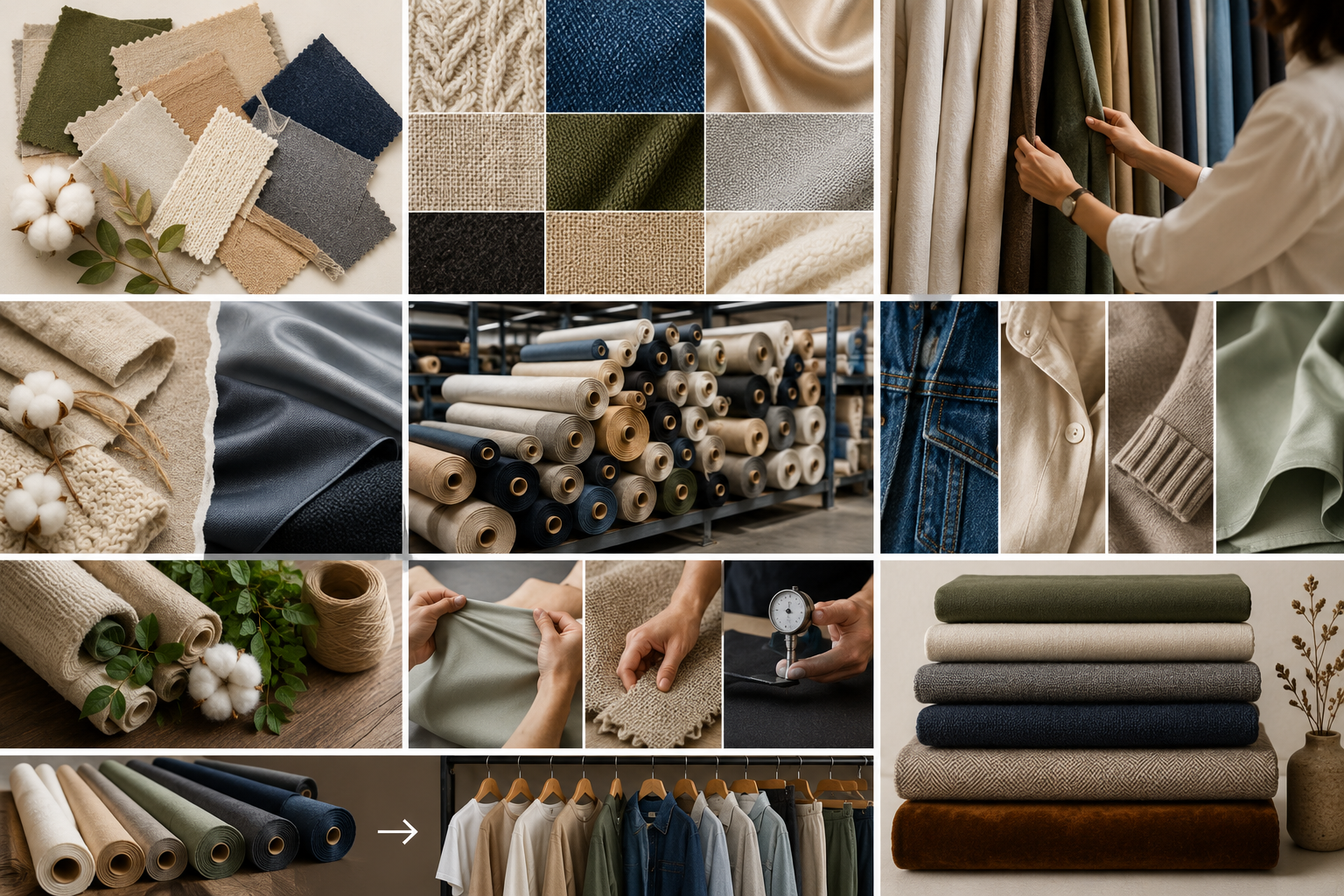
Cotton is the most widely used natural fiber in clothing, valued for its breathability, softness, and washability. It comes in many constructions: jersey knit (T-shirts), woven poplin (shirts), canvas (workwear), and French terry (sweatshirts).
- Best for: T-shirts, casual shirts, sweatshirts, basics, underwear
- Properties: Breathable, absorbent, soft, machine washable, prone to shrinkage if not pre-washed
- Common use in fashion: Foundational for most everyday apparel brands, from basics to premium streetwear
- MOQs at US cut-and-sew factories typically start at 50–300 units per style in cotton jersey. Fabric runs $3–$10 per yard depending on weight and construction. AAFA data shows cotton remains the most common fiber type used by US apparel brands.
2. Polyester
Polyester is a synthetic fiber made from petroleum-derived polymers, known for its durability, moisture resistance, and low cost. It holds shape well, resists wrinkles, and dries fast.
- Best for: Activewear, outerwear linings, performance apparel, uniforms
- Properties: Durable, wrinkle-resistant, moisture-wicking when brushed, colourfast, not breathable in heavy weights
- Common use in fashion: Dominant in performance and athleisure categories; used widely in blended fabrics
- Polyester fabrics run $1.50–$5 per yard for standard constructions. Most US activewear manufacturers work with polyester as a primary fabric, and MOQs tend to be lower than woven natural categories.
3. Cotton-Polyester Blend
A cotton-polyester blend is one of the most practical types of clothing fabric for new brands, combining the softness of cotton with the durability and shape retention of polyester. The most common ratio is 60/40 or 50/50.
- Best for: T-shirts, fleece, hoodies, workwear
- Properties: More durable than 100% cotton, holds colour better, some breathability retained
- Common use in fashion: Workwear, uniforms, and mid-market casualwear
- Blends are widely available at US manufacturers and typically lower cost per unit than pure organic cotton. An ideal starting point for new brands watching budget without sacrificing durability.
4. Linen
Linen is a natural fiber made from the flax plant, prized for its texture, breathability, and summer wearability.
- Best for: Summer shirts, trousers, resort wear, women’s blouses
- Properties: Highly breathable, gets softer with washing, wrinkles easily, stronger than cotton, moisture-absorbing
- Common use in fashion: Resort and vacation categories, sustainable fashion lines, premium basics
- US manufacturers who work in linen are fewer than cotton specialists. Budget for higher fabric costs: $6–$15 per yard. MOQs can run higher at specialty woven factories.
5. Wool
Wool is a natural protein fiber from sheep, offering warmth, natural moisture management, and excellent drape for structured garments. It ranges from bulky knits to fine merino.
- Best for: Outerwear, knitwear, suiting, cold-weather basics
- Properties: Insulating, naturally odour-resistant, elastic recovery, flame resistant, biodegradable
- Common use in fashion: Menswear suiting, performance base layers (merino), outerwear, winter knitwear
- Fine merino runs $15–$30+ per yard. Domestic wool manufacturers are concentrated in the Northeast and Pacific Northwest. Textile Exchange’s Preferred Fiber and Materials Report tracks wool certifications including the Responsible Wool Standard, increasingly important for premium positioning.
6. Silk
Silk is a natural protein fiber produced by silkworms, known for its lustre, smooth hand-feel, and lightweight drape. Among all types of clothing fabric, silk carries the highest cost per yard and the most limited US manufacturing base.
- Best for: Eveningwear, lingerie, blouses, scarves, luxury linings
- Properties: Naturally temperature-regulating, strong for its weight, lustrous sheen, sensitive to water and sunlight
- Common use in fashion: Luxury and occasion wear, bridal, high-end womenswear
- Very few US manufacturers work primarily in silk due to limited domestic supply. Budget $20–$80+ per yard. Plan for longer lead times and tighter specification on care instructions.
7. Denim
Denim is a sturdy woven cotton fabric constructed in a twill weave, defined by its diagonal rib pattern and characteristic indigo dyeing. It is one of the most recognisable types of clothing fabric globally.
- Best for: Jeans, jackets, skirts, shorts, workwear
- Properties: Very durable, stiffens when new and softens with wear, holds dye well, heavy weight (6–16 oz per yard)
- Common use in fashion: The core fabric of the denim category; also used in outerwear and accessories
- The US has a strong denim manufacturing heritage, particularly in Los Angeles and North Carolina. MOQs typically start at 100–300 units per style. Fabric cost: $4–$12 per yard depending on weight and wash finish.
8. Spandex / Lycra / Elastane
Spandex is a synthetic elastic fiber that can stretch 400–700% and return to its original shape. It is almost never used alone, but blended into other fabrics.
- Best for: Activewear, swimwear, compression garments, leggings, fitted bodywear
- Properties: Exceptional stretch and recovery, lightweight, resistant to sweat and sunscreens
- Common use in fashion: Required in any category demanding stretch, from performance wear to bodycon dresses
- Spandex-blend fabrics are the foundation of the activewear category. US manufacturers working in this space are concentrated in Los Angeles and New Jersey. See our guide to activewear manufacturing in the USA for factory detail. MOQs typically start at 50–150 units per style.
9. Nylon
Nylon is a synthetic polymer fabric that is lightweight, strong, and abrasion-resistant, making it essential for performance categories.
- Best for: Outerwear shells, swimwear, hosiery, athletic shorts, bags
- Properties: Lightweight, strong, quick-drying, smooth texture, slightly less breathable than polyester
- Common use in fashion: Technical outerwear, swimwear linings, performance sportswear
- Nylon fabrics run $3–$9 per yard. US cut-and-sew factories handling outerwear often carry nylon as a standard material.
10. Fleece
Fleece is a synthetic knit fabric, usually polyester-based, that traps air to provide warmth without the weight of wool.
- Best for: Hoodies, zip-ups, casual outerwear, blankets
- Properties: Warm, lightweight, quick-drying, pill-prone without anti-pill treatment, not wind-resistant unless bonded
- Common use in fashion: Core to the streetwear and casualwear hoodie market; also used in performance midlayers
- Fleece is one of the most manufacturer-accessible types of clothing fabric for new brands. MOQs at US factories for basic fleece styles typically start at 50–100 pieces. Budget $3–$7 per yard for standard 300gsm fleece.
11. Velvet
Velvet is a closely woven fabric with a dense cut pile that creates a soft, reflective surface.
- Best for: Evening wear, blazers, footwear uppers, luxury casualwear
- Properties: Soft pile surface, drapes well, directional nap, sensitive to crushing
- Common use in fashion: Holiday and occasion collections, luxury streetwear, premium accessories
- US manufacturers who work in velvet are fewer, and MOQs tend to be higher. Expect fabric costs of $8–$25 per yard and specialist cutting knowledge requirements.
12. Canvas
Canvas is a heavy, plain-woven fabric traditionally made from cotton or linen, known for its strength and structure.
- Best for: Workwear, outerwear, bags, shoes, structured jackets
- Properties: Very durable, holds structure, becomes softer with washing, heavy (10–20 oz per yard)
- Common use in fashion: Heritage workwear brands, tote bags, sneaker uppers, structured outerwear
- Canvas is widely available at US manufacturers and a good starting fabric for brands building in the workwear or accessories category.
13. Rayon / Viscose
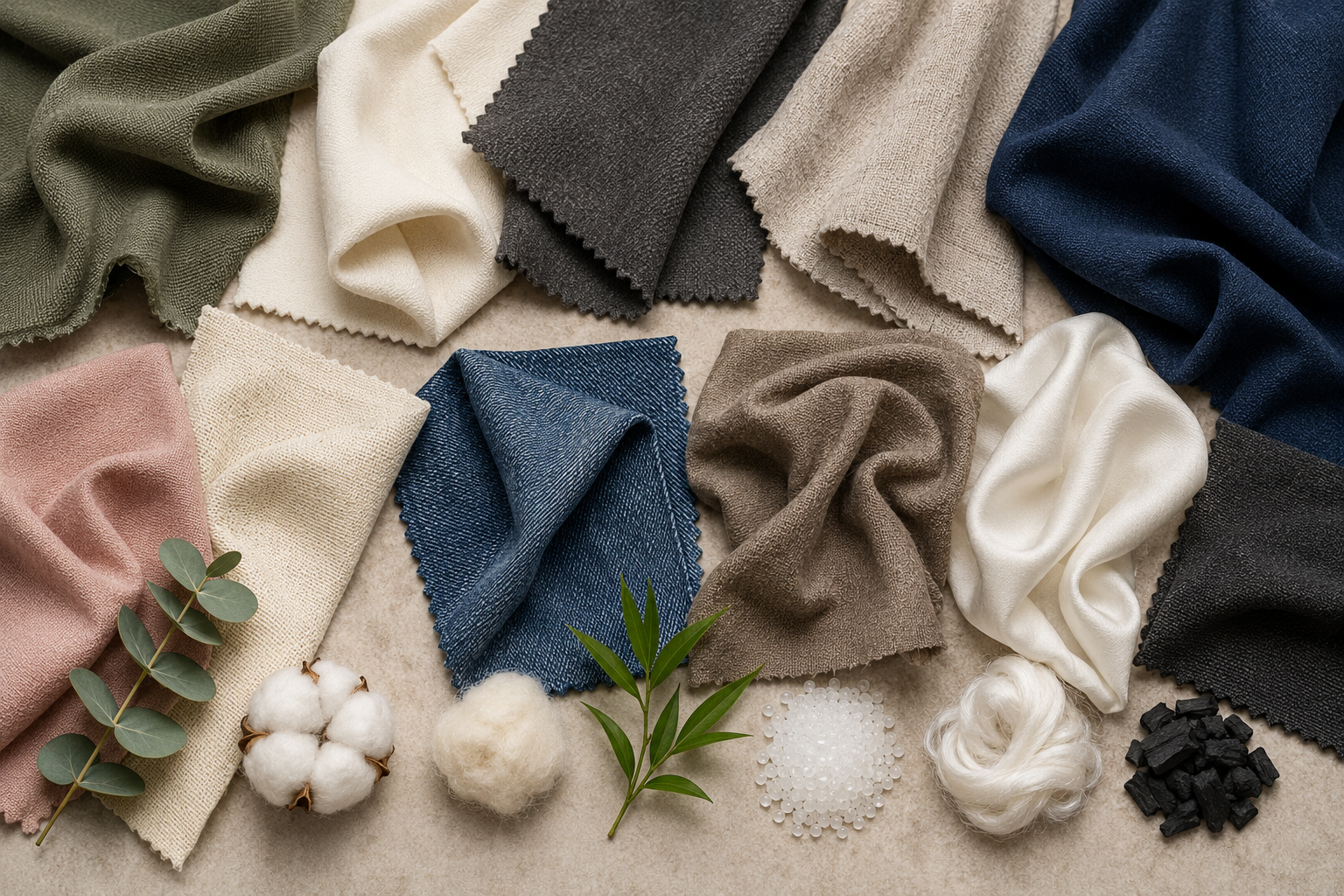
Rayon (also called viscose) is a semi-synthetic fiber made from wood pulp cellulose, designed to mimic the feel of natural fibers like silk and linen.
- Best for: Blouses, dresses, linings, summer tops, lightweight pants
- Properties: Breathable, soft, good drape, moisture-absorbent, wrinkles easily, shrinks if not pre-treated
- Common use in fashion: Affordable alternatives to silk in women’s RTW; widely used in summer and resort collections
- Rayon fabric runs $2–$7 per yard. One note for brand owners: rayon labelling has specific FTC requirements. The FTC’s textile labelling guidelines cover what you are required to disclose on care labels.
14. Modal and Tencel (Lyocell)
Modal and Tencel are cellulosic fibers processed from wood sources, offering softness and breathability with a lower environmental impact than conventional rayon. Both are among the fastest-growing types of clothing fabric in the sustainable basics category.
- Best for: T-shirts, underwear, athleisure basics, loungewear
- Properties: Ultra-soft, moisture-wicking, colour-retaining, biodegradable, more stable than regular viscose
- Common use in fashion: Premium basics, sustainable collections, comfortable activewear and loungewear
- Modal runs $4–$10 per yard. Tencel commands a slight premium. Both are increasingly available through US cut-and-sew factories. Textile Exchange certifies Tencel under its responsible fibers framework, relevant if you are building a sustainability narrative.
15. Recycled Polyester (rPET)
Recycled polyester is made from post-consumer plastic bottles or industrial polyester waste, offering the same performance properties as virgin polyester with a reduced environmental footprint.
- Best for: Activewear, outerwear, swimwear
- Properties: Identical performance to virgin polyester, lower carbon footprint, certifiable through GRS (Global Recycled Standard)
- Common use in fashion: Sustainability-positioned activewear, outerwear, and swimwear brands
- rPET fabric typically costs 10–25% more than virgin polyester. US manufacturers supplying performance and outerwear brands are increasingly stocking rPET as a standard option. The Sustainable Apparel Coalition provides tools to measure and communicate rPET’s environmental advantage.
Comparison Table: Clothing Fabric Types at a Glance
Type | Best For | Key Properties | Cost Range (per yard) | USA Availability |
Cotton | Basics, casualwear | Breathable, soft, washable | $3–$10 | Very high |
Polyester | Performance, uniforms | Durable, wrinkle-resistant | $1.50–$5 | Very high |
Cotton-Poly Blend | Hoodies, workwear | Durable, colourfast | $2–$6 | Very high |
Linen | Resort, summer | Breathable, textured | $6–$15 | Moderate |
Wool | Outerwear, suiting | Warm, odour-resistant | $15–$30+ | Moderate |
Silk | Luxury, eveningwear | Lustrous, temperature-regulating | $20–$80+ | Low |
Denim | Jeans, jackets | Very durable, iconic texture | $4–$12 | High |
Spandex Blend | Activewear, swimwear | High stretch and recovery | $4–$12 | High |
Nylon | Outerwear, swimwear | Lightweight, abrasion-resistant | $3–$9 | High |
Fleece | Hoodies, casualwear | Warm, soft, lightweight | $3–$7 | Very high |
Velvet | Evening, luxury casual | Soft pile, directional nap | $8–$25 | Low |
Canvas | Workwear, accessories | Very durable, structured | $5–$15 | High |
Rayon/Viscose | Blouses, dresses | Soft, drapes well | $2–$7 | High |
Modal / Tencel | Basics, loungewear | Ultra-soft, moisture-wicking | $4–$10 | Moderate |
Recycled Polyester | Activewear, outerwear | rPET certified, low footprint | $2–$7 | High |
How to Choose the Right Fabric for Your Brand
The right types of clothing fabric for your line is a production decision, not just a design preference. Before you contact any manufacturer, work through these five questions.
- What is your product’s primary function? A performance piece needs moisture management and stretch. A casualwear piece needs wash durability. A luxury piece needs hand-feel and drape. Match fabric to function first, aesthetics second.
- What is your target price point? Silk and fine wool position a product at $150+. Cotton jersey and polyester blend can support a $35–$80 retail target with healthy margins. Be honest about where your customer is shopping.
- What are your sustainability commitments? If your brand story involves environmental responsibility, look at certified options: organic cotton (OCS certified), Tencel, or recycled polyester (GRS certified). The Sustainable Apparel Coalition’s Higg Index is the standard tool for measuring this.
- What do US manufacturers actually stock? Cotton, polyester, fleece, denim, and nylon are widely available at US cut-and-sew factories. Silk, wool, and velvet are specialty categories with fewer domestic options. Understanding cut and sew manufacturing in the USA helps you match fabric type to the right factory type.
- What is your MOQ and sample budget? A complex woven fabric in a specialty category will cost more per sample and require higher MOQ to reach price parity. Simple construction fabrics like jersey knit give you more room to sample at low minimums.
Finding Clothing Fabric Manufacturers on Maker’s Row
Finding the right types of clothing fabric and the manufacturer who works with them does not have to mean months of cold emails. On Maker’s Row, post your clothing fabric project for free and verified US manufacturers bid directly. Review bids, check profiles, connect when ready.
Describe your fabric category, construction requirements, and MOQ expectations in your project brief. Manufacturers who work with that specific fabric type respond directly, so you are not wasting time on factories that cannot help you. Many US factories specialise in either knit or woven categories, and some work across both. The clearer your fabric specification, the more relevant the bids you receive.
FAQs About Types of Clothing Fabric
Cotton and polyester are the most common types of clothing fabric worldwide. Together they account for more than 80% of all fiber used in global apparel production, according to Textile Exchange. Cotton dominates casualwear and basics; polyester leads in performance, activewear, and blended fabrics.
Cotton jersey is the best starting fabric for most new clothing brands. It is widely available at US cut-and-sew factories, accessible at low MOQs (often 50–100 pieces), forgiving in construction, and universally accepted by consumers across every price tier.
Woven fabrics are made by interlacing threads at right angles, producing a structured result with limited stretch, used in shirts, trousers, and outerwear. Knit fabrics are made by looping yarn, creating a stretch-friendly textile used in T-shirts, activewear, and underwear. The distinction matters when briefing a manufacturer, as many factories specialise in one or the other. See our guide on cut and sew manufacturing in the USA for how this affects factory selection.
Specialty fabrics like silk, velvet, and fine wool require factories with specific machinery and expertise, which tends to raise MOQs. Standard types of clothing fabric like cotton jersey, polyester fleece, and cotton-poly blend have the widest factory availability in the USA, which keeps minimums lower. Most US factories working in accessible fabric categories will start at 50–300 units per style.
Organic cotton (OCS certified), Tencel lyocell, recycled polyester (GRS certified), and linen are the most widely adopted sustainable fabric types. The Sustainable Apparel Coalition publishes benchmarking tools that help brands measure and communicate the environmental impact of their fabric choices.
Yes, but your options are narrower than for cotton or polyester. US manufacturers specialising in silk or fine wool tend to have higher MOQs and longer lead times. Posting your project on Maker’s Row with clear material specifications gives you the fastest view of which verified factories can fulfill your requirements. See also how to find a clothing manufacturer in the USA for a step-by-step approach.
Yes. Your tech pack must specify fabric type, weight (in GSM or oz/yd²), construction (woven vs knit), fiber content percentage, and any certifications. A tech pack without complete fabric specification will produce inconsistent quotes and potentially wrong samples.
Now You Know the Types — Here Is Your Next Step
Your clothing fabric brand is one manufacturer away from becoming real. The factories are on Maker’s Row, ready to bid.