You have a design you believe in. You know your customer. Then someone asks: “Where are you in production?” and you realize you are not sure what that word actually covers. Is it just the sewing? Does it include sampling? What about sourcing fabric? Clothing production is the full process that turns your idea into a finished garment at scale. This guide explains every stage of that process, how long each one takes, and what you need to know before your first production run.
Clothing production covers far more than the time a machine spends on fabric. For brand owners, understanding what production actually includes changes every conversation you have with a manufacturer. You will know what questions to ask, which stage is causing your delay, and why your timeline is what it is.
This guide walks you through every stage of the clothing production process, the realistic timeline from concept to delivery, what each phase costs, and how to find the right manufacturing partner in the USA.
What is Clothing Production?
Clothing production is the complete process of turning a garment concept into finished, sellable units at scale. For clothing brands, this means every step from sourcing fabric and creating a tech pack through sampling, approvals, bulk manufacturing, and final quality control before shipment.
The term is often used interchangeably with “apparel manufacturing” or “garment production.” In practice, clothing production includes six distinct stages, each with its own timeline, cost, and decision points. Missing or rushing any one stage affects the quality of the final product and the reliability of your delivery date.
Stage | What Happens | Typical Duration |
Pre-Production | Concept, tech pack, fabric sourcing | 2–8 weeks |
Sampling | Proto sample, fit sample, production sample | 4–12 weeks |
Material Procurement | Fabric and trims ordered in bulk | 3–8 weeks |
Bulk Production | Cutting, sewing, finishing | 4–10 weeks |
Quality Control | Inspection before and after production | 1–2 weeks |
Shipping and Delivery | Packaging and logistics to your location | 1–3 weeks (domestic) |
According to the American Apparel and Footwear Association, the US apparel industry handles over 100 billion units of apparel per year, with domestic production timelines averaging significantly shorter than overseas equivalents for small and mid-size brands.
Why Clothing Production Knowledge Matters for Brand Owners
Understanding clothing production gives you control that most first-time brand owners do not have. You can plan your launch date accurately, budget by stage rather than guessing a total, and identify which part of the process is the source of a problem when things slow down.
Without this knowledge, brand owners regularly miss sell-through windows by underestimating the time between first contact with a manufacturer and garments in hand. A brand that starts production discussions in January for a summer launch often finds itself short by six to eight weeks if they have not accounted for sampling cycles and material lead times.
Clothing production knowledge also changes your credibility with manufacturers. A brand owner who walks in knowing what a production sample is, what bulk fabric lead time looks like, and what MOQ they can commit to gets taken more seriously and gets faster responses.
Practical impacts for your brand:
- Accurate launch date planning, not wishful thinking
- Budget allocation by production stage, not lump sum
- Faster sample approvals because you know what to look for
- Stronger manufacturer relationships from the first conversation
- Lower risk of costly re-runs caused by unclear specifications
The 6 Stages of Clothing Production: Real Examples
Clothing production follows a consistent sequence. Understanding each stage prevents the most common planning errors brand owners make.
Stage 1: Pre-Production and Design Finalization
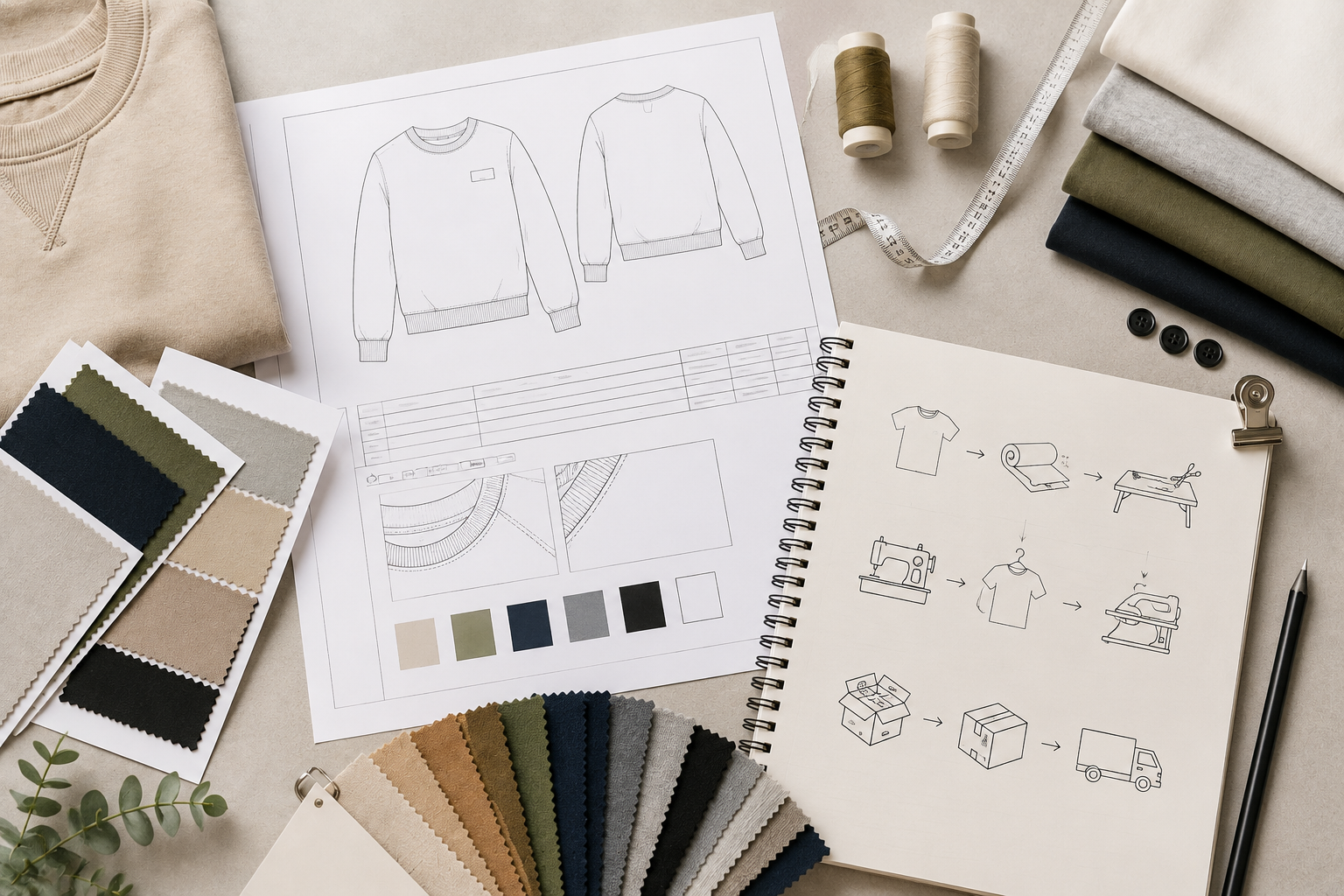
Pre-production is everything that happens before a single sample is made. This includes finalizing your design, creating a tech pack with measurements and construction details, choosing your fabric, and sourcing your trims. This stage typically takes two to eight weeks depending on how detailed your design is and how quickly your fabric sourcing moves.
A brand launching a structured jacket in Los Angeles spent six weeks in pre-production finalizing lining choices and hardware sourcing before approaching any manufacturer. Brands that skip or rush this stage almost always pay for it in extra sampling rounds.
Example: A Brooklyn-based knitwear brand building a 200-unit debut collection spent four weeks on pre-production, including two rounds of internal design revisions and one week of fabric swatch ordering. By the time they contacted manufacturers, they had a complete tech pack and their sampling time dropped by three weeks compared to their first attempt the previous year, when they had started without one.
Stage 2: Sampling
Sampling is the stage where your design becomes a physical garment for the first time. Most clothing production requires three types of samples in sequence: a proto sample (rough first version to check construction), a fit sample (to confirm sizing and proportion), and a production sample (the final approved version the manufacturer will replicate in bulk).
Each round of sampling takes one to four weeks depending on the factory’s lead time and your feedback speed. Most brands budget four to twelve weeks for full sampling from first proto to approved production sample.
Example: A Miami activewear startup building a four-piece collection went through two proto samples and one fit correction before approving their production sample. Total sampling time: nine weeks. The first proto exposed a stitch tension issue in the waistband that would have affected all 500 units if missed.
Stage 3: Material Procurement
Once your production sample is approved, the manufacturer orders fabric and trims in bulk quantities. This is a stage many first-time brand owners do not account for in their timeline. Domestic fabric suppliers typically deliver in three to six weeks. Specialty or imported fabric can take six to eight weeks or more.
If fabric is not in stock, your bulk production cannot begin regardless of how ready everything else is.
Example: A Chicago outerwear brand approved their production sample in October and assumed production would start immediately. Their shell fabric was out of stock and required a four-week reorder lead time, pushing their delivery from November to mid-December and missing their holiday wholesale window.
Stage 4: Bulk Production (Cut, Sew, and Finish)
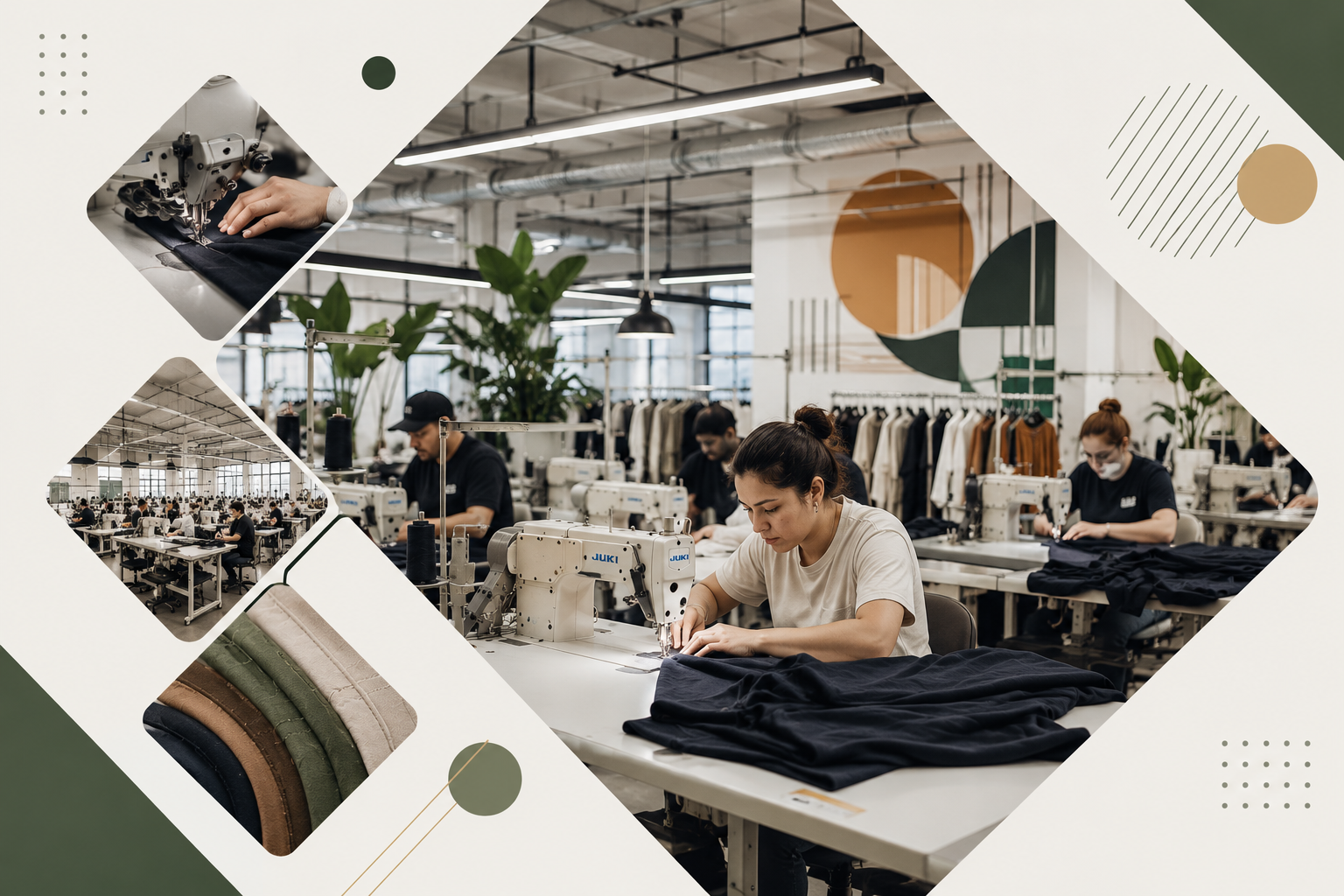
Bulk production is what most people picture when they think of clothing production: cutting fabric, assembling garments, and adding finishing details like buttons, labels, and tags. This is the core manufacturing stage. For a domestic US manufacturer, 200 to 500 units typically takes four to eight weeks. Larger orders or more complex garments take longer.
Production time depends on factory capacity, your order position in their queue, and the complexity of your design. Embroidery, special washes, and multi-component garments all extend production time.
Example: A Seattle brand producing 300 units of a woven shirt with custom embroidery quoted six weeks for bulk production. The embroidery added ten days compared to a standard print version of the same design.
Stage 5: Quality Control
Quality control happens both during bulk production and at the final inspection before shipping. A final inspection of a 300-unit order takes one to two days on-site. Formal third-party QC inspections add one to two weeks to the timeline but reduce the risk of defective units reaching your warehouse.
Most US manufacturers have internal QC processes, but brand owners shipping directly to retail buyers should consider an independent inspection for orders over 200 units.
Stage 6: Shipping and Delivery
Domestic shipping from a US manufacturer to your warehouse or fulfillment center adds one to three weeks depending on location and carrier choice. Expedited shipping reduces this to two to five business days for most domestic routes.
This stage is often left out of timeline calculations entirely, causing brands to tell buyers a delivery date that is two weeks shorter than what is actually achievable.
How to Manage Your Clothing Production Timeline
Managing a clothing production timeline well comes down to four practical decisions made before production begins.
- Start with your delivery date and work backward. Set your required delivery date first. Then subtract time for each production stage in reverse. If you need product in-hand by September 15, and domestic shipping takes two weeks, your bulk production needs to complete by September 1. That means production starts by late July, which means your production sample needs approval by early to mid-July.
- Build buffer time into sampling. Most first-time brands budget one sample round. Most production requires two or three. Build four extra weeks into your sampling calendar, and if sampling goes faster, you have a bonus. If it does not, you are not scrambling.
- Confirm fabric lead time before agreeing to a production start date. Ask your manufacturer to confirm whether your fabric is in stock before agreeing to a production start date. This single step prevents the most common timeline failure in clothing production.
- Treat quality control as a non-negotiable week. QC is not optional and it is not instant. Assign a full week to final inspection in your timeline, whether internal or third-party.
The Small Business Administration recommends that product businesses plan for a minimum of twelve weeks from concept to delivery for a first production run. In clothing production, experienced brand owners typically plan for sixteen to twenty-four weeks for a first run and twelve to sixteen weeks for subsequent seasons once manufacturer relationships are established.
Clothing Production on Maker’s Row
Finding the right manufacturer is the step where most clothing production timelines either stay on track or fall apart. The search, the outreach, the waiting, and the back-and-forth before a first sample can cost a brand owner weeks before any production work even begins.
Finding the right clothing production partner does not have to mean months of cold emails. On Maker’s Row, post your clothing production project for free and verified US manufacturers bid directly. Describe your timeline, quantity, and product category and manufacturers who match your requirements come to you. Review bids, check profiles, connect when ready.
On Maker’s Row, brand owners post unlimited manufacturing projects for free and receive bids from verified US factories at no upfront cost. To connect directly, subscription plans give full access.
FAQs About Clothing Production
Clothing production is the full process of manufacturing garments at scale, from pre-production planning and sampling through bulk manufacturing, quality control, and delivery. It covers every step between a finalized design and a finished product ready for sale, including fabric sourcing, tech pack creation, sampling rounds, cutting, sewing, finishing, and QC inspection.
Clothing production typically takes twelve to twenty-four weeks for a first production run from initial concept to delivery. Pre-production and sampling account for six to twelve of those weeks. Subsequent production runs with an established manufacturer and approved samples can move faster, typically eight to fourteen weeks depending on order volume and fabric lead times.
The clothing production process follows six main steps: pre-production and design finalization, sampling (proto, fit, and production samples), material procurement, bulk production (cut, sew, and finish), quality control inspection, and shipping and delivery. Each stage has its own timeline, and none can be skipped without affecting final product quality or delivery date.
Clothing production costs in the USA vary significantly by garment type, order volume, and manufacturer. According to Bureau of Labor Statistics data on domestic apparel manufacturing, US production commands a premium over overseas but offers shorter lead times and easier quality oversight. Basic cut and sew garments in quantities of 200 to 500 units typically cost between $15 and $45 per unit in domestic production, with technical and structured garments running higher. You can also review the full breakdown in the apparel manufacturing cost guide.
Minimum order quantities for clothing production in the USA typically range from 50 to 300 units per style depending on the manufacturer. Small batch manufacturers work with MOQs of 50 to 150 units. Higher-volume factories generally require 300 or more. Your clothing manufacturer readiness checklist should confirm your MOQ commitment before reaching out to any factory.
Clothing production refers broadly to the full manufacturing process for any garment, whether from your original design or a base template. Private label manufacturing specifically means producing garments under your own brand name using a manufacturer’s existing designs or base patterns, which you customize with your logo, colorways, and sizing. Both follow the same production stages, but private label typically has shorter pre-production and sampling phases because the base design already exists.
Yes. Most US manufacturers on platforms like Maker’s Row work regularly with first-time brand owners. What matters more than experience is preparation: a completed tech pack, a confirmed MOQ commitment, and clear communication about your timeline and product requirements. The SCORE mentorship program also provides free guidance for first-time product business owners navigating their first production run.
Ready to Put Clothing Production Into Practice?
Your garment idea has a path from concept to finished product. Every stage of clothing production is manageable when you know what it involves and how long each step takes.
Your clothing brand is one manufacturer away from becoming real. The factories are on Maker’s Row, ready to bid.
On Maker’s Row, brand owners post unlimited manufacturing projects for free and receive bids from verified US factories at no upfront cost. To connect directly, subscription plans give full access.