Starting a circular fashion brand is one of the most meaningful things a clothing entrepreneur can do right now. It is also one of the least understood. Most resources tell you to “design for sustainability” without explaining what that means in a production context. This guide is different. It gives you the exact steps to build a cradle-to-cradle apparel brand in the USA, from defining your materials philosophy to finding a manufacturer who can actually execute it.
Building a brand around circular fashion principles is not a small commitment. It changes how you choose fabrics, how you write your tech pack, and what you ask manufacturers before you sign a contract. But the brands doing it well are building real competitive advantages: loyal customers, premium price points, and supply chains that hold up to scrutiny.
The three biggest obstacles new circular brand owners face are: finding manufacturers who understand end-of-life design requirements, sourcing certifiable circular materials without prohibitive minimums, and navigating the gap between “sustainability marketing” and actual cradle-to-cradle production. This guide solves all three.
Step 1: Define Your Circular Brand Identity and Design Philosophy
Circular fashion is not a marketing strategy. It is a design framework. Before you touch a single fabric swatch, you need to decide what circularity means for your brand specifically.
The cradle-to-cradle framework means every material in your garment has a defined end-of-life path: it either returns safely to the biological cycle (natural, compostable fibers) or to the technical cycle (synthetic materials recoverable through mechanical or chemical recycling). A blended poly-cotton T-shirt that your customer cannot easily recycle is not a circular product, even if it is made in the USA.
Write a one-page brand brief that answers four questions: What materials will your products be made from and why? What happens to your product when a customer is done with it? What certifications will you pursue in Year 1? And who will verify your claims to customers?
According to the Textile Exchange 2025 Materials Market Report, recycled fibers accounted for just 7.6% of global fiber production in 2024, with less than 1% coming from post-consumer recycled textiles. That gap represents the market opportunity your circular fashion brand can fill.
Also Read: Sustainable Material Sourcing Policies for Clothing Brands →
Step 2: Know Your Customer and Their Values
Circular fashion buyers are not just environmentally motivated. They want quality that justifies a higher price, transparency about where and how garments are made, and a real relationship with the brand. They read labels. They ask questions. They share brands they trust with their networks.
Your target customer is likely 25 to 45, college-educated, and willing to spend more on fewer, better pieces. They have heard too many vague sustainability claims. What converts them is specificity: not “eco-friendly materials” but “made from GOTS-certified organic cotton with a free take-back program.”
Write a two-paragraph customer profile. Include their current wardrobe habits, what brands they already trust, and what sustainability claim would actually change their buying decision. This profile will drive every production conversation you have with manufacturers.
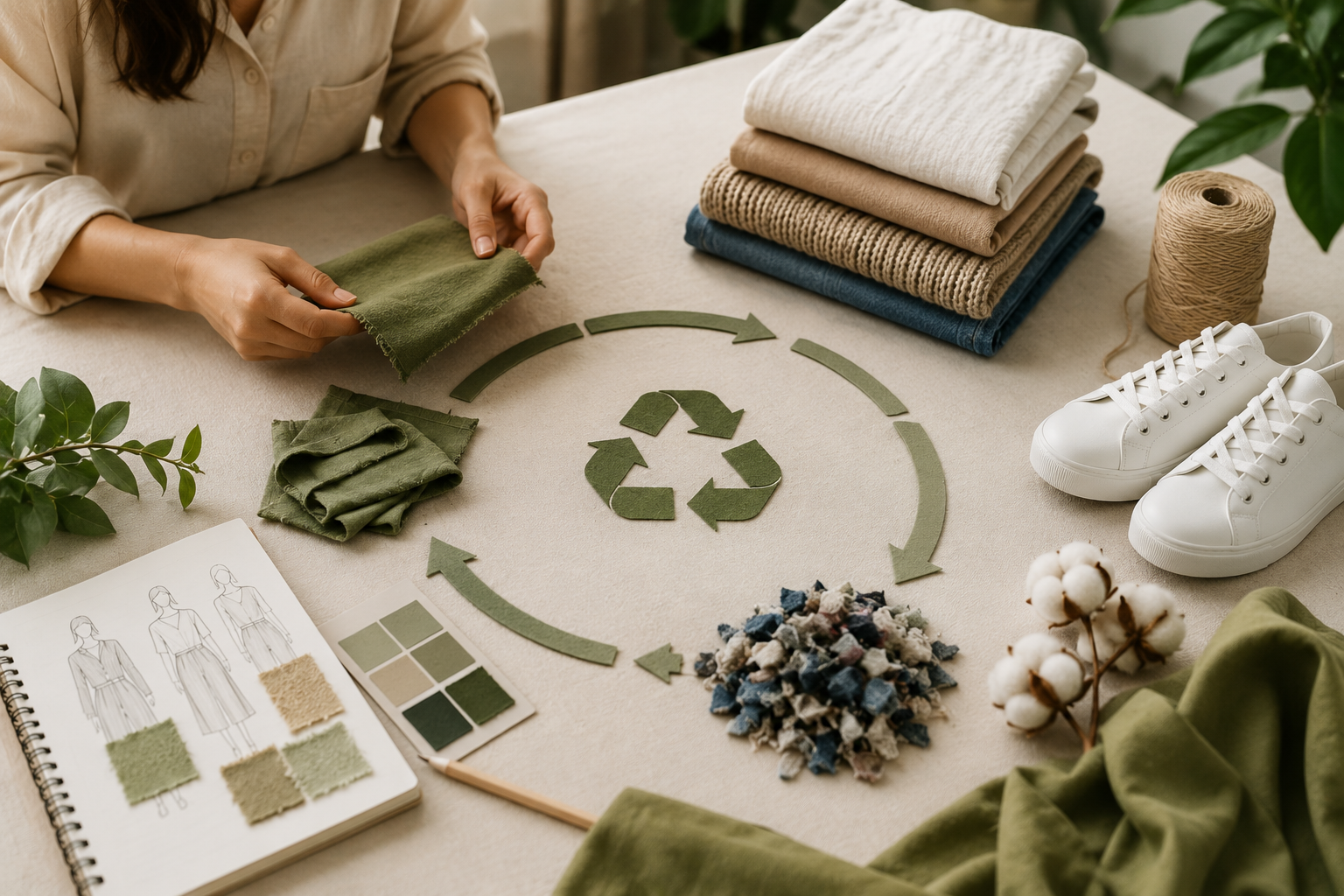
Step 3: Choose Your Materials and Build Your Tech Pack
Your material choices are the foundation of your circularity claim. There are two clean pathways for circular apparel materials in the USA.
The biological cycle includes materials like GOTS-certified organic cotton, linen, hemp, and wool, natural fibers that can return to soil at end of life without leaving harmful residues. These are your best options for single-material products like T-shirts, denim, or knitwear.
The technical cycle includes materials like recycled polyester (rPET from post-consumer plastic bottles), recycled nylon (Econyl from ocean waste), and mechanically recycled cotton. These can be recovered and reprocessed at end of life, but only if your garment is made from a single fiber type. Blends are the enemy of circularity.
Avoid blends wherever possible. A 97% cotton / 3% elastane waistband makes an otherwise compostable garment unrecyclable. If stretch is required, investigate material options certified to Textile Exchange standards before specifying them in your tech pack.
Your tech pack must go beyond standard construction specs to include: fiber content and certification number for every material, recommended end-of-life pathway, wash care instructions that extend garment life, and any take-back or resale program details printed on the care label.
Also Read: How to Write a Professional Tech Pack for Your Clothing Brand →
Step 4: Find a Manufacturer Who Understands Circular Production
This is where most circular fashion brand owners get stuck. Finding a US manufacturer who can execute your production is one challenge. Finding one who understands your material requirements, minimum order quantities for certified fabrics, and end-of-life design constraints is a different level of search entirely.
The old approach of cold emails to factory directories, trade show networking, and industry referrals works for conventional production. For circular fashion, you need a manufacturer who asks the right questions back at you. Does your factory partner know what GOTS certification means? Do they understand why you cannot use the standard fusible interfacing they use for everyone else? Can they source certified trims, or will every button and zipper undercut your circularity claim?
When evaluating manufacturers for circular production, ask specifically about: their experience with single-fiber construction, their supplier relationships for certified materials, whether they offer any take-back or cut-waste programs, and whether they have worked with brands requiring full material traceability.
Find Circular Fashion Manufacturers on Maker’s Row
Finding the right circular fashion manufacturer does not have to mean months of cold emails. On Maker’s Row, post your circular apparel project for free and verified US manufacturers bid directly. Review bids, check profiles, and connect when ready.
In your project brief, specify your material certifications, your single-fiber construction requirements, and your preferred US production regions. Manufacturers who understand circular production requirements will respond directly, including smaller, specialist cut-and-sew operations that do not show up in a standard Google search.
Step 5: Order Samples and Validate Your Circularity Claims
Your first sample is not just a fit check. For a circular fashion brand, samples are where your material claims meet reality.
Before approving any sample, verify three things. First, check that every fiber is exactly as specified. Request the mill certification documents for each material and cross-reference them against your tech pack. Second, test wash fastness and durability. Circular fashion brands carry a premium price point; your product must last long enough to justify it. Third, evaluate end-of-life yourself. Can you separate the materials? Can you compost or recycle the garment as you claim customers can?
A Portland-based sustainable basics brand ordered samples from three manufacturers before finding one who could source certified organic cotton buttons alongside their main fabric supplier. The difference cost them eight weeks but saved them from a launch with an uncertifiable product.
Review your manufacturer’s certifications as well. Certifications relevant to circular apparel production include GOTS (for organic fibers), GRS (Global Recycled Standard for recycled content), bluesign (for chemical safety), and Fair Trade USA for labor practices.
Step 6: Plan Your Production Budget and Take-Back Program
Circular fashion production costs more than conventional apparel manufacturing in the USA. Certified organic cotton typically commands a premium over conventional cotton. Recycled nylon costs more than virgin nylon. And single-fiber construction, which avoids blends, can reduce your fabric efficiency because you cannot use standard stretch interfacings and trims.
Budget realistically. According to the U.S. Small Business Administration, first-time apparel brand owners consistently underestimate total launch costs by 30 to 40 percent. For circular brands, add material certification costs, potential higher MOQs for specialty fabrics, and take-back program infrastructure to that estimate.
Your take-back program is not optional for a credible circular fashion brand. It is the proof point. Plan it before launch, not after. Options include partnering with an existing textile recycler, building a direct mail-back system using your own packaging, or partnering with a resale platform for items that still have life in them. Make the take-back friction-free for your customer.
Also plan your certifications budget. Third-party certification is what separates a circular fashion brand from a brand that says circular. Pursue at least one material certification and one process certification in your first year. Budget time as well as money.
Also Read: How to Find a Clothing Manufacturer in the USA →
Step 7: Launch, Market, and Measure Your Circular Brand
Your launch story is your circularity story, and specificity is everything. Do not say “we use sustainable materials.” Say “every piece in our first collection is made from GOTS-certified organic cotton, with a free mail-back program so we can recycle every garment we sell.”
According to the Sustainable Apparel Coalition, consumer trust in sustainable fashion claims increases significantly when brands provide specific material certifications, named manufacturing partners, and measurable impact data rather than general environmental language.
Measure three things from day one: your garment return rate through your take-back program, your certified material percentage as a share of total production, and your customer lifetime value compared to industry benchmarks. Circular brands build loyalty. Track it.
Build your community before your inventory. Content about your material sourcing process, your manufacturer relationships, and your take-back program converts browsers into buyers better than product photography alone. Your process is your brand story.
FAQs: Starting a Circular Fashion Brand
Budget between $15,000 and $50,000 for a first collection, depending on your MOQ and material choices. Circular fashion production typically costs 15 to 25 percent more than conventional manufacturing due to certified material premiums and single-fiber construction requirements. Add certification costs, take-back infrastructure, and working capital for sampling rounds that may take longer with specialist manufacturers.
Yes, but the learning curve is steeper than conventional apparel because you need to understand both standard garment production and circular design principles. Start by reading Textile Exchange’s materials guides, study the GRS and GOTS certification frameworks, and use a platform like Maker’s Row where you can post your project and receive bids from manufacturers who already work with sustainable brands.
Look specifically for US manufacturers with experience in single-fiber construction and certifiable material sourcing. On Maker’s Row, specify your material certifications, construction requirements, and preferred production region in your project brief. Manufacturers with relevant experience will respond directly.
MOQ stands for minimum order quantity, meaning the fewest units a manufacturer will produce in a single run. For circular fashion brands using specialty certified fabrics, MOQs can be higher than conventional production because certified fabric suppliers often have their own minimums. Learn more about minimum order quantities for clothing manufacturers before approaching factories.
Plan for 9 to 14 months from brief to launch. Circular fashion timelines run longer than conventional production because certified material sourcing, sampling validation, and certification processes all add time. Build your brand community and content strategy during this period so you launch with an audience ready to buy.
Yes, and your tech pack needs to go further than a conventional one. Beyond construction specs, it must include fiber certification numbers, end-of-life pathway specifications, and approved trim and accessory suppliers that meet your circularity standards. Review how to write a professional tech pack before your first factory conversation.
Register your original design elements with the U.S. Patent and Trademark Office before sharing detailed tech packs with manufacturers you have not yet contracted. Use a basic NDA for any pre-contract material sharing. Note that general design concepts are not protectable, but specific original graphic elements and distinctive trade dress can be registered.
This varies by manufacturer and material. Cut-and-sew manufacturers who specialize in sustainable production sometimes offer smaller runs of 50 to 150 units per style for brands using specialty fabrics. Conventional factories may require 300 to 500 units minimum. Post your project on Maker’s Row with your target quantity and let manufacturers tell you what they can work with.
Your Circular Fashion Brand Is Closer Than You Think
The manufacturers, the certified materials, and the customers for circular fashion brands already exist in the USA. What most aspiring brand owners are missing is the right production partner.
Your circular fashion brand is one manufacturer away from becoming real. The factories are on Maker’s Row, ready to bid.