One wrong cleaner can cloud an opal or strip the oil from an emerald in a single afternoon. If you sell gemstone jewelry, that mistake lands in your returns pile and your reviews. This guide shows you how to clean and care for gemstone jewelry, stone by stone, so your samples, your stock, and your customers stay protected. It is written for founders of new jewelry brands, not for shoppers cleaning one ring.
Gemstone jewelry rewards careful brands. As of 2025, the U.S. Bureau of Labor Statistics counts 32,800 US jewelers and precious stone and metal workers, and projects a 3 percent decline by 2035. Skilled hands are scarce, so every piece you make is worth protecting.
Most new founders hit three walls. They cannot tell which stones are fragile. They cannot write care instructions customers will follow. They do not know what to ask a factory about stone treatments.
This guide solves all three. Each step ends with a task you can finish today, and Step 6 shows you how to collect bids from US factories instead of chasing emails.
Step 1: Which Gemstones Are in Your Line, and How Hard Are They?
Group every stone in your line by hardness and sensitivity before you write a single care rule. The Mohs scale ranks a mineral’s scratch resistance from 1 (softest) to 10 (diamond). Hardness is only half the story, because a hard stone can still chip. Cleavage is a stone’s tendency to split along flat internal planes when struck. Topaz and tanzanite both show it.
Tier | Stones | Approx. Mohs hardness | Care level |
Durable | Diamond, ruby, sapphire | 9 to 10 | Soap, water, soft brush |
Moderate | Emerald, aquamarine, topaz, garnet, amethyst, citrine, peridot, tanzanite | 6.5 to 8 | Gentle hand clean, no temperature shocks |
Delicate | Opal, turquoise, pearl, amber | 2 to 6.5 | Damp-cloth wipe only |
Your task today: build a one-page stone list with each stone’s name, hardness, treatment, and tier. Step 2 gives you the tools to act on it.
Also Read: The Secret to Quality: How Manufacturing Jewelers Work →
Step 2: What Cleaning Kit Do You Need?
You need five cheap items: lukewarm water, mild dish soap, a soft brush, a lint-free cloth, and a towel-lined bowl. Line the bowl with a towel so a dropped piece lands softly, and never work over an open drain.
Choose a toothbrush labeled soft or extra soft, because medium and firm bristles scratch settings and soft stones. Rinse in lukewarm water at the same temperature as the wash, since sudden temperature changes can crack some stones.
Skip bleach, ammonia, toothpaste, and harsh commercial dips. They are abrasive or reactive, and a delicate stone cannot take them. Your task: buy the kit, then test it on a scrap sample before you touch a real stone. Step 3 shows which stones can take this routine.
Step 3: How Do You Clean and Care for Gemstone Jewelry, Stone by Stone?
Knowing how to clean and care for gemstone jewelry starts with matching the method to the stone: durable stones tolerate soapy water and a soft brush, while delicate stones need a damp cloth only. An ultrasonic cleaner is a machine that loosens dirt with high-frequency vibration in a liquid bath. It can damage treated, fractured, or included stones, so hand cleaning is the safe default.
Stone | Approx. Mohs | Safe method | Avoid |
Diamond | 10 | Soap, water, soft brush | Fracture-filled stones in ultrasonic baths |
Ruby and sapphire | 9 | Soap, water, soft brush | Ultrasonic on glass-filled ruby |
Emerald | 7.5 to 8 | Damp cloth, or a very brief lukewarm soap rinse | Ultrasonic, steam, heat, solvents |
Aquamarine | 7.5 to 8 | Soap, water, soft brush | Hard knocks, sudden temperature swings |
Topaz | 8 | Soap, water, soft brush | Hard knocks (cleavage), temperature shocks |
Amethyst and citrine | 7 | Soap, water, soft brush | Long exposure to strong sunlight or heat |
Garnet | 6.5 to 7.5 | Soap, water, soft brush | Abrasives |
Peridot | 6.5 to 7 | Damp cloth or gentle soap rinse | Acids, ultrasonic |
Tanzanite | 6.5 to 7 | Damp cloth, soft brush | Ultrasonic, steam, thermal shock |
Opal | 5.5 to 6.5 | Soft damp cloth wipe | Soaking, heat, dryness, ultrasonic |
Turquoise | 5 to 6 | Dry or barely damp cloth | Soap, oils, chemicals, soaking |
Pearl | 2.5 to 4.5 | Wipe with a soft damp cloth after each wear | Acids, alcohol, ammonia, perfume, ultrasonic |
Amber | 2 to 2.5 | Soft dry cloth | Solvents and chemical cleaners |
When you are unsure, wipe with a damp cloth and stop. A dull stone is easy to fix later, but a cracked or clouded one is not. Your task: copy the rows for your own stones into a draft care sheet. Step 4 covers daily habits.
Step 4: How Do You Protect Gemstone Jewelry Day to Day?
Daily care starts with three rules: put jewelry on last, take it off first, and store each piece on its own. Perfume, hairspray, and lotion leave films that dull stones, and pearls react to them most.
Build these five habits into your care guidance:
- Remove before work: Take rings and bracelets off for the gym, cleaning, gardening, and swimming.
- Store apart: Use soft pouches or lined compartments, because a diamond scratches every softer stone it touches.
- Limit light and heat: Keep amethyst and other color-sensitive stones out of direct sun and hot cars.
- Wipe after wear: Use a soft cloth on every piece, and wipe pearls each time.
- Check settings yearly: Ask a jeweler to inspect prongs, since a loose prong loses stones.
Your task: turn these five habits into five lines for your care card. Step 5 explains why treatments can change the rules.
Step 5: Which Treatments and Settings Change the Care Rules?
A treatment can override a stone’s normal care rules, so find out each stone’s treatment before you write its care card. A gemstone treatment is any process, such as oiling, dyeing, or heating, that improves a stone’s color or clarity. Fracture filling is the injection of glass or resin into cracks to hide them.
Treatment | Often found on | Care impact |
Oil or resin filling | Emerald | No ultrasonic, steam, heat, or solvents |
Fracture or glass filling | Ruby and some diamonds | No ultrasonic, heat, or acid; re-setting can damage the filler |
Dyeing | Turquoise, pearl | No soaking or chemicals; color can rub off |
Heat treatment | Sapphire, ruby, tanzanite | Usually stable, but avoid sudden temperature swings |
Surface coating | Some topaz | Avoid abrasion and hard brushing |
The FTC’s 2019 brochure In the Loupe: Advertising Diamond, Gemstones and Pearls says sellers should disclose treatments that are not permanent, that need special care, or that significantly affect value. It also advises sellers to name the cleaners and solvents to avoid. Settings matter too, because glued stones, pave work, and opal doublets react to soaking differently than a prong-set sapphire.
Your task: ask every supplier for written treatment details per stone lot. A tech pack (spec sheet) is the document that lists every measurement and material a factory needs to quote and make your piece. Add the treatment line to yours, and read our jewelry design process guide if you have never written one.
Step 6: How Do You Find a Jewelry Manufacturer for Care-Ready Pieces?
You find the right manufacturer by sending one written spec to several US shops and comparing their answers. This is where most founders get stuck, and it decides whether your line launches.
The old way means cold emails, trade shows, and referrals. Each takes weeks, and small inquiries often go unanswered. Judge every shop on the same five points instead.
Criterion | Ask this | Green flag | Red flag |
Stone treatment info | Can you document each stone’s treatment? | Written note per lot | “It is just a natural stone” |
Setting method | How are stones set, and who repairs them? | Names the method and a repair policy | No repair answer |
MOQ | What are your prototype and production minimums? | Both stated in writing | Vague or shifting numbers |
Location | Where do you cast, set, and finish? | Verifiable US address | Overseas work behind a US office |
Sample policy | Do you offer a paid prototype? | Paid sample with a timeline | Refuses samples |
MOQ (minimum order quantity) is the smallest number of pieces a factory will produce per order. A US partner also gives you a nearby shop for resizing and repairs, which customers expect from gemstone pieces.
Find Gemstone Jewelry Manufacturers on Maker’s Row
Maker’s Row is a marketplace connecting jewelry and apparel brand owners with verified US manufacturers. Finding the right gemstone jewelry manufacturer does not have to mean months of cold emails. On Maker’s Row, post your gemstone project for free and verified US manufacturers bid directly. Review bids, check profiles, connect when ready.
List your stones, treatments, setting style, and target quantity in the project so factories quote accurately. Posting projects and receiving bids costs nothing upfront, and subscription plans unlock replies and direct contact. For a wider shortlist, see our roundup of the best jewelry manufacturers in the USA or our guide to custom jewelry manufacturers.
Also Read: Best Small Batch Jewelry Manufacturers for Small Businesses in the USA →
Step 7: How Do You Turn Care Rules Into a Care Card?
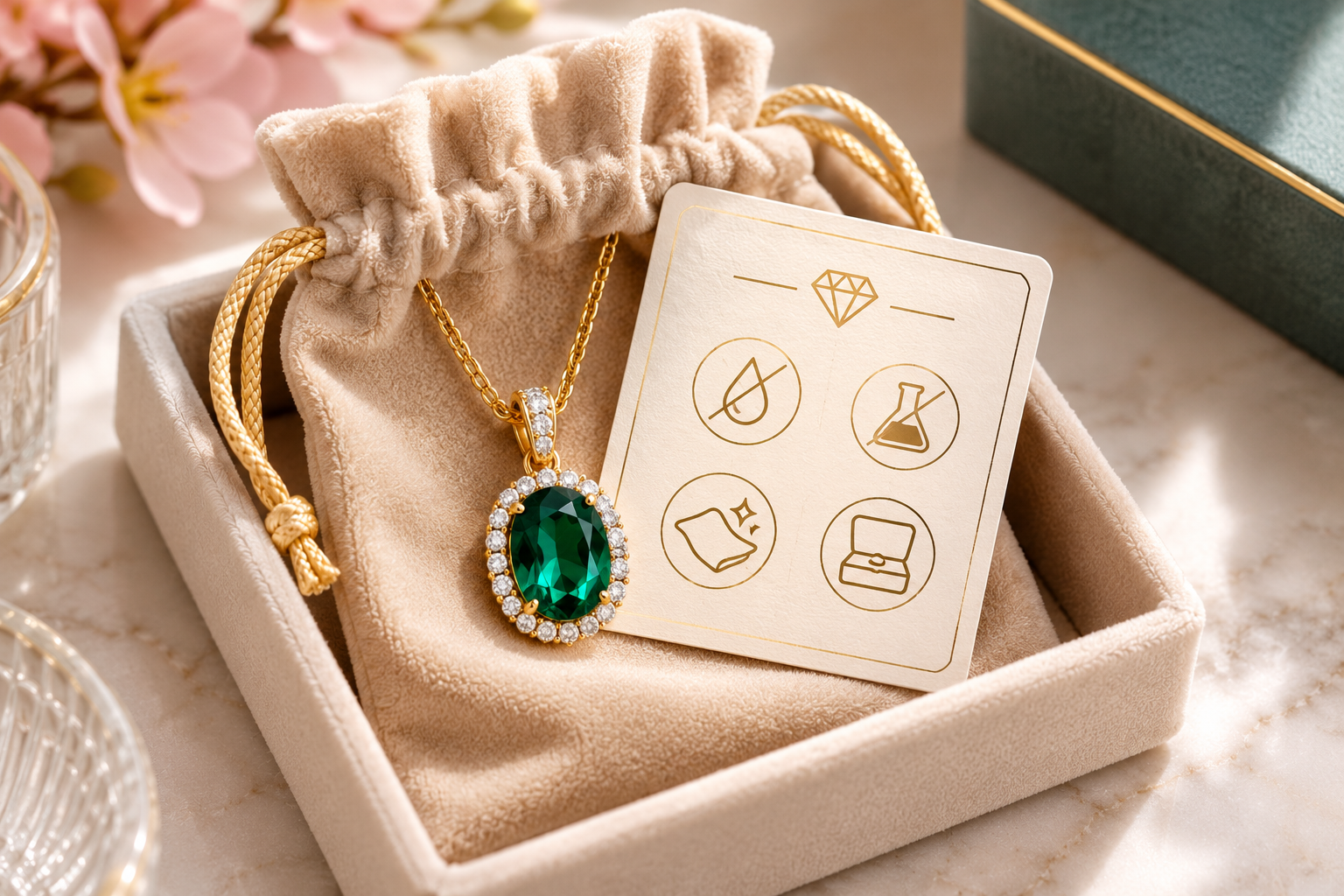
Print a short care card for each stone group and ship it with every order. It is the simplest way to show customers how to clean and care for gemstone jewelry without a support email. Keep it to five lines: the stone name, one thing to do, two things to avoid, how to store it, and who to contact.
Here is an illustrative example, not a customer result. Picture a Providence founder who orders 40 pendants: 20 aquamarine and 20 emerald. She prints two cards. The aquamarine card says soap, water, and a soft brush. The emerald card says no ultrasonic, steam, or solvents, and her supplier’s oil-treatment note sits in her tech pack, so she can answer any retailer question in one email.
Protect your brand before launch. Register your name and logo with the USPTO, and use SCORE’s business plan resource to pressure-test your launch numbers.
FAQs About Gemstone Jewelry Care
Use lukewarm water, a drop of mild dish soap, and a soft brush for durable stones. Rinse in water of the same temperature and pat dry. For emerald, opal, turquoise, pearl, and amber, wipe with a damp or dry soft cloth instead.
Only on durable, untreated stones such as diamond and sapphire. Emerald, tanzanite, opal, pearl, and any filled or fractured stone can be damaged by vibration or heat. Hand cleaning is the safe default.
Clean daily-wear rings weekly and occasional pieces every few months. Wipe pearls and other delicate stones after each wear. Clean sooner after lotion, sunscreen, or swimming.
Do not use bleach, ammonia, toothpaste, harsh commercial dips, or hot water. They scratch, strip treatments, or cloud porous stones. Stick to mild soap, lukewarm water, and soft tools.
Store each piece separately in a soft pouch or lined compartment. This stops harder stones from scratching softer ones. Keep pieces away from direct sun and heat.
Wipe it with a soft damp cloth, or give it a very brief rinse in lukewarm soapy water. Never use an ultrasonic cleaner, steam, or solvents, because emeralds are often oil-filled. Ask your supplier whether your stones are treated.
Post your project on Maker’s Row and let verified US factories bid, or send a written spec to shops directly. Judge each shop on treatment documentation, setting method, MOQ, location, and sample policy. Compare at least three responses before paying for a sample.
Give a short, stone-specific card covering cleaning, what to avoid, and storage. Name any cleaners or solvents to avoid, and disclose treatments that need special care. The FTC’s jewelry guidance recommends this for treated stones.
Your Gemstone Jewelry Line Is Closer Than You Think
Your gemstone jewelry brand is one manufacturer away from becoming real. The factories are on Maker’s Row, ready to bid.