You are holding a fabric swatch, and the tag reads “92% Modal, 8% Elastane.” Your supplier calls it a rayon. A friend calls it “basically viscose.” A product page calls it “TENCEL™ Modal.” Those three terms are related but not interchangeable, and mixing them up gets expensive once the name reaches your label, your quote, or your sustainability claim. This guide answers one question: what is modal fabric, and what does it change about the product you are about to make?
Modal fabric is a soft, smooth textile made from modal fiber, a man-made cellulosic fiber regenerated from beech wood pulp.
So what is modal fabric going to do for your product? The fiber name on your fabric decides how it feels, what it costs, and what your label must say.
What Is Modal Fabric?
Modal fabric is any textile knitted or woven from modal fiber, which manufacturers make by dissolving beech wood pulp and spinning it into fine, smooth filaments. For clothing brands, this means a silky feel and fluid drape.
What Is Modal Fabric Made From?
Cellulosic fiber is a fiber made from cellulose, the structural material found in plants and trees. Modal belongs to the man-made cellulosic family alongside viscose and lyocell. Austrian company Lenzing developed modal. Lenzing sells it today as TENCEL™ Modal, and other producers make modal under the generic name.
What Is Modal Fabric Used For?
Brands use modal most in knit garments that sit against skin, such as underwear, bralettes, loungewear, sleepwear, and layering tees. What is modal fabric used for least? Structured pieces that need crispness.
How Is Modal Different From Viscose?
What separates modal from standard viscose is performance when wet. Wet modulus measures how much a fiber resists stretching when it is wet. The International Bureau for the Standardization of Man-Made Fibres (BISFA) defines modal as a viscose fiber with a higher wet modulus, which is why modal tends to hold its shape better through washing. Textile Exchange, the nonprofit that tracks global fiber markets, groups modal with viscose and lyocell in its man-made cellulosic category and lists “Preferred Modal” among its preferred fibers.
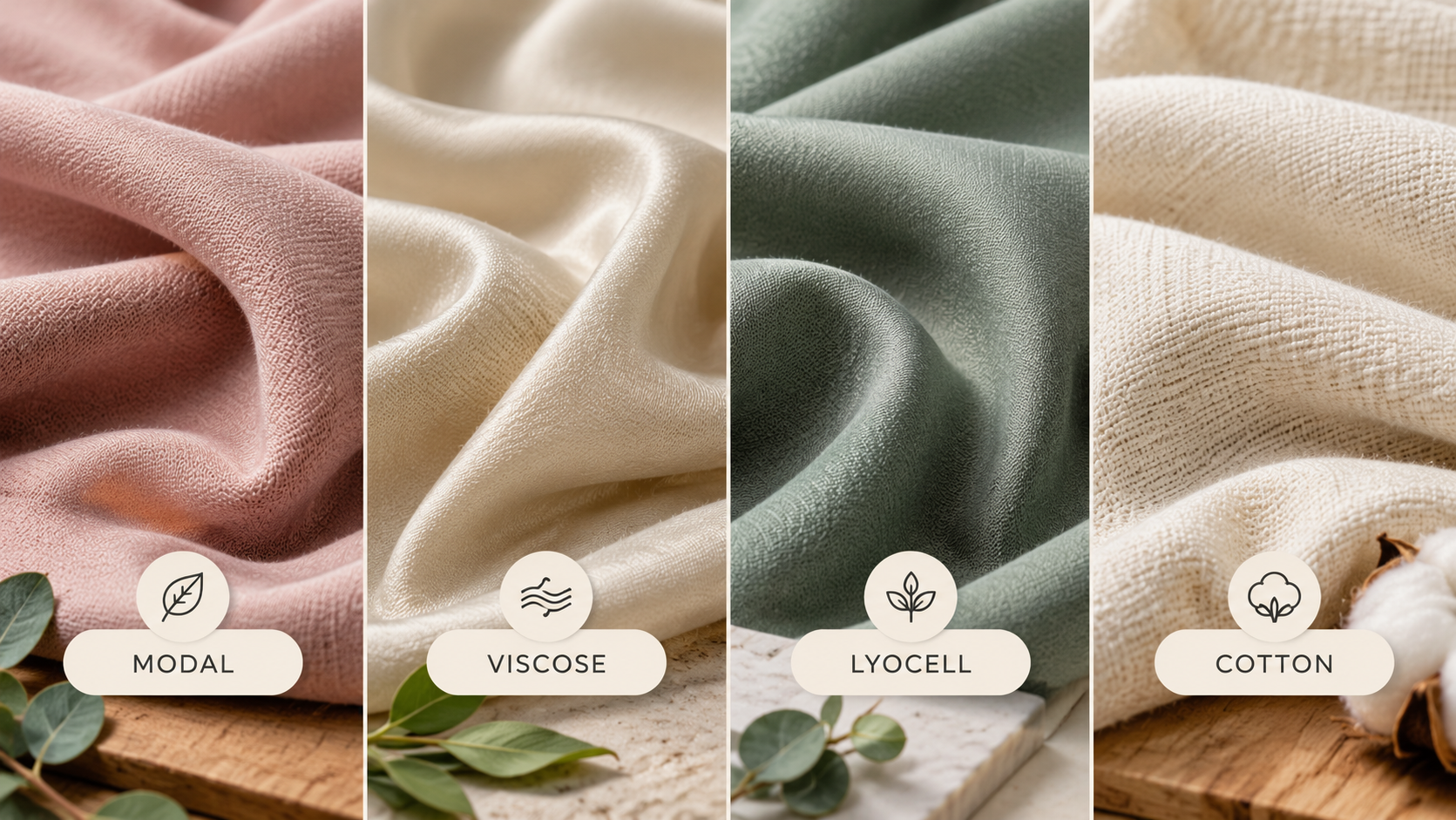
The table below answers the follow-up to what is modal fabric: how does it compare with the fibers you might choose instead?
Fiber | Source | Wet Performance | Typical Feel and Drape | What It Means for Your Product |
Modal | Beech wood pulp (man-made cellulosic) | Higher wet modulus than standard viscose | Very smooth, soft, fluid drape | Suits underwear, loungewear, and layering tees. Generally costs more than standard viscose or cotton. 100% modal knits can pill. |
Viscose | Wood pulp (man-made cellulosic) | Weaker when wet than modal | Soft, fluid, silky | Lower fiber cost than modal. Needs gentler care. |
Lyocell | Wood pulp, made with a different solvent process (man-made cellulosic) | High strength among cellulosic fibers | Smooth, cool, subtle sheen | Works in knits and wovens. Lenzing sells it as TENCEL™ Lyocell. |
Cotton | Cotton plant (natural fiber) | Holds up well to repeated washing | Breathable, matte, less fluid drape | Widely available. Usually costs less than modal. |
Why Does Modal Fabric Matter for Your Brand?
What is modal fabric’s real impact on your brand? The fiber name drives four decisions you cannot skip: how your product feels, what it costs, what your label says, and which sustainability claims you can make.
- Feel and positioning. Modal’s smooth surface and drape suit garments that sit against skin, such as bralettes, briefs, sleepwear, and layering tees. If your product needs structure or crispness, modal alone may not deliver it.
- Cost and margin. Modal generally costs more than standard viscose and cotton, so your fiber choice moves your per-unit cost before you cut a single piece. Ask what is modal fabric costing per yard in your exact blend, in writing, before you set wholesale prices.
- Labeling. The FTC requires fiber content labels that use generic fiber names and percentages by weight. The FTC accepts “modal” as a fiber name, and it expects the name on your tag to match what is actually in the fabric.
- Sustainability claims. FSC and PEFC are forest certification programs that verify wood comes from responsibly managed forests. According to Textile Exchange’s Materials Market Report 2026, man-made cellulosic fibers reached 9.1 million tonnes in 2025, about 7% of global fiber production, and two-thirds came from FSC or PEFC certified or controlled feedstock. That means about one-third did not, so ask your supplier for documents instead of assuming.
Modal Fabric in Practice: Real Examples
What is modal fabric in a real order? It shows up as a blend percentage on a tag, a trademark on a hang tag, or a line in a supplier quote, and each one needs a decision from you. The two scenarios below are illustrative composites built from the FTC labeling rules and common sourcing questions. They are not case studies of named customers.
Example: A Los Angeles loungewear label sets its blend A Los Angeles founder plans a first run of 150 modal jersey lounge sets. MOQ (minimum order quantity) is the smallest number of units a manufacturer will produce per order. Her factory sets it at 150 sets, and her supplier offers a 94% modal, 6% elastane knit. She prints “94% Modal, 6% Elastane” on the label and keeps the supplier’s fiber record on file, because the FTC treats knowingly wrong percentages as mislabeling. Her labels match her documentation, so the run ships on time.
Example: A Brooklyn underwear brand uses a fiber trademark A Brooklyn brand orders 100 pairs of briefs in TENCEL™ Modal and wants the trademark on the hang tag. The FTC allows a hang tag that names a fiber without listing full fiber content only if it tells shoppers to see the label. The brand adds “See label for full fiber content” and places the trademark beside the generic fiber name on the label. Its tag claims stay accurate.
[IMAGE: brand owner holding a modal jersey tee sample and a supplier quote | ALT: modal fabric example for clothing brands]
How Do You Work With Modal Fabric?
Knowing what is modal fabric is step zero. You work with it by confirming the exact fiber and blend, testing a sample, and writing the label correctly before you approve production.
- Confirm the fiber name and blend in writing. Ask your supplier for the full fiber content, for example “94% modal, 6% elastane,” and whether the modal is generic or TENCEL™ Modal.
- Match the fabric to the garment. What is modal fabric best suited to in your range? Tees, underwear, and loungewear. Ask for fabric weight in GSM. GSM (grams per square meter) is the standard measure of fabric weight. It lets you compare quotes fairly.
- Test before you commit. Order swatches, then a pre-production sample. Wash it using the care instructions you plan to print, and check for shrinkage and pilling.
- Put the specs in your tech pack, then raise MOQ. A tech pack is the document that gives a factory the specifications for a garment, including fabric, measurements, and construction details. List fiber content, weight, and blend, and use our guide to building a professional tech pack. Then ask each factory about its MOQ and fabric lead time, and read our guide to minimum order quantities before you negotiate.
- Write the label correctly. The FTC’s labeling guidance says to list generic fiber names with percentages by weight in descending order. Fibers under 5% are called “other fiber,” unless they serve a clear function such as spandex for stretch. A 3% tolerance applies, but you cannot knowingly misstate content. Add the country of origin and your company name or RN. An RN is the Registered Identification Number the FTC issues to US companies, and it can stand in for your company name on a label.
- Support any sustainability claim with documents. Ask your supplier for FSC or PEFC chain of custody records before you write “responsibly sourced” anywhere. Our roundup of sustainable fabric manufacturers in the USA shows other fabric options if the paperwork does not hold up.
Also Read: Your Ultimate Guide to Launching a Successful Clothing Brand →
Modal Fabric on Maker’s Row
Maker’s Row is a marketplace connecting apparel brand owners with verified US manufacturers. Once you know what is modal fabric and which blend you need, finding a factory comfortable with modal knits does not have to mean months of cold emails. Post your project for free, describe your blend, fabric weight, and first-run quantity, and verified US manufacturers bid directly. Review bids and check profiles.
Brand owners post unlimited projects for free and receive bids from verified US factories at no upfront cost. To reply and connect directly, subscription plans give full access.
Maker’s Row does not sell fabric, so settle what is modal fabric for your line first. Need yardage? See our guide to modal fabric suppliers in the USA, or browse the clothing manufacturers directory.
FAQs About Modal Fabric
Modal fabric is made from modal fiber, a man-made cellulosic fiber regenerated from beech wood pulp. Manufacturers dissolve the pulp, push it through fine nozzles to form filaments, then spin those filaments into yarn. Lenzing developed the fiber and sells its version as TENCEL™ Modal.
No, modal is a distinct fiber within the viscose family, not the same thing as standard viscose. BISFA defines modal as a viscose fiber with a higher wet modulus. The FTC notes that the international standard uses “viscose” for the most common form of rayon, and either name is acceptable on a label. Use “modal” only when the fabric is actually modal.
Neither fiber is better in every case. What is modal fabric’s edge over cotton? A smoother feel and more fluid drape, which suits intimates and loungewear. Cotton is a natural plant fiber that is widely available and usually costs less than modal.
It can be, but the word “modal” does not guarantee it. Modal comes from wood, a renewable material, yet Textile Exchange reports that only about two-thirds of man-made cellulosic fiber used certified or controlled feedstock in 2025. Textile Exchange also states there is no third-party industry standard that supports sustainability claims through pulp and fiber processing. Ask your supplier for chain of custody documents before you publish a claim.
The main disadvantages are higher cost than viscose or cotton, pilling in some 100% modal knits, and sensitivity to care. Most suppliers recommend cold, gentle washing. Blending modal with cotton or elastane often reduces pilling and cost.
Modal fabric is used mainly for underwear, bralettes, loungewear, sleepwear, and layering tees. Its smooth surface suits garments worn against skin.
Label it with generic fiber names and percentages by weight in descending order, plus country of origin and your company name or RN. The FTC allows “modal” as a fiber name and expects every percentage to be accurate within a 3% tolerance. If you use a trademark such as TENCEL™ Modal, place it beside the generic fiber name. Read the full FTC textile labeling guidance before you print tags.
Ready to Put Modal Fabric Into Practice?
You know what is modal fabric once you can name the fiber, state the blend, and write the label correctly. Your clothing brand is one manufacturer away from becoming real. The factories are on Maker’s Row, ready to bid.