Starting a clothing brand is one of the most exciting opportunities for creative entrepreneurs, but it can also feel overwhelming. Many guides explain how to start a clothing brand by telling you to “find a manufacturer” without showing you the actual process—or they assume you have tens of thousands of dollars in startup capital before making your first sale.
This guide is different. It walks you through how to start a clothing company step by step, from developing your idea to completing your first production run. You’ll also learn how to find trusted U.S. clothing manufacturers, even if you’ve never worked with a factory before.
Whether you’re ready to launch a clothing line, build your first collection, or turn a long-standing idea into a business, this guide provides a practical roadmap. Learning how to start a clothing brand in the USA has never been more accessible. With growing demand for independent fashion brands and platforms like Makers Row connecting entrepreneurs with domestic clothing manufacturers, it’s possible to launch without overseas factories, large minimum order quantities, or existing industry connections.
Still, many new founders struggle for the same reasons: they don’t know the right order of the process, underestimate what apparel manufacturing involves, or spend weeks searching for clothing manufacturers through unanswered emails and outdated directories.
By the end of this guide, you’ll understand exactly how to start a clothing brand, develop a solid foundation, and connect with experienced clothing manufacturers that fit your business goals.
Step 1: Define Your Brand Identity and Hero Product
Before you talk to a single manufacturer, you need to know what you’re building, and more importantly, why anyone would buy it.
The most common mistake new clothing brand owners make is trying to launch a full collection. A ten-piece line sounds exciting. It also means ten times the production cost, ten times the storage, and ten times the complexity — before you’ve proven your first product sells.
Start with one hero product. One great piece, executed exceptionally well, builds a brand faster than five mediocre ones.
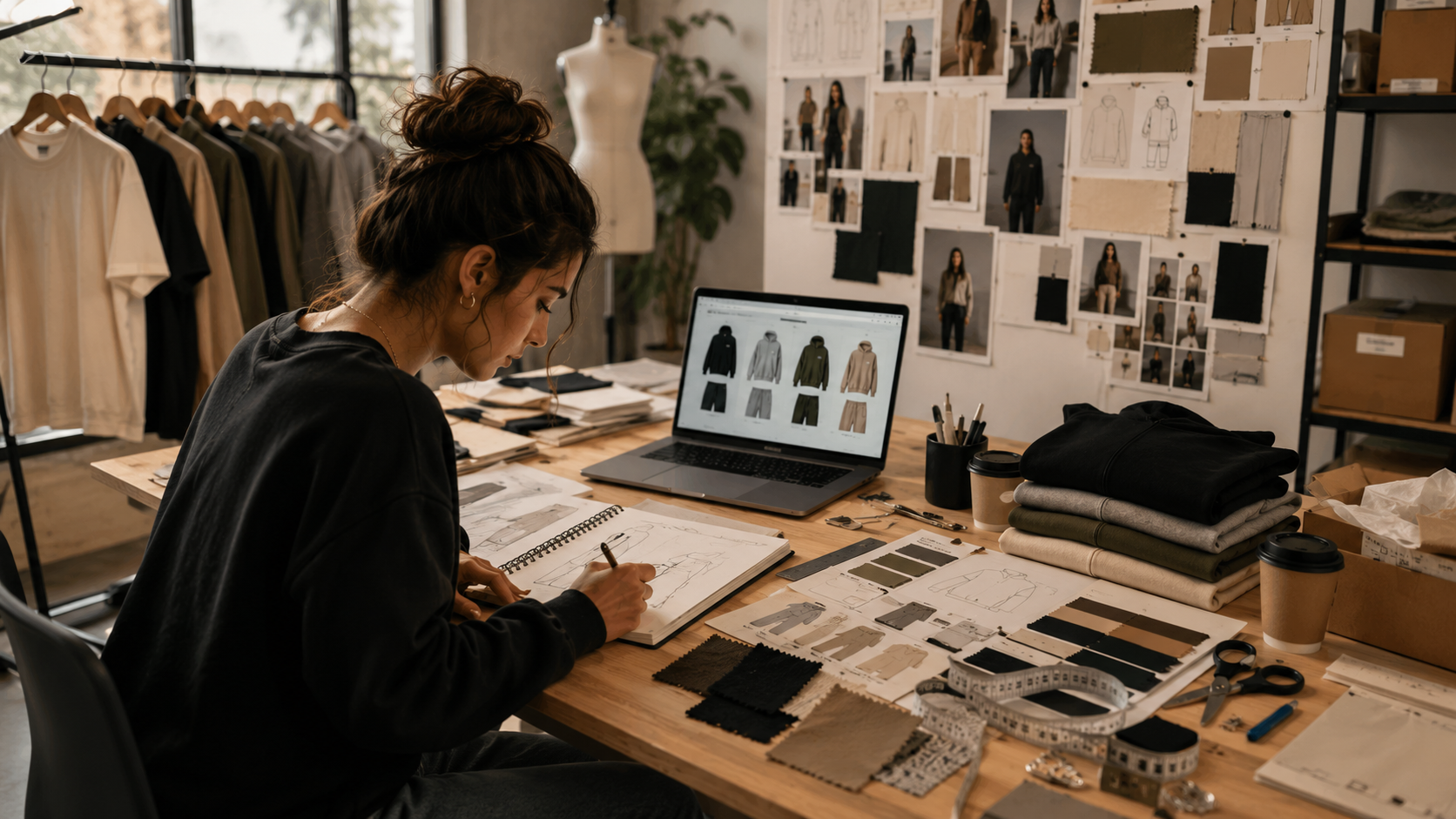
To define your hero product and brand identity, write a 1–2 page brand brief that covers:
- Your category and aesthetic — streetwear, workwear, activewear, sustainable basics, luxury casualwear? Be specific.
- Your brand values — made in USA, ethically sourced, size-inclusive, limited drops? Specificity attracts the right customers.
- Your price positioning — what is your target retail price, and what does that mean for your production cost?
- Your top 3 competitors — what do they do well, and what gap does your brand fill?
This brief becomes your reference document for every conversation you have with a manufacturer. A brand owner who walks into a factory conversation knowing exactly what they’re building gets better quotes, faster samples, and more serious attention than one who says “I want to make clothes.”
Not sure where to start with your brand plan? The Small Business Administration’s business plan guide is a trusted framework that works just as well for clothing brands as it does for any other startup.
Step 2: Know Your Target Customer
Your manufacturer needs to know what you’re making. Your customer needs to know why they should buy it.
These two things are more connected than most new brand owners realise. The same customer research that shapes your marketing also shapes your product decisions — the fabrics you choose, the fit standards you require, the MOQ you can realistically sell through in your first season.
Build a clear customer profile covering:
- Age, location, lifestyle, and spending habits
- Where they currently shop and why
- What they’re not finding from brands they already follow
- What they would pay for something that solved that gap
You don’t need a 40-page market research document. You need enough clarity to answer this question from any manufacturer or investor: “Who buys this, and why do they choose your brand over what’s already available?”
If you can’t answer that question clearly, work on it before moving to Step 3. Everything from your product design to your launch strategy depends on it.
Step 3: Build Your Product Concept and Tech Pack
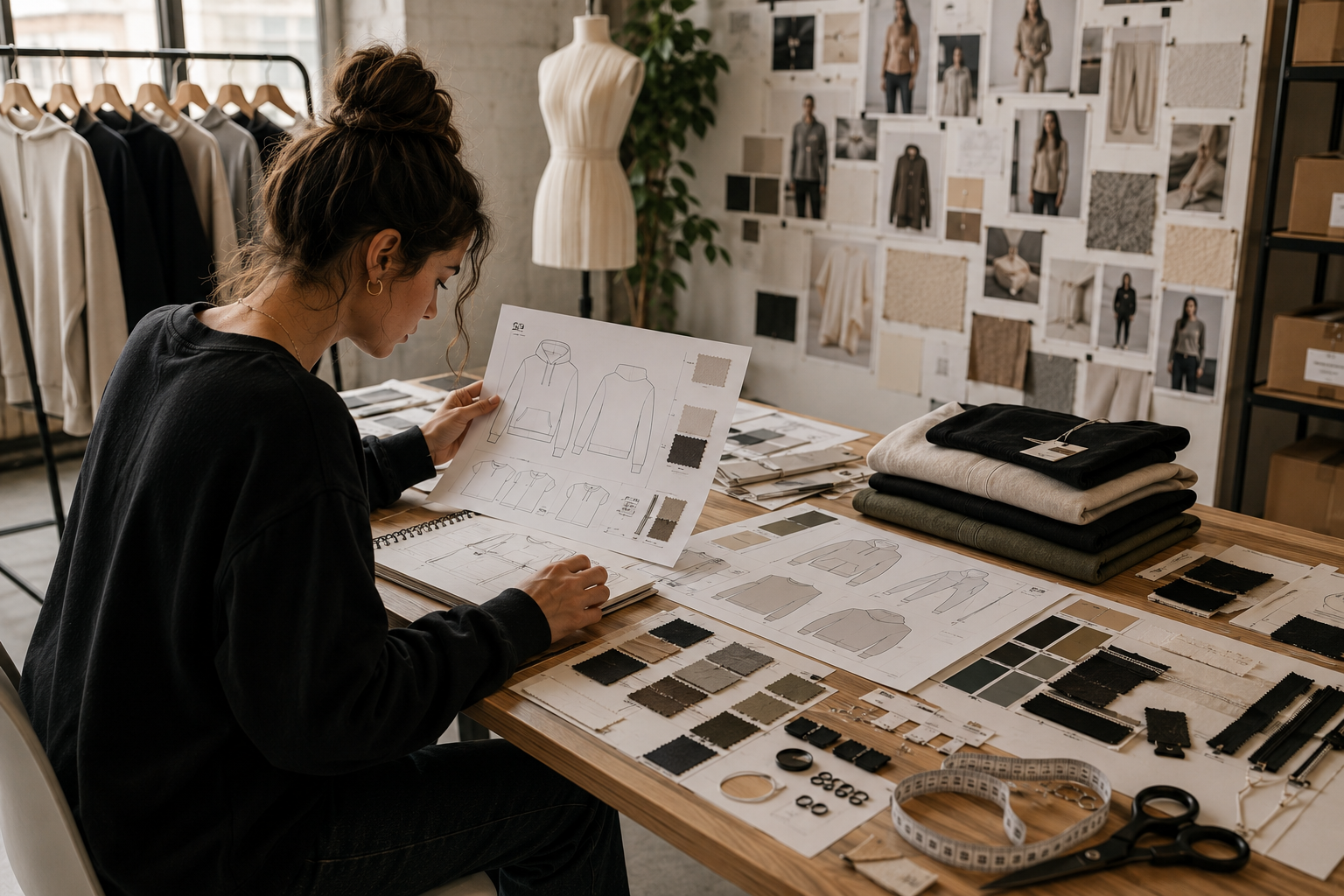
A tech pack is the document manufacturers use to produce your garment accurately. It is not optional — without one, you’re asking factories to guess, and guesses cost you time and money.
A complete tech pack for a clothing brand includes:
- Flat sketches of the garment (front, back, detail views)
- Measurements and size specifications
- Fabric specifications — weight, composition, finish
- Trim details — buttons, zippers, labels, tags
- Colorways and Pantone references
- Stitching requirements and seam allowances
You don’t need to be a technical designer to create a basic tech pack. Many brand owners work with a freelance fashion designer or technical designer for their first production run. Platforms like Upwork have experienced tech pack designers who work specifically with startup clothing brands.
Before your tech pack is finished, clarify:
- The fabrics and materials your product requires
- Your target production cost per unit
- Whether you want cut and sew manufacturing, private label, or full custom production
Not sure what goes into a tech pack or how detailed it needs to be? Read the full breakdown before approaching any manufacturer.
Also Read: What Is a Tech Pack? Complete Guide for Clothing Brand Owners →
And if you’re still getting your head around minimum orders, this will save you a lot of back-and-forth with factories:
Also Read: What Is MOQ? A Brand Owner’s Guide to Minimum Order Quantities →
Step 4: How to Start a Clothing Brand — Finding Your Manufacturer
This is where most brand owners get stuck — and it determines whether your brand actually launches.
The traditional approach is cold emails to factories from Google searches, attendance at trade shows, or hoping a contact in the industry knows someone. This process routinely takes three to six months, with a majority of outreach never getting a reply.
The problem isn’t that manufacturers don’t want to work with new brands. Many of them actively do — they value long-term relationships with growing brands. The problem is that cold outreach doesn’t reach the right factories efficiently. You’re searching blind, and so are they.
What to look for in a clothing manufacturer:
- MOQ (Minimum Order Quantity) — know the minimum number of units you can afford to produce and the maximum you can realistically sell or store. US clothing manufacturers range from MOQs of 25 units to 500+ — knowing your number narrows your options immediately.
- Speciality — a factory that excels at knitwear may not be the right partner for woven technical outerwear. Match the factory’s strength to your product category.
- Sample policy — a good manufacturer will produce samples before full production. Confirm sample costs and turnaround time before committing.
- Lead times — ask about sample lead time and production lead time separately. These are different, and conflating them leads to launch delays.
- Communication responsiveness — how a factory communicates during the inquiry stage reflects how they’ll communicate during production. Slow replies are a signal.
The Faster Way: Maker’s Row
The fastest way to find a verified US clothing manufacturer is Maker’s Row.
Instead of cold-emailing factories from a Google search, you post your project brief once — for free. Manufacturers who specialise in your category and can meet your MOQ bid on your project directly. You review their profiles, past production work, location, and response speed. Then you choose the right one.
On Maker’s Row, brand owners post unlimited manufacturing projects for free and receive bids from verified US factories at no upfront cost. When you’re ready to respond to factories and connect directly, subscription plans give you full platform access.
More than 150,000 brands have found production partners this way — many starting exactly where you are now, with no factory contacts and no manufacturing experience.
Factories on the platform are active and responsive. Many reply within 24–48 hours of a new project being posted. Your clothing requirement could have manufacturer bids in your inbox by tomorrow.
For additional guidance on finding and vetting production partners as a startup, SCORE’s manufacturing resources for small businesses are a useful reference alongside the Maker’s Row platform.
Step 5: Order Samples and Refine
Never go straight from manufacturer selection to full production. Always sample first.
A sample is your first physical version of the product — and it will almost never be perfect on the first try. That’s not a failure; it’s the process. Most brand owners go through two to three rounds of sampling before a product is production-ready.
What to evaluate in every sample:
- Fit — does the garment fit your size spec? Test on actual bodies, not just a form.
- Fabric quality — does the material feel and perform the way the spec intended?
- Construction — check seams, stitching, finishing, and durability
- Colour accuracy — compare against your Pantone reference
- Label and branding details — verify placement, size, and legibility
Document every change request in writing. Send annotated images back to the manufacturer with specific notes — not vague feedback like “the fit is off.” The more specific your feedback, the faster the revision cycle.
Budget realistically for sampling. Sample costs typically run $50–$300 per unit depending on complexity. Factor two to three rounds of sampling into your pre-launch budget before you receive production-ready approval.
For a realistic picture of US manufacturing timelines and what to expect at each stage, the American Apparel & Footwear Association publishes industry data that gives new brand owners useful benchmarks before committing to a production schedule.
Step 6: Plan Your First Production Run and Budget
Once your sample is approved, you’re ready to plan your first production run. This step is where financial clarity saves brands from their most common early mistake: producing more than they can sell.
Build your first production budget around these numbers:
- Production cost per unit — what the factory charges for the run, including materials, labour, and finishing
- Sampling costs — already spent, but included in total pre-launch cost
- Shipping and logistics — from the factory to your storage or fulfilment location
- Duties and tariffs — relevant for any imported materials even in domestic production
- Packaging and branding — hangtags, polybags, tissue, boxes
- Storage or 3PL costs — where your inventory lives before it sells
Calculating your break-even point:
Take your total investment (production + pre-launch costs) and divide by your target gross margin per unit. That tells you how many units you need to sell to recover your investment. If that number is larger than your first production run, revisit your price point or production cost before committing.
A realistic first production run for a startup clothing brand in the USA is typically 50–200 units per style. This is enough to test the market, gather real customer feedback, and prove the product before scaling.
One real-world scenario: A New York-based brand launching a signature oversized tee produced 150 units in their first run with a Brooklyn manufacturer. At a $48 retail price and $14 cost per unit, they recovered their full investment at 60 units sold — and sold out in six weeks. They placed a second order for 300 units the following month.
Step 7: Launch and Market Your Brand
Your product is produced. Your brand identity is defined. Now you need customers.
The brands that launch successfully in 2026 do not rely on paid advertising alone. They build audience before inventory. The goal is to have a community waiting for your product — not to spend money finding customers after the fact.
The pre-launch checklist for a clothing brand:
- Brand identity locked — logo, brand colours, photography style, brand voice
- Website live — Shopify is the standard for independent clothing brands; set up a simple, fast-loading store
- Social presence established — Instagram and TikTok are non-negotiable for apparel; start posting content six to eight weeks before launch
- Email list started — a pre-launch landing page with an email capture converts 5–15% of visitors; these are your highest-intent launch customers
- Content strategy in place — product photography, behind-the-scenes content, brand story — document it now while it’s fresh and authentic
- Fulfilment plan confirmed — self-fulfilment, 3PL, or dropship from factory? Know this before orders arrive
At launch:
Send your email list first. Give them 24–48 hours of early access before public launch. This creates genuine scarcity and rewards the people who opted in — and generates social proof and reviews before the product is widely visible.
After launch, the work becomes iteration. Watch your sell-through rate, gather customer feedback, and refine your next production run based on what you learn.
If you’re still comparing manufacturing options before you launch, this guide covers vetted domestic factories across every clothing category and production stage
Find Your Clothing Manufacturer on Maker’s Row
Finding the right clothing manufacturer doesn’t have to mean months of cold emails and ignored factory inquiries.
On Maker’s Row, you post your clothing project for free and verified US manufacturers bid on it directly. You review the bids, compare factory profiles, and choose the ones that match your MOQ, timeline, and budget — all before spending anything.
When you’re ready to respond to factories and connect directly, subscription plans give you full platform access.
More than 150,000 brands have found production partners on Maker’s Row. Factories are active and responsive — many reply within 24–48 hours of a new project being posted. Post your project for free. Receive manufacturer bids at no cost. When you’re ready to connect, your production partner is one message away.
FAQs: Starting a Clothing Brand in the USA
You can start a clothing brand in the USA with $5,000–$15,000 for a focused first production run of 50–150 units. That budget covers sampling ($500–$1,500), production ($3,000–$10,000 depending on MOQ and category), branding ($500–$2,000 for photography and basic design), and a Shopify store ($39/month). Larger ambitions — multiple styles, larger runs, paid advertising — require $20,000–$50,000 or more. The key is to start with one great product and a budget you can recover from a realistic first sell-through.
Yes — manufacturing knowledge comes from doing, not from prior industry experience. Many of the fastest-growing independent clothing brands were started by founders with no fashion background. Order your first sample, ask specific questions, and learn through each production round. Platforms like Maker’s Row are designed for brand owners at exactly this stage — you don’t need connections or experience to post a project and receive manufacturer bids.
The fastest method is to post a project on Maker’s Row — free to post, and verified US manufacturers respond with bids directly. Alternatively, you can attend trade shows like Magic Las Vegas, search manufacturer directories, or request referrals from other brand owners. Cold outreach directly to factories is slow and has a low response rate — posting a structured project brief through a platform is significantly more efficient and gets responses from factories who are actively looking for new brand partnerships.
MOQ stands for Minimum Order Quantity — it’s the fewest units a manufacturer will produce in a single run. US clothing manufacturers typically have MOQs ranging from 25 units (small-batch specialists) to 500+ units (larger factories). Your MOQ determines your upfront production cost and your inventory risk. Always confirm MOQ before requesting a quote — and build your budget around factories whose MOQ you can realistically sell through. For a deeper explanation, read the Maker’s Row guide on what is MOQ in clothing manufacturing.
Realistically, four to six months from concept to a production-ready garment in hand. Broken down: brand development and tech pack creation (four to eight weeks), manufacturer selection (one to three weeks on Maker’s Row, or one to three months via cold outreach), sampling and revisions (four to eight weeks), and production (four to eight weeks depending on factory lead time). Working with US manufacturers reduces shipping lead time significantly compared to overseas production — which can add four to six weeks to your timeline.
Yes — without a tech pack, you’re asking factories to guess, and quotes based on guesswork lead to production errors and disputes. A tech pack is the document manufacturers use to produce your garment accurately. It includes flat sketches, measurements, fabric specifications, trim details, and colorway references. If you don’t have one yet, work with a freelance fashion technical designer before reaching out to manufacturers — many produce tech packs specifically for startup clothing brands in one to two weeks.
You can protect your brand name and logo by filing a trademark through the US Patent and Trademark Office. Individual garment designs have limited copyright protection in fashion — what protects most independent brands in practice is speed to market and a strong relationship with their customer. Before sharing detailed tech packs with any manufacturer, request a Non-Disclosure Agreement (NDA). Reputable manufacturers will sign one without issue.
Many US clothing manufacturers work with MOQs as low as 25–50 units for the right product category. Small-batch cut and sew manufacturers specifically serve startup brands and independent designers. If your product has standard construction (basic tees, hoodies, sweatshirts), you’re more likely to find low-MOQ options than if your product has complex construction or specialist fabrics. On Maker’s Row, you can specify your target MOQ in your project brief — manufacturers who bid are confirming they can meet it.
Your Clothing Brand Is Closer Than You Think
The steps are clear. The manufacturers exist. The platform to find them is free to post on.
What’s standing between your idea and your first production run is one project post on Maker’s Row. Verified US clothing manufacturers are active on the platform right now — bidding on projects from brand owners at exactly your stage.
Post your project. Receive manufacturer bids. Your clothing brand starts here.
Post your clothing manufacturing project for free on Maker’s Row. Receive bids from verified US manufacturers. When you’re ready to connect, subscription plans give you full platform access.