Sustainable sourcing sounds simple until you are staring at three different TENCEL suppliers quoting three different price points and three different MOQs. Most brand owners know TENCEL fabrics are eco-friendly, but few know how to actually vet a supplier or match the fiber to the right product. These 7 tips are used by brand owners who have already worked through the sourcing confusion with US manufacturers.
TENCEL fabrics have moved from niche eco-label to mainstream sourcing request in the last few years, and that shift creates a real problem: demand is outpacing brand owner knowledge. Sourcing the wrong TENCEL construction for your product means paying a premium for a fabric that does not perform the way you expected.
This guide applies to any brand owner considering TENCEL fabrics for a new collection, whether you are launching your first loungewear line or adding a sustainable capsule to an existing brand. It applies equally to first-time sourcers and brands that have manufactured before but are new to regenerated cellulosic fibers.
After reading, you will know how to evaluate TENCEL suppliers, avoid greenwashed claims, and brief a US manufacturer with the right specifications the first time.
What Makes TENCEL Fabrics Different From Standard Rayon?
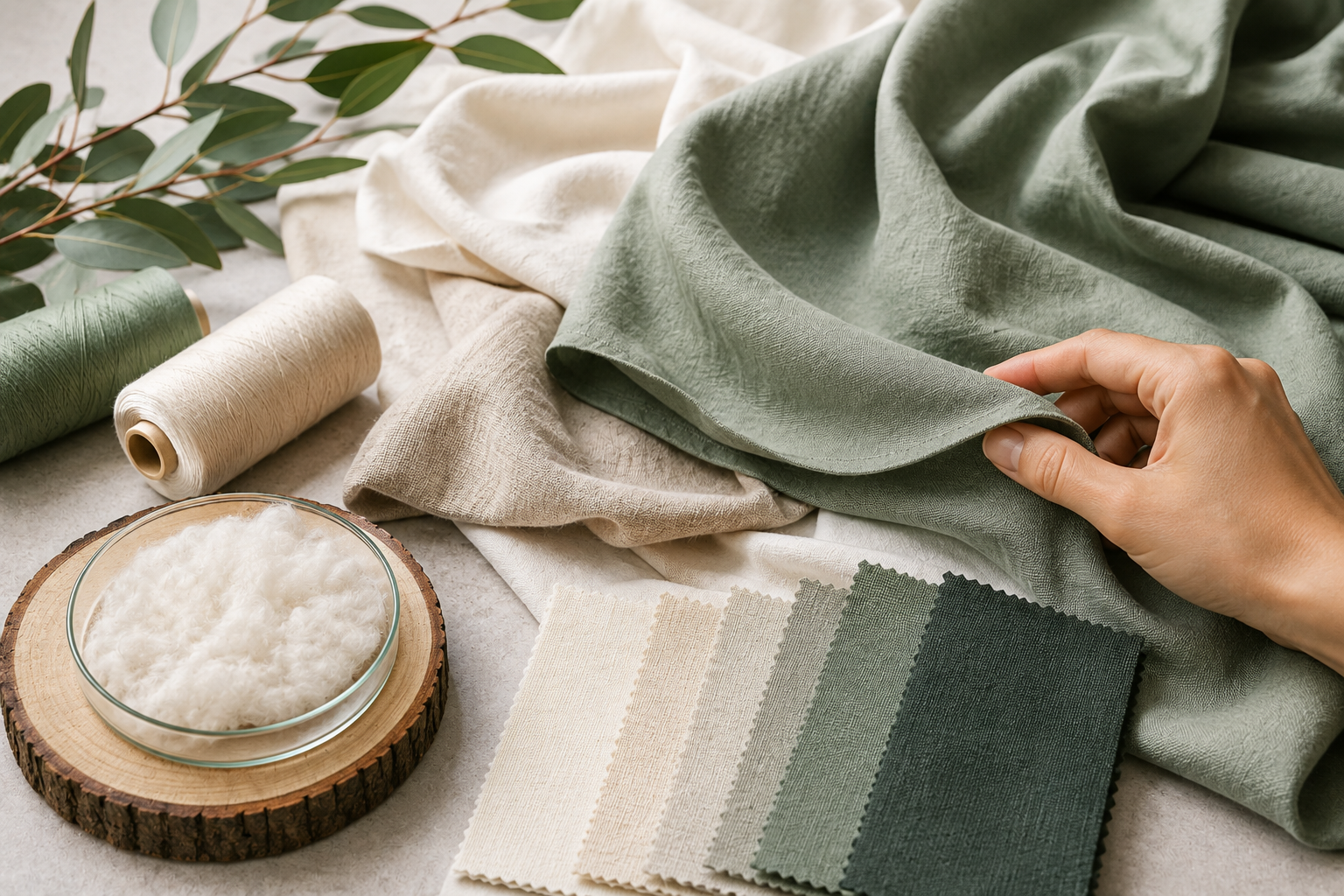
TENCEL fabrics are a branded form of lyocell, produced by the Austrian company Lenzing from wood pulp in a closed-loop manufacturing process that recovers the vast majority of the water and solvent used. Standard rayon and viscose use an open-loop process that releases far more chemical byproduct into the surrounding environment. That difference is the whole reason TENCEL commands a price premium over generic rayon.
Understanding this distinction changes how you brief a manufacturer. Ask specifically for TENCEL™ branded fiber, not “lyocell” or “eco-rayon,” since those terms can describe fabrics made outside the certified closed-loop system. According to Textile Exchange, TENCEL is tracked separately from generic lyocell under its responsible fibers framework precisely because the production method and sourcing chain are verifiable and audited, unlike many unbranded alternatives.
A Los Angeles-based loungewear startup learned this the hard way in 2025, sourcing an unbranded “eco-lyocell” fabric that turned out to be a rayon blend with none of the certified closed-loop sourcing their marketing implied. Confirming the TENCEL brand name on the fabric mill’s paperwork before sampling would have caught the issue immediately. If you are sourcing fabric alongside a garment fabric manufacturer, ask them to confirm this in writing before you commit to a sample run.
Verify TENCEL Certification Before You Commit
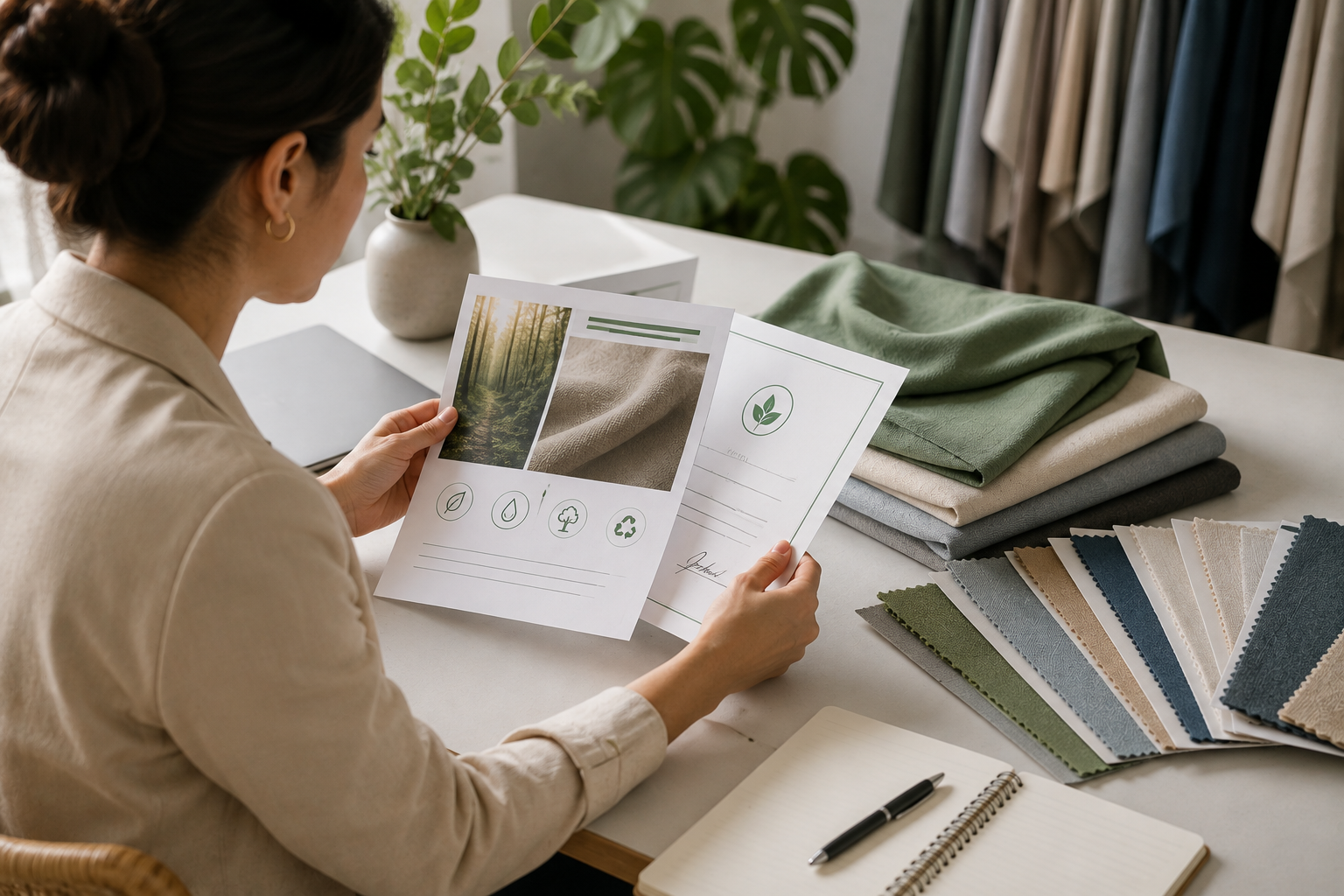
The fastest way to confirm a fabric is genuine TENCEL is to request the official TENCEL hang tag license number from your fabric supplier, not just the word “TENCEL” on a spec sheet. Certification is what protects you from greenwashing claims when your product reaches retail buyers or conscious consumers.
TENCEL fibers used in apparel are certified biodegradable in soil, freshwater, and marine environments by the independent testing body TÜV AUSTRIA. That certification only applies to genuine TENCEL fiber, not every fabric marketed as “sustainable lyocell.” Before placing a sample order, ask your fabric supplier for the license documentation directly from Lenzing.
If your brand story leans on sustainability messaging, this step is not optional. A brand that cannot produce certification documentation on request risks a Federal Trade Commission Green Guides compliance issue if a customer or regulator challenges an environmental claim on a hang tag or website.
Choose Between TENCEL Lyocell and TENCEL Modal for Your Garment
TENCEL Lyocell and TENCEL Modal are both wood-pulp fibers from Lenzing, but they behave differently in a finished garment, and choosing the wrong one is the single most common TENCEL sourcing mistake new brands make. Lyocell has more structure and drape, while Modal is softer and stretchier.
TENCEL Lyocell works best in wovens: dresses, blouses, structured tops, and lightweight pants where drape and a cooling hand-feel matter. TENCEL Modal works best in knits: underwear, T-shirts, and loungewear where softness and stretch recovery matter more than structure. Briefing a manufacturer with the wrong type produces a sample that looks and feels wrong for your product category.
Fiber Type | Best For | Feel | Typical Construction |
TENCEL Lyocell | Dresses, blouses, wovens, resort wear | Cool, structured drape | Woven |
TENCEL Modal | T-shirts, underwear, loungewear | Ultra-soft, stretchy | Knit |
How Much Do TENCEL Fabrics Cost From US Manufacturers?
TENCEL fabrics typically run higher than standard cotton or polyester, with US suppliers pricing TENCEL jersey and woven constructions at a noticeable premium over comparable non-certified alternatives, and MOQs at US cut-and-sew factories commonly starting between 50 and 100 units per style for TENCEL styles. Budgeting accurately for this premium upfront prevents a mid-production pricing surprise.
The premium exists because TENCEL fiber costs more to produce than conventional viscose, and US mills that stock it in smaller runs pass that cost through. If your margin model was built around standard cotton pricing, rework it before you commit to a TENCEL-based collection. Some cut-and-sew manufacturers require higher minimums specifically for TENCEL blends due to smaller batch dyeing runs.
Ask every supplier for a landed cost per yard and a confirmed MOQ before you approve a sample. Two suppliers quoting “TENCEL” can differ meaningfully once dye lot minimums and finishing costs are factored in.
Match TENCEL Weight and Construction to Your Product
Fabric weight, measured in grams per square meter (GSM), determines whether a TENCEL fabric will work for your specific garment, and requesting the wrong weight is a common cause of failed samples. A lightweight TENCEL twill in the 120 to 150 GSM range suits summer blouses, while a heavier 200 to 250 GSM TENCEL jersey suits structured T-shirts and loungewear.
Specify GSM explicitly in your tech pack rather than describing the fabric as “medium weight,” a term that means something different to every mill. Request a physical swatch card showing multiple weight options from the same TENCEL supplier before locking your fabric selection, since digital swatch photos do not communicate drape or hand-feel accurately.
Consider TENCEL Blends for Cost and Performance Balance
Blending TENCEL with cotton, spandex, or recycled polyester can lower your per-yard cost while retaining much of TENCEL’s softness and moisture-wicking benefit, making blends a practical entry point for brands not ready to commit to 100% TENCEL fabrics. A common starting blend is 60% TENCEL to 40% cotton for T-shirts and basics.
Blends also solve a performance gap: 100% TENCEL lacks the stretch recovery needed for fitted activewear, so a TENCEL-spandex blend at roughly 92% TENCEL to 8% spandex delivers stretch without losing the fiber’s signature softness. Discuss blend ratios directly with your fabric supplier, since ratio changes affect both cost and care instructions on your finished garment label.
Confirm Sustainability Certifications for Your Brand Story
If your marketing will lean on TENCEL’s environmental credentials, confirm which third-party certifications your specific fabric batch carries, since certification can vary by mill even when the underlying fiber is genuine TENCEL. Look for GOTS (Global Organic Textile Standard) on any TENCEL-cotton blend, and OEKO-TEX Standard 100 for chemical safety compliance on the finished fabric.
The Sustainable Apparel Coalition’s Higg Index is the standard tool many US manufacturers and mills now use to measure and report the environmental footprint of a fabric batch, including TENCEL constructions. Ask your supplier whether they participate in Higg Index reporting if a documented environmental impact score matters to your retail buyers or wholesale accounts.
Do not assume every fabric on a mill’s “sustainable” list carries a specific certification. Request the certificate number and issuing body for any claim you plan to put on a swing tag.
How Maker’s Row Helps You Find TENCEL Fabric Manufacturers
Several of the tips above come down to one thing: finding a US fabric supplier and cut-and-sew manufacturer who actually works with certified TENCEL fabrics and can document it. That is exactly what Maker’s Row is built for. Maker’s Row is a marketplace connecting apparel brand owners with verified US manufacturers, and it removes the guesswork of cold-emailing mills that may not even stock TENCEL fabrics.
On Maker’s Row, brand owners post unlimited manufacturing projects for free and receive bids from verified US factories at no upfront cost. To connect directly, subscription plans give full access. Describe your TENCEL specification, target weight, and blend ratio in your project brief, and manufacturers who actually work with that fiber respond directly.
Also Read: 15 Types of Clothing Fabric Every Brand Owner Should Know →
FAQs About TENCEL Fabrics
Yes, TENCEL fabrics generally cost more per yard than standard cotton due to the higher production cost of the closed-loop lyocell process. Budget for a noticeable premium over conventional cotton jersey or woven fabric when planning your cost sheet. The exact gap varies by mill, weight, and whether the fabric is a blend or 100% TENCEL.
TENCEL is the branded, certified version of lyocell produced exclusively by Lenzing under audited closed-loop manufacturing standards. Generic lyocell may use similar production methods but lacks the same certification, traceability, and hang tag licensing. Brands that want a verifiable sustainability claim should specify TENCEL by name, not just lyocell.
Yes, but only when blended with an elastic fiber like spandex, since 100% TENCEL lacks stretch recovery on its own. TENCEL-spandex blends around 92% to 8% deliver softness and moisture management suited to loungewear and light activewear, though they do not match the compression performance of dedicated technical fabrics.
MOQs for TENCEL fabrics at US cut-and-sew factories commonly start between 50 and 100 units per style, though some mills require higher minimums for custom-dyed TENCEL batches. Confirm the MOQ directly with your fabric supplier and manufacturer separately, since fabric minimums and garment production minimums are not always the same number.
Yes, genuine TENCEL fiber is certified biodegradable in soil, freshwater, and marine environments by TÜV AUSTRIA, an independent testing body. This certification applies specifically to licensed TENCEL fiber rather than to every fabric marketed loosely as “eco-lyocell,” which is why verifying the license number matters before making a biodegradability claim to customers.
Start Applying These Strategies Today
Your TENCEL fabric collection is one manufacturer away from becoming real. The factories are on Maker’s Row, ready to bid.