Starting a custom print clothing business is one of the most accessible ways to break into apparel, since you are decorating garments rather than engineering them from scratch. It is also one of the most crowded corners of the industry, and most guides skip straight to “find a printer” without explaining how to pick the right one. This guide walks you through the exact steps, from your first design concept to your first production run, including how to find a US manufacturer even if you have never placed an order before.
Screen printing, embroidery, direct-to-garment (DTG) printing, and sublimation are the four decoration methods that shape your cost, your minimum order quantity, and how fast you can launch. As of 2023, Grand View Research valued the U.S. custom t-shirt printing market at $857.5 million, with screen printing holding more than 56% of that revenue and the market projected to grow at an 11.8% compound annual rate through 2030.
That growth means more competition, not less risk. New brand owners typically get stuck on three things: choosing a manufacturing partner instead of a home printer, budgeting accurately for a first run, and knowing what to send a factory so the first sample comes back right. This guide solves all three, in order, so you can move from idea to shipped product without the trial-and-error most first-time founders go through.
Step 1: Define Your Brand Identity and Hero Print Concept
Your hero print concept is the single design you will launch with, chosen because it is strong enough to sell on its own before you build a full catalog. Pick one garment type and one print method for your first design rather than trying to launch six styles across three decoration techniques at once.
Write a one-page brand brief covering your target customer, your price point, and your top three competitor brands. SCORE mentors, who work with new small business owners at no cost, consistently point to a narrow, well-defined first offer as the factor that most separates a brand that launches from one that stalls in planning. Name the specific print technique you are starting with, whether that is a single-color screen print, a multi-color embroidered logo, or a full-panel sublimation design, since this decision determines which manufacturers can even quote your project. A brand that starts with one strong graphic tee and one clean embroidered hat, for example, has a far easier path to a clean first production run than a brand that tries to launch ten SKUs across four techniques simultaneously. For a narrower look focused specifically on t-shirt printing, 10 Step Guide for Setting Up a Custom Tshirt Business breaks down the business-formation side in more detail.
Step 2: Know Your Target Customer
Your target customer determines your price point, your print complexity, and which manufacturer fits your volume. Write down who buys this, why they choose your brand over an existing option, and what they are willing to pay per piece before you approach any factory.
Look at how comparable decorated apparel brands price a similar garment and note where your production cost needs to land to hit a healthy margin. A brand targeting local sports teams and gyms has a different customer profile, order cadence, and price sensitivity than a brand targeting streetwear collectors, and that distinction changes which print technique and which manufacturer make sense for you. Spend real time here. The clearer this answer is, the faster a manufacturer can quote your first project accurately.
Step 3: What Belongs in a Print-Ready Tech Pack?
A print-ready tech pack for custom print clothing must specify the blank garment, the exact print or embroidery placement in inches, the color codes, and the file format the manufacturer needs from you. A tech pack is a detailed specification document that tells a manufacturer everything it needs to produce your garment or decoration correctly, and it includes both the garment spec and the artwork spec, since two separate processes are involved.
Include the blank garment style number and fabric content, placement measurements from the collar and side seam, and Pantone color codes for every ink or thread color in the design. For screen printing, provide vector artwork in AI or EPS format with colors separated. For embroidery, provide a high-resolution image so the manufacturer’s digitizer can build the stitch file. Digitizing is the process of converting artwork into a stitch file an embroidery machine can read, and shops that digitize in-house typically turn proofs around in 24 to 48 hours instead of outsourcing the step. Getting this file format right the first time is the difference between a one-round sample approval and three rounds of costly revisions.
Also Read: Tech Pack Clothing: What It Is and How to Create One →
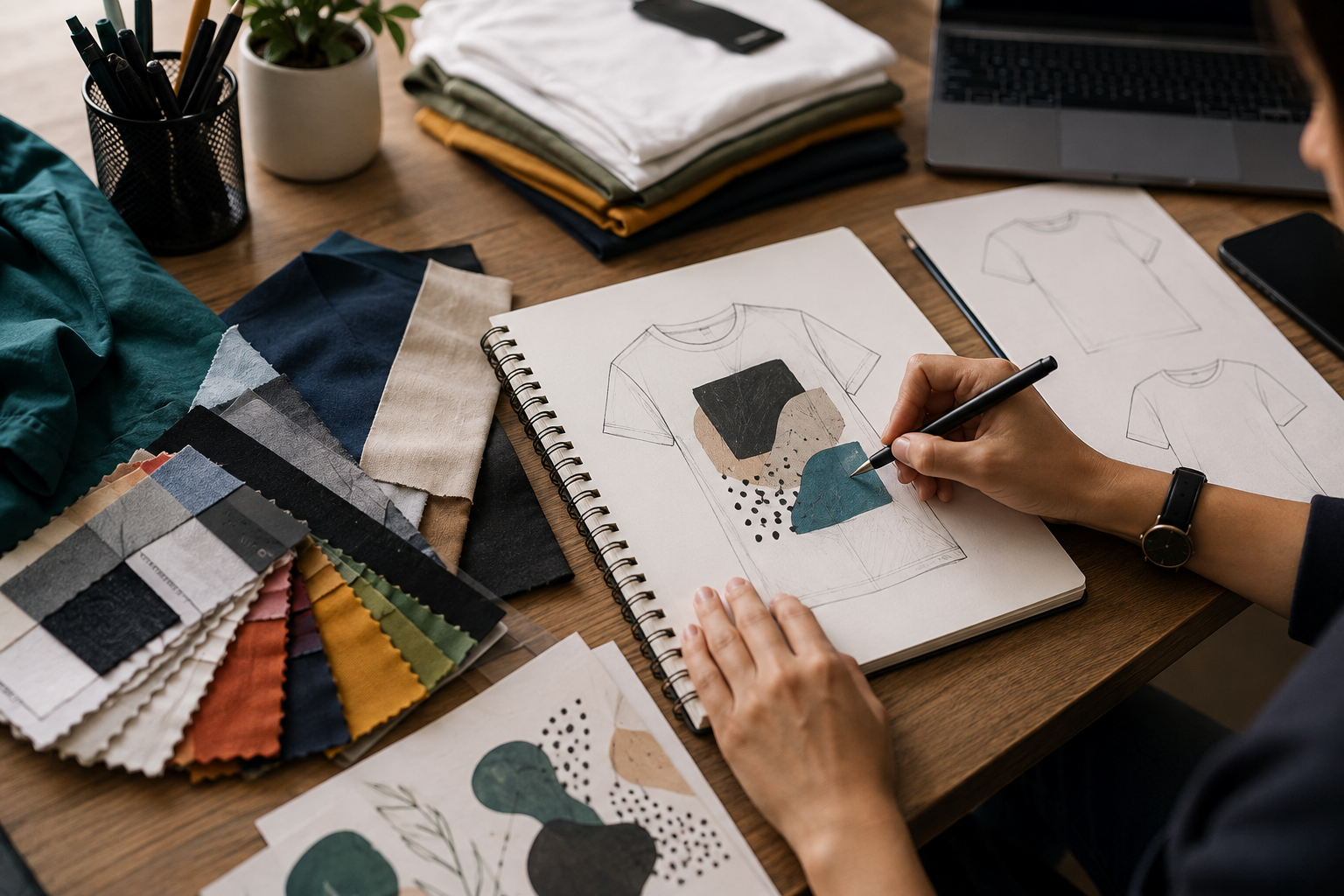
Step 4: How Do You Find a Custom Print Manufacturer?
You find a custom print manufacturer by matching your decoration method to a factory’s actual equipment and minimums, not by emailing the first printer that shows up in a search. This is where most brand owners get stuck, and it determines whether your brand actually launches.
The old way is cold emails, local trade shows, and word-of-mouth industry contacts. It works, but it is slow. Most first-time founders sending cold outreach report weeks of silence before getting a single quote back, because generalist print shops are flooded with one-off requests and rarely prioritize a new, unproven account.
MOQ (minimum order quantity) is the smallest number of units a manufacturer will produce per style or per design. According to the American Apparel and Footwear Association, domestic apparel manufacturers typically set MOQs between 50 and 500 units per style, though several contract decoration shops accept far smaller runs. Full-service factories such as Zega Apparel in Houston and Full Speed 100 in downtown Los Angeles combine cut-and-sew production with screen printing and embroidery under one roof, which removes the need to coordinate a separate decorator once your garments are made. Dedicated decoration shops such as those covered in custom embroidery manufacturers in the USA often accept no-minimum orders on the decoration step alone, which makes them a lower-risk starting point while you test a single design.
When comparing manufacturers, evaluate them against the same criteria every time:
Criteria | What to Confirm |
MOQ | Per style, per color, or per total order |
Location | US-based for faster sampling and easier visits |
Sample policy | Cost per sample and whether it is credited toward production |
Communication speed | Time to first reply on a new inquiry |
Decoration methods offered | Screen printing, embroidery, DTG, sublimation, or a mix |
For a broader walkthrough of vetting any US apparel factory, how to find a clothing manufacturer in the USA covers the same due-diligence steps that apply to decoration-focused shops.
Finding the right custom print manufacturer does not have to mean months of cold emails. Maker’s Row is a marketplace connecting apparel brand owners with verified US manufacturers, and on Maker’s Row, brand owners post unlimited manufacturing projects for free and receive bids from verified US factories at no upfront cost. To connect directly, subscription plans give full access. Describe your garment type, decoration method, and target MOQ in your project brief, and manufacturers who work with those specific requirements respond directly, often within 24 to 48 hours of your project going live.
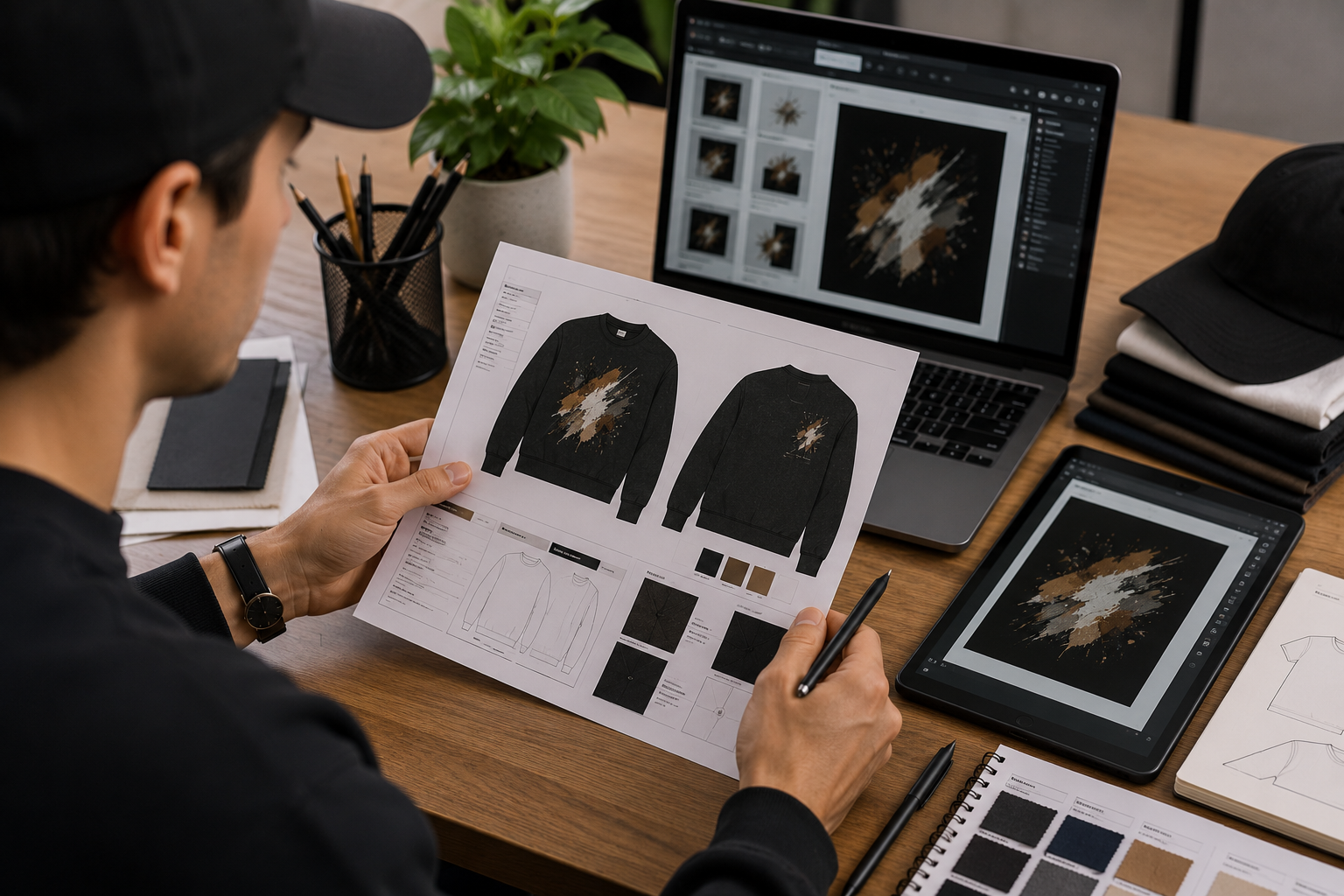
Step 5: Order Samples and Refine
Order a physical sample from every manufacturer you shortlist before committing to a full production run, since a proof on screen never fully predicts how ink or thread behaves on fabric. A sample costs $25 to $150 depending on the decoration method and garment, and most manufacturers credit that cost toward your first production order if you move forward.
A Denver-based streetwear founder tested three manufacturers with the same embroidered logo design and found a visible thread-density difference between the cheapest and mid-priced options, at nearly identical quoted costs. That single sample round saved the founder from a 300-unit production run with a decoration quality her customers would have noticed immediately. Check placement accuracy, color matching against your Pantone codes, and how the print or stitching holds up after one wash cycle before approving anything for bulk production.
Step 6: Plan Your Production Run and Budget
Your production budget for a first decorated apparel run should cover blanks, decoration, sampling, and a buffer for reprints, not just the per-unit quote a factory gives you. Multiply your confirmed MOQ by your per-unit cost, then add 10 to 15% for sampling, labeling, and the inevitable small revision.
A typical first run for a screen-printed or embroidered style lands between $6 and $18 per unit depending on garment blank quality and decoration complexity, before packaging. According to the Small Business Administration, building a realistic first-order budget before approaching any manufacturer is one of the most common gaps that causes new product businesses to underprice their first launch. Confirm payment terms in writing, typically a deposit before production and the balance on completion, and get a written delivery date so you can plan your launch timeline around actual production lead time rather than a hopeful guess.
Step 7: Launch and Market Your Brand
Launch with your hero print design and a simple, fast-loading online store rather than waiting until every planned style is ready. A pre-launch email list with even a small early group of subscribers converts at meaningfully higher rates than cold traffic, since those are your highest-intent early customers.
Document your production process as content while it is fresh: photos of the decoration in progress, the sample approval, and the final product on a real person. This behind-the-scenes content builds trust for a new brand faster than polished product shots alone. Once your first run sells through, use that data, not a guess, to decide your second design and your next production quantity.
FAQs: Starting a Custom Print Clothing Business
Most first-time founders need $1,500 to $6,000 to cover blanks, decoration, sampling, and a basic online store, depending on garment type and decoration method. Screen printing and heat transfer generally cost less to start than embroidery or sublimation, since embroidery machine setup and digitizing add a fixed cost per design.
Yes, this segment is one of the more accessible entry points into apparel because you are not developing patterns or sewing garments from scratch. Start with a full-service manufacturer that handles both the blank garment and the decoration, since that removes the need to coordinate two separate vendors while you learn the process.
Post a project brief on Maker’s Row specifying your garment type, decoration method, and target MOQ, and verified US manufacturers respond directly to briefs that match their equipment and minimums. This is faster than cold-emailing print shops individually from a search engine list.
MOQ, or minimum order quantity, is the smallest number of units a manufacturer will produce per style or design, and it directly sets your minimum production spend. Contract decoration shops sometimes accept single-piece orders, while full-service factories bundling decoration with garment production typically set MOQs between 50 and 500 units.
Plan for 8 to 14 weeks from a finalized design to a shipped first order, covering tech pack preparation, sampling, and production. Screen printing and heat transfer generally move faster through this timeline than embroidery, since digitizing and multi-color stitch testing add extra days.
Yes, even a simple one-page tech pack with placement measurements, color codes, and file format speeds up your first quote significantly. A manufacturer without a clear tech pack has to guess at your specifications, which is the most common cause of a first sample coming back wrong.
Original artwork is automatically protected by copyright the moment you create it, but registering with the U.S. Patent and Trademark Office gives you stronger legal standing for your brand name and logo. Consider a nondisclosure agreement with any manufacturer before sharing unreleased designs, particularly if your concept is highly distinctive.
Some contract embroidery and screen printing shops accept orders as small as a single unit for testing, though most factories combining decoration with full garment production set minimums in the 50 to 100 unit range. Starting with the smallest MOQ you can find lets you validate demand before committing to a larger, riskier run.
Your Custom Print Clothing Brand Is Closer Than You Think
Your custom print clothing brand is one manufacturer away from becoming real. The factories are on Maker’s Row, ready to bid.