Pique fabric is a woven or knitted cotton textile identified by raised parallel cords or a small geometric waffle texture, created by a double-cloth construction that uses two or more yarn sets. Most pique used in apparel today is knit rather than woven, and it shows up most often in polo shirts, though it also appears in dresses, tuxedo shirting, and structured casualwear. For a brand owner comparing fabric options, pique’s main advantage is durability paired with breathability, since the raised structure limits skin contact and improves airflow.
Pique gets its name from the French word for “quilted,” a nod to the raised texture that separates it from flat-woven or flat-knit cotton. Brand owners run into the term most often when comparing polo shirt suppliers or reviewing a tech pack that specifies “cotton pique” instead of “jersey knit.”
This guide breaks down what pique fabric actually is, how manufacturers produce it, and what a brand owner needs to confirm before placing a fabric order.
What Is Pique Fabric?
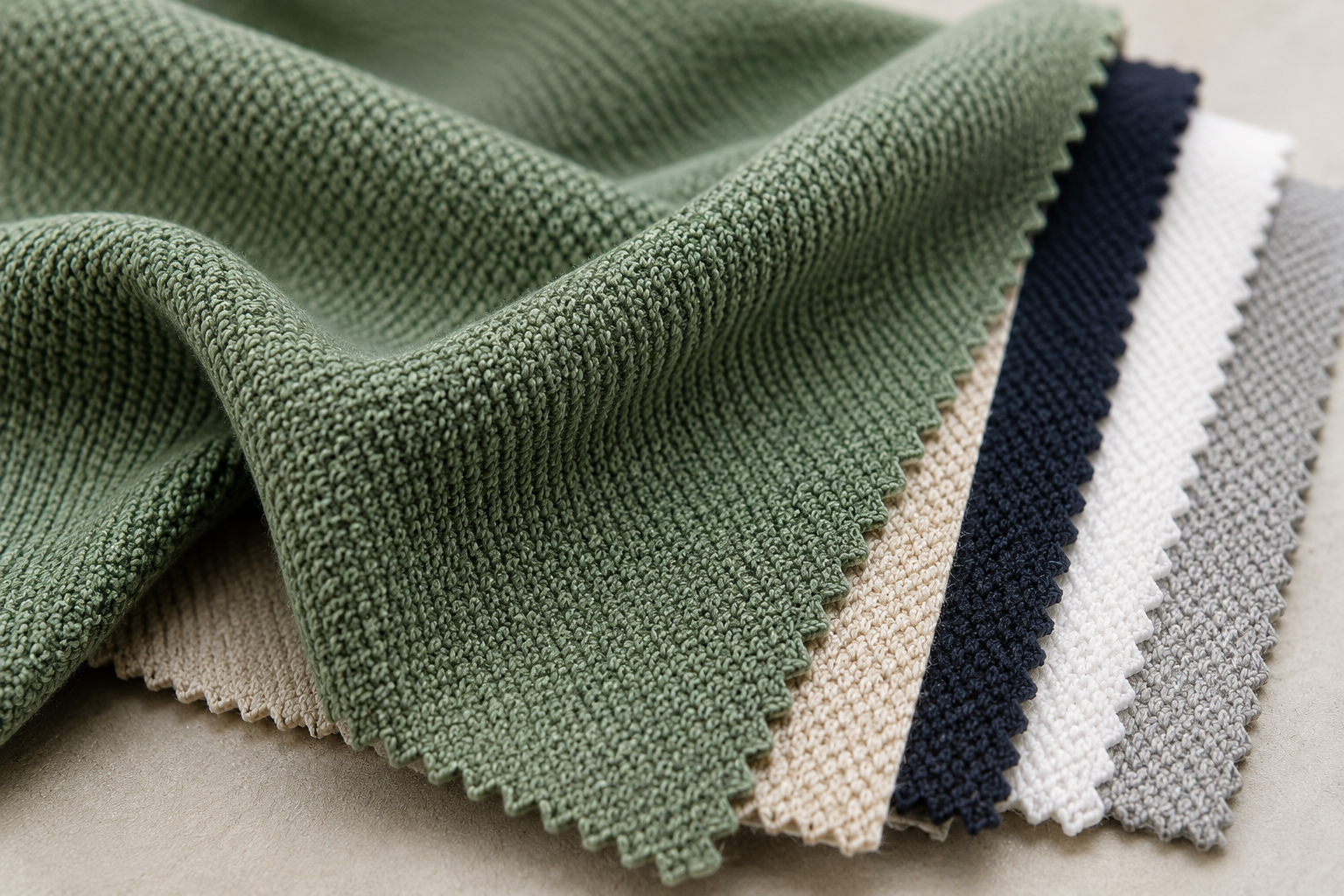
Pique fabric is defined by its raised, textured surface, which is produced using a double-cloth construction method rather than a flat single-layer weave or knit. The two most common yarn sets in cotton pique interlock to form small geometric patterns, most often a honeycomb or waffle grid, sometimes described as birdseye pique when the pattern is finer. For clothing brands, this means pique behaves differently from a flat cotton fabric of the same weight: it holds its shape better under repeated washing and stretches less out of position.
Property | Typical Range |
Fiber content | 100% cotton, or cotton-polyester blend (usually 50/50 to 65/35) |
Weight | 180–240 GSM for apparel-grade pique |
Construction | Knit (double-knit, most common) or woven (dobby loom) |
Stretch | Low to moderate, depending on knit tension |
Common finish | Mercerized for sheen, or unfinished for a matte face |
How Is Pique Made?
Pique is made by interlocking two separate yarn sets on a knitting machine or dobby loom, with one yarn set forming the visible surface texture and the second reinforcing the underside. In knitted pique, a double-knit machine alternates tuck and knit stitches to raise the surface yarn above the base layer, which is what creates the honeycomb effect. In woven pique, a dobby attachment lifts specific warp yarns to form the same raised cord pattern using an enclosed weft.
Cut-and-sew manufacturing (garment production built from your own patterns and fabric, rather than a pre-made template) is the typical production path for pique-based apparel, since most pique garments, like polos, require precise panel cutting around the fabric’s grain to keep the texture aligned. Brands sourcing pique should confirm with their cut and sew manufacturers whether the factory has experience cutting textured knits, since pique shifts more than a flat jersey during cutting and can distort if handled incorrectly.
What Makes Pique Different From Other Cotton Fabrics?
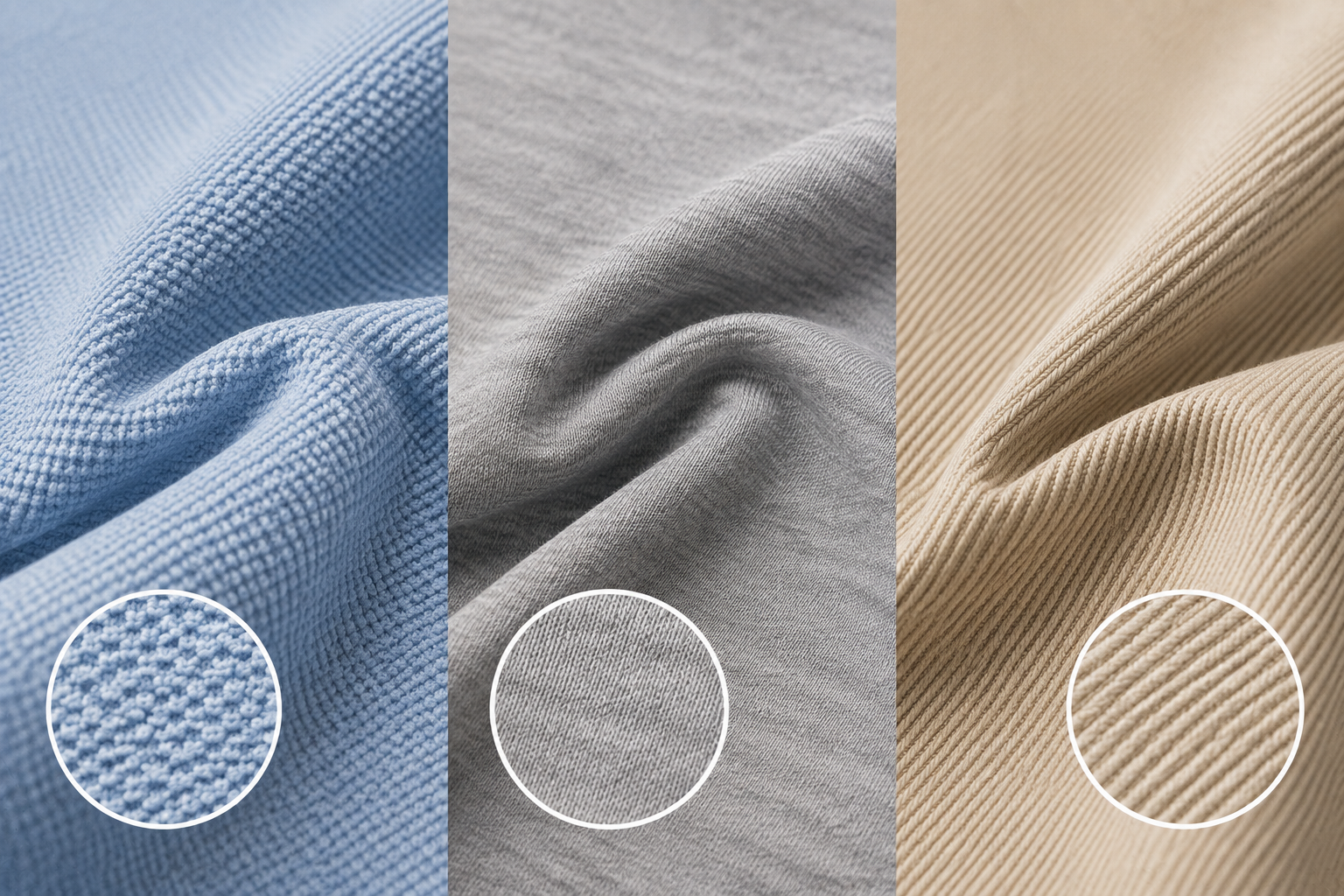
Pique differs from jersey and twill primarily in construction and surface texture, not fiber content, since all three can be made from 100% cotton. Jersey is a single-knit fabric with a flat, smooth face and a looped back, making it lighter and stretchier than pique. Twill is a woven fabric with a diagonal rib pattern, denser than pique and typically used for chinos and structured jackets rather than knit tops.
Fabric | Construction | Typical Weight | Best For |
Pique | Double-knit or dobby weave | 180–240 GSM | Polos, structured dresses, tuxedo shirting |
Jersey | Single-knit | 140–200 GSM | T-shirts, casual tops |
Twill | Woven, diagonal weave | 200–320 GSM | Chinos, jackets, workwear |
Where Is Pique Used in Fashion?
Pique is used most often in polo shirts, but it also appears in tennis dresses, tuxedo shirting, and structured casualwear where a textured surface adds visual interest without extra bulk. The polo shirt category alone accounts for the largest share of pique demand in the US apparel market, a link traced back to Lacoste’s popularization of the cotton pique polo in the 1930s. As of 2025, AAFA reports the US apparel and footwear industry drives more than $523 billion in annual retail sales, a market where knit polo shirts remain one of the most consistently ordered categories year over year.
A Los Angeles-based activewear brand launching a 250-unit golf polo run chose cotton-polyester pique specifically for its moisture management, since the raised texture creates air channels that a flat knit does not. That same construction logic applies to tennis and preppy-adjacent categories, where pique’s structure holds a crisp collar shape better than a jersey knit.
What Should Brand Owners Know Before Sourcing Pique?
Brand owners sourcing pique should confirm fiber blend, GSM weight, and MOQ (minimum order quantity, the smallest amount a supplier will produce per order) before requesting a quote, since these three factors drive both cost and lead time. US mills typically set pique MOQs between 50 and 500 yards depending on whether the fabric is stocked or custom-dyed, and custom colorways almost always carry a higher minimum than standard white or navy pique.
As of 2025, BLS data shows the US apparel manufacturing subsector employed roughly 83,000 workers, a base that includes the cut-and-sew shops and knitting mills capable of producing and finishing pique at domestic scale. Brands prioritizing “Made in USA” positioning should ask garment fabric manufacturers in the USA directly whether pique is stocked domestically or imported and finished locally, since sourcing claims vary by mill.
For brands weighing sustainability claims, look for pique certified under recognized fiber standards. Textile Exchange maintains widely used organic and recycled fiber certifications that apply to cotton pique the same way they apply to any cotton-based textile.
Also Read: Best Clothing Manufacturers in the USA →
Find Pique Manufacturers on Maker’s Row
Maker’s Row is a marketplace connecting apparel brand owners with verified US manufacturers, and it is a practical next step once you know your pique specifications. Post your project with your fiber blend, GSM, and target MOQ, and manufacturers who stock or produce pique respond directly. If you have not yet chosen a factory, start by reviewing how to find a clothing manufacturer in the USA that fits your production stage.
FAQs About Pique Fabric
Yes, pique is well suited to hot weather because its raised texture limits skin contact and improves airflow compared to a flat knit of the same weight. This is why cotton pique remains the standard fabric for golf and tennis polos.
Pique can be either knit or woven, though knit pique is far more common in modern apparel. Knit pique uses a double-knit machine to create the raised texture, while woven pique relies on a dobby loom attachment.
Pique and waffle knit both use raised, geometric surface textures, but pique typically has a finer, tighter grid while waffle knit has a larger, deeper texture. Waffle knit is generally heavier and used more often in thermals and loungewear.
Pique should be machine washed in cold water and tumble dried on low to preserve the raised texture and prevent shrinkage. Mercerized cotton pique holds its finish longer if turned inside out before washing.
Cotton pique can shrink 3 to 5 percent on first wash if it has not been pre-shrunk or sanforized during finishing. Brands should always request a pre-shrunk fabric option or account for shrinkage in the pattern before cutting.
Yes, most US mills offer custom-dyed pique, though custom colorways typically carry a higher MOQ than stocked colors like white, navy, or black. Lead time for custom dye runs is usually longer than for stocked fabric.
Ready to Source Your Pique?
Once you know your fiber blend, weight, and MOQ, the next step is finding a manufacturer who already works with pique.