Starting a compression clothing brand is one of the most exciting moves a fitness-minded entrepreneur can make. It is also one of the most technical corners of apparel, since compression fabric, seamless construction, and fit tolerance punish shortcuts that a basic t-shirt brand could get away with. This guide is different. It gives you the exact steps from product concept to your first production run, including how to find a US manufacturer that actually works with compression knits.
The activewear category keeps pulling in new entrants because consumers now wear performance fabric outside the gym, not just inside it. Compression clothing sits at the technical end of that category, covering leggings, base layers, sports bras, and recovery wear built from four-way stretch knits.
New brand owners in this space run into three obstacles almost every time: understanding what makes compression fabric different from standard activewear fabric, budgeting for a more technical production process, and finding a US manufacturer who genuinely works with compression knits instead of general cut-and-sew basics. This guide solves all three, in order, from defining your first product to placing your first production order.
Step 1: Define Your Brand Identity and Hero Product
Your hero product is the single compression garment that will carry your brand through its first launch, and it should be the item you can execute best with the smallest number of variables. Most new compression brands try to launch leggings, sports bras, and base layers at once, then run out of budget before any single style is dialed in.
Write a one to two page brand brief covering your target customer, your price point, and your top three competitor brands. Name the specific compression benefit you are building around: muscle support during training, faster recovery after activity, or all-day shaping under regular clothing. Each of those benefits points to a different fabric weight and compression level, so naming it now saves you a wasted sample round later.
Pick one hero product first. A single legging style in one colorway, built well, outperforms a five-piece capsule collection that arrives inconsistent across every style.
Step 2: Who Is Your Target Customer?
Your target customer for a compression clothing brand is defined by activity type, not just demographics, because a runner, a weightlifter, and a postpartum wellness customer each need different compression profiles. Skipping this step means your fabric choice and your marketing message will not match.
Build a simple customer profile: their primary activity, their price sensitivity, and where they currently shop for performance apparel. A customer buying compression leggings for CrossFit training has different expectations around squat-proof opacity and waistband height than a customer buying compression tops for recovery wear after a marathon.
Also Read: What is a Tech Pack? How to Create One for Your Brand →
Cross-reference your customer profile against your top three competitor brands from Step 1. If every competitor you named targets the same narrow niche, look for the gap they are leaving unaddressed, whether that is size range, price point, or a specific sport.
Step 3: Build Your Product Concept and Tech Pack
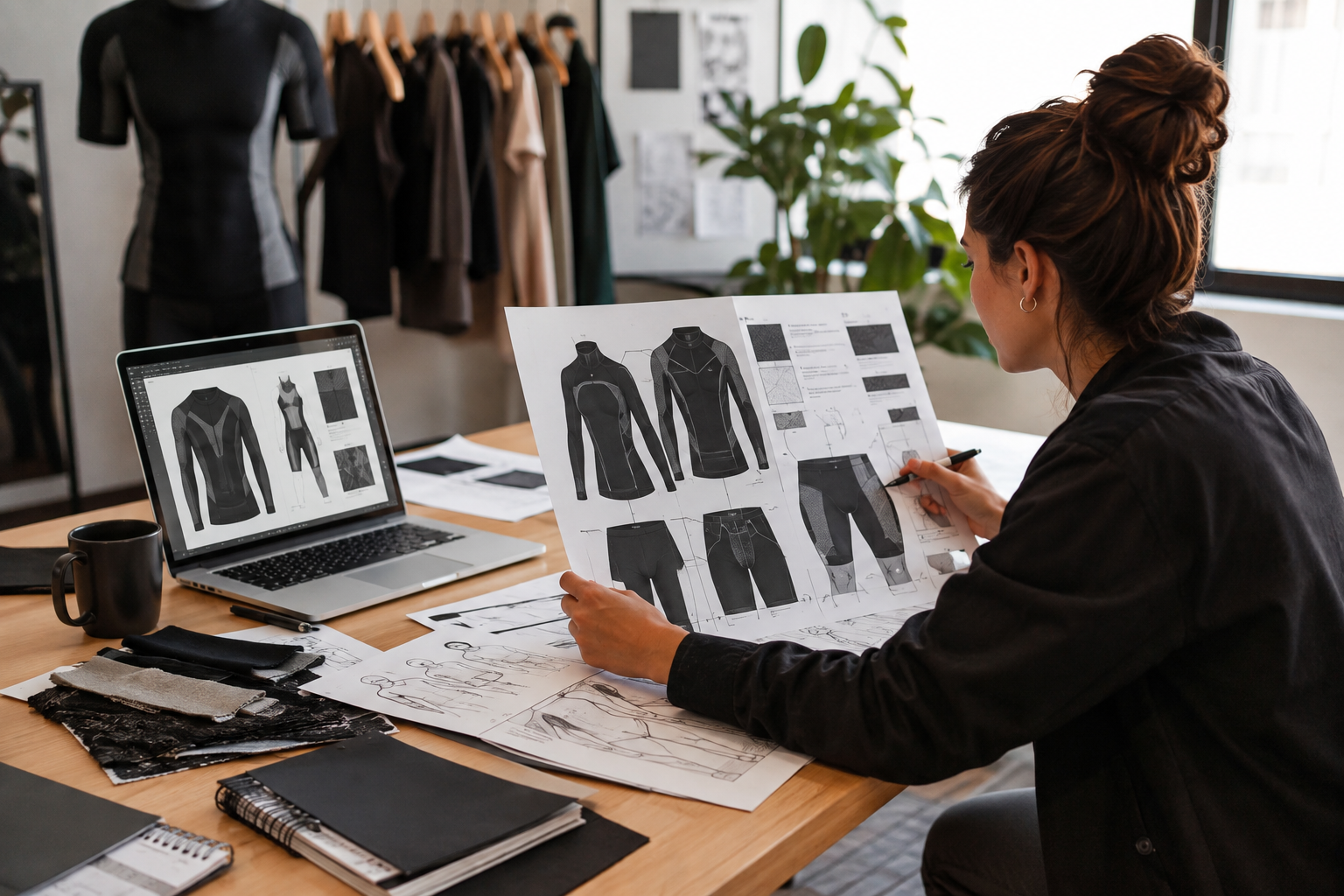
A tech pack for a compression garment is a technical specification document that tells a manufacturer exactly how your garment should fit, stretch, and perform, and it needs more construction detail than a basic tee. For compression apparel, this document has to cover fabric composition, stretch percentage, and seam type in addition to the standard measurements and materials list.
Specify your fabric blend precisely. A common compression fabric runs 78 percent polyester and 22 percent spandex, though ratios shift depending on how much recovery stretch you need. Note whether you want flatlock seams, which reduce chafing, or a fully seamless knit construction, which changes both your cost and your manufacturer shortlist.
Also Read: What is MOQ? A Brand Owner’s Guide to Minimum Order Quantities →
Include a compression grade description in your tech pack, even in general terms such as light, medium, or firm support. Manufacturers who specialize in compression knits will ask for this detail on the first call, and having it ready signals that you understand the category.
Step 4: How Do You Find a Compression Clothing Manufacturer?
You find a compression clothing manufacturer by targeting factories that specifically list compression knits or seamless construction as a specialty, not general activewear cut-and-sew shops. This is the step where most new compression brands get stuck, and it determines whether your brand launches on schedule or stalls for months.
The old way means cold-emailing factories from outdated directories, walking trade shows like MAGIC, or hoping an industry contact knows someone. Compression apparel narrows this search further than a general activewear line would, since not every cut-and-sew factory owns the knitting equipment or seam technology compression construction requires. That process routinely takes three to six months, and most of that outreach never gets a reply at all.
What to look for in a compression clothing manufacturer:
Criteria | What to Confirm |
MOQ | Per style and per colorway, not just total order |
Fabric specialty | Confirmed experience with four-way stretch, compression knits, or seamless construction |
Sample policy | Sample cost, turnaround time, and how many rounds are typical |
Communication speed | Response time to a first inquiry, ideally under 48 hours |
Certifications | OEKO-TEX or similar, if your fabric sourcing requires it |
Also Read: Best 10 Sportswear Manufacturers in the USA 2026 →
Maker’s Row is a marketplace connecting apparel brand owners with verified US manufacturers. On Maker’s Row, brand owners post unlimited manufacturing projects for free and receive bids from verified US factories at no upfront cost. To connect directly, subscription plans give full access.
Find Compression Clothing Manufacturers on Maker’s Row
Describe your compression fabric requirements, target MOQ, and construction preference (flatlock seam or seamless knit) directly in your project brief on Maker’s Row. Manufacturers who specifically work with compression knits and seamless activewear respond directly, often within 24 to 48 hours of a new project being posted, which is faster than the standard cold-outreach timeline.
For a broader view of your options, the how to find a clothing manufacturer in the USA guide covers the general vetting process that applies to compression manufacturers as well.
Step 5: Order Samples and Refine
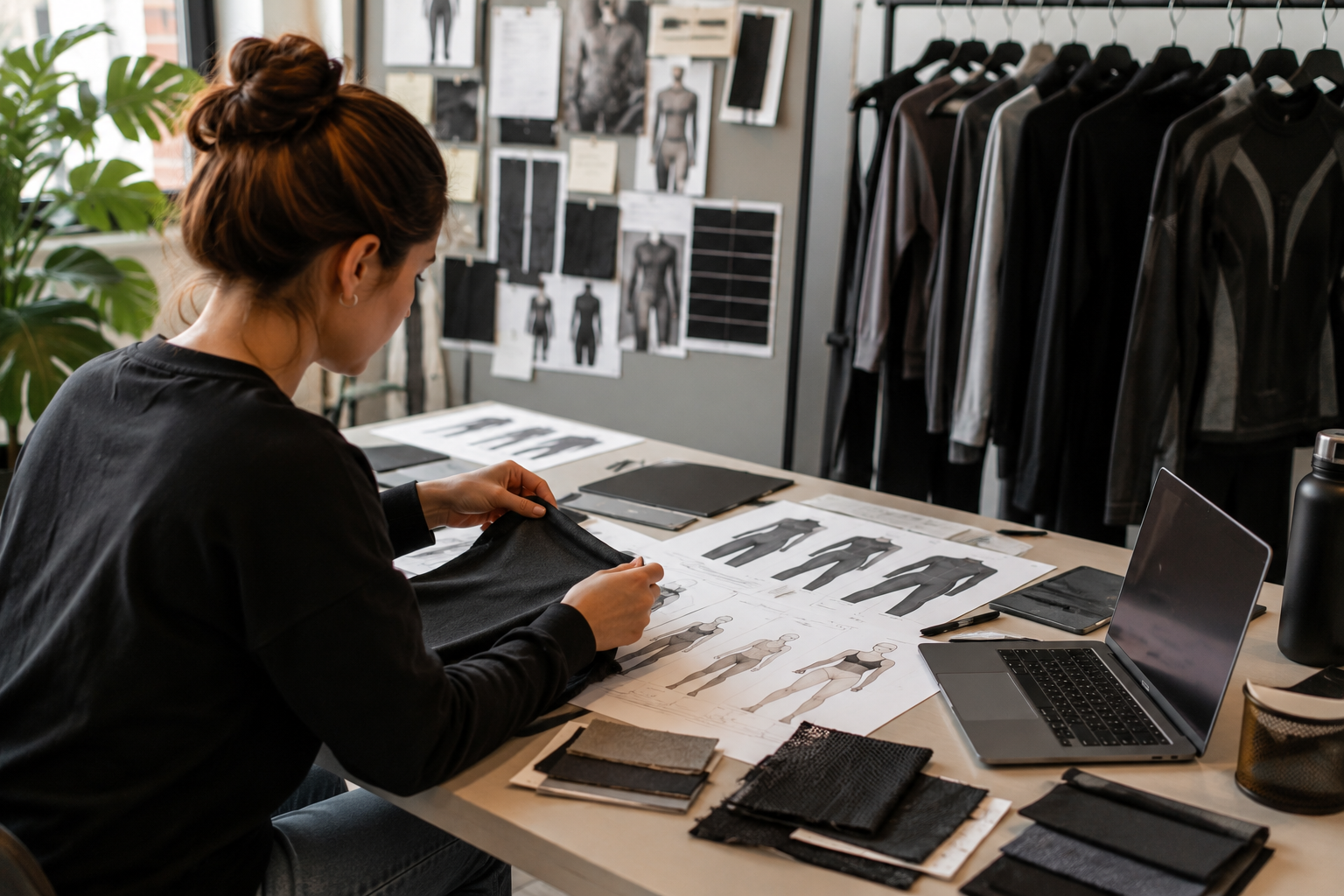
Ordering samples for compression apparel means testing fit under movement, not just fit at rest, so your sample review should include squats, stretches, and a wash test before approval. Compression fabric that fits perfectly straight off the rack can lose recovery and shape after one wash cycle if the fabric blend is wrong.
Order samples in your core size first, then a size at each end of your range once the core fit is approved. Test the sample through a full workout if the product is designed for active use, not just a fitting room try-on. A Denver-based compression brand caught a waistband roll-down issue during a squat test that never showed up during a standing fitting, saving them from a full-batch defect on their first 300-unit run.
Budget for two to three sample rounds before you approve a compression style for production. Compression garments typically need more rounds than basic apparel because stretch recovery and seam placement are harder to nail on the first try.
Step 6: Plan Your Production Run and Budget
A first production run for a compression clothing brand typically costs $12,000 to $35,000, covering tech pack development, sampling, your manufacturer’s MOQ at your chosen unit cost, and initial packaging. Compression fabric and seamless construction usually run higher per unit than basic activewear fabric, so budget accordingly.
Break your budget into four line items: tech pack development ($300 to $1,500), sampling across two to three rounds ($200 to $800 per round), your production run at your manufacturer’s MOQ, and packaging plus labeling. According to AAFA industry data, domestic apparel manufacturers commonly set MOQs between 50 and 500 units per style, and compression specialists often sit toward the middle of that range because of setup complexity.
The Small Business Administration (SBA) recommends building a cash reserve beyond your production budget to cover reorders, since a successful launch often means you need capital for a second run before revenue from the first has fully cleared.
Step 7: Launch and Market Your Brand
Launching a compression clothing brand means proving fit and performance claims with real customers before you scale marketing spend, since compression apparel lives or dies on whether it actually works as advertised. Seed your first units to a small group of real users in your target activity before a public launch.
Document real performance outcomes, not just styling shots. A Chicago-based compression brand built its entire launch campaign around before-and-after workout photos from 15 seeded customers rather than studio photography alone, and converted at a noticeably higher rate on paid ads than their studio-only test campaign.
The SCORE mentorship network offers free guidance for new product businesses building a launch marketing plan, particularly around budgeting paid acquisition against a limited first-run inventory.
Your next step after launch is planning your second production run using real sell-through data instead of guesswork, which is exactly what Step 6 above prepares you for.
FAQs: Starting a Compression Clothing Brand
Most new compression clothing brands need $12,000 to $35,000 to reach a first production run, covering tech pack development, sampling, and your manufacturer’s MOQ at a compression-grade unit cost. Costs run higher than basic activewear because compression fabric and seamless construction carry a higher per-unit price.
Yes. Most brand owners launching a compression line have no prior manufacturing background. What you need is a clear tech pack, a realistic MOQ budget, and a manufacturer experienced in compression knits who can guide you through sampling.
Post a project brief on Maker’s Row specifying your compression fabric blend, target MOQ, and construction type. Verified US manufacturers who work with compression knits and seamless activewear respond directly to briefs that match their capabilities.
MOQ, or minimum order quantity, is the smallest number of units a manufacturer will produce per style. Compression specialists commonly set MOQs between 50 and 300 units per style, which directly sets your minimum production spend for each colorway you launch.
Plan for 12 to 18 weeks from concept to delivered inventory. Tech pack development takes 2 to 3 weeks, sampling for compression apparel typically takes 4 to 6 weeks across two to three rounds, and production runs 6 to 9 weeks depending on your manufacturer’s schedule.
Yes. A tech pack is even more important for compression apparel than basic apparel, since fabric stretch percentage, compression grade, and seam type all need to be specified for a factory to quote and sample accurately.
Use a non-disclosure agreement before sharing a detailed tech pack with a new manufacturer, and consider a design patent for a genuinely novel construction method. The United States Patent and Trademark Office (USPTO) provides guidance on design patent eligibility for apparel innovations.
Some compression specialists accept first orders as low as 50 units per style, though many require 100 to 150 units to cover the setup cost of technical seaming equipment. Confirm this number directly with each manufacturer before committing to a tech pack revision.
Your Compression Clothing Brand Is Closer Than You Think
Your compression clothing brand is one manufacturer away from becoming real. The factories are on Maker’s Row, ready to bid.