To choose windproof fabrics for winter apparel, match air permeability to your customer’s activity level. One USPTO-published patent defines windproof as 3 CFM or less and prefers 1 CFM or less. CFM (cubic feet per minute) is the volume of air that passes through one square foot of fabric under test pressure. Bonded membranes block the most wind, while softshells and tightly woven nylon give up some blocking to breathe better.
Winter fabric catalogs use terms like wind resistant, windproof, and wind blocking, and few suppliers test their materials the same way. That inconsistency leads brand owners to approve samples that feel warm in the studio but fail on a cold, windy street. Let’s compare six windproof fabrics and match each one to your customer. Then we will look at what each choice means for your manufacturer.
What Makes a Fabric Windproof?
A fabric is windproof when it lets 3 CFM or less of air through each square foot. That threshold comes from a USPTO-published patent for wind-barrier garments, which prefers a result of 1 CFM or less. Labs measure the number with ASTM D737, a standard test that clamps fabric over an opening and records the airflow.
Windproof fabrics reach that number through three construction choices: weave density, coatings, and bonded membranes. A tighter weave leaves smaller gaps between yarns, and a coating or film closes the gaps that remain. Each step lowers airflow and breathability together, so additional wind protection always reduces how easily moisture escapes.
Windproof Fabrics Compared: Six Options Side by Side
Six fabric types cover nearly every winter apparel use. The table below compares them on wind protection, breathability, weight, best use, and cost. A softshell is a stretch woven face bonded to a fleece or knit backer. A membrane laminate is a fabric bonded to a thin polymer film that blocks air while letting water vapor out.
Fabric | Wind Protection | Breathability | Weight and Feel | Best Winter Use | Relative Cost |
Tightly woven nylon or polyester | Good to very good with a coating | Moderate | Light, crisp | Wind shell over insulation | $ |
Softshell | Good, varies by construction | High | Medium, stretchy | Running, hiking, dry cold days | $$ |
Membrane laminate | Highest of the six | Moderate to high | Light to medium | Exposed, windy, sub-freezing days | $$$ |
Wind-blocking fleece | High with a bonded film | Moderate | Bulky, warm | Cold, low-activity days | $$ |
Waxed or coated cotton | High when tightly woven | Low | Heavy, stiff | Casual and work coats | $$ |
Dense wool (melton or boiled) | Moderate, wind resistant only | High | Heavy, warm | Dress coats, cold dry city wear | $$$ |
Relative cost runs from $ (lowest) to $$$ (highest) and reflects fabric price plus sewing difficulty, not a supplier quote. Treat every rating for these windproof fabrics as general guidance, and request CFM results on the exact fabric before you approve a sample.
How Do You Choose the Right Windproof Fabric for Your Brand?
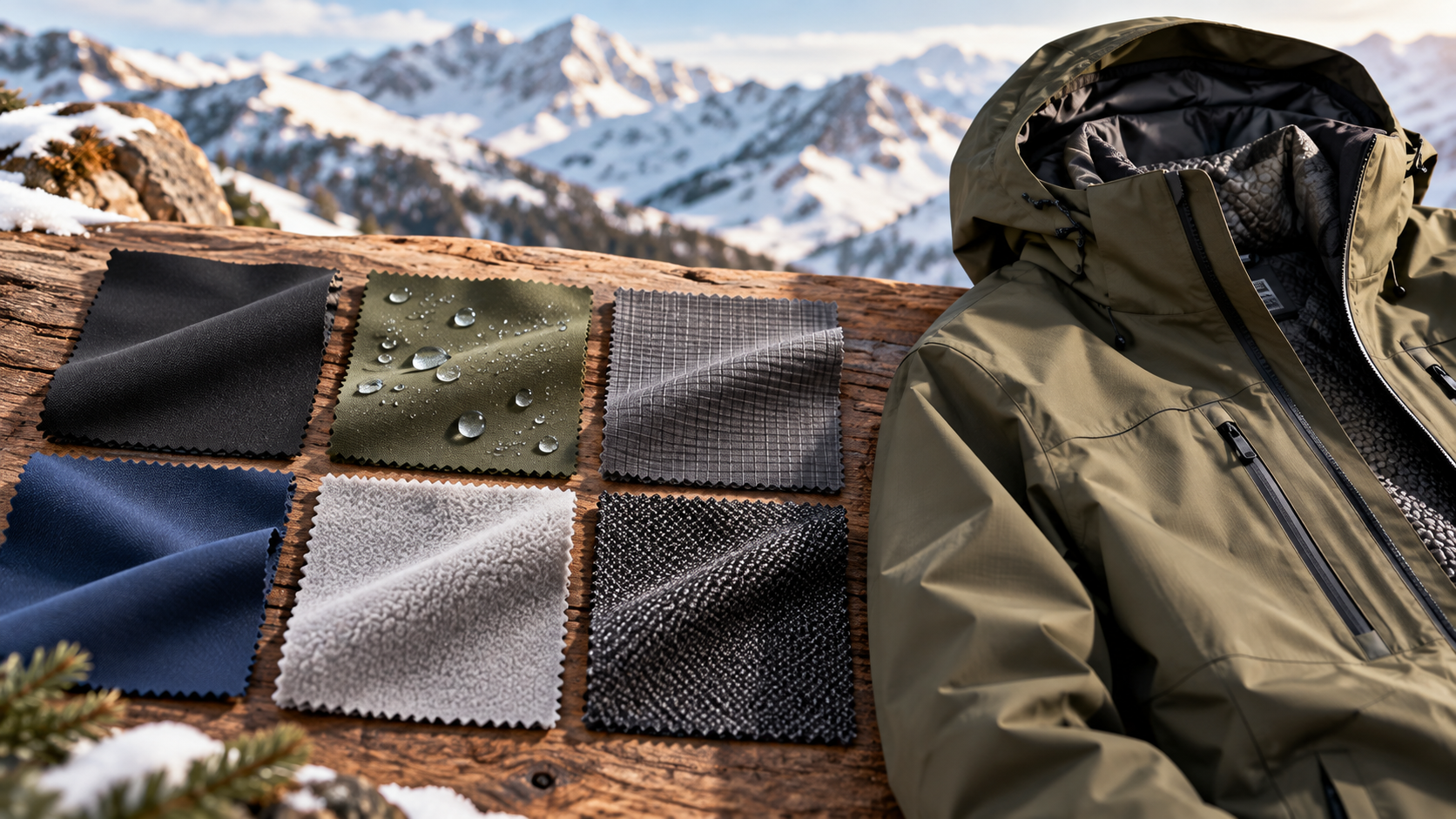
Choose windproof fabrics by answering four questions in order. Ask how hard your customer moves, how cold it gets, how wet it gets, and how your factory builds the garment.
- How hard will your customer move? Standing or walking in wind calls for a membrane laminate or waxed cotton. Running, skiing, or hiking calls for a softshell or tightly woven nylon, because sweat needs a way out.
- How cold does it get? Windproof fabrics stop wind chill but add almost no insulation on their own. Pair a shell with an insulating layer, or select wind-blocking fleece or wool for single-layer warmth.
- How wet does it get? Windproof does not mean waterproof. Wind-only shells soak through in steady rain, so confirm whether the fabric carries a water-resistant finish or a taped-seam construction. Our waterproof clothing manufacturer guide explains how seam tape works.
- How thick is the yarn? Denier is the weight in grams of 9,000 meters of a single fiber, so a higher number means a thicker, tougher yarn. Lower deniers make lighter, packable shells, while higher deniers resist abrasion better. Maker’s Row’s fabric denier guide explains how to read the number on a fabric tag.
What Do Windproof Fabrics Mean for Your Manufacturer?
Bonded and coated materials change your manufacturer conversation, because they need different sourcing, equipment, and sewing skill than plain woven cloth. Not every factory has experience sewing laminates or bonded fleece, so ask about fabric handling before you discuss pricing.
The domestic sector is small. As of August 2026, BLS data shows about 72,000 apparel manufacturing employees (preliminary), and 6,199 private establishments in the first quarter of 2026 (preliminary). Our outerwear manufacturer guide shows which factory type fits each coat style.
Polyester was the world’s most widely produced fiber in 2025, at 59% of global fiber production, according to the Textile Exchange Materials Market Report 2026. The same report finds that recycled polyester still comes mostly from plastic bottles, at 97%. If your customers want recycled windproof fabrics, ask your mill for certified recycled content on the exact fabric. Our guide to eco-friendly clothing materials for small brands covers certifications and minimum yardage.
Also Read: 8 Best Jacket Manufacturers In The USA For Brands (2026) →
Also Read: Winter Clothing Manufacturers: How To Find One (2026) →
Find Windproof Outerwear Manufacturers on Maker’s Row
Maker’s Row is a marketplace connecting apparel brand owners with verified US manufacturers. Post your windproof outerwear project for free, name your shell fabric, and verified US manufacturers bid directly.
FAQs About Windproof Fabrics
A membrane laminate is the most windproof fabric type in common use, because its bonded polymer film is built to reach 1 CFM or less. Tightly woven nylon with a coating comes next, then softshell. Higher wind protection lowers breathability, so the most windproof choice is not always the best one for active wear.
No, windproof fabric blocks airflow, while waterproof fabric blocks liquid water. A windproof shell can still soak through in steady rain unless it has a water-resistant finish or taped seams. Many membrane laminates do both, so read the spec sheet for each claim separately.
Yes, but windproof fabrics always breathe less than an open fabric of the same weight. Softshells and wool breathe best, while waxed cotton and coated nylon breathe least. Breathability matters most for running, skiing, and hiking, where sweat builds up under the shell.
Neither wins outright, because weave density and coating matter more than fiber type. Nylon usually resists abrasion better, while polyester absorbs less water and holds color well. Ask your mill for CFM results on both before you choose.
Send the fabric to a lab for ASTM D737 air permeability testing, which reports the result in CFM. For a quick studio check, hold a swatch to your mouth and blow, but treat that as a screen, not proof. A laboratory measurement gives you a specification you can write into your tech pack and your factory quote.
Yes, but large mills favor bulk orders, so small brands often buy from converters who sell in smaller lots. Stock fabrics carry lower minimums than custom-coated or custom-laminated ones. Ask each supplier for its minimum yardage per color before you commit to a design.
Yes, several US factories sew technical shells for emerging brands, and many accept fabric you source yourself. Confirm the factory has previously sewn laminates or coated fabrics, since those materials require different machinery and seam handling.
When You Are Ready to Source Windproof Outerwear
When you are ready to move from fabric choice to production, remember this: your winter apparel brand is one manufacturer away from becoming real. The factories are on Maker’s Row, ready to bid.