Winter clothing is the hardest category to manufacture on a startup budget. It takes more fabric, more layers, and more specialized machines than a summer line. This guide shows you how to find the right winter clothing manufacturer in the USA, even if you have never worked with a factory. It is written for founders launching their first cold-weather collection.
Domestic apparel production is smaller than most founders expect. As of August 2026, the U.S. Bureau of Labor Statistics reports about 72,000 apparel manufacturing workers (preliminary). Its first-quarter 2026 count shows 6,199 private establishments (preliminary). Cold-weather specialists are a small slice of that base, so a targeted search beats a broad one.
New brand owners usually hit three walls: finding a factory that answers, affording the minimum order, and not knowing the steps. Winter clothing makes each wall taller, because insulation, lining, and trims add cost and sewing time. This guide gives you seven steps, a production calendar built backward from the selling season, and the exact questions to ask any factory.
Step 1: Which Winter Product Should You Build Your Brand Around?
Build your brand around one winter clothing product, such as an insulated jacket or a knit sweater. Each product needs a different type of factory. Launching a full collection on day one multiplies your sampling rounds and your minimum orders.
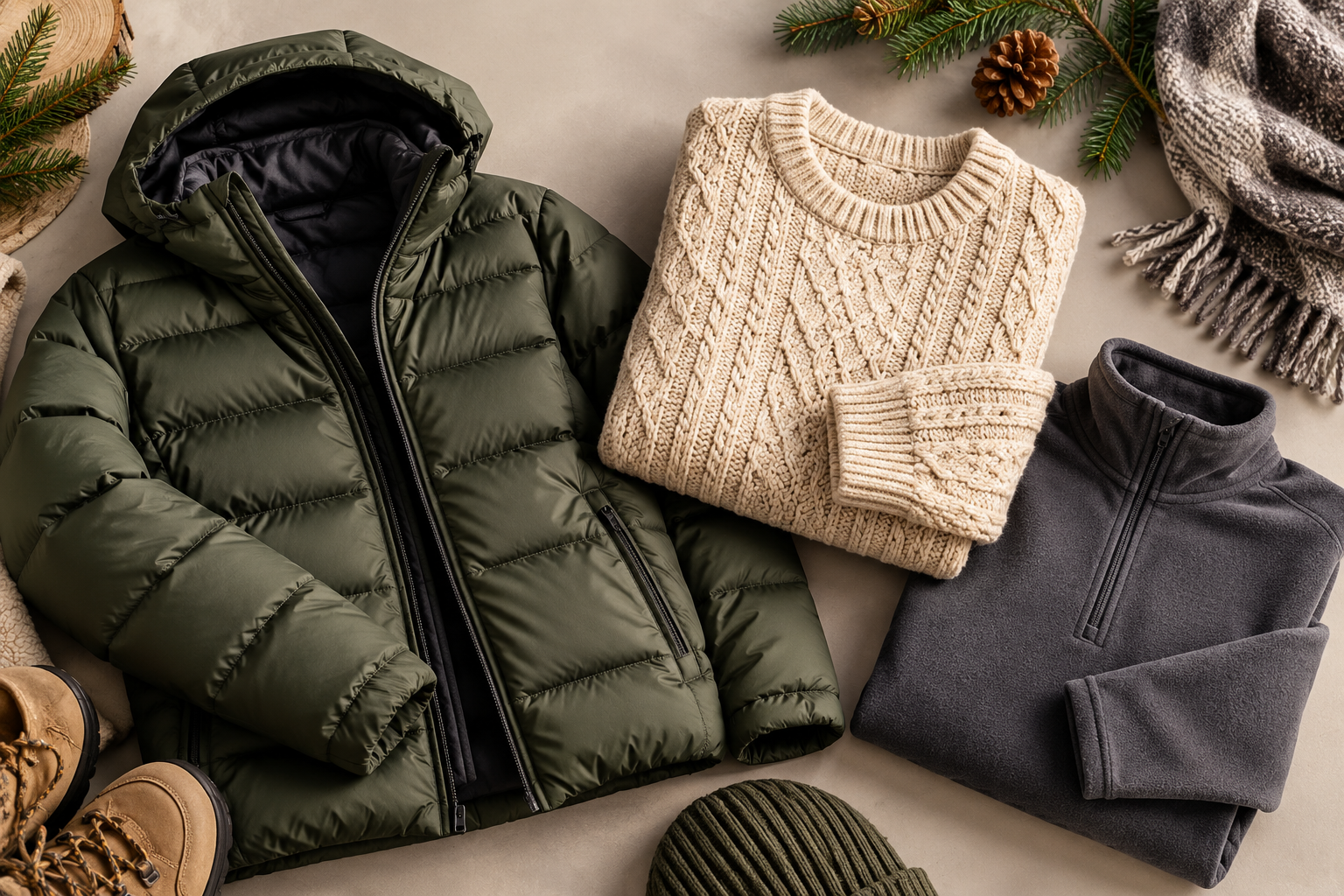

Cut and sew is a manufacturing method where a factory cuts fabric panels and stitches them into a garment. Fully fashioned knitwear is a method where knitting machines shape each panel to size, so little fabric gets cut away. The BLS treats apparel knitting mills and cut and sew factories as separate industry groups, which is why one factory rarely does both well. Match your product to the right method before you contact anyone.
Winter Product | Factory Type to Search For | Key Question to Ask |
Insulated jackets and parkas | Cut and sew outerwear factory with quilting and fill experience | Which insulation types have you sewn? |
Wool coats | Tailored outerwear factory with lining and interfacing skill | Do you build structured coats in-house? |
Sweaters and knitwear | Knitting mill, either fully fashioned or knit and sew | Which yarns and machines do you run? |
Base layers and fleece | Knit-fabric cut and sew factory | Do you supply the knit fabric or do I? |
Hats and gloves | Headwear or glove specialist | What is your minimum per color? |
Write a one-page brand brief covering your target customer, your retail price, and your top three competitor brands. Circle the single product you would be proud to sell on its own. If you chose sweaters, start with Maker’s Row’s guide to custom sweater manufacturers. If you chose outerwear, read the guides to coats manufacturers and jacket manufacturers.
Once your product is chosen, the next question is who will wear it.
Step 2: Who Are You Making Winter Clothing For?
You are making winter clothing for a specific climate and activity, and those two facts decide your fabric, insulation, and price. A commuter jacket for Chicago sidewalks needs different warmth than a shell for Colorado ski lifts. Write down the coldest conditions your customer faces and what they do outdoors.
Interview five to ten people who match your customer about what they wear now, and ask what they dislike about warmth, fit, and price. Then list three competing winter clothing pieces and their retail prices. Set your own retail price inside that range and work backward to a target unit cost. That number tells you which factories you can afford before you send a single email.
Decide early whether your insulation will be down or synthetic. Down brings certification questions in Step 3, and synthetic fill changes which factories can quote you. With those choices made, you can write the document factories actually need.
Step 3: What Goes in a Winter Clothing Tech Pack?
A winter clothing tech pack holds flat sketches, measurements, a bill of materials, and construction notes. It also lists the insulation, lining, and hardware that make cold-weather pieces different. A tech pack is the specification document that tells a manufacturer exactly how to build your garment. Without one, every factory quotes a slightly different product, and you cannot compare bids fairly.
Add these winter clothing lines to your spec:
- Shell fabric, its weight, and any water-resistant finish
- Insulation type and fill weight, or lining and interlining for wool pieces
- Zippers, snaps, drawcords, and cuff or hem finishes
- Seam finishing, such as taped seams, if your product needs weather protection
- Fiber content and care label text
If your shell must repel water, see the guide to waterproof clothing manufacturers. If you plan to advertise down, ask the factory whether it can work with down certified to the Responsible Down Standard. Textile Exchange maintains that standard to address animal welfare and traceability.
Per Maker’s Row’s 2026 tech pack guide, a freelance technical designer typically charges $50 to $250 per tech pack. An NDA (non-disclosure agreement) is a signed contract that bars a factory from sharing your designs. Ask each factory to sign one before you send the full file.
Also Read: Tech Pack Clothing: What It Is And How To Create One (2026) →
Also Read: What Is MOQ? Complete Guide For Brand Owners 2026 →
Your tech pack is ready. Now comes the step that decides everything else.
Step 4: How Do You Find a Winter Clothing Manufacturer?
You find a winter clothing manufacturer by matching your product to a factory type and comparing five to ten specialists side by side. Compare their MOQ, location, sample policy, and response speed. This is where most brand owners get stuck, and it decides whether your collection ships before the first cold snap.
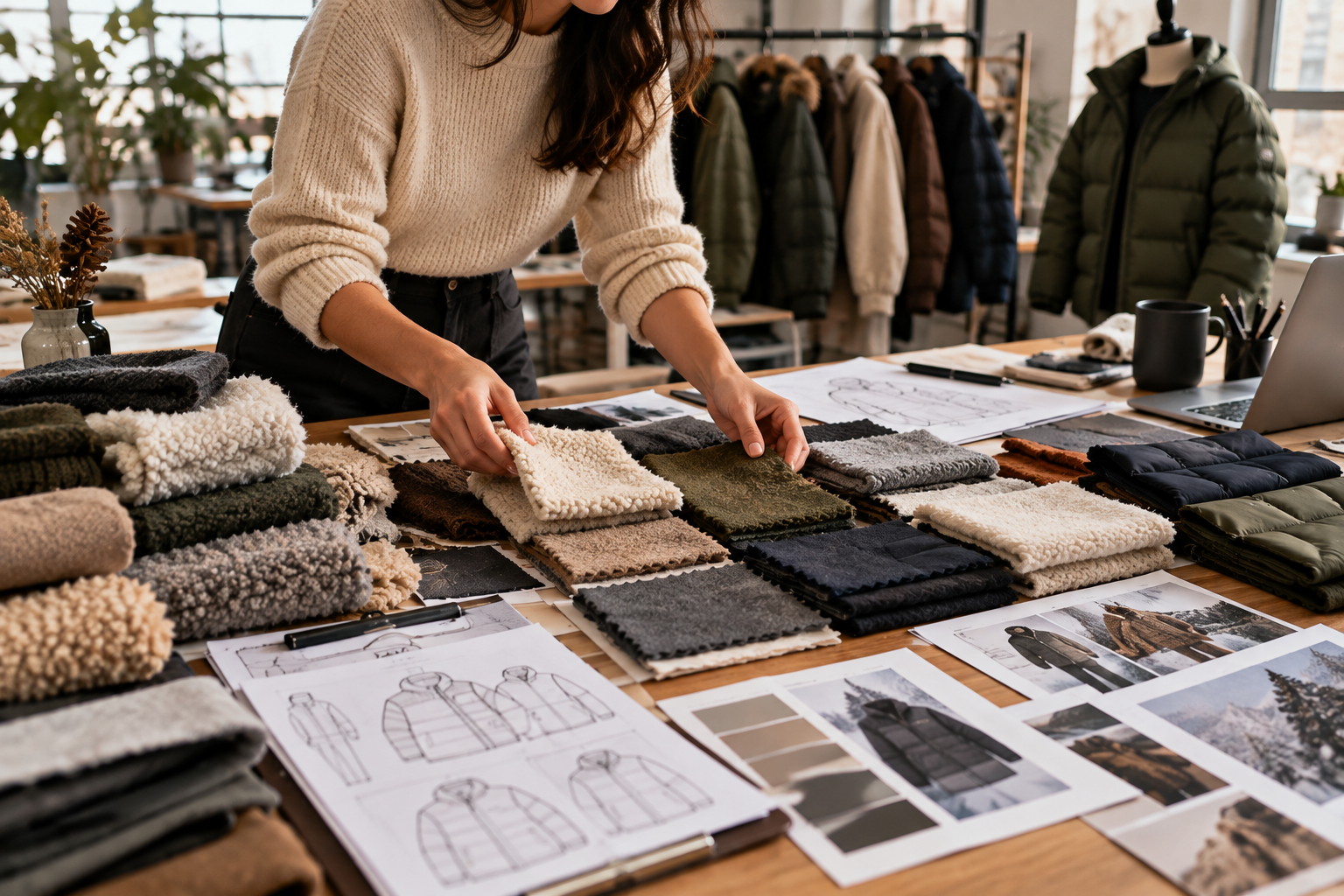

The old way is cold emails, trade shows, and referrals. It works, but slowly. Maker’s Row’s 2026 guide to starting a clothing brand puts cold outreach at one to three months. Selecting a manufacturer on Maker’s Row takes one to three weeks, per the same guide.
MOQ (minimum order quantity) is the smallest number of units a factory will produce per style. Maker’s Row’s 2026 MOQ guide reports that US clothing manufacturers typically set MOQs between 50 and 500 units per style. Its jacket guide adds that structured outerwear with lining, interfacing, and hardware typically commands higher minimums than simpler styles. Ask every factory whether the minimum applies per style or per color, because colors can multiply it.
What to Compare | What to Look For | Red Flag |
MOQ | A clear per-style number and a clear per-color number | Refuses to name any figure |
Location | Close enough for visits or fast sample courier | Only a contact form and no street address |
Sample policy | Paid samples with a written turnaround | Will not sample before a bulk order |
Response speed | First reply within 2 business days | Silence for a week or more |
Material experience | Has sewn your shell and insulation fabrics | Claims to make everything |
Protect yourself before you pay anyone. The FTC advises searching a company’s name with the word “scam” or “complaint.” It also says demands for wire transfer, cryptocurrency, or gift card payment signal a scam. Ask every factory for a verifiable street address and two brand references.
Find Winter Clothing Manufacturers on Maker’s Row
Maker’s Row is a marketplace connecting apparel brand owners with verified US manufacturers. You do not have to cold email every cold-weather factory on a list. Post your winter clothing project for free and verified US manufacturers bid directly.
Name your product, insulation, and target quantity in the brief so only relevant specialists respond. Then review bids, check profiles, and connect when you are ready.
On Maker’s Row, brand owners post unlimited manufacturing projects for free and receive bids from verified US factories at no upfront cost. To connect directly, subscription plans give full access. You can also see how Maker’s Row works for brands before you post.
Also Read: How to Find a Clothing Manufacturer in the USA 2026 →
With a shortlist in hand, you can start sampling.
Step 5: How Do You Order Samples and Refine Fit?
Order a paid sample from your top two or three factories, then expect two or three fit rounds before the pattern is right. Maker’s Row’s 2026 jacket guide reports first samples take 2 to 4 weeks after the tech pack and materials are confirmed. Its coats guide reports 3 to 6 weeks. Its sweater guide notes that a sweater often needs two or three fit rounds.
Compare winter clothing samples on warmth, seam strength, zipper action, and how the garment sits over a base layer. Test each one in real weather. Put every change in writing as a revised tech pack so each round stays traceable. Ordering from two factories costs more upfront, but it gives you leverage on price and quality.
Once one sample passes, the money conversation gets real.
Step 6: How Do You Plan Your Production Run and Budget?
Plan your winter clothing production run by adding your per-unit quote, sampling costs, and tech pack cost. Then check that total against the units you can sell in one season. Start with a small test run of a single style. It tells you more about a factory’s quality control than any sales call.
Winter clothing runs on a hard calendar, because customers buy coats when the weather turns, not after. The table below shows Maker’s Row’s 2026 stage ranges for a new brand.
Stage | Typical Duration |
Brand development and tech pack | 4 to 8 weeks |
Manufacturer selection on Maker’s Row | 1 to 3 weeks |
Sampling and revisions | 4 to 8 weeks |
Production | 4 to 8 weeks |
Total | 13 to 27 weeks |
Sampling is where winter calendars slip. Maker’s Row’s 2026 guide to starting a jacket manufacturing business describes a Denver-based outerwear founder who expected one-round approval on her first bomber sample. Two more sample rounds, roughly four additional weeks, fixed both problems before she committed to a 150-unit run.
Now apply that to your own calendar. Suppose you want insulated jackets in stock by September 1, 2027. Counting back 27 weeks puts your tech pack start at February 24, 2027. The fastest 13-week path still means starting by June 2, and neither date includes shipping, photography, or extra sample rounds.
For the money side, the SBA’s business plan resources cover lean startup formats, and free mentors at SCORE can pressure-test your budget. Do not order more units than you expect to sell in one season. Then it is time to bring the collection to market.
Step 7: When Should You Launch Your Collection?
Launch your winter clothing before the first cold snap in your customer’s region, which means having inventory in hand by early fall. Work backward from that date using the calendar in Step 6, and add a two-week buffer for shipping delays.
Open pre-orders while you are still sampling. Pre-orders show you which styles customers want before you fund the full run. Photograph your pieces in real cold weather, because customers judge warmth by how it looks on a person outside. Build an email list six to eight weeks before your ship date so buyers are waiting when stock arrives.
FAQs About Finding a Winter Clothing Manufacturer
The eight answers below cover what founders ask most when sourcing cold-weather production from US factories.
You need enough to cover a tech pack, two or three sample rounds, and one minimum order. Maker’s Row’s 2026 guide to finding a manufacturer puts US cut and sew production at $15 to $45 per unit. At that range, a 100-unit run costs $1,500 to $4,500 before sampling. Winter pieces use more material per unit, so quote each style separately. The SBA resources in Step 6 help you turn those numbers into a budget.
Yes, you can start with no experience if you pick one product and work with a factory that offers development support. Choose a manufacturer that will review a draft tech pack or help with patterns. Free mentors at SCORE can guide the business side. Posting your project on Maker’s Row lets you compare factories that offer this help.
Match your product to a factory type, shortlist five to ten specialists, and compare MOQ, sample policy, and response speed. Post a project on Maker’s Row so relevant factories bid on it. Verify each one with a street address and two brand references. Step 4 above has the full comparison table.
MOQ is the smallest number of units a factory will make per style, and it sets the minimum cash you must commit. At the 50 to 500 unit range Maker’s Row reports for 2026, your floor is the MOQ multiplied by your unit cost. Ask whether the minimum applies per style or per color, since colors can multiply it. Lower minimums usually come with higher per-unit prices.
Plan for 13 to 27 weeks from tech pack to finished production. That total adds the four stage ranges from Step 6, which come from Maker’s Row’s 2026 guide. Shipping and photography add more time. Starting in February for a September launch leaves a safety margin.
Yes, you need at least a draft tech pack, because factories quote what they can see. Without one, quotes vary and you cannot compare bids. Freelance technical designers typically charge $50 to $250 per tech pack, according to Maker’s Row’s 2026 tech pack guide. A complete file also cuts the number of sample rounds you pay for.
Ask factories to sign an NDA before you share files, and consider a design patent if your look is truly new. The USPTO explains that a design patent covers the ornamental design of an article of manufacture, not how it works. Talk to an intellectual property attorney before you file. Keep dated copies of your sketches as a record.
Some small-batch US factories accept 25 to 200 units per style, according to Maker’s Row’s 2026 small-batch guide. Typical clothing MOQs run higher, at 50 to 500 units. Structured outerwear sits toward the upper end, and knitwear mills vary. State your target quantity in your project brief so only factories that can meet it respond.
Your Winter Clothing Brand Is Closer Than You Think
Your winter clothing brand is one manufacturer away from becoming real. The factories are on Maker’s Row, ready to bid.
