Private label lab grown diamonds in the USA come from US jewelry manufacturers that source certified stones and set them under your brand. Stuller in Lafayette, Louisiana, and Kaprielian in New York City both offer certified lab grown diamonds with casting and setting. The best known US growers have stepped back: WD Lab Grown Diamonds filed for Chapter 7 in October 2023, and De Beers announced the closure of Lightbox in May 2025. Diamond manufacturers that grow stones for outside brands are now rare.
A stone grower and a jewelry factory are different businesses, and most new brands need the factory. It buys certified stones, then casts, sets, and finishes your pieces.
This guide is for you if you are launching a first jewelry line with lab grown stones under your own label. It names the diamond manufacturers and jewelry factories we could verify, explains why the list is short, and shows you how to brief a factory.
Who Are the Diamond Manufacturers Making Private Label Lab Grown Stones in the USA?
Three US companies passed our checks: Stuller, Kaprielian, and Diamond Foundry. Two make finished jewelry with certified lab grown stones, and one grows the stones itself. We kept only diamond manufacturers and jewelers with a confirmed street address or headquarters, a founding year, and a named third party source.
Private label means a factory makes finished pieces that you sell under your own brand name. Neither Stuller nor Kaprielian describes a program by that name on the pages we reviewed. Confirm the arrangement in writing before you design around it. MOQ (minimum order quantity) is the smallest number of pieces a factory produces per order.
1. Stuller
- Location: Lafayette, LA
- MOQ: Not published, trade account required
- Speciality: Loose lab grown stones and finished jewelry
- Best for: Brands that want stones and settings from one account
Matthew Stuller founded the company in 1970, according to its own press release. It added lab grown diamonds in 2016, each with a certificate from GCAL (Gem Certification and Assurance Lab) and a girdle inscription. The girdle is the thin outer edge of a stone, where labs laser inscribe a report number. National Jeweler reported in April 2024 that its first lab grown catalog listed over 1,500 jewelry items and over 650 loose stones.
2. Kaprielian Enterprises
- Location: 207 W 25th Street, New York, NY
- MOQ: Not published, contact for a quote
- Speciality: Certified lab grown stones, digital design, casting, setting, and finishing
- Best for: Designers who need a full bench shop in New York
The Chelsea shop says it has worked in New York City since 1976. Its services page lists natural and lab grown diamonds certified by GIA and IGI, two independent grading labs, plus casting and stone setting. That page does not mention private label, so ask how it handles your designs and your brand name.
3. Diamond Foundry
- Location: San Francisco, CA
- MOQ: Not published, contact for a quote
- Speciality: Growing lab grown diamonds
- Best for: Brands exploring a US grower after settling their design
Martin Roscheisen founded the company in 2012, according to National Jeweler. Rapaport reported in 2019 that it was ramping up a Wenatchee, Washington factory, with a target of 1 million carats a year. We found no published terms for outside brands, so treat it as a conversation to start, not a sourcing plan.
Why Are There So Few US Diamond Manufacturers Growing Lab Grown Stones?
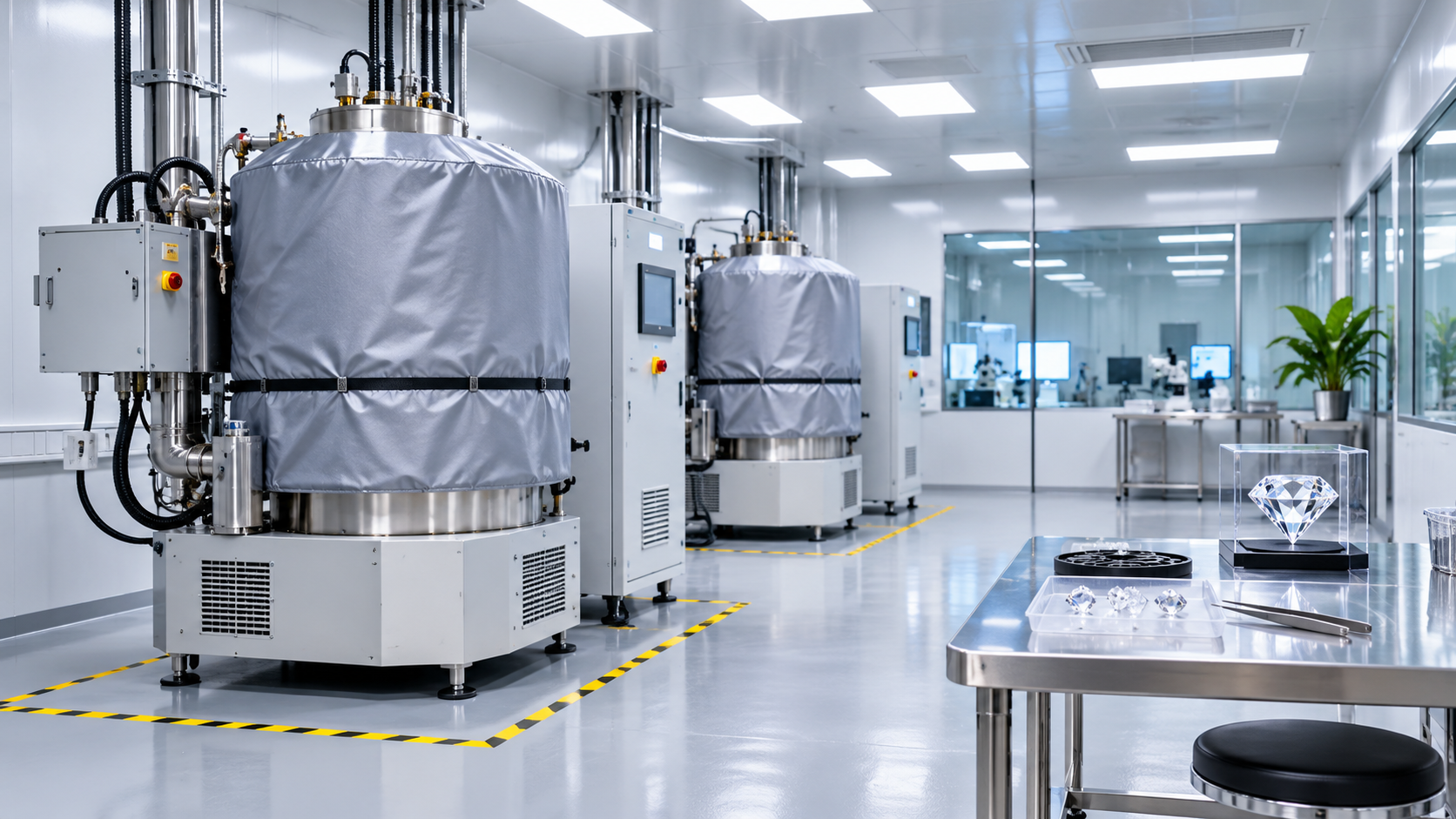
Lab grown prices collapsed, and US diamond manufacturers struggled against overseas output.
- WD Lab Grown Diamonds. The company filed for Chapter 7 protection on October 11, 2023, in a Delaware bankruptcy court. IDEX Online reported $44 million in liabilities against $3 million in assets. The Jewelry Magazine, citing the Financial Times, called it the second largest US grower.
- De Beers Lightbox. JCK reported on May 8, 2025, that De Beers is closing the Lightbox lab grown business. CEO Al Cook said lab grown prices have fallen over 90% since the 2018 launch. The Portland, Oregon factory now grows industrial stones for the Element Six subsidiary.
For your brand, the US advantage sits in design, setting, finishing, and honest labeling. Ask any of these diamond manufacturers or jewelers where its stones were grown, because a US factory can set stones grown overseas.
Private Label Lab Grown Diamond Comparison Table
Stuller and Kaprielian are the practical starting points for finished pieces, while Diamond Foundry is a grower with unpublished terms for outside brands.
Company | Location | Founded | What it offers | Private label stated? | Best for |
Stuller | Lafayette, LA | 1970 | Loose lab grown stones and finished jewelry | Not stated | Stones and settings from one account |
Kaprielian Enterprises | New York, NY | 1976 | Certified lab grown stones, digital design, casting, setting | Not stated | Designers needing a bench shop |
Diamond Foundry | San Francisco, CA | 2012 | Grown stones from a Washington state factory | Not stated | Brands exploring a grower |
Comparing diamond manufacturers and jewelers one by one means weeks of emails. The faster path is letting the right jewelry factories come to you.
Find Lab Grown Diamond Jewelry Manufacturers on Maker’s Row
Finding the right lab grown diamond jewelry manufacturer does not have to mean months of cold emails. On Maker’s Row, post your lab grown diamond jewelry project for free and verified US manufacturers bid directly. Review bids, check profiles, connect when ready.
Maker’s Row is a marketplace connecting brand owners with verified US manufacturers. Name the stone type, carat weight, and metal in your brief, so each bidder quotes the same piece. If you already have preferred diamond manufacturers, name them too. Confirm with every factory whether it sources stones or sets stones you supply.
Posting a project and receiving bids costs nothing upfront. Replying to a factory and searching profiles need a paid subscription plan. Our guide to private label jewelry manufacturers explains what a factory can handle. For a wider shortlist, read our roundup of the best jewelry manufacturers in the USA.
How Do You Brief a US Factory for Private Label Lab Grown Jewelry?
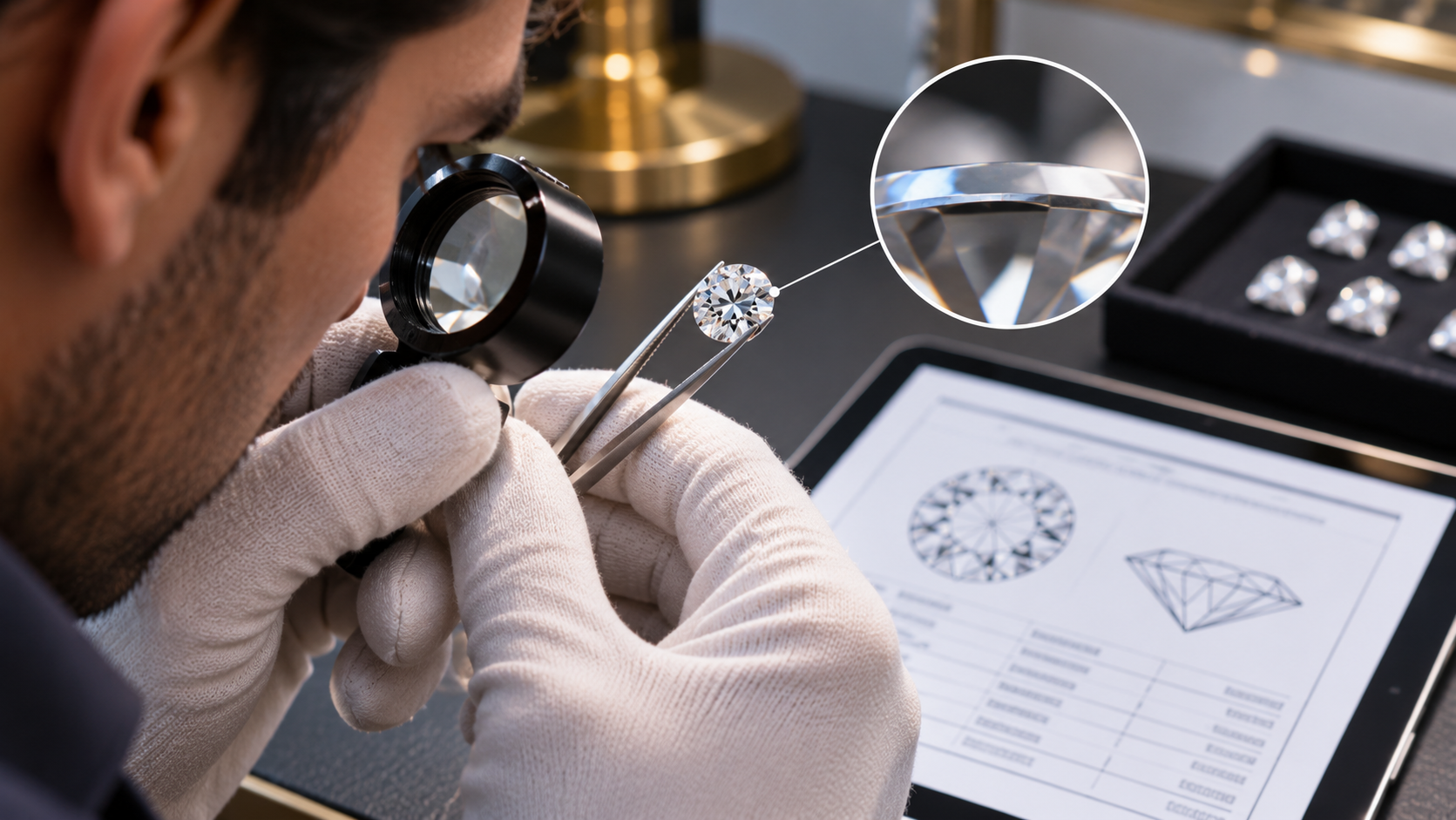
You brief a factory by writing one stone spec, asking for a lab report, and agreeing the label wording before production. Picture a Nashville founder launching 40 pendants, each set with one 0.30 carat round stone. That is 12 total carats (40 × 0.3), and she sends one spec to every factory and to any diamond manufacturers she shortlists. This is an illustration, not a client case.
- Write the stone spec. List shape, carat weight, color, clarity, and cut, and state that the stone is lab grown. The 4Cs are carat weight, color, clarity, and cut, the four factors that set a diamond’s quality.
- Ask for a report and inscription. Name the lab, such as GIA or IGI, and request a report number that matches the girdle inscription. If you still need a stone source, read our guide to wholesale jewelry suppliers.
- Ask where stones are grown and who sets them. Put the question to your diamond manufacturers and factories, and get the answer in writing, along with who pays for a stone chipped during setting.
- Agree the label wording. The FTC’s Jewelry Guides require “laboratory-grown” or similar wording immediately before “diamond.” The FTC’s 2018 revision removed “natural” from the definition of a diamond.
- Order a sample first. Request samples from two diamond manufacturers or factories, check each stone against its report, then approve bulk production. Confirm who owns the design and whether the factory may resell it.
The Bureau of Labor Statistics tracks US makers under NAICS 339910, Jewelry and Silverware Manufacturing.
Also Read: The Secret to Quality: How Manufacturing Jewelers Work →
FAQs About Private Label Lab Grown Diamonds in the USA
Few US diamond manufacturers grow gem quality stones for jewelry today, and the best known have stepped back. WD Lab Grown Diamonds filed for Chapter 7 in 2023, and De Beers announced Lightbox’s closure in 2025. Diamond Foundry is a US grower, and Stuller and Kaprielian set certified lab grown stones.
Some are, but many sold in the USA are grown overseas. De Beers cited growing low cost production from China when it closed Lightbox. Ask each of your diamond manufacturers where its stones were grown, and get the answer in writing.
Yes, you can launch by writing a clear stone spec and hiring a US factory or one of the diamond manufacturers above to set the stones. Start with a small sample order, check each stone against its report, and label every listing correctly.
Yes, the FTC’s Jewelry Guides say to disclose it immediately before the word “diamond,” with equal conspicuousness. Terms such as “laboratory-grown” or “laboratory-created” qualify. The FTC’s 2019 warning letters said company names and hashtags alone did not count.
No single minimum applies, and neither Stuller nor Kaprielian publishes one on the pages we reviewed. Ask each of the diamond manufacturers and factories you shortlist for a minimum per style and per order, in writing.
Ready to Find Your Lab Grown Diamond Jewelry Manufacturer?
Your lab grown diamond jewelry brand is one manufacturer away from becoming real. The factories are on Maker’s Row, ready to bid.