Walk into any glove showroom and the vocabulary multiplies fast: lambskin, cabretta, opera length, driving cut. For you, that confusion costs money. The wrong hide means stiff samples, returns, and a first order that does not sell. Knowing your leather gloves options up front keeps those mistakes off your purchase order.
It also changes how factories treat you. Brand owners who name the hide, the lining, and the construction get accurate quotes on the first reply.
This guide covers ten types, from lambskin dress styles to touchscreen commuter pairs, with production notes for each.
Why Do Leather Glove Types Matter for Brand Owners?
Leather glove types matter because the hide and the style together set your unit cost, your minimum order, and the factory you can use. Most US factories specialize in one or two glove types, according to Maker’s Row’s gloves sourcing guide. A brief that names your type reaches the right shop faster.
Let’s talk about what that means in practice. A thin lambskin dress glove needs skilled hand cutting. A cowhide work-style glove runs on heavier equipment.
MOQ (minimum order quantity) is the smallest number of pairs a factory will produce per style. The same guide puts leather fashion gloves at roughly 100 to 300 pairs. The type you pick pushes you toward the low or high end of that range.
Complete List: 10 Types of Leather Gloves
The ten main types of leather gloves are lambskin, cabretta, goatskin, deerskin, cowhide, suede, driving, opera, lined winter, and touchscreen gloves. Five describe the leather and five describe the style or finish, and a real product combines one of each. A lambskin driving glove and a goatskin driving glove are different products with different price points.
Each entry below covers the best use, key properties, fashion examples, and production notes. Every type here is built with cut-and-sew construction, the method where factories cut leather into pattern pieces and stitch them into a finished glove.
1. Lambskin Gloves
Lambskin gloves use the soft hide of young sheep and set the standard for refined dress styles.
Best for: Dress, evening, and premium women’s collections.
Properties: Very soft, lightweight, and fine grained, and it molds to the hand quickly. It is also thin, so it resists abrasion less than heavier hides.
Common use in fashion: Unlined dress pairs, cashmere-lined winter gloves, and bridal accessories.
Production notes: Thin skins show every scar, so cutters waste more hide per pair and your unit cost rises. Budget for extra sampling rounds to dial in the fit.
2. Cabretta (Hairsheep) Gloves
Hairsheep leather comes from sheep raised for hair instead of wool, and cabretta gloves are cut from its smooth, supple hide.
Best for: Dress and driving styles that need a clean line and a consistent shape.
Properties: Soft like lambskin, but typically a little firmer, which helps the glove hold its shape through repeated wear.
Common use in fashion: Classic men’s dress gloves and tailored driving pairs.
Production notes: Ask your tannery for swatches from more than one lot. Color can shift between lots, and that matters when you reorder.
3. Goatskin Gloves
Goatskin gloves combine light weight with strong abrasion resistance.
Best for: Driving, riding, and everyday gloves that need to last.
Properties: Natural lanolin keeps the leather supple, and it stays flexible after getting wet.
Common use in fashion: Driving gloves, moto-inspired styles, and unlined everyday pairs.
Production notes: Goatskin sits in the mid-price tier, below lambskin and deerskin. That makes it a sensible pick for a first collection with tight margins.
4. Deerskin Gloves
Deerskin gloves offer a soft, slightly pebbled hand with real durability.
Best for: Heritage, outdoor, and workwear-inspired lines.
Properties: Flexible, warm, and tough, and it holds up well in wet conditions.
Common use in fashion: Lined winter gloves, ranch-style pairs, and outdoor lifestyle accessories.
Production notes: Hides vary widely in size and texture, so expect more sorting and less consistency between lots. Ask each supplier where the hides come from, because the supply base differs from farmed leathers.
5. Cowhide Gloves
Cowhide gloves use the most widely available leather in the glove industry.
Best for: Work-inspired, utility, and budget-friendly lines.
Properties: Thick, durable, and economical, with a longer break-in period than sheep or goat.
Common use in fashion: Lined heritage gloves, mittens, and rugged outerwear accessories.
Production notes: Supply is deep, so costs and lead times stay predictable. Thicker leather limits fine finger detail, so skip it for slim dress patterns.
6. Suede Gloves
Suede gloves use leather with a brushed, napped surface instead of a smooth grain.
Best for: Casual seasonal lines and color-driven collections.
Properties: Velvety, soft, and easy to dye in rich colors. It absorbs water and stains faster than smooth leather.
Common use in fashion: Fall accessories, lined winter pairs, and matching sets with suede bags and boots.
Production notes: Plan for a protective finish and a care card. Stained suede drives returns, and returns eat margin.
7. Driving Gloves
Driving gloves are a fitted style built from thin, supple leather for grip and feel.
Best for: Menswear, luxury accessories, and gifting.
Properties: Snug fit, short wrist, and often unlined or lightly lined.
Common use in fashion: Perforated knuckle styles, contrast stitching, and car-culture branding.
Production notes: Tight fit tolerances demand accurate size grading, the process of scaling one pattern into every size. Most brands need more than one sample round. Test the pattern on real hands before you approve production.
8. Opera Gloves
Opera gloves are long evening gloves that cover the forearm and often reach above the elbow.
Best for: Formalwear, bridal, and runway-driven collections.
Properties: Thin leather, a long pattern, and often button closures at the wrist.
Common use in fashion: Evening wear, costume lines, and editorial shoots.
Production notes: Longer patterns use more hide per pair and add fit risk along the forearm. Confirm the factory has made long patterns before, since not every shop has.
9. Lined Winter Gloves
Lined winter gloves pair a leather shell with a warm lining such as cashmere, wool, fleece, or shearling.
Best for: Cold-climate collections and holiday gifting.
Properties: The lining supplies most of the warmth, while the leather blocks wind.
Common use in fashion: Cashmere-lined dress pairs, fleece-lined commuter gloves, and shearling-lined mittens.
Production notes: Each lining adds cutting and sewing steps, so unit cost and MOQ both climb. Source the lining fabric early, because it can set your lead time.
10. Touchscreen Leather Gloves
Touchscreen gloves add conductive fingertips so you can use a phone without taking them off.
Best for: Commuter and city-wear lines.
Properties: A standard leather body with conductive thread or patches at the thumb and index finger.
Common use in fashion: Everyday commuter pairs in lambskin or goatskin.
Production notes: The conductive component adds a supplier and a testing step. Test on several phone models before you approve bulk production.
If sustainability matters to your customers, the Higg Materials Sustainability Index from the Sustainable Apparel Coalition lets designers compare material impacts, leather included.
Comparison Table: Leather Gloves at a Glance
This table compares all ten types by best use, key properties, relative cost, and US factory availability. Cost tiers run from $ (lowest) to $$$$ (highest), and availability is general guidance, so confirm both when you post your project.
Type | Best For | Properties | Cost Range | USA Availability |
Lambskin | Dress, evening | Softest feel, thin, delicate | $$$ | Moderate |
Cabretta | Dress, driving | Smooth, holds its shape | $$$ | Moderate |
Goatskin | Driving, everyday | Light, abrasion resistant | $$ | High |
Deerskin | Heritage, outdoor | Flexible, warm, wet tolerant | $$$ | Limited |
Cowhide | Work-inspired, budget | Thick, durable | $ | High |
Suede | Casual, color-led | Velvety, stain prone | $$ | Moderate |
Driving | Menswear, gifting | Snug, thin, fitted | $$$ | Moderate |
Opera | Formal, bridal | Long, thin, delicate | $$$$ | Limited |
Lined winter | Cold climates | Warm lining, wind-blocking shell | $$$ | Moderate |
Touchscreen | Commuter | Conductive fingertips | $$ | Moderate |
How Do You Choose the Right Leather Gloves for Your Brand?
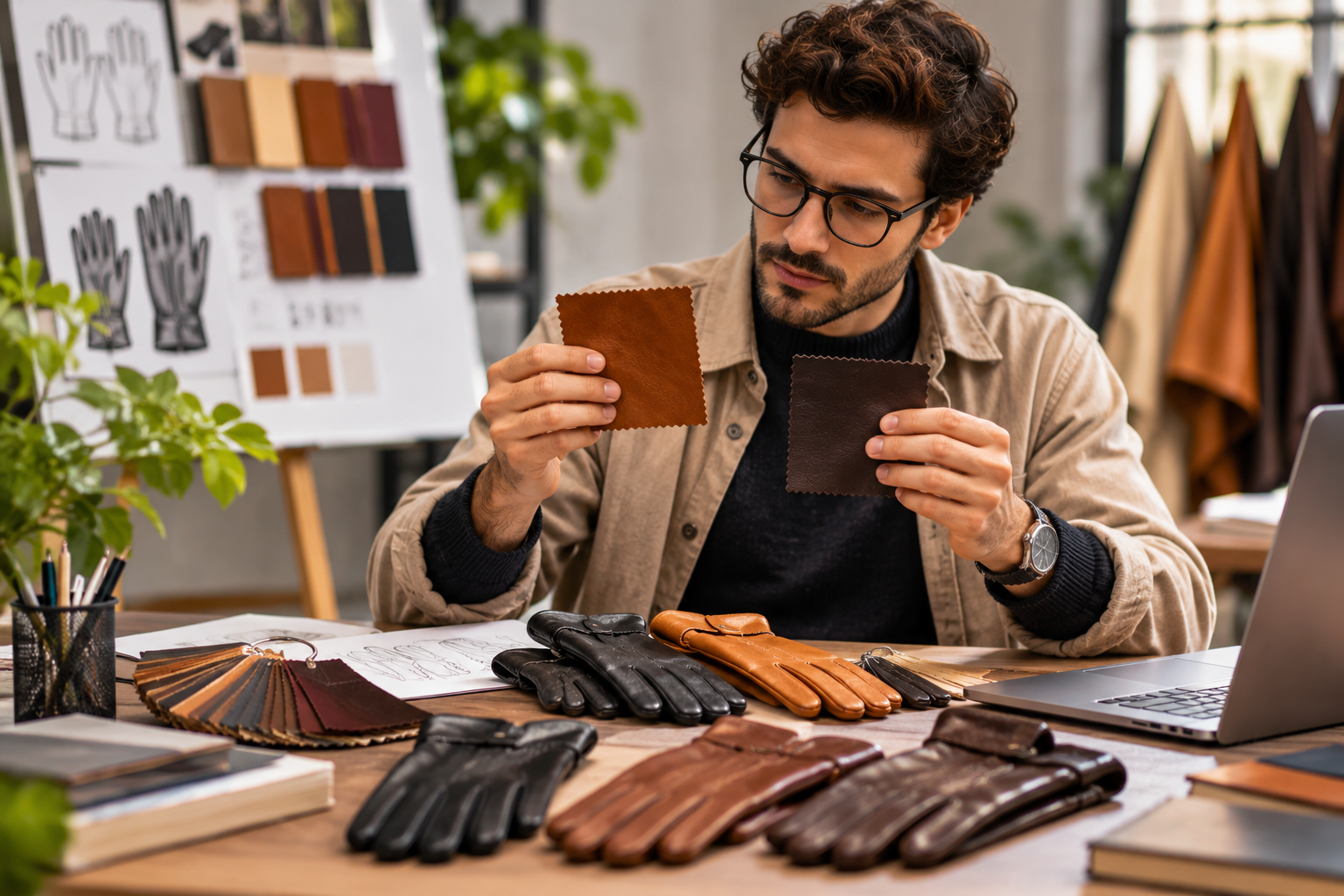
Five questions decide which leather gloves fit your brand: wearer, price, warmth, branding, and origin.
- Who wears it, and when? Dress and evening buyers expect lambskin or cabretta. Daily commuters and drivers do better with goatskin. Work-inspired customers expect cowhide or deerskin.
- What price must you hit? Work backward from your retail price. Cowhide and goatskin protect margin, while lambskin and opera lengths need a premium price to pay off.
- How warm must it be? Pick the lining first, since it drives warmth more than the leather does.
- Will it carry your name? A stamped or embossed logo marks your brand on every pair. The USPTO explains that registration is optional, but a federal registration creates nationwide rights, so decide before your first production run.
- Where must it be made? An unqualified Made in USA claim requires a product to be “all or virtually all” made in the United States, per FTC guidance. Imported hides or linings can undercut that claim, so ask every factory where materials come from.
Also Read: 7 Ways to Find a Verified Gloves Manufacturer USA (2026) →
Finding Leather Gloves Manufacturers on Maker’s Row
You can find leather gloves manufacturers on Maker’s Row, a marketplace connecting apparel brand owners with verified US manufacturers. Finding the right manufacturer does not have to mean months of cold emails. On Maker’s Row, post your leather gloves project for free and verified US manufacturers bid directly. Review bids, check profiles, connect when ready.
Name the hide, lining, and style in your brief, such as “goatskin driving glove, unlined, 100 pairs.” Factories that work with those materials respond directly. One Brooklyn accessories brand posted a 60-unit belt project and received bids from three verified leather manufacturers within a week.
You can post unlimited projects at no cost and receive bids from verified US factories with no upfront fee. To reply to a bid and connect directly, a subscription plan gives you full access.
FAQs About Leather Gloves
The main types are lambskin, cabretta, goatskin, deerskin, cowhide, suede, driving, opera, lined winter, and touchscreen gloves. Leather type sets feel and durability, while style sets fit, length, and lining.
Lambskin and cabretta suit fine dress gloves, goatskin and deerskin suit gloves that need strength and flexibility, and cowhide suits rugged, budget-friendly pairs. The best choice depends on who wears the glove and what price you need.
Lambskin feels softer and looks more refined, while goatskin lasts longer and costs less. Choose lambskin for dress lines and goatskin for daily wear.
Leather gloves block wind well, but the lining provides most of the insulation, so unlined pairs feel cool in real winter weather. Wool, cashmere, fleece, and shearling are the common lining choices.
US factories typically set minimums of 100 to 300 pairs for leather fashion gloves, according to Maker’s Row’s 2026 gloves sourcing guide. Simpler constructions can start lower, since the guide’s overall range for US glove factories runs from 50 to 300 pairs. For negotiation tactics, read Apparel Manufacturers USA: 7 Pricing & MOQ Strategies.
Yes, US factories make leather gloves, and the leather supply chain is active. As of 2025, the Bureau of Labor Statistics counted about 1,544 private-industry establishments in leather and allied product manufacturing in the fourth quarter (preliminary). That category covers tanning, footwear, and leather goods, so treat it as a measure of the supply chain, not a count of glove factories. For help locating a shop, see How to Find a Clothing Manufacturer in the USA.
Post your project on Maker’s Row and let verified US factories bid, or send a written spec to shops directly. Judge each shop on treatment documentation, setting method, MOQ, location, and sample policy. Compare at least three responses before paying for a sample.
Give a short, stone-specific card covering cleaning, what to avoid, and storage. Name any cleaners or solvents to avoid, and disclose treatments that need special care. The FTC’s jewelry guidance recommends this for treated stones.
Now You Know the Types, Here Is Your Next Step
Your leather gloves brand is one manufacturer away from becoming real. The factories are on Maker’s Row, ready to bid.