Open any supplier catalog and the types of gemstones start to blur together. Sapphire, spinel, tanzanite, and tourmaline all come in blue, and each one behaves differently at the bench. Mixing them up means cracked stones, returned rings, and factory quotes you cannot compare.
Knowing the types of gemstones tells you which stones survive daily wear and which belong only in earrings. That choice sets your setting style, breakage risk, and price.
It also sharpens manufacturer conversations. Name the stone, its Mohs hardness, and its treatment status, and a factory can quote accurately on the first reply.
Below, we cover 15 types of gemstones, a comparison table, and a five-question choosing framework.
Why Do Types of Gemstones Matter for Brand Owners?
The types of gemstones you choose decide how your jewelry is set, priced, cleaned, and sold. A wrong match shows up as chipped stones in your returns pile.
The Mohs scale ranks a mineral’s scratch resistance from 1 (softest) to 10 (diamond). Hardness is only half the story for most types of gemstones. Cleavage is a stone’s tendency to split along flat internal planes when struck. Diamond and topaz both show it, so a hard stone can still chip.
A treatment is any process that changes a stone’s color, clarity, or durability. The FTC’s In the Loupe guide says sellers should disclose treatments that are not permanent, need special care, or significantly affect value.
Skilled setters are scarce, too. As of 2025, the Bureau of Labor Statistics counts 32,800 jewelers and precious stone and metal workers and projects a 3 percent decline through 2035. Learning how manufacturing jewelers work before you pick types of gemstones saves you from stones nobody can set.
Complete List: 15 Types of Gemstones
The 15 types of gemstones below run roughly from hardest to softest, so you see durability before you fall for a color. Each entry ends with production notes.
1. Diamond
Diamond is crystallized carbon and the hardest of all natural types of gemstones.
- Best for: Engagement rings and daily wear.
- Properties: Colorless to fancy colors, perfect cleavage.
- Common use in fashion: Solitaires, studs, tennis bracelets.
A hard knock can still chip an exposed edge, so ask about protective settings. A bezel is a metal rim around the stone’s edge, and prongs are metal claws that grip it. Lab-created diamonds exist, and the FTC says sellers should label them laboratory-grown or laboratory-created.
2. Ruby
Ruby is the red variety of corundum, colored by chromium.
- Best for: Statement rings and July birthstone pieces.
- Properties: Saturated red, durable, often heat treated.
- Common use in fashion: Cocktail rings, studs, pendants.
Heating is a common ruby treatment, so ask for it in writing. Glass-filled and fracture-filled rubies exist, and the FTC treats fillers as a disclosure issue.
3. Sapphire
Sapphire is corundum in every color except red, with blue as the classic choice.
- Best for: Rings and September birthstone pieces.
- Properties: Blue, pink, yellow, or green, durable, no cleavage.
- Common use in fashion: Engagement rings, stackable bands, studs.
Calibrated stones are cut to standard sizes so a setter can use stock mountings. Calibrated sapphires let a small brand buy matching stones for a full ring run, and with no cleavage they hold up well in prong settings.
4. Spinel
Spinel is a durable, vivid stone that comes in red, pink, blue, and violet.
- Best for: Everyday rings as a sapphire alternative.
- Properties: Strong color saturation, no cleavage.
- Common use in fashion: Stacking rings and earrings.
Spinel sets well in standard settings. Shoppers know it less, so explain it in your product copy and on your hang tags.
5. Topaz
Topaz is an aluminum silicate that comes in blue, pink, yellow, and colorless forms.
- Best for: Pendants, cocktail rings, and November birthstone pieces.
- Properties: Clear, large sizes, cleavage in one direction.
- Common use in fashion: Studs and drop earrings.
Suppliers often treat blue topaz with irradiation and heating, so confirm disclosure with yours. Cleavage in one direction means bezels protect the edges best.
6. Emerald
Emerald is the green variety of beryl, colored by trace elements.
- Best for: Statement rings and May birthstone jewelry.
- Properties: Rich green, natural inclusions, brittle.
- Common use in fashion: Emerald-cut rings and pendants.
Emeralds are commonly oil-filled, and the FTC lists oil or resin impregnation as a treatment to disclose. Ask for protected settings, and keep ultrasonic cleaning off your care card.
7. Aquamarine
Aquamarine is the blue to blue-green variety of beryl.
- Best for: Rings, pendants, and March birthstone pieces.
- Properties: Light blue, typically clear.
- Common use in fashion: Emerald-cut rings and drop earrings.
It is a low-risk stone for most setters, which keeps bench quotes predictable. Large clear sizes suit bold statement pieces.
8. Morganite
Morganite is pink to peach beryl, named after J.P. Morgan.
- Best for: Romantic rings and bridal alternatives.
- Properties: Pastel pink, same family as emerald.
- Common use in fashion: Halo rings and pendants.
Rose gold flatters its color, so confirm your factory casts in that alloy. Halo and bezel settings help frame the pale tone.
9. Tourmaline
Tourmaline is a mineral group with one of the widest color ranges among types of gemstones.
- Best for: Color-forward fashion jewelry and October birthstone pieces.
- Properties: Pink rubellite, blue, green, and bicolor varieties.
- Common use in fashion: Rings and bracelets.
Color varies by parcel, so ask for matched pairs when you order earrings. Request a sample of each color before you approve a run.
10. Amethyst
Amethyst is purple quartz and the February birthstone.
- Best for: Entry-price color jewelry.
- Properties: Purple, can fade in strong sunlight.
- Common use in fashion: Everyday rings and pendants.
Calibrated sizes are common, which suits small batches. Keep samples out of strong sunlight and warn customers, since the color can fade.
11. Garnet
Garnet is a group of related silicates, not one mineral, which is why its hardness is a range.
- Best for: Everyday jewelry and January birthstone pieces.
- Properties: Red almandine and pyrope, plus green, orange, and purple.
- Common use in fashion: Bead necklaces and studs.
Name the variety on your spec sheet, because green tsavorite costs far more than red almandine. Ask your supplier for that variety’s exact hardness.
12. Peridot
Peridot is an olive-green gem and the August birthstone.
- Best for: Earrings and pendants.
- Properties: Olive green, sensitive to acids.
- Common use in fashion: Studs and drop earrings.
Use it where knocks are rare, because pendants and earrings outlast rings. Skip acid-based cleaners in your care card.
13. Tanzanite
Tanzanite is violet-blue zoisite mined only in Tanzania.
- Best for: December birthstone pendants and earrings.
- Properties: Violet-blue, usually heat treated, soft for a ring stone.
- Common use in fashion: Pendants and earrings.
Single-source supply means price and stock can shift, so confirm availability before your design is final. Its softness suits pendants and earrings better than rings.
14. Opal
Opal is hydrated silica known for flashes of shifting color.
- Best for: Pendants, earrings, and October birthstone pieces.
- Properties: Water-bearing, soft, can crack from heat or dryness.
- Common use in fashion: Cabochon pendants and earrings.
A cabochon is a gemstone cut with a smooth, domed top and no facets. Opal is usually cut this way, so choose protective bezels and print care instructions into your packaging.
15. Pearl
Pearl is the one organic gem among these types of gemstones, grown inside a mollusk, and cultured pearls grow with human help.
- Best for: Necklaces, earrings, and June birthstone pieces.
- Properties: Soft, lustrous, harmed by acids, alcohol, and perfume.
- Common use in fashion: Strands, studs, drop earrings.
FTC guidance says the word cultured or cultivated should immediately precede pearl on cultured products. Soft nacre scratches easily, so pearls suit earrings and necklaces better than rings.
Treatments touch many of these types of gemstones. The FTC’s jewelry guidance hub is the place to confirm current rules before you write product copy.
Comparison Table: Types of Gemstones at a Glance
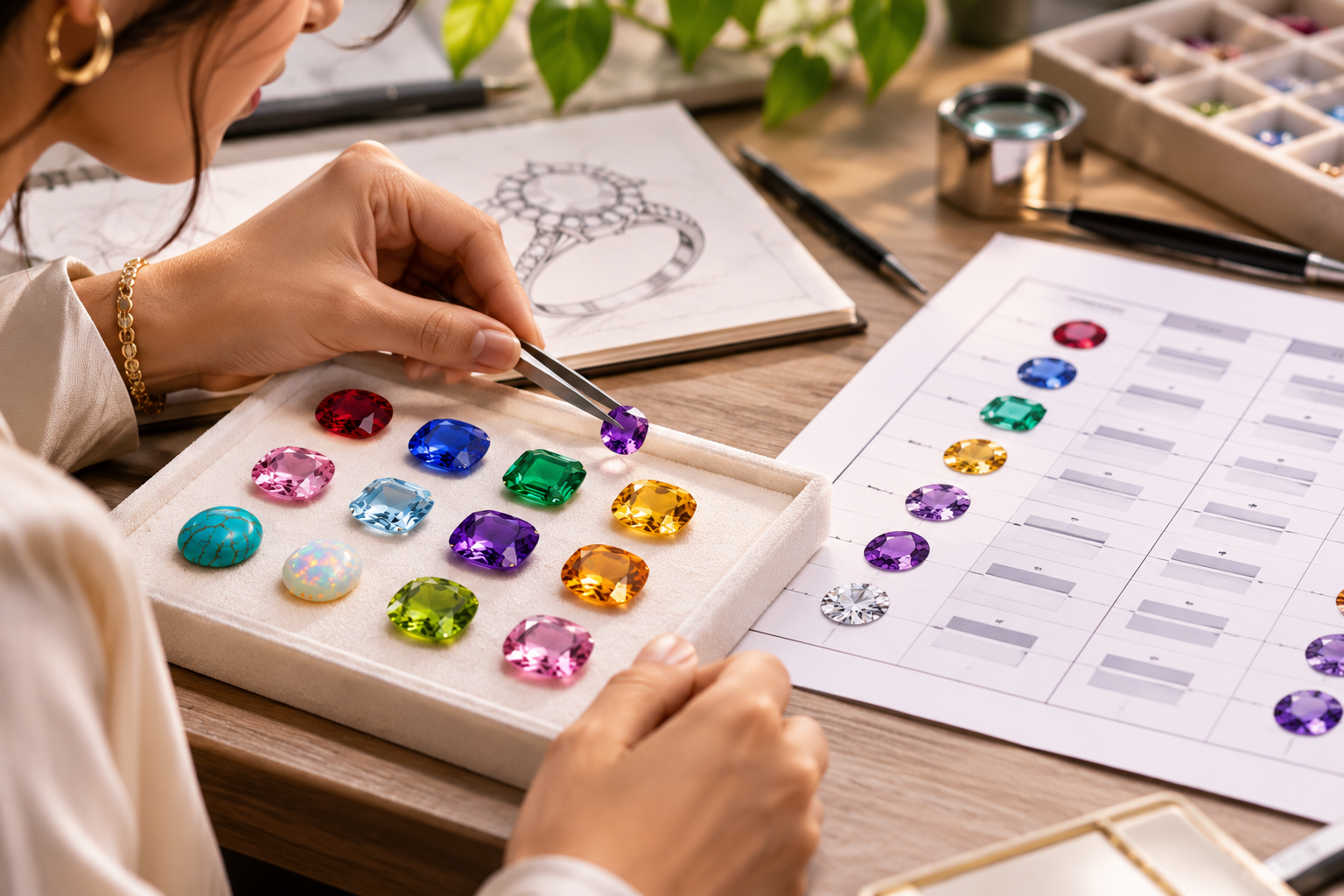
This table compares all 15 types of gemstones by hardness, price, and sourcing ease. Cost ranges are US dollar per carat retail estimates from published dealer guides, not quotes, and they swing with size, color, treatment, and origin. Availability is general guidance, so confirm stock with each supplier.
Type | Best For | Properties | Cost Range (USD per carat) | USA Availability |
Diamond | Rings | Mohs 10 | $3,000 to $11,000 (1 ct, high quality) | Wide |
Ruby | Statement rings | Mohs 9 | $1,000 to $100,000 | Wide |
Sapphire | Rings | Mohs 9 | $500 to $15,000 | Wide |
Spinel | Rings | Mohs 8 | $10 to $3,000+ | Moderate |
Topaz | Pendants | Mohs 8 | $25 to $1,500 | Wide |
Emerald | Statement rings | Mohs 7.5 to 8 | $250 to $20,000 | Wide |
Aquamarine | Rings, pendants | Mohs 7.5 to 8 | $80 to $600 | Wide |
Morganite | Bridal | Mohs 7.5 to 8 | $80 to $450 | Moderate |
Tourmaline | Fashion rings | Mohs 7 to 7.5 | $15 to $500 | Wide |
Amethyst | Entry-price rings | Mohs 7 | $10 to $500 | Wide |
Garnet | Everyday pieces | Mohs 6.5 to 7.5 | $5 to $200 | Wide |
Peridot | Earrings | Mohs 6.5 to 7 | $50 to $500 | Wide |
Tanzanite | Pendants | Mohs 6 to 7 | $150 to $1,500 | Moderate |
Opal | Pendants | Mohs 5.5 to 6.5 | $50 to $8,000 | Moderate |
Pearl | Strands | Mohs 2.5 to 4.5 | Sold by piece, $5 to $10,000 | Wide |
Price sources, by stone: Gemdle for topaz, aquamarine, morganite, peridot, tanzanite, and opal. Gems of Ashion for ruby, sapphire, emerald, tourmaline, amethyst, garnet, spinel, and pearl. Nendine for diamond, and Worth My Rock for fine red spinel. Dealer guides disagree by wide margins, so treat each range as a starting point and request itemized quotes.
How Do You Choose the Right Gemstones for Your Jewelry Brand?
Choose gemstones by answering five questions about wear, budget, treatment, supply, and setting, in that order. These questions narrow 15 types of gemstones to the few your line needs.
- What will your customer do while wearing it? Rings take daily knocks, so favor Mohs 8 and above. Earrings and pendants can carry softer stones like opal and pearl.
- What can your unit price absorb? Use the per-carat ranges above, and budget from the middle of each range, not the bottom. For a first line, pair one low-range stone with one mid-range stone.
- Can your supplier document treatment and origin? Require both in writing on every invoice, because the FTC expects disclosure of many treatments.
- Can you buy matching stones in your size? MOQ (minimum order quantity) is the smallest number of units a manufacturer will produce per order. Ask each factory for its MOQ and whether it sets stones you supply. Our guide to choosing wholesale jewelry suppliers covers vetting.
- Which setting protects the stone? Bezels protect cleavage-prone and soft stones, while prongs suit hard ones. Custom jewelry manufacturers can prototype both before you commit.
Picture a founder choosing among types of gemstones for a 100-piece stacking ring run. Sapphire or spinel fits daily wear, while opal belongs in her pendant line. This example is illustrative, not a client case.
Also Read: Small Batch Jewelry Manufacturers You Should Know →
Finding Gemstone Jewelry Manufacturers on Maker’s Row
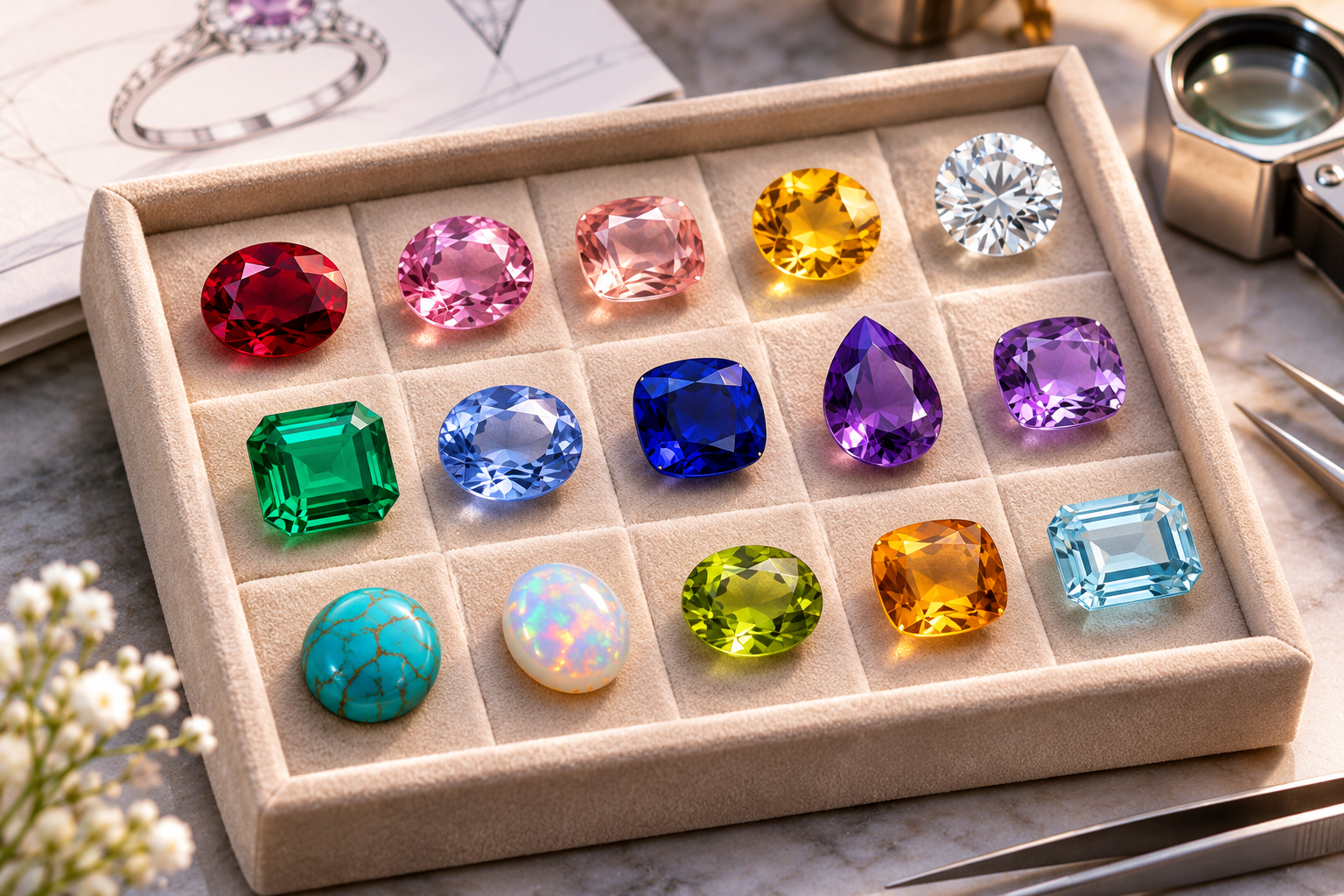
Maker’s Row is a marketplace connecting brand owners with verified US manufacturers, including jewelry makers who cast, set, and finish gemstone pieces. Finding the right gemstone jewelry manufacturer does not have to mean months of cold emails. On Maker’s Row, post your gemstone jewelry project for free and verified US manufacturers bid directly. Review bids, check profiles, connect when ready.
List each of your types of gemstones, sizes, and treatment status in your project brief, so manufacturers who work with those stones respond directly. You can post as many jewelry projects as you like at no charge, and verified US factories bid with no upfront fee. When you are ready to reply and connect directly, a subscription gives you full access.
FAQs About Types of Gemstones
These answers cover classification, durability, cost, disclosure, and sourcing.
Gemstones fall into two traditional groups: precious (diamond, ruby, sapphire, emerald) and semiprecious (every other stone). They also split by origin into natural, laboratory-created, and imitation, and the FTC says sellers should label each one clearly.
Diamond, ruby, and sapphire, at Mohs 9 to 10, are the best choices for rings worn daily. Spinel at Mohs 8 is a strong alternative, and topaz works with protective settings because of its cleavage.
Yes in many cases, because the FTC says sellers should disclose treatments that are not permanent, need special care, or significantly affect value. Read the FTC’s jewelry guidance for the full rules, since this article is not legal advice.
Garnet, amethyst, spinel, and tourmaline start at $5 to $15 per carat in the table above. Top qualities cost far more, so price your samples at the middle of each range.
Some can, so ask each manufacturer before you buy stones. The BLS projects jewelry and silverware manufacturing employment to fall from about 20,400 in 2025 to 15,800 by 2035, so book capacity early.
Now You Know the Types of Gemstones: Here Is Your Next Step
Your gemstone jewelry brand is one manufacturer away from becoming real. The factories are on Maker’s Row, ready to bid.