American lingerie has room for heritage names and fast-growing newcomers in the same drawer. Most lists rank brands without saying when they started, where they are based, or what they cost. This guide covers the best lingerie brands in the USA, with a lesson for brand owners from each.
Apparel manufacturing is still a sizable US industry. As of September 2026, the U.S. Bureau of Labor Statistics reports about 71,400 employees in the sector (preliminary), and 6,199 private establishments in the first quarter of 2026 (preliminary). The American Apparel & Footwear Association says the wider industry supports more than 3.24 million US workers.
The best lingerie brands share three habits. They fit on real bodies, they build around one hero product, and they know exactly how it gets made. If you are building a brand in this space, this list shows you what the best are doing right.
What Makes a Great Lingerie Brand?
A great lingerie brand fits real bodies, makes its hero product well, and is honest about where that product is made. Five traits separate the best lingerie brands from the rest:
- Fit research: Cuup co-founder Abby Morgan told Coveteur the team ran about 80 fittings per design, against 12 to 17 at most companies.
- Materials: Hanky Panky says its Signature Lace is knitted, dyed, and finished in the US.
- Manufacturing honesty: Natori states plainly that most of its collections are made in the Philippines.
- Brand identity: Fleur du Mal treats lingerie as fashion, with boutiques in New York and West Hollywood.
- Community and audience: Savage X Fenty built its range around inclusive sizing, with bras from 32A to 46DDD at Nordstrom.
Best Lingerie Brands in the USA (2026)
The best lingerie brands in the USA for 2026 are Hanky Panky, Natori, Cosabella, Victoria’s Secret, Journelle, Eberjey, Fleur du Mal, Cuup, ThirdLove, Savage X Fenty, Skims, and Honeylove. Each is headquartered in the US and was still selling in October 2026, and each founding year and headquarters was checked against company or reference pages. Prices are retail listings seen in October 2026 and move with sales.
1. Hanky Panky
Hanky Panky built a global name on one comfortable lace thong.
Founded: 1977, New York, NY (Gale Epstein and Lida Orzeck) Known for: The Original Rise Thong, launched in 1986 Price range: $24 (Original Rise Thong) to $58 (Padded Triangle Bralette), per hankypanky.com What sets them apart: Its CEO says the lace is made in the US and a substantial part of manufacturing stays domestic. CB Insights reports that Crown Brands Group and Gelmart International acquired the company in December 2025.
2. Natori
Natori turned lingerie into a design-led fashion house.
Founded: 1977, New York, NY (Josie Natori) Known for: The Feathers contour plunge bra Price range: $72 for the Feathers Contour Plunge Bra (Nordstrom list price, July 2025) What sets them apart: A sister company, FFI, runs the Philippines factory where most collections are made, which keeps design and production close. Natori describes itself as woman-founded and family-owned.
3. Cosabella
Cosabella pairs Miami design with Italian production.
Founded: 1983, Miami, FL (Ugo and Valeria Campello) Known for: The Never Say Never lace collection, including the Sweetie bralette Price range: $55 to $69.75 for the Sweetie bralette across US retailers (Walmart and Simon outlet listings) What sets them apart: Collections are designed in Miami and made in Italy. The company says it stopped importing from other makers and started producing its own line.
4. Victoria’s Secret
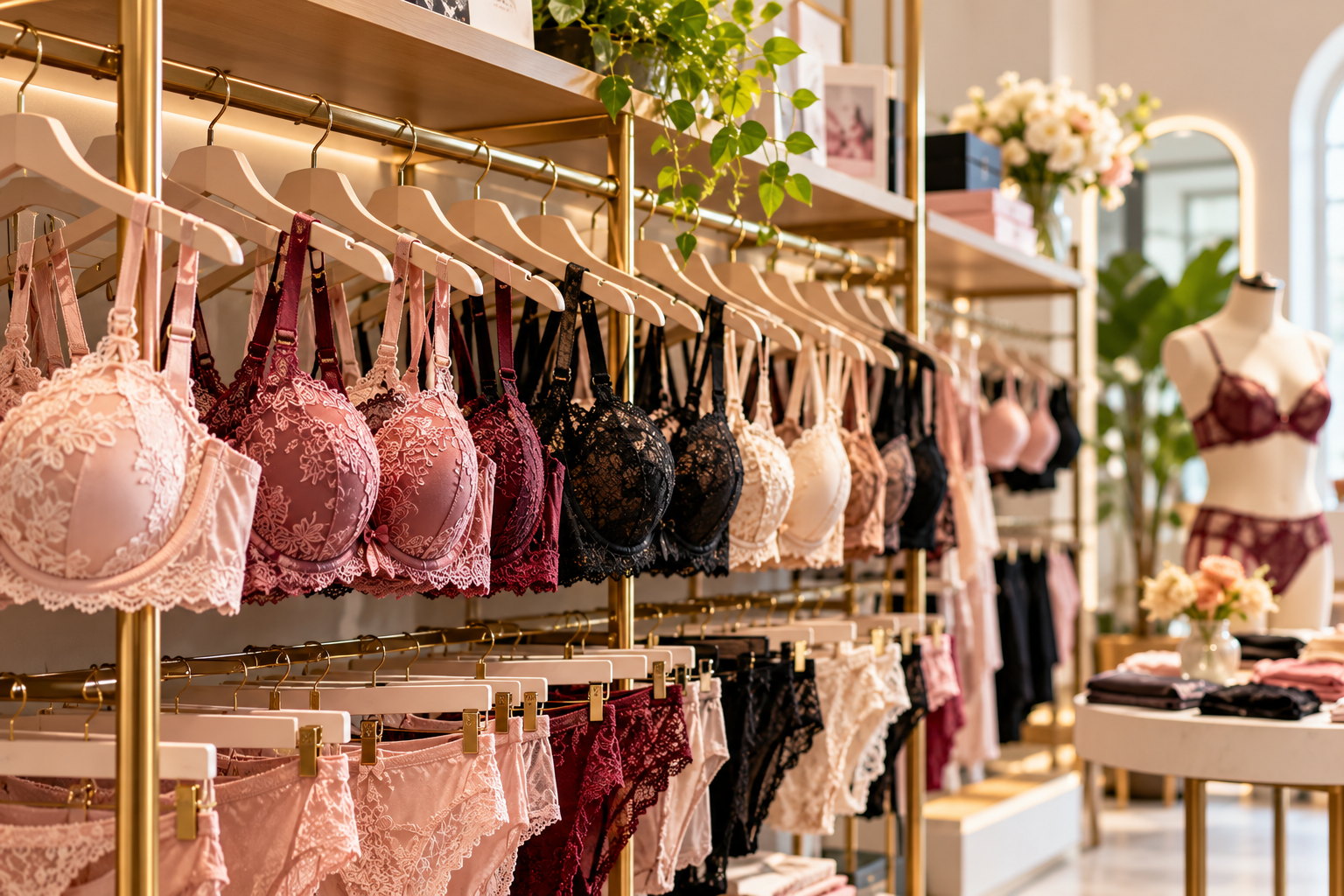
Victoria’s Secret is the best-known American lingerie retailer.
Founded: 1977, Palo Alto, CA (Roy and Gaye Raymond), now headquartered in Reynoldsburg, OH Known for: Body by Victoria bras and the PINK line Price range: $54.95 list price for the FlexFactor Lightly Lined Plunge Demi Bra (victoriassecret.com) What sets them apart: It became an independent public company, NYSE: VSCO, on August 3, 2021. In the US, Canada, and Greater China, it owns and operates its brands directly.
5. Journelle
Journelle started as a curated lingerie boutique and later added its own label.
Founded: 2007, New York, NY (Claire Chambers) Known for: Curated multi-brand lingerie plus the in-house Journelle Collection Price range: $68 (Lace Molded Wireless Bra) to $128 (Anais Plunge Bra), sold by Journelle What sets them apart: It sold other labels for seven years before launching its own collection in 2014. Guido Campello and Sapna Palep acquired it in October 2019, per CB Insights.
6. Eberjey
Eberjey made comfortable sleepwear and lingerie its whole identity.
Founded: 1996, Miami, FL (Ali Mejia and Mariela Rovito) Known for: The Gisele pajama set Price range: $118 to $158 for Gisele pajama sets (Luxe Digital and Zappos listings) What sets them apart: The founders launched in 1996, when they say lingerie focused more on the male gaze than on the wearer. It has since added menswear, kidswear, swim, and activewear.
7. Fleur du Mal
Fleur du Mal treats lingerie as fashion, not just foundation.
Founded: 2012, New York, NY (Jennifer Zuccarini) Known for: Lace lingerie, ready-to-wear, and swim Price range: $58 (Le Stretch Triangle Bra) to $168 (Executive Balconette Bra), per Moda Operandi What sets them apart: Zuccarini co-founded Kiki de Montparnasse in 2005 and was a Victoria’s Secret design director before launching. The brand runs boutiques at 175 Mott Street in New York and in West Hollywood.
8. Cuup
Cuup is a New York bra brand built around fit and size range.
Founded: 2018, New York, NY (Abby Morgan, Kearnon O’Molony, Lauren Caris Cohan, and Chrisden Ferrari) Known for: Unlined mesh underwire bras, including The Balconette and The Plunge Price range: $68 (The Plunge – Mesh) to $88 (lace plunge bras), per shopcuup.com What sets them apart: The brand lists 67 sizes, and Morgan says it ran about 80 fittings per design. Crunchbase lists FullBeauty Brands as its owner.
9. ThirdLove
ThirdLove pioneered half cup sizes in the American bra market.
Founded: 2013, San Francisco, CA (Heidi Zak) Known for: The 24/7 Classic T-Shirt Bra, which the brand calls the first bra made in half cup sizes Price range: 74listpriceforthe24/7ClassicT-ShirtBra(49 on thirdlove.com in October 2026) What sets them apart: Retail Dive reports 78 size options. A news interview with Zak reported production in China and Vietnam, so a US brand does not always mean US-made.
10. Savage X Fenty
Savage X Fenty is Rihanna’s size-inclusive lingerie label.
Founded: 2018, El Segundo, CA (Rihanna) Known for: Lace balconette bras such as Savage Not Sorry Price range: $49.95 (Microfiber Push-Up Bra) to $64.95 (Savage Not Sorry Unlined Lace Balconette Bra), per Nordstrom and savagex.com What sets them apart: It began as a monthly subscription business. WWD reported in 2024 that Nordstrom, its first US retail partner, carried bras from 32A to 46DDD.
11. Skims
Skims grew from shapewear into a full intimates brand.
Founded: 2019, Los Angeles, CA (Kim Kardashian, Jens Grede, and Emma Grede) Known for: The Fits Everybody bra and shapewear collection Price range: $46 (Scoop Neck Bralette) to $55 (T-Shirt Bra), per Net-A-Porter What sets them apart: Its September 2019 launch sold out in minutes and took in $2 million, per Luxury Tribune. SCMP reported a valuation of $4 billion in July 2023.
12. Honeylove
Honeylove turned a founder’s frustration with shapewear into a patented wireless bra.
Founded: 2018, Los Angeles, CA (Betsie Larkin) Known for: The wireless CrossOver Bra and Liftwear tops Price range: $69 (CrossOver Bra) to $74 (CrossOver Contour Bra), per honeylove.com What sets them apart: A Kickstarter campaign in October 2018 reached its goal within hours, per Curvy Girl Journal. The company joined Y Combinator’s Summer 2018 batch.
Best Lingerie Brands at a Glance
The table below compares founding year, headquarters, hero product, and price for all 12 brands.
Brand | Founded | HQ | Known For | Price Range (October 2026 listings) |
Hanky Panky | 1977 | New York, NY | Original Rise Thong | $24 to $58 |
Natori | 1977 | New York, NY | Feathers contour plunge bra | $72 (July 2025) |
Cosabella | 1983 | Miami, FL | Never Say Never lace | $55 to $69.75 |
Victoria’s Secret | 1977 | Reynoldsburg, OH | Body by Victoria bras | $54.95 |
Journelle | 2007 | New York, NY | Curated lingerie and own collection | $68 to $128 |
Eberjey | 1996 | Miami, FL | Gisele pajama set | $118 to $158 |
Fleur du Mal | 2012 | New York, NY | Fashion-forward lingerie | $58 to $168 |
Cuup | 2018 | New York, NY | Unlined mesh underwire bras | $68 to $88 |
ThirdLove | 2013 | San Francisco, CA | 24/7 Classic T-Shirt Bra | $74 |
Savage X Fenty | 2018 | El Segundo, CA | Inclusive lace bras | $49.95 to $64.95 |
Skims | 2019 | Los Angeles, CA | Fits Everybody bras | $46 to $55 |
Honeylove | 2018 | Los Angeles, CA | CrossOver wireless bra | $69 to $74 |
What Do the Best Lingerie Brands Have in Common?
The best lingerie brands in this guide share four habits: one hero product, fit research, small first runs, and close control of production.
- One hero product: Hanky Panky has its Original Rise Thong, Cosabella has Never Say Never lace, and Natori has the Feathers bra.
- Fit research before launch: Cuup says it ran about 80 fittings per design.
- Small first runs: In 1977, Gale Epstein spent a weekend sewing 144 tops and bottoms for Lord & Taylor, the first store to order Hanky Panky, per a profile archived by WRAL. Honeylove tested demand on Kickstarter in October 2018.
- Production control: Natori uses a sister-company factory, Cuup describes its supplier as a business partner, and Cosabella produces in Italy.
Every brand on this list started exactly where you might be right now, with a strong idea and a need to find the right manufacturer to bring it to life.
Also Read: How to Start a Fashion Line and Collection →
How Do You Start Your Own Lingerie Brand?
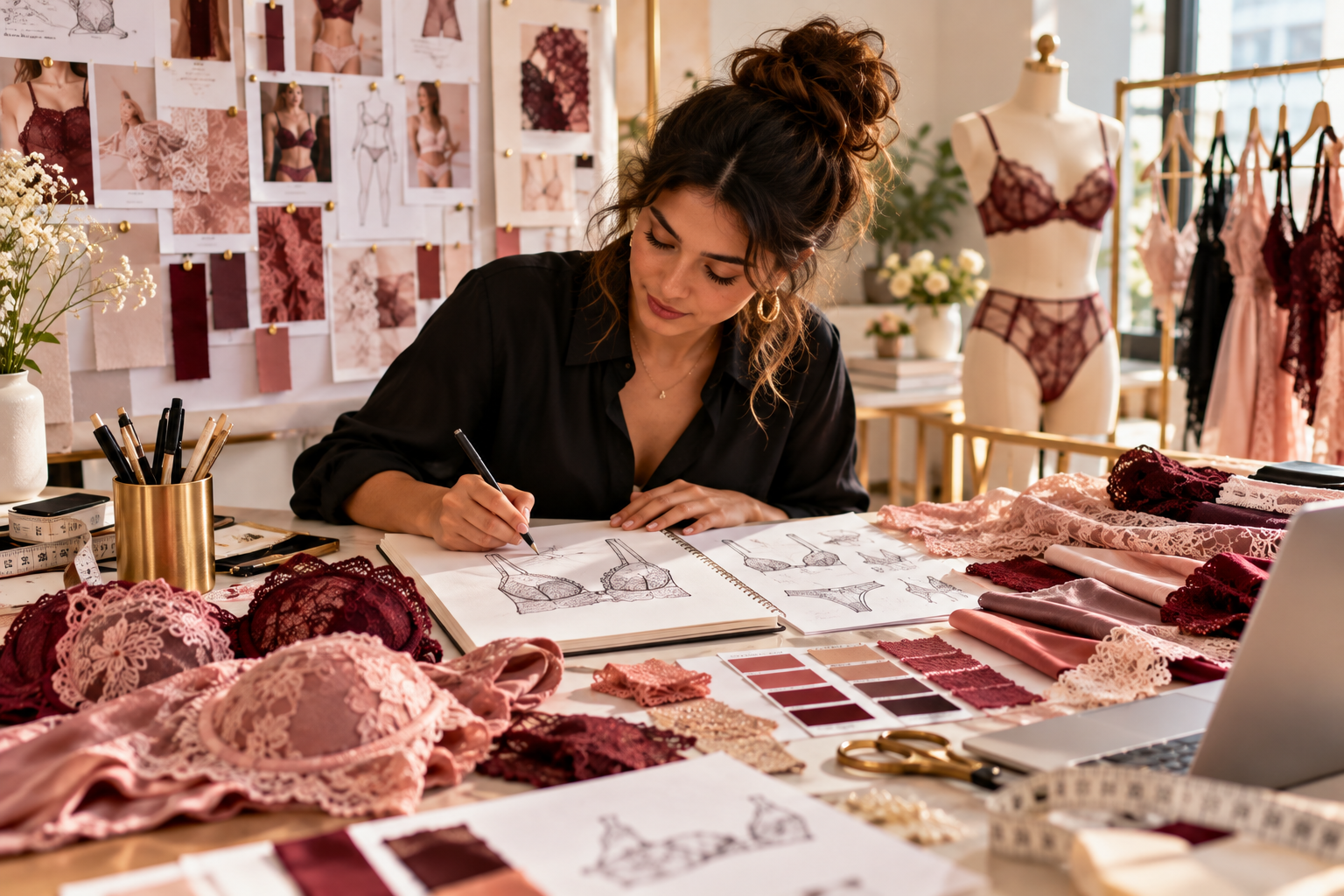
You start a lingerie brand by choosing one hero product, defining your identity, and finding a manufacturer that fits your volume. Every brand above began with a founder, a gap in the market, and a first run. Yours can too.
- Define your hero product. Write a one-page brief covering fit, fabric, target customer, and retail price for one piece, such as a wireless bralette. A tech pack is a design specification document that gives a factory your sketches, materials list, and measurements. Build one before you request quotes; this professional tech pack guide shows how.
- Build your brand identity. Pick a name, an aesthetic, and a customer. Search the USPTO trademark database before you commit to a name, and book a free mentor session through SCORE to pressure-test your budget.
- Find your manufacturer. Ask each factory whether it sews underwire, wireless, or both, and what it needs from you for a first run. MOQ (minimum order quantity) is the smallest number of units a manufacturer will produce per order. Our MOQ guide explains how to negotiate it.
One New York founder sourced panty elastic from California, bra elastic from Rhode Island, and hook-and-eye tape from North Carolina. She made her first run in Long Island City, Queens, funded by a Kickstarter that raised just over $25,000 in 2014. Read her story in Lingerie, Made in the USA.
Find Lingerie Manufacturers on Maker’s Row
Maker’s Row is a marketplace connecting apparel brand owners with verified US manufacturers. For a lingerie line, describe your bras or briefs, your fabric, and your first-run size in one project brief. Brand owners post unlimited manufacturing projects for free and receive bids from verified US factories at no upfront cost. To connect directly, subscription plans give full access.
FAQs About Lingerie Brands
Victoria’s Secret is the most widely recognized lingerie brand in the USA. Founded in 1977 in Palo Alto, it has traded on the NYSE as VSCO since August 3, 2021. No single public ranking settles “most popular,” because sales, reach, and social following differ. Newer brands such as Skims, Savage X Fenty, and Cuup compete mainly on size range and fit.
Hanky Panky is the clearest US-made brand on this list. Its CEO says the lace is made in the US and a substantial part of manufacturing stays domestic, and its product page says Signature Lace is knitted, dyed, and finished in the US. Natori produces mostly in the Philippines, Cosabella makes in Italy, and ThirdLove was reported to manufacture in China and Vietnam. Check each label before you assume.
They either build a close partnership with one supplier or own production. Cuup’s Abby Morgan says its supplier is a partner in the business, and Natori runs a factory through a sister company. Cosabella stopped importing from other makers and began producing its own line. New brands without that network can post a project on Maker’s Row and compare bids from verified US factories.
There is no single cost, because it depends on first-run size, fabric, and fit rounds. In 2014, the New York label Najla raised just over its $25,000 Kickstarter goal to fund a first lingerie production run. Ask each factory for an itemized quote covering patterns, grading, samples, trims, labels, and production. Free mentoring through SCORE can help you build the budget.
There is no universal lingerie MOQ, because each factory sets it by style, fabric, and construction. Ask for the minimum per style and per color, and ask whether paid sample development can lower it. Small starts are normal: Hanky Panky’s first order in 1977 was 144 pieces for Lord & Taylor. Run a test order before you scale.
Your Lingerie Brand Starts With One Decision
Your lingerie brand is one manufacturer away from becoming real. The factories are on Maker’s Row, ready to bid.