What Are Private Label Clothing Manufacturers?
Private label clothing manufacturers produce apparel that businesses sell under their own brand names. Depending on the manufacturer’s capabilities, brands can customize garments with their own designs, fabrics, colors, labels, trims, and packaging without owning or operating a clothing factory.
This manufacturing model is popular among fashion startups, direct-to-consumer (DTC) businesses, eCommerce brands, and established apparel companies looking to develop branded products. A manufacturing partner can support different stages of production, from sourcing fabrics and developing samples to producing finished garments that meet a brand’s specifications.
When evaluating private label clothing manufacturers in the USA, brands should compare product specialization, minimum order quantities (MOQs), sampling capabilities, production capacity, quality standards, and lead times. Some manufacturers accommodate small production runs, while others specialize in larger orders. Finding the right fit depends on your product, budget, and expected order volume.
Whether you’re developing a streetwear collection, activewear line, luxury apparel range, or everyday basics, the right private label apparel manufacturer can help turn your product specifications into finished garments ready for your brand.
In this guide, we’ll explore private label clothing manufacturers, explain how to evaluate potential production partners, and outline the factors to consider before placing an order. If you’re ready to move forward, explore clothing manufacturers on Maker’s Row or post your manufacturing project for free to share your requirements with potential manufacturing partners.
Why Choose Private Label Clothing Manufacturers?
Working with a private label manufacturer allows your business to develop branded apparel without building its own production facility. Instead of managing factory equipment and production operations yourself, you can work with a manufacturing partner whose capabilities match your product and order requirements.
The benefits depend on the manufacturer’s services, order size, and production process. Here are four factors to consider when deciding whether private label manufacturing is right for your clothing brand.
Lower Investment in Production Infrastructure
Starting a clothing brand doesn’t require purchasing industrial sewing machines, renting factory space, or hiring an in-house production team. By partnering with an established manufacturer, you can use its existing production capabilities instead.
Your actual costs will still depend on design development, sampling, fabrics, trims, labeling, order quantities, and shipping. Request a detailed quotation before committing to production so you can evaluate the total cost of launching your collection.
Create Apparel Under Your Own Brand
Private label manufacturing allows you to develop products for sale under your brand identity. Depending on the factory’s capabilities, customization options may include garment construction, fabric selection, colors, labels, trims, prints, embroidery, and packaging.
Before choosing a partner, clarify which elements can be customized and whether the manufacturer can meet your technical specifications. Sharing a tech pack, reference images, size charts, and fabric requirements can help you evaluate a factory’s suitability.
Find Production Options That Match Your MOQ
Minimum order quantities vary by manufacturer, garment type, fabric, customization requirements, and production method. Some factories accept small-batch orders, while others require larger commitments, particularly for custom fabrics or specialized construction.
If you’re launching your first collection, ask potential private label clothing manufacturers about minimums per style, color, and size, as well as sample costs and reorder requirements. Choosing a manufacturer whose MOQ aligns with your budget and demand forecasts can help you manage inventory risk.
Plan Sampling and Production Timelines
A manufacturer’s development process can influence how quickly your products are ready for sale. Sampling, fit revisions, material sourcing, production scheduling, and quality inspections all affect the final timeline.
Ask prospective manufacturers about sample turnaround times, bulk production lead times, revision policies, and how they handle production delays. Confirm the agreed timeline before placing your order, especially if you’re working toward a seasonal launch or retail delivery date.
How to Find the Right Private Label Clothing Manufacturer
Choosing a private label clothing manufacturer involves more than comparing quoted prices. The right partner should be capable of producing your specific garments, meeting your quality expectations, accommodating your order volume, and communicating clearly throughout development and production.
Use the following steps to evaluate potential manufacturing partners before committing to an order.
1. Compare Manufacturers on a Manufacturing Platform
Finding suitable factories can take time when you have to research each company individually. Maker’s Row helps brands discover apparel manufacturers and explore potential production partners through manufacturer profiles and platform features.
When comparing manufacturers, look for information about:
- Product specialization: Experience with your garment category, such as T-shirts, denim, activewear, dresses, or outerwear.
- Production capabilities: Services such as cut-and-sew manufacturing, private labeling, printing, embroidery, and finishing, where offered.
- Location: Whether the factory’s location aligns with your sourcing, shipping, and communication requirements.
- Minimum order quantities: Whether the manufacturer accepts your planned order size and quantity requirements.
- Sampling and development: Whether the factory can develop samples and accommodate revisions before bulk production.
- Relevant experience: Previous work, available portfolios, and experience producing garments with similar materials or construction requirements.
Start by exploring apparel manufacturers on Maker’s Row. Once you have identified potential matches, post your manufacturing project with your product details, estimated quantities, target timeline, and customization requirements.
Providing a clear brief makes it easier to communicate your needs and assess which manufacturing partners may be suitable for your project.
2. Match the Manufacturer to Your Apparel Category
Not every clothing factory produces every type of garment. A manufacturer experienced in basic cotton T-shirts may not have the same capabilities as a factory specializing in technical activewear, denim, tailored garments, or performance outerwear.
Look for a private label apparel manufacturer with experience in your specific product category. Ask about the materials it works with, construction techniques, available equipment, and previous projects involving similar garments.
For example, a brand developing leggings may need expertise in stretch fabrics, flatlock stitching, and fit testing. A denim brand may prioritize wash development, durable construction, and hardware sourcing.
Matching the manufacturer’s capabilities to your product specifications can reduce development issues and improve the likelihood of achieving the desired result.
3. Request and Evaluate Samples Before Bulk Production
Before approving a large order, request samples to assess whether the manufacturer can meet your expectations. Review fabric quality, stitching, garment measurements, fit, seams, trims, labeling, and finishing.
If the first sample requires changes, document your feedback clearly and request revisions where necessary. Confirm the approved sample, specifications, and quality expectations before authorizing bulk production.
Also ask about sample charges, revision costs, development timelines, and whether sample fees can be credited toward a production order. These details help you compare manufacturers on more than their initial quoted price.
Best Private Label Clothing Manufacturers for Startups
Finding the right private label clothing manufacturer involves more than comparing prices. Startups need a production partner whose capabilities, minimum order quantities (MOQs), sampling process, quality standards, and lead times align with their products and budgets.
The manufacturers and manufacturing resources below can help emerging and growing apparel brands explore potential production partners. Before choosing a factory, confirm that it specializes in your garment category, supports your required level of customization, and can accommodate your planned order volume.
Whether you’re searching for private label clothing manufacturers in the USA, small-batch production, or a partner that offers product development and sampling, compare each option against your actual manufacturing requirements.
1. Maker’s Row
Best for: Apparel startups and growing brands looking to discover manufacturing partners in the United States.
Maker’s Row is a manufacturing platform, not a single clothing factory. It helps brands discover apparel manufacturers, explore manufacturing capabilities, and identify potential production partners for their products.
Depending on the manufacturer, available services may include cut-and-sew production, pattern making, sample development, fabric sourcing, and full-package manufacturing. Brands should review individual manufacturer profiles and confirm service availability, MOQs, and production capabilities before moving forward.
Highlights
- Discover apparel manufacturing partners across the United States.
- Explore manufacturers based on product category and production capabilities.
- Identify potential partners for sampling and product development, where offered.
- Compare manufacturing options against your order size and specifications.
- Communicate your requirements to potential manufacturing partners.
Looking for a private label clothing manufacturer? post your manufacturing project for free on Maker’s Row share your product specifications, estimated order quantity, and production requirements.
2. Stylus Apparel (Chicago, IL)
Best for: Premium private label apparel
Stylus Apparel provides end-to-end private label clothing manufacturing services, including product development, garment production, branding, and finishing. Their experience producing premium-quality apparel makes them a strong choice for fashion brands focused on craftsmanship and high-end products.
Specialties
- Private label apparel
- Premium garments
- Product development
- Brand customization
3. Good Clothing Company (Fall River, MA)
Best for: Small-batch production
Good Clothing Company specializes in low MOQ clothing manufacturing, making it an excellent partner for startups and independent designers. Their experience with women’s, children’s, and lifestyle apparel allows brands to test collections before committing to larger production runs.
Specialties
- Small-batch manufacturing
- Low minimum order quantities
- Women’s apparel
- Children’s clothing
4. Lefty Production Co. (Los Angeles, CA)
Best for: Full-package production
Lefty Production Co. offers comprehensive private label apparel manufacturing, managing everything from pattern making and sampling to production and quality control. Their experience spans multiple apparel categories, including activewear, swimwear, streetwear, and premium fashion.
Specialties
- Full Package Production (FPP)
- Pattern making
- Sampling
- Activewear
- Swimwear
- Streetwear
5. Royal Apparel (Hauppauge, NY)
Best for: Sustainable apparel brands
Royal Apparel specializes in Made in USA private label clothing using organic, recycled, and sustainable materials. Brands focused on ethical manufacturing and environmentally responsible production often choose Royal Apparel for its commitment to sustainable practices.
Specialties
- Organic fabrics
- Recycled materials
- Sustainable apparel
- Made in USA production
6. Portland Garment Factory (Portland, OR)
Best for: Sustainable product development
Portland Garment Factory combines product development, design consulting, and manufacturing services with a strong focus on sustainability. Their collaborative approach makes them a great option for startups developing unique apparel collections.
Specialties
- Product development
- Design consultation
- Sustainable manufacturing
- Prototype development
7. Apparel Production Inc. (New York, NY)
Best for: Fashion brands in premium apparel
Located in New York’s Garment District, Apparel Production Inc. provides private label apparel manufacturing for luxury fashion, formalwear, and premium clothing brands. Their experience across multiple product categories makes them suitable for businesses seeking high-quality domestic production.
Specialties
- Luxury apparel
- Formalwear
- Premium fashion
- Private label manufacturing
8. Dolphin Manufacturing (Miami, FL)
Best for: Activewear and swimwear brands
Dolphin Manufacturing specializes in custom activewear and swimwear production, helping startups develop niche apparel collections with flexible manufacturing options.
Specialties
- Activewear
- Swimwear
- Private label production
- Custom apparel
9. Oomph Manufacturing (Salt Lake City, UT)
Best for: Low MOQ sustainable production
Oomph Manufacturing focuses on made-to-order production, sustainability, and lower minimum order quantities, making it an excellent choice for startups launching limited collections or testing new products.
Specialties
- Low MOQ production
- Sustainable manufacturing
- Made-to-order apparel
- Startup brands
Why Choose Made in USA Private Label Clothing Manufacturers?
Sourcing apparel from the United States can offer practical advantages for brands that prioritize domestic production, closer collaboration, and access to US-based manufacturing partners. However, the right choice depends on your product specifications, budget, order volume, and delivery requirements.
When comparing Made in USA private label clothing manufacturers, evaluate the following factors alongside the quoted production cost.
Quality Control and Product Development
Working with a domestic manufacturer may make it easier to coordinate sample reviews, discuss construction changes, and arrange production visits when practical. Consistent quality still depends on the factory’s processes, agreed specifications, and inspection procedures.
Before approving bulk production, document your measurements, fabric requirements, construction details, and quality standards.
Production and Delivery Planning
Domestic production can reduce international shipping distances for US-based brands, but it does not automatically guarantee shorter manufacturing lead times. Material availability, factory capacity, sampling revisions, and production schedules all influence delivery dates.
Ask each manufacturer for separate estimates for sample development, bulk production, and shipping so you can plan your launch or restocking schedule accurately.
Labor Standards and Supply Chain Transparency
Brands that prioritize responsible sourcing should ask manufacturers about their labor practices, supplier relationships, certifications, and available documentation. Manufacturing in the United States does not, by itself, establish that every aspect of a product’s supply chain meets a particular ethical or sustainability standard.
Request evidence that supports any claims you intend to make about your products or production process.
Communication and Collaboration
Working with a US-based manufacturing partner may make communication easier for brands operating in compatible time zones. Depending on location and factory policies, it may also be possible to arrange in-person meetings or production visits.
Before choosing a partner, establish how you’ll communicate, how quickly you can expect responses, how revisions will be handled, and who will be responsible for approvals throughout production.
Ready to explore US apparel manufacturing options? Browse clothing manufacturers on Maker’s Row and submit your manufacturing requirements to begin identifying potential partners.
POST YOUR MANUFACTURING REQUIREMENT FOR FREE
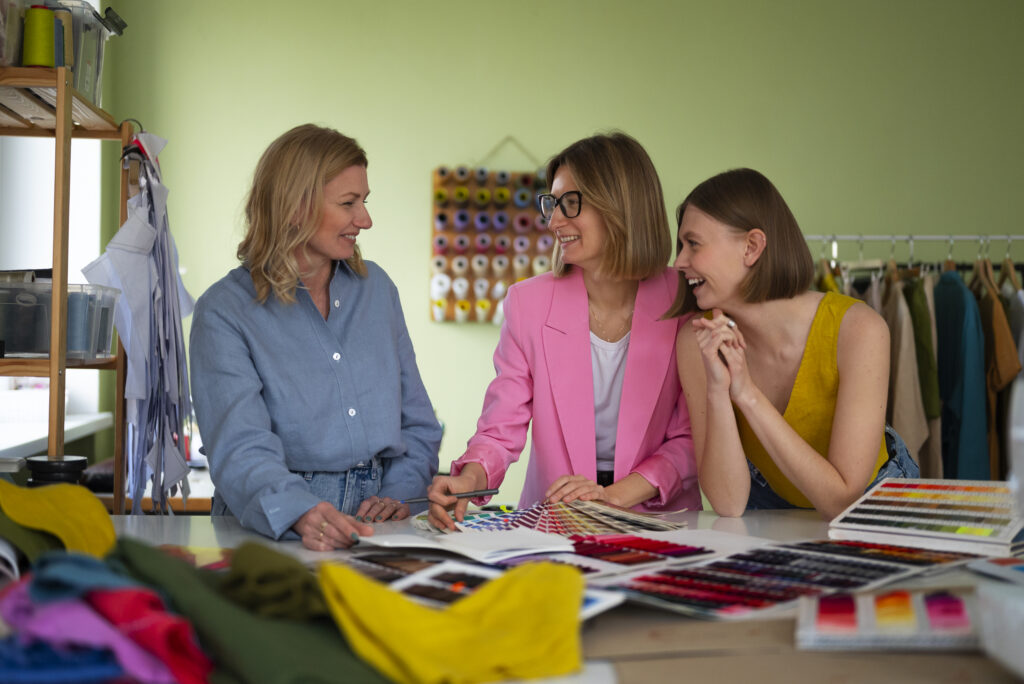
image credit: freepik
Tips for Working With Private Label Clothing Manufacturers
Finding a suitable private label clothing manufacturer is only the beginning. A successful production partnership also depends on clear specifications, realistic timelines, documented quality expectations, and effective communication.
Use these practices to prepare for manufacturing and reduce avoidable problems during product development.
Start With an Order Size That Fits Your Business
Minimum order quantities vary by factory, garment type, fabric, color, and customization requirements. If you’re launching a new collection, ask manufacturers whether they accept smaller production runs and how their pricing changes at different quantities.
Consider your budget, projected demand, sampling costs, and inventory requirements before deciding on an order size. A low MOQ is useful only if the manufacturer’s capabilities and unit economics also suit your business.
Provide Clear Product Specifications
Prepare a detailed manufacturing brief before requesting quotations. Include your garment designs, reference images, tech packs if available, size charts, fabric preferences, colors, trims, labeling requirements, estimated quantities, target budget, and desired delivery date.
The more clearly you communicate your requirements, the easier it becomes to assess whether a manufacturer can produce your garments and provide a meaningful quotation.
Approve Samples Before Bulk Production
Request and review samples before committing to a production run. Check fabric quality, fit, measurements, stitching, construction, trims, labels, and finishing against your specifications.
Document requested changes and obtain approval on the final sample and production details. Confirm the sampling process, associated costs, and expected timelines with the manufacturer in advance.
Establish Expectations for Quality and Delivery
Before placing an order, agree on production quantities, inspection procedures, acceptable quality standards, payment terms, delivery milestones, and how defects or delays will be handled.
Written expectations help both parties understand their responsibilities and provide a reference point if production issues arise.
Build a Long-Term Manufacturing Relationship
A reliable manufacturing relationship can become increasingly valuable as your apparel brand grows. Consistent communication, timely approvals, realistic forecasts, and constructive feedback can help improve coordination across repeat orders.
Before scaling production, review the manufacturer’s performance on quality, communication, delivery, and overall cost. Increase order volumes based on demonstrated results rather than assumptions.
Conclusion
Finding the right private label clothing manufacturer starts with understanding your product requirements, target costs, order quantities, and production timeline. Comparing manufacturers on their actual capabilities, sampling processes, quality standards, and experience can help you choose a partner that fits your apparel business.
Whether you’re looking for private label clothing manufacturers in the USA, small-batch production options, or a partner for a larger collection, verify MOQs, customization capabilities, pricing, and lead times before committing to an order.
Maker’s Row helps apparel brands discover potential US manufacturing partners and explore options suited to their production requirements. Instead of researching every factory independently, you can explore apparel manufacturers on Maker’s Row and compare potential partners for your product.
Ready to take the next step? Post your manufacturing project for free with your garment type, estimated order quantity, customization needs, budget, and timeline to start sharing your requirements with potential manufacturing partners.