Chasing down a full package clothing manufacturer usually means dozens of emails and half-answered questions about MOQ, cost, and who actually controls production. Most brand owners waste weeks vetting factories that turn out to be cut and sew shops in disguise. These seven strategies help you find, question, and confirm a real full package partner before you commit a single unit.
Full package clothing manufacturing is different from a standard cut and sew factory because the manufacturer handles clothing manufacturer fabric sourcing on your behalf, not just assembly. Finding the right full package clothing manufacturer means handing over more of your production process at once, which raises the stakes if the factory cannot actually deliver what it promises.
This guide applies to founders at any stage, from a first small run to a brand ready to scale a full collection. After reading, you will know exactly what questions to ask, what a fair MOQ and cost range look like, and how to confirm a factory’s fabric sourcing and full package claims before you sign anything.
Define What “Full Package” Actually Means for Your Product
A full package clothing manufacturer, often called an FPP (full package production) factory, manages your entire production cycle from design refinement through bulk shipment. That includes pattern making, fabric sourcing, trim procurement, sampling, and final production, not just cutting and sewing what you supply.
Before you contact a single factory, write down exactly which stages you need covered. A Portland-based outerwear brand spent three weeks negotiating with a factory before realizing it only handled sewing, not fabric sourcing. That mismatch added six weeks to their timeline and forced a second search mid-development.
If your product concept exists only as a sketch, you need a full package partner from day one. If you already have a finished tech pack and sourced fabric, you may only need cut and sew, which is faster and often cheaper. For a full breakdown of every production stage a domestic factory can cover, see this guide to a garment factory in the USA.
Compare Full Package Production Against Cut and Sew First
Full package production covers your entire supply chain, while cut and sew factories only assemble garments from materials you already provide. Confusing the two wastes time on both sides of a factory inquiry.
Getting clothing manufacturer fabric sourcing right starts with this distinction, so ask any prospective factory directly which model they use, because many list both services without clarifying the split. A cut and sew shop that also offers “sourcing support” may still expect you to approve every fabric order individually, which is not the same as full package production.
Brands with limited internal design or sourcing experience generally do better with a full package manufacturer. Brands with an in-house designer and existing fabric relationships often save money working with cut and sew manufacturers instead.
As of 2026, AAFA data shows the US apparel and footwear industry supports more than 3.6 million American workers, a reminder that domestic full package options exist across far more categories than most first-time founders assume.
How Much MOQ Should You Expect From a Full Package Clothing Manufacturer?
Full package manufacturers in the USA typically set MOQs between 150 and 600 units per style, higher than many cut and sew shops because sourcing and pattern development cost the factory more upfront regardless of order size.
A Los Angeles-based swimwear brand approached a full package facility with a 75-unit test order and was turned away twice before finding a factory whose minimum matched their stage. Confirming MOQ before you invest time in sampling conversations saves both sides weeks.
If your projected first run sits below 150 units, look for factories that offer a tiered model, moving from small studio production into full package manufacturing once your design is validated. The SBA recommends starting new supplier relationships with a small test order before committing to volume contracts, a principle that applies directly here.
Request a Full Sample Package Before Any Bulk Commitment
Ask for a complete sample, not just a fabric swatch or a single component, before approving any production run. It should be able to produce a finished, wearable sample that reflects every stage of the process.
Review the sample for fit accuracy, stitch quality, fabric behavior, and trim placement. A factory that resists producing a full sample, or that only offers a tech pack review (a detailed design file covering measurements, construction, and materials) without a physical prototype, is not ready to handle your full production.
Most reputable factories build one to two sample rounds into their standard process. If a factory charges heavily for a first sample or refuses revisions entirely, treat that as a warning sign rather than a normal cost of doing business.
Verify Which Services the Factory Actually Controls In-House
Some factories market themselves as full package partners but outsource pattern making, dyeing, or trim sourcing to third parties they do not directly manage. That adds a layer of risk you cannot see from a portfolio.
Ask directly: which stages happen inside your own facility, and which are subcontracted? A factory that outsources fabric dyeing to a partner two states away introduces a lead time and quality variable outside its control, even if it presents the finished product as fully in-house.
This distinction matters most for brands prioritizing consistency across seasons. A factory that controls every stage internally can usually correct a quality issue faster than one juggling multiple subcontractors.
Can a Clothing Manufacturer Source Fabric for Your Brand?
Yes, many full package clothing manufacturers source fabric directly for your brand, though the range of materials they can access depends on their existing mill relationships and your order volume. A factory that only works with three or four stock fabrics is not the same as one with an open supplier network.
Before assuming a factory can source what you need, ask for their current supplier or mill list rather than a general claim of “we source fabric for you.” Ask whether they can order custom colors or prints, and what the minimum yardage is per fabric type, since fabric minimums often run separately from your garment MOQ.
Traceability is the ability to track a fabric’s origin and supply chain journey back to its raw material source. Textile Exchange runs an annual Materials Benchmark program that collects sourcing and traceability data directly from brands, retailers, and Tier 1 through 3 suppliers, and traceability gaps remain a recurring theme in its published industry insights. Asking a manufacturer where a fabric actually originates, not just which reseller supplied it, is a fair question before you sign anything.
Ask This | Why It Matters | Red Flag |
Can I see your current fabric supplier list? | Confirms real sourcing relationships, not just marketing language | Vague answer, no specifics offered |
What is the minimum yardage per fabric type? | Fabric MOQs often differ from your garment MOQ | Factory refuses to give a number |
Can you source custom colors or prints? | Determines your creative flexibility on materials | Only offers a few stock colorways |
Where does the raw fiber originate? | Supports traceability and sourcing claims | Cannot answer beyond “our supplier” |
If you want a broader starting point before narrowing to full package vetting, browse clothing manufacturers in the USA directly on Maker’s Row to compare verified options by category.
What Does Full Package Production Really Cost?
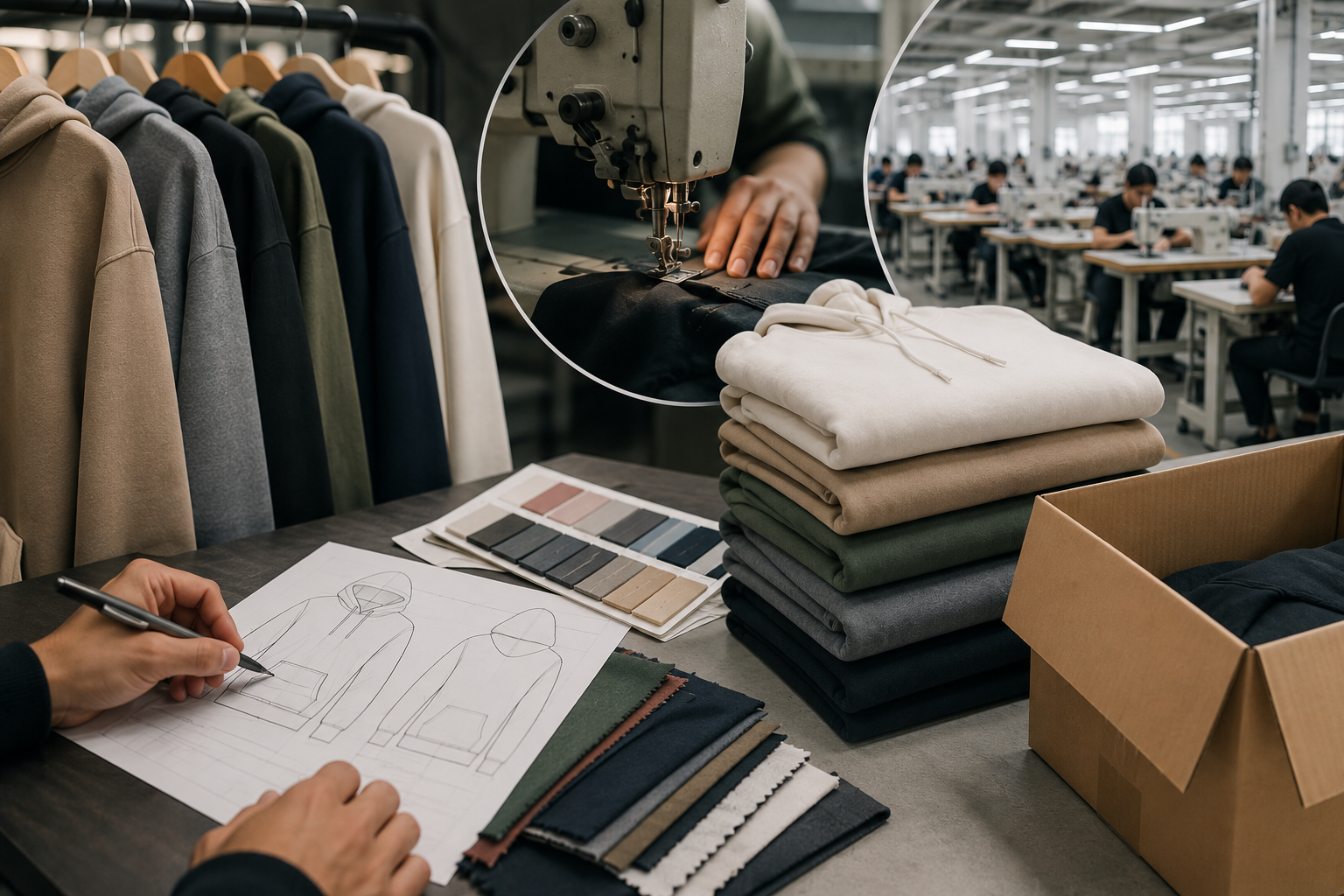
Full package production costs more per unit than cut and sew because the factory absorbs sourcing, development, and coordination work you would otherwise manage yourself. Understanding where that cost sits helps you evaluate bids fairly instead of chasing the lowest number.
Cost Component | Full Package Production | Cut and Sew Only |
Pattern Making | Included in package | $150–$400 separately |
Fabric Sourcing | Included in package | Managed by brand |
Sampling | 1–2 rounds typically included | $100–$300 per sample |
Per-Unit Production | Generally higher due to bundled services | Generally lower, brand supplies materials |
A factory quoting an unusually low full package rate is often shifting hidden costs into change orders later, such as fabric substitution fees or extra sampling charges. Ask for an itemized quote before comparing bids side by side.
Test Communication Speed Before You Sign Anything
Clothing manufacturer fabric sourcing questions are a good early test of this, since response time during your first few exchanges predicts how the entire relationship will run. A full package manufacturer in the USA that takes ten days to answer a basic sourcing question will likely stall your production calendar once real deadlines are on the line.
Send the same specific question to every factory on your shortlist and track how long each takes to respond, and how completely they answer it. According to the U.S. Bureau of Labor Statistics, the domestic apparel manufacturing sector remains concentrated in smaller facilities that work directly with independent brands, which means responsiveness often comes down to how a factory prioritizes new inquiries rather than how large it is. If you are still building your shortlist, this walkthrough on how to find a clothing manufacturer in the USA covers the outreach process step by step.
Find Full Package Manufacturers on Maker’s Row
Finding a full package clothing manufacturer does not have to mean months of cold emails and unanswered calls. Maker’s Row is a marketplace that connects apparel brand owners with verified US manufacturers, including factories that offer full package production for brands that need fabric sourcing, pattern making, and bulk production handled under one roof.
On Maker’s Row, post your project for free and verified US manufacturers bid directly. Review bids, compare MOQ and speciality, and connect when ready.
FAQs About Full Package Clothing Manufacturing
A full package clothing manufacturer handles every stage of production, including pattern making, fabric sourcing, sampling, and bulk manufacturing, rather than only cutting and sewing materials you supply. This model suits brands that need production support beyond assembly alone.
Full package manufacturers in the USA typically require 150 to 600 units per style, though some factories offer tiered options for smaller first runs. Confirm the exact minimum before you invest time in sample development with any single factory.
Full package production builds a custom garment from your original design, while private label manufacturing starts from an existing style the factory already produces. Full package gives you more control over the final product, while private label typically gets you to market faster with a lower upfront cost.
Full package production generally costs more per unit than cut and sew because the factory bundles sourcing, pattern making, and coordination into the price. Request an itemized quote so you can see exactly which services are included before comparing factories.
Yes, a full package manufacturer is often a better starting point for first-time founders because the factory handles sourcing and development that a new brand may not yet know how to manage. Look for a factory that explicitly offers guidance during the sampling stage.
Start Applying These Strategies Today
Your full package brand is one manufacturer away from becoming real. The factories are on Maker’s Row, ready to bid.