Fabric sourcing is where most first collections stall, long before a single garment is cut. You email five suppliers, hear back from one, and learn that the fabric you loved will not be available again. These seven ways turn that chaos into a process you can repeat for every style.
Fabric sourcing is the process of finding, testing, and buying the cloth your garments are made from. For your clothing brand, it sets your cost per unit, your lead time, and whether you can reorder a bestseller next season.
This guide is for you if you are launching a first line or fixing a collection that keeps hitting supplier problems. You will get a repeatable checklist, a supplier comparison table, and a clear view of when a factory can take fabric sourcing off your plate.
1. Write a One-Page Fabric Brief Before You Contact Anyone
A fabric brief is a one-page document listing the fiber, weight, width, finish, target price, and yardage for each style. Send it with every inquiry so suppliers can quote in one reply instead of five.
Include the fiber content, the weight in grams per square meter (GSM), the roll width, any stretch, and your target cost per yard. Add yardage per style, with an allowance for cutting waste. A clear brief keeps your fabric sourcing focused on exact specs instead of vague emails.
Fiber choice shapes your supplier pool. According to the Textile Exchange Materials Market Report 2025, polyester made up roughly 78 million of the 132 million tonnes of fiber produced worldwide in 2024. Asking for a niche fiber narrows your options faster than asking for a common blend. If you are working with woven cloth, the guide to woven fabric suppliers online shows you how to vet sellers.
2. Match Your Supplier Type to Your Order Size
Retail fabric stores suit sampling, while wholesale stock suppliers, make-to-order suppliers, and jobbers suit production runs. Pick the wrong type and your sample fabric may not exist when you place a production order.
Avantūr, a New York brand, learned this during its first round of fabric sourcing. The founders found that stores such as Mood Fabrics and B&J Fabrics inspire great ideas but hold limited supply of each fabric. They shared the lesson with Maker’s Row.
A jobber is a supplier that buys large, often discontinued fabric lots from mills and resells whatever remains. Once that lot is gone, you likely cannot buy it again.
Supplier Type | How It Works | Best For | Watch Out For |
Retail fabric store | Sells cut yardage from limited stock | Inspiration and early sampling | Cannot meet production volume |
Wholesale stock supplier | Holds fabric in stock and ships on request | First production runs | Minimum order requirements |
Make-to-order supplier | Produces fabric just for you | Brands with steady volume | You commit to the spec upfront |
Jobber | Resells leftover mill lots | One-time limited runs | Cannot reorder once the lot is gone |
Direct from the mill | You buy from the maker | Lower cost at higher volume | Larger quantities to hold |
Which Fabric Supplier Type Fits a First Collection?
A wholesale stock supplier fits most first collections. It ships existing fabric on request, so you can sample and produce in the same cloth.
As of the first quarter of 2026, the U.S. Bureau of Labor Statistics counted 2,610 private-industry textile mills nationwide, using preliminary data. That is a narrow pool, so build your fabric sourcing shortlist early. For named sellers, see our list of the best fabric suppliers online.
3. Order Swatches in Batches and Test Them

A swatch is a small fabric cut a supplier sends so you can check color, hand feel, and drape. Order swatches from at least two suppliers per fabric so you can compare quality and price side by side.
Wash each swatch the way your customer will, then check shrinkage, color transfer, and stretch recovery. Pin the survivors to a board, label each with the supplier name and fabric code, and write the price per yard beside it. Testing swatches early keeps fabric sourcing mistakes small.
Trade shows speed this up. Avantūr built its materials library at a show for emerging designers, where dealers handed out generous swatch sets, the founders told Maker’s Row. You leave with many options instead of waiting on parcels.
4. Confirm Minimums and Reorder Continuity in Writing
MOQ (minimum order quantity) is the smallest amount of fabric a supplier will sell per order. Confirm it, and confirm you can buy the exact fabric again, before you design a style around it.
A printed fabric that disappears after one season forces you to redevelop the style from scratch. Reorder gaps stall fabric sourcing for the next season, so match your fabric schedule to your production calendar. The guide to what clothing production involves maps every stage.
What Should You Ask a Fabric Supplier Before You Order?
Before you order, ask a supplier whether the fabric is a continuing item, how the supplier counts the minimum, and how long a reorder takes. Get all three answers in the written quote.
5. Buy Direct From the Source When Your Volume Allows
Buying direct from the mill or maker removes the reseller’s markup, but it only works if you can commit to larger quantities. Resellers buy from manufacturers and add their margin on top.
Avantūr tested this on zippers for its cocoon coats in New York. After calling the factory directly, the founders learned a set purchase quantity cut $5 off each zipper. They shared the result with Maker’s Row.
Direct fabric sourcing follows the same logic, and it works best when you can afford to hold more stock. Holding stock ties up cash, so run the math first. To find domestic mills, start with the guide to garment fabric manufacturers in the USA.
6. Ask Your Manufacturer to Handle Fabric for You
Choose a full-package manufacturer if you want one vendor to handle fabric, patterns, sampling, and sewing. Full-package production means the factory sources fabric and trims, builds patterns, produces samples, and completes cutting, sewing, and finishing under one contract.
The trade-off is control. When your factory handles fabric sourcing, you give up some say over the mill. In exchange, you manage one vendor instead of four.
Before you sign, ask which mills the factory buys from. Ask whether fabric costs appear as a separate line on the quote, and who owns the pattern files if you leave. You can filter for full-package capability in the Maker’s Row clothing manufacturers directory.
7. Keep a Sourcing Log and Vet Every New Supplier
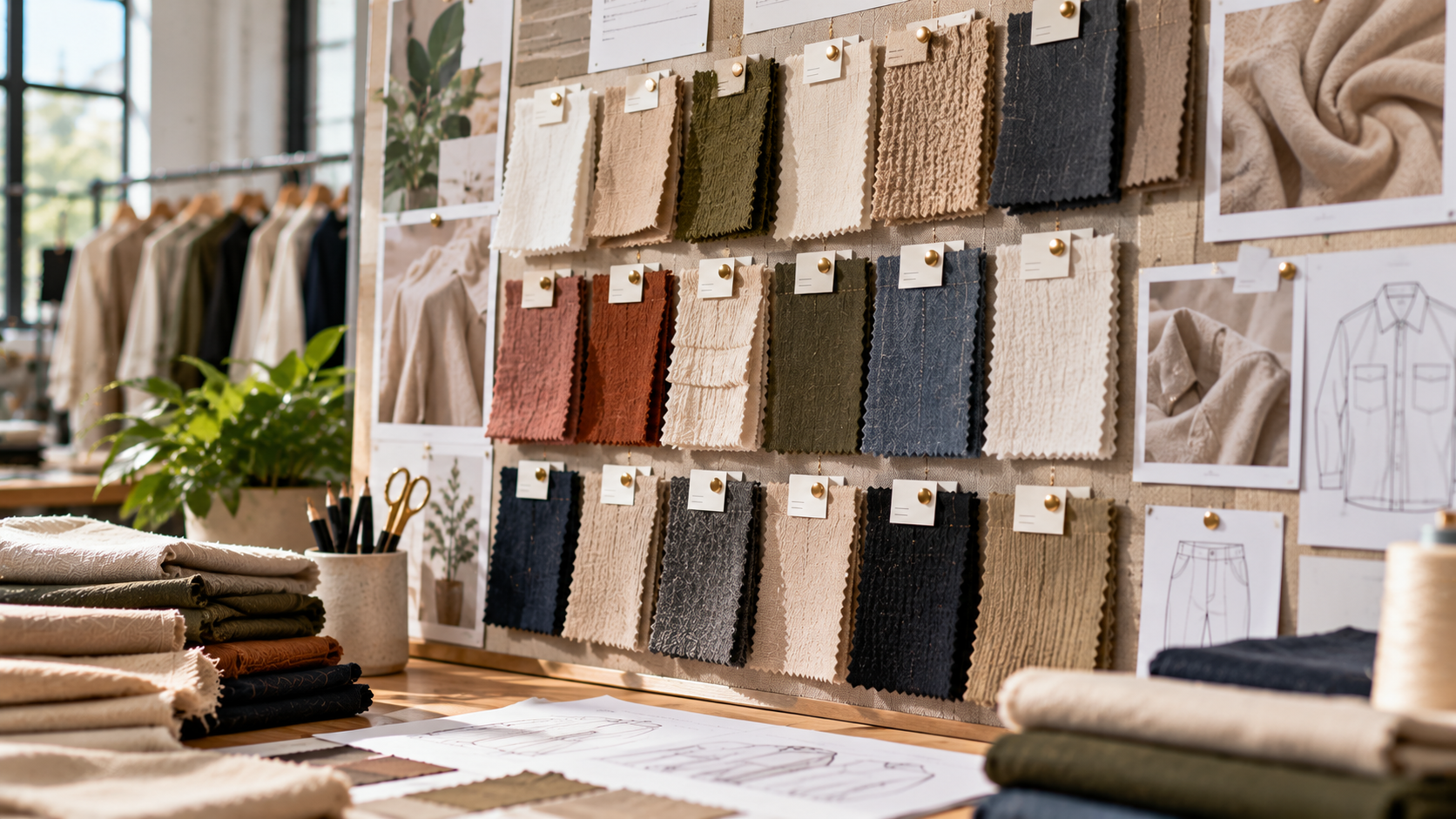
A sourcing log is a spreadsheet that records each supplier, fabric code, price per yard, MOQ, lead time, and sample result. Update it after every swatch, quote, and order so your fabric sourcing decisions stay repeatable.
Vetting protects your cash. The Federal Trade Commission says a demand for payment by wire transfer, cryptocurrency, or gift card signals a scam. It also advises you to search a company name with the word “scam” or “complaint” before you buy.
SCORE adds that reliability, quality, and compatibility matter alongside price. Score each supplier on all four in your log.
How Maker’s Row Helps You Simplify Fabric Sourcing
Maker’s Row is a marketplace connecting apparel brand owners with verified US manufacturers, including factories that source fabric as part of production. Several of these ways come down to one choice: finding the right partner for your fabric sourcing needs.
You do not need months of cold emails to find that partner. On Maker’s Row, brand owners post unlimited manufacturing projects for free and receive bids from verified US factories at no upfront cost. To connect directly, subscription plans give full access.
FAQs About Fabric Sourcing
Fabric sourcing is the process of finding, testing, and buying cloth for your garments from mills, wholesalers, or other suppliers. It covers choosing the fiber, checking swatches, agreeing on minimums, and planning reorders. These choices set both your unit cost and your production timeline.
Start with a fabric brief, then request swatches from at least two suppliers per fabric. Test each swatch, confirm the minimum order and reorder terms in writing, and place a small first order. Keep every result in a sourcing log so next season moves faster.
There is no single standard for fabric sourcing minimums, because each supplier sets its own by fabric, color, and roll. Stock suppliers, make-to-order suppliers, and mills all differ. Ask for the MOQ in writing before you commit to a style.
Check for a verifiable business address and request references from other brands. Search the company name with “scam” or “complaint.” The FTC warns that a demand for wire transfer, cryptocurrency, or gift card payment signals a scam. Never pay in full before you approve a sample.
Buy it yourself if you want control over materials, and choose a full-package manufacturer if you want one vendor to manage everything. Buying yourself means more calls and more risk, but you pick the mill. A full-package factory trades some of that control for speed.
Start Applying These Strategies Today
Your clothing brand is one manufacturer away from becoming real. The factories are on Maker’s Row, ready to bid.