Your customers are already reading labels. They are scanning hangtags, checking fiber content, and choosing brands that match their values. Bamboo fabric has moved from a niche material to one of the fastest-growing textile categories in the US market. If you are building a clothing brand and you have not looked seriously at bamboo, this guide explains exactly why so many brand owners are making the switch now and what you need to know before you do.
Your supplier keeps mentioning bamboo. Your competitors are listing it on their product pages. And your customers are starting to ask questions you are not sure how to answer yet. The switch to bamboo fabric is not just a sustainability trend. It is a production decision that affects your margins, your marketing, your manufacturer conversations, and your compliance obligations.
This guide breaks down five concrete reasons brands are choosing this material in 2026, with the honest tradeoffs included. No vague green claims. Just what you need to make an informed decision for your brand.
Reason 1: The Performance Properties Are Genuinely Competitive
Bamboo fabric delivers real performance advantages, not just sustainability messaging. That distinction matters when you are competing against established cotton and synthetic brands.
The fiber is naturally moisture-wicking, drawing perspiration away from the skin and allowing it to evaporate at the fabric surface. It has measurable thermal regulation properties, keeping wearers cooler in summer and retaining more warmth in layering situations. The fiber also carries a natural UPF rating, blocking ultraviolet rays without chemical treatment. For activewear, basics, loungewear, and babywear brands, these are functional selling points your customers will notice and mention in reviews.
Best for: Activewear, T-shirts, bodysuits, loungewear, undergarments, and babywear.
The softness of bamboo fabric often surprises first-time users. The fiber produces a texture that buyers frequently compare to fine cotton or modal but with greater moisture management. A Portland-based loungewear brand switched its bestselling pullover from 100% cotton to a bamboo blend in 2024, reduced their return rate by 18%, and saw an increase in repeat purchases within two seasons, citing fit retention and softness as the two most-cited customer reasons.
One important note: garments made from this fiber require a shorter wash cycle and cooler temperatures than cotton. If your product line includes retail placement, factor care instructions into your labeling plan before sampling.
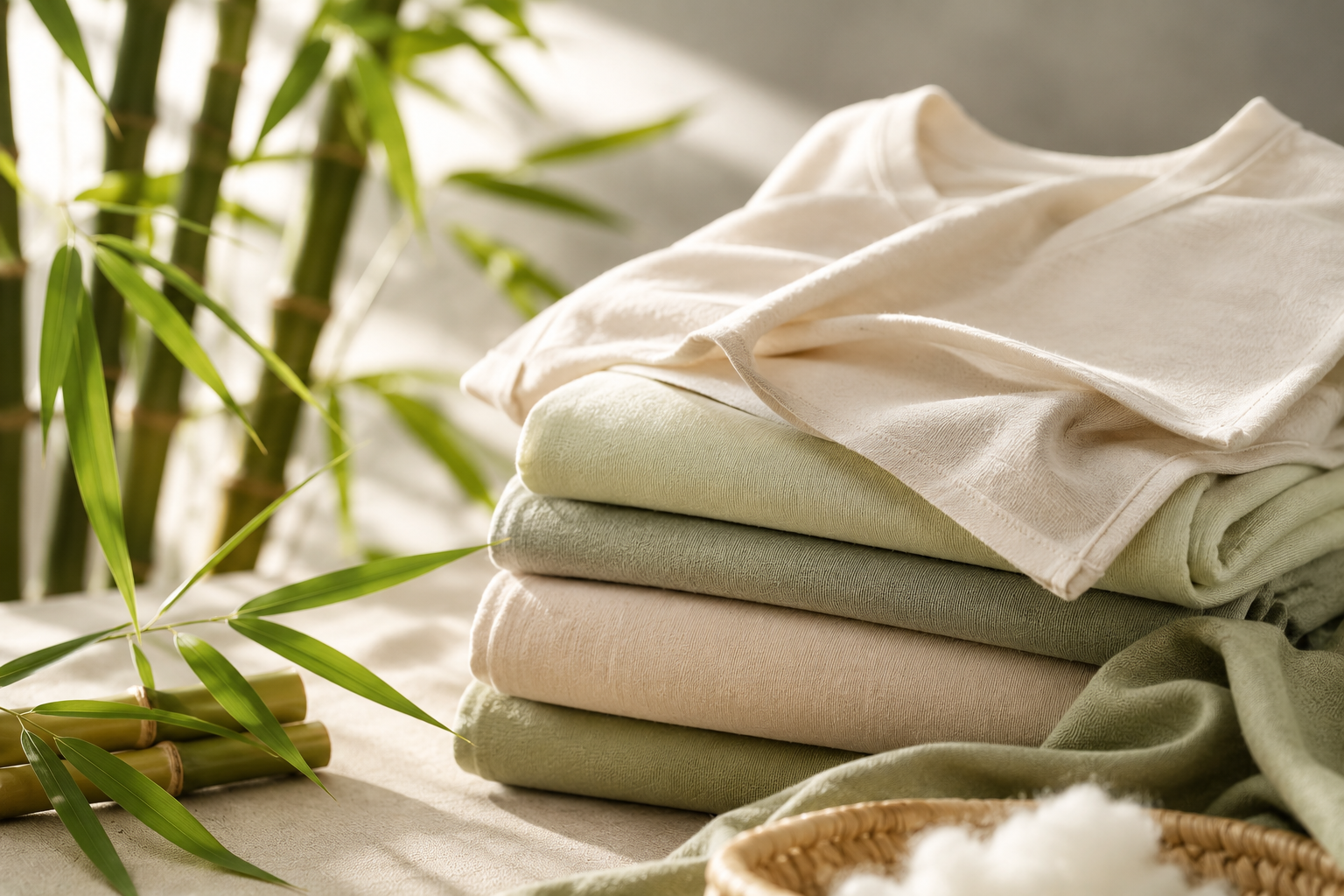
Reason 2: Consumer Demand for Sustainable Fabrics Is Measurable
The switch to bamboo fabric is not driven by brand preference alone. Consumer behavior has moved the market in a measurable direction and the numbers are large enough to inform production planning.
According to Maximize Market Research, the global bamboo clothing market was valued at $2.17 billion in 2025 and is projected to grow at a compound annual growth rate of 8.5% through 2032. In the US specifically, Verified Market Reports puts the domestic bamboo textile market at $1.1 billion in 2025, with North America leading global growth in the segment.
What this means for your brand: the customer already exists. Shoppers who are reading ingredient lists on food are now reading fiber content labels on clothing. They know the difference between “viscose from bamboo” and “100% cotton.” They know what OEKO-TEX certification means. According to Textile Exchange, demand for certified preferred fibers including bamboo-derived viscose grew significantly across major apparel categories between 2023 and 2025, with brands citing cleaner fiber sourcing as a top strategic priority.
If you are selling to eco-conscious consumers, millennial or Gen Z buyers, or building a premium basics line, bamboo gives you a material story that sells itself. The Sustainable Apparel Coalition notes that fiber transparency continues to rank among the top factors driving purchase decisions in conscious fashion segments.
Reason 3: Bamboo Fabric Strengthens Your Brand Story
The material your brand chooses communicates something to your customer before they read a single word of copy. Bamboo communicates a specific set of values that resonate with a growing customer segment.
Bamboo is a fast-growing grass that reaches full harvest size in three to five years, compared to decades for hardwood trees. It requires no replanting after harvest, regenerating from its existing root system. According to Market Reports World, bamboo fabric requires one-third less water to produce compared to conventional cotton production. These are facts your brand can use to build an honest sustainability narrative, as long as you are also being precise about what kind of bamboo fabric you are sourcing.
The important distinction: Most of the bamboo textile on the market is bamboo viscose, meaning the bamboo plant is chemically processed to extract cellulose, which is then regenerated into fiber. This is a legitimate process and the resulting textile carries the performance properties above. However, your sustainability claims need to be matched to the specific fiber and processing method you are using. Mechanically processed bamboo linen, where the fiber is extracted physically rather than chemically, carries stronger biodegradability claims but is less common and often more expensive.
For brand owners, this distinction is not a problem. It is a conversation that builds credibility. The brands winning in this space are the ones who explain their material choices honestly rather than relying on vague eco-language. Customers who ask questions become loyal advocates when they get real answers.
Also Read: Top Eco-Friendly Clothing Brands in the USA →
Reason 4: Manufacturer Availability Has Expanded
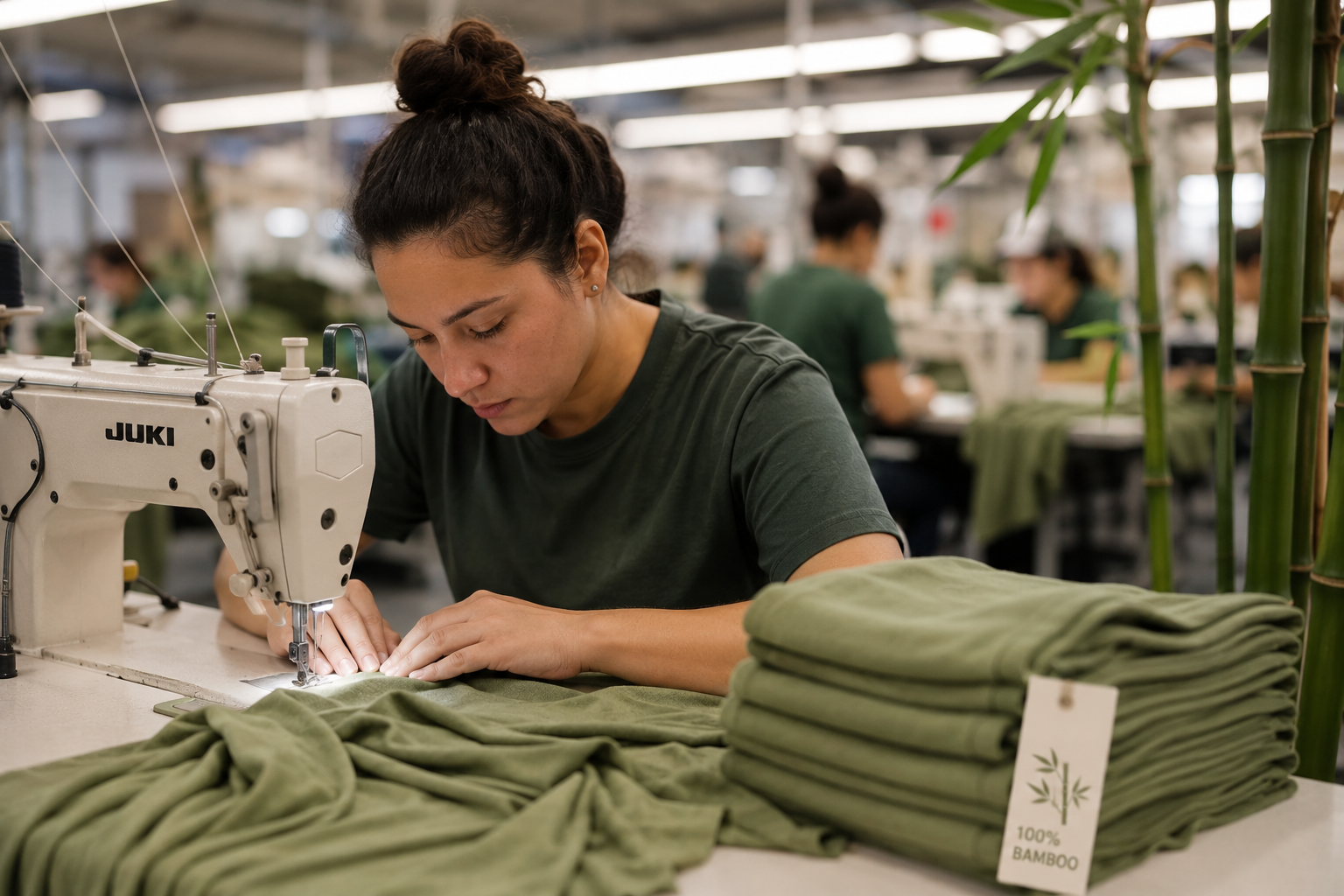
Three years ago, finding a US-based cut-and-sew manufacturer with bamboo fabric experience meant a long search. That has changed. More domestic manufacturers now work with bamboo-derived jersey, bamboo blend interlock, and bamboo fleece as standard offerings rather than specialty requests.
The raw fabric is still predominantly imported from Asia, where over 85% of global bamboo textiles are produced. But the cut-and-sew production step, where your garment is actually made, is increasingly accessible through US manufacturers who source the fabric and run production domestically.
US-based cut and sew manufacturers often carry or can source bamboo jersey, bamboo-cotton blends, and bamboo modal on your behalf, especially for brands ordering 100 units or more per style. MOQ expectations for cut-and-sew production in this category typically run between 50 and 300 units per style. Basics like T-shirts and bodysuits sit at the lower end. Structured pieces requiring print or embroidery push that number higher.
Before reaching out to any manufacturer about bamboo fabric, have a clear brief ready: the fiber content you want, the fabric weight in grams per square meter, and whether you need OEKO-TEX or GOTS certification documentation. The more specific your project description, the faster manufacturers respond with accurate quotes.
Reason 5: The FTC Compliance Path Is Clear
This material comes with a specific compliance requirement that some brand owners discover too late. Understanding it before production protects your brand and simplifies your marketing.
Under the Textile Fiber Products Identification Act, clothing brands in the US cannot label bamboo-derived fabric as “100% bamboo” unless the fiber was extracted mechanically from the plant without chemical processing. The vast majority of bamboo fabric on the market is bamboo viscose and must be labeled as “viscose from bamboo” or “rayon from bamboo” on your care label and in your product descriptions.
The FTC has enforced this rule consistently. In 2022, Kohl’s and Walmart each faced action for labeling rayon products as bamboo and making false environmental claims, with combined penalties of $5.5 million. Nordstrom, Bed Bath and Beyond, and J.C. Penney paid $1.3 million in penalties in 2015 for the same reason.
For your brand, compliance is straightforward: confirm the specific fiber name with your manufacturer, use the correct generic name on your labels, and avoid claiming biodegradability or antibacterial properties for bamboo viscose without substantiation, since those properties apply to the plant but are not proven to transfer to chemically processed fiber. Clear, honest labeling combined with real certifications like OEKO-TEX Standard 100 builds the customer trust that earns repeat purchases.
How Maker’s Row Helps You Find Bamboo Fabric Manufacturers
Finding the right cut-and-sew manufacturer for bamboo fabric does not have to mean weeks of cold emails and unanswered factory calls. On Maker’s Row, post your project for free and verified US manufacturers bid directly. Review bids, check profiles, connect when ready.
When you write your project brief, include your specific material requirements: fiber content ratio, fabric weight, certifications needed, style category, and MOQ range. Manufacturers who work with bamboo fabric respond to detailed briefs faster than vague requests. Many reply within 24 to 48 hours of a new project being posted
FAQs About Bamboo Fabric for Clothing Brands
Bamboo fabric is made from fiber derived from the bamboo plant. Most of it is bamboo viscose, also called rayon from bamboo, produced by chemically extracting cellulose from bamboo pulp. A smaller category called bamboo linen extracts fiber mechanically without chemicals. The two types carry different properties and different FTC labeling requirements.
Bamboo offers distinct advantages in specific applications. It is more moisture-wicking, has better thermal regulation, and carries a natural UPF rating. However, it typically costs more than cotton, has a more limited domestic supply chain, and requires FTC-compliant labeling. For activewear, basics, and babywear, it often outperforms cotton. For structured garments or heavy outerwear, cotton blends may be more practical.
Most products must be labeled with the exact fiber name, such as “viscose from bamboo” or “rayon from bamboo.” You cannot use “100% bamboo” unless the fiber was mechanically processed directly from the plant. Consult the FTC’s bamboo textiles guidance before finalizing your care labels and product descriptions.
MOQ for cut-and-sew production in this category in the US typically starts at 50 to 100 units per style for basics like T-shirts and bodysuits. More complex styles with custom dyeing or construction typically require 150 to 300 units per style. Post your project on Maker’s Row to receive bids from manufacturers who match your specific volume.
Yes, if your claims are accurate and substantiated. Bamboo as a plant is fast-growing and regenerates without replanting. However, bamboo viscose involves chemical processing, so claims like “fully biodegradable” can create FTC compliance risk. Mechanically processed bamboo linen and certified bamboo lyocell support stronger claims. OEKO-TEX Standard 100 is one of the most recognized verification tools for bamboo apparel brands.
OEKO-TEX Standard 100 tests for harmful substances and is recognized by retailers globally. GOTS applies if your brand uses organic inputs throughout the supply chain. FSC certification confirms responsible bamboo sourcing. For babywear, CPSIA compliance is required regardless of material. Request documentation from your manufacturer before confirming any order.
Yes, typically. Bamboo jersey may run 20 to 40% higher per yard than comparable cotton jersey. Certified materials add further cost. However, the price gap is closing as the bamboo supply chain matures. For brands in the premium or sustainable segment, the difference is generally absorbable within your pricing model.
Start Applying These Strategies Today
Your bamboo brand is one manufacturer away from becoming real. The factories are on Maker’s Row, ready to bid.