You can find reliable merchandise suppliers through four main channels: apparel and soft-goods manufacturers for branded clothing, contract decorators for logo application like screen printing and embroidery, promotional product distributors for hard goods like drinkware and stickers, and B2B sourcing platforms such as Maker’s Row for verified US-based factories. No single channel covers every merchandise category. A t-shirt manufacturer and a sticker printer almost never overlap, so matching the right supplier to the specific product you need cuts weeks off your search.
“Merch” gets used as a catch-all term, but the merchandise suppliers behind it split into two very different worlds: apparel decorated with your logo, and hard goods manufactured or printed to spec.
Most first-time buyers treat “find a merchandise supplier” as one search when it is really two or three. This guide breaks down where each type of supplier lives, what to expect in MOQ and lead time, and how to vet one before you send a deposit.
What Counts as “Merchandise” and Why the Right Supplier Depends on the Product?
Merchandise (often shortened to merch) covers any branded product a business, creator, or event sells or gives away, and reliable merchandise suppliers split cleanly into two categories: apparel and hard goods. Apparel merchandise includes t-shirts, hoodies, hats, and tote bags decorated with a logo or design. Hard-good merchandise covers drinkware, stickers, pins, and tech accessories, which are usually printed or manufactured, not sewn.
This split matters because the two categories don’t share a supply chain. A cut-and-sew factory is a manufacturer that builds a garment from fabric and a pattern, and that skill set has nothing to do with injection-molding a phone case or die-cutting a sticker. Asking an apparel factory to quote a sticker run, or a promotional supplier to sew a hoodie, is the single most common reason merchandise orders stall before they start.
Where to Find Merchandise Suppliers for Branded Apparel
Apparel merchandise has the most mature, most easily verified supplier network of the two categories, since it runs through the same channels as any clothing brand.
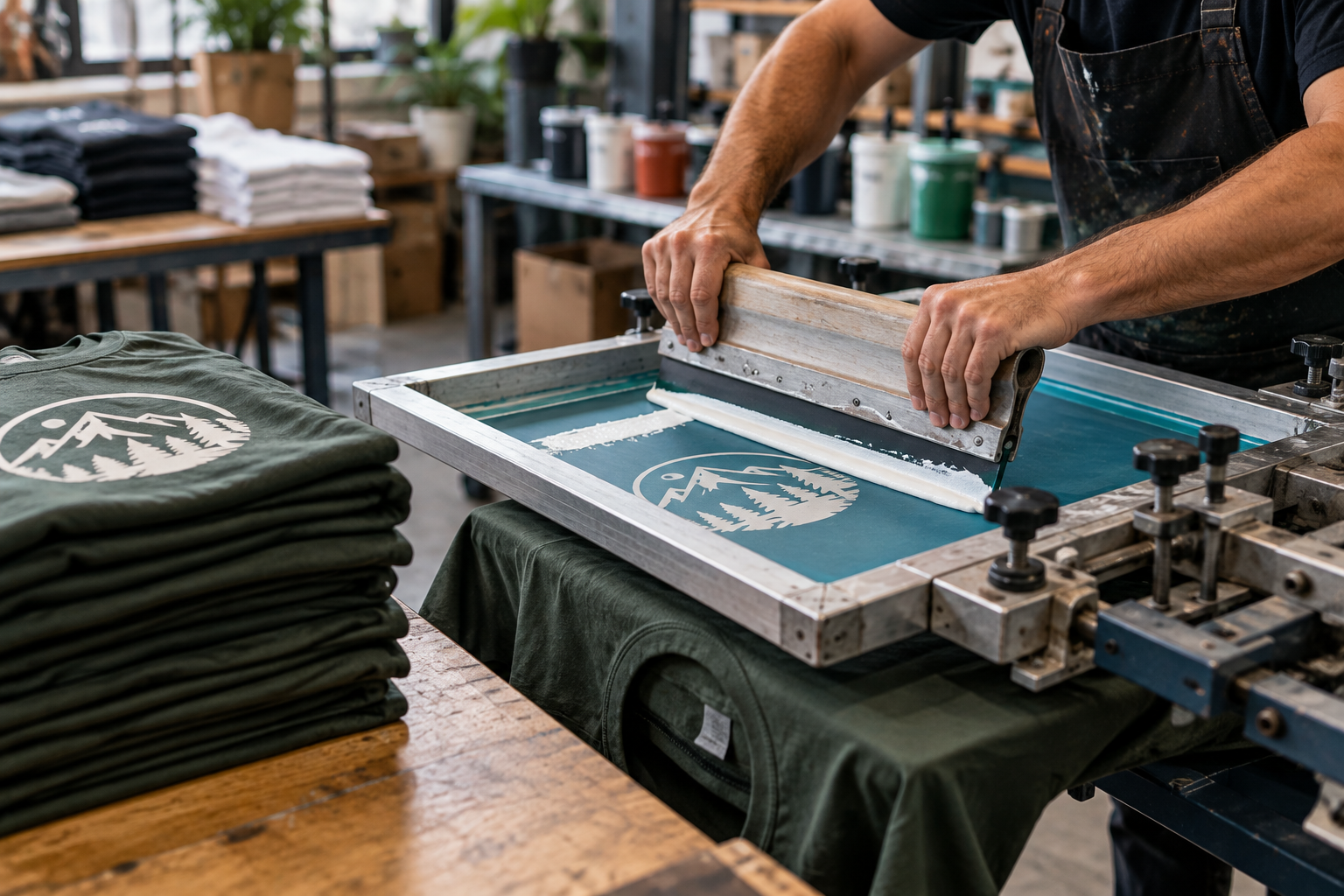
Contract Decorators (Screen Printing and Embroidery)
Contract decorators apply your logo or design to blank garments you either supply or they source. As of August 2026, the printing and related support activities sector, which includes commercial screen printers, employed roughly 338,500 people across the US, according to the U.S. Bureau of Labor Statistics, spread across more than 27,000 establishments. Turnaround for a standard decoration run is typically 1 to 3 weeks. Custom embroidery manufacturers in the USA often run no minimum on logo-only orders, which makes them a good fit for small merchandise drops.
Full-Package Apparel Manufacturers
These factories source the blank garment, decorate it, and finish it under one contract. Domestic apparel manufacturing (NAICS 315) employed approximately 71,800 workers across more than 6,300 establishments as of mid-2026, per the U.S. Bureau of Labor Statistics. MOQs commonly run 50 to 300 units per style. This route works best as a merchandise supplier when your line is a real product line, not a one-time event run.
Verified Marketplaces
Platforms that vet manufacturers before listing them remove most of the cold-email step from finding a merchandise supplier. This is different from a general wholesale directory: understanding the manufacturer vs. supplier distinction helps you avoid contacting a reseller who cannot actually produce or decorate anything.
Where to Find Merchandise Suppliers for Promo and Hard Goods
Hard-good merchandise runs through a separate supplier world: promotional product distributors, import sourcing platforms, and regional print or fabrication shops.
Promotional Product Distributors
These merchandise suppliers work as brokers with a network of factories to produce drinkware, bags, pens, and tech accessories under your branding. MOQs vary widely by item, often 25 to 250 units, and most distributors will rush a small first order for a fee.
Local and Regional Print or Fabrication Shops
Sticker printers, sign shops, and small fabricators frequently take on merchandise orders below the minimum a large factory will accept. These suppliers are harder to find through a national search since many run almost entirely on local reputation and repeat clients.
Import Sourcing Platforms
For higher-volume hard-good runs, direct overseas factories can undercut domestic merchandise supplier pricing significantly, though shipping time and quality-control oversight become your responsibility instead of the supplier’s.
Merchandise Supplier Comparison Table
Channel | Best For | Typical MOQ | Vetting Difficulty | Timeline |
Contract decorators | Logo-only apparel runs | Often no minimum | Medium | 1–3 weeks |
Full-package apparel manufacturers | Ongoing apparel merchandise lines | 50–300 units | Medium | 4–8 weeks |
Verified marketplaces (Maker’s Row) | Apparel and soft-goods sourcing without cold outreach | Varies by factory | Low, profiles reviewed before listing | Days to post, factory-dependent to fulfill |
Promotional product distributors | Drinkware, bags, tech accessories | 25–250 units | Medium to high, you vet the broker | 2–4 weeks |
Local print or fabrication shops | Small sticker, sign, or one-off runs | Often none | High, self-verified | Days to 2 weeks |
Import sourcing platforms | High-volume hard-good production | 500+ units | High, you manage QC remotely | 6–12 weeks including shipping |
Comparing six merchandise supplier channels by email means weeks of back-and-forth before you place a single order. The faster path is narrowing to the channel that actually matches your product before you start reaching out.
Find Apparel Merchandise Suppliers on Maker’s Row
Maker’s Row is a marketplace connecting apparel and soft-goods brand owners with verified US manufacturers, and it is the right merchandise supplier channel specifically for the apparel side of your order. On Maker’s Row, brand owners post unlimited manufacturing projects for free and receive bids from verified US factories at no upfront cost. To connect directly, subscription plans give full access.
If your order is drinkware, stickers, or tech accessories rather than apparel, a promotional product distributor or local print shop will serve you better than a general manufacturing marketplace, since those merchandise supplier types are not part of Maker’s Row’s current network.
How Do You Vet a Merchandise Supplier Before Placing an Order?
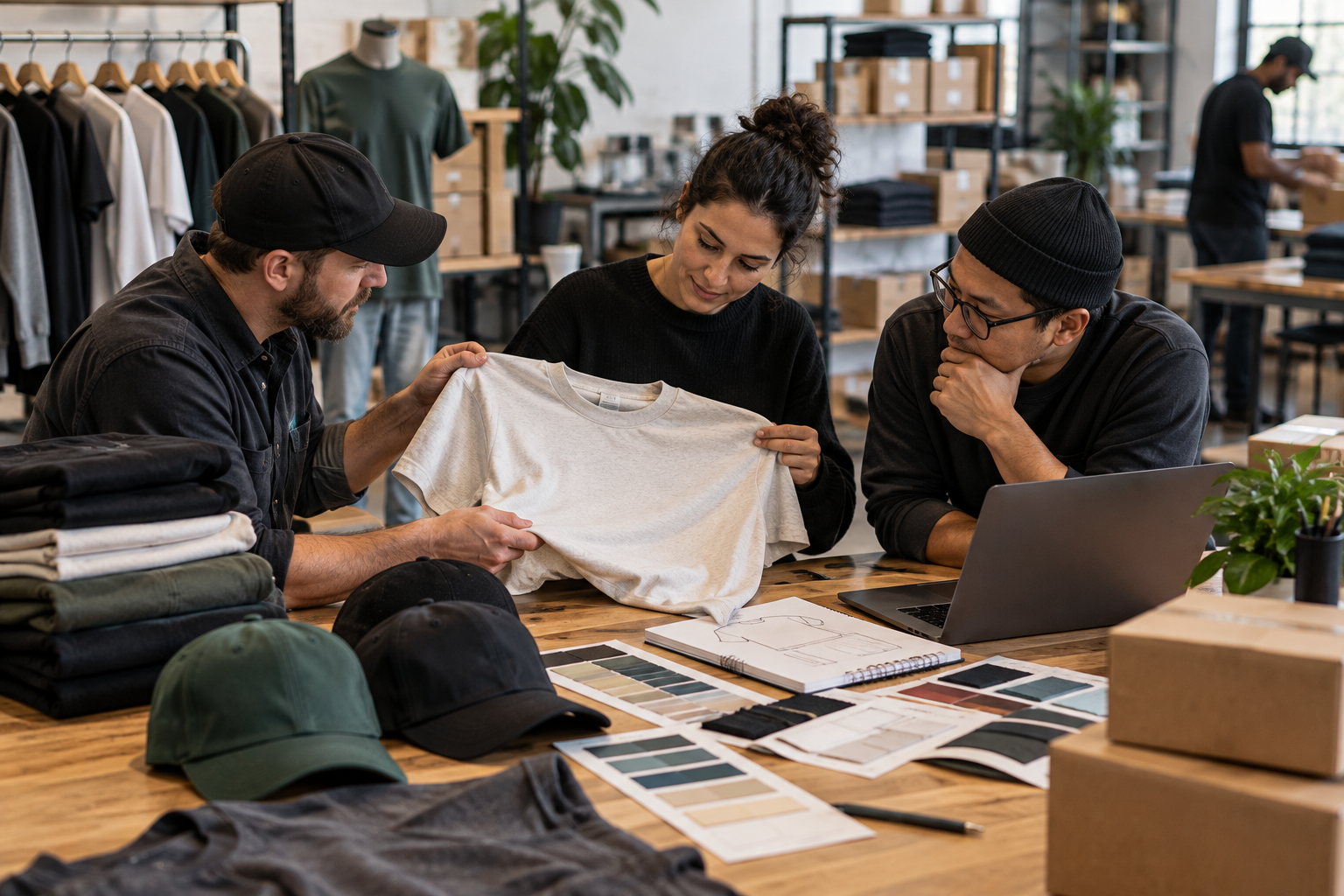
You vet a merchandise supplier by confirming a real business address, requesting a paid sample before a bulk order, and checking payment terms before sending any deposit. The same core checks apply whether you are sourcing a hoodie or a sticker sheet.
- Confirm a physical address and working phone number. A merchandise supplier who only communicates through a contact form is harder to hold accountable if an order goes wrong.
- Request a paid sample first. A $30 to $75 sample fee is a normal cost of vetting quality, not a red flag on its own.
- Ask for MOQ per item, not per order. Some distributors quote a blended minimum across multiple products, which can hide a much higher per-item minimum.
- Get sampling and production timelines as two separate numbers. Suppliers rarely volunteer the difference, and conflating them is the most common reason a launch date slips.
- Verify payment terms before committing a deposit. The Federal Trade Commission’s guide to business scams flags wire transfer, cryptocurrency, or gift card payment demands as a clear warning sign with any new supplier.
Beyond fraud checks, wholesale suppliers are classified separately from manufacturers under the Census Bureau’s NAICS system, which is worth knowing before you assume a “supplier” can actually produce your item rather than just resell someone else’s.
FAQs About Finding Merchandise Suppliers
The best way to find a merchandise supplier is to identify your product category first, apparel versus hard goods, then search within that category’s specific supplier network rather than a general search. Apparel merchandise routes through decorators, full-package factories, or marketplaces like Maker’s Row. Hard-good merchandise routes through promotional product distributors or fabrication shops.
Verify a merchandise supplier by confirming a real business address, requesting references, and asking for a paid sample before committing to a bulk order. A supplier that refuses a sample or pushes for an unusual payment method is a warning sign, not a shortcut.
A good first-order MOQ depends heavily on product type: apparel runs often start at 50 units per style, while hard goods like stickers or drinkware can start as low as 25 to 100 units through a promotional distributor. Ask any merchandise supplier for the per-item minimum specifically, since some quote a blended figure across a full product mix.
Rarely. Apparel manufacturing and hard-good production use different equipment, materials, and factory types, so a single merchandise supplier that genuinely covers both well is uncommon. Most brands use one channel for decorated apparel and a separate one for drinkware, stickers, or accessories.
Overseas sourcing often has a lower per-unit cost at high volumes, but domestic merchandise suppliers typically cut sample and reorder lead time significantly and simplify quality control, since remote oversight is not required. The right choice depends on your order size and how much lead time you can absorb.
Ready to Source Your Apparel Merchandise?
Your apparel merchandise line is one manufacturer away from becoming real. Verified US factories are already bidding on projects on Maker’s Row, ready when you are.