You identify trusted clothing manufacturers by verifying a real, searchable business address, confirming a paid sample policy, and watching for scam patterns such as demands for full payment upfront or payment only by wire transfer, cryptocurrency, or gift card. Legitimate US apparel factories are a small, traceable group. As of August 2026, apparel manufacturing (NAICS 315) employed roughly 72,000 workers across about 6,200 private establishments nationwide, according to the U.S. Bureau of Labor Statistics, so a real manufacturer almost always has a verifiable public footprint. A factory that resists basic verification, avoids signing a Non-Disclosure Agreement, or cannot produce a single reference is showing you exactly how the relationship will go before you have paid it a dollar.
Choosing the wrong production partner does not just cost you money. It costs you months of your launch timeline, your tech pack, and sometimes your design itself if it lands with someone who never intended to produce it. Not every factory that looks professional online turns out to be one of the trusted clothing manufacturers actually producing in the USA.
This guide breaks down exactly what separates trusted clothing manufacturers from the ones that leave brand owners chasing invoices and unanswered emails, plus the specific warning signs to check before you send a deposit.
Why Manufacturer Trust Matters Before You Sign
A manufacturer relationship starts with money changing hands before you have anything to show for it, which is exactly the setup scammers rely on. Brand owners who skip verification typically lose their deposit, their timeline, and in the worst cases, their tech pack to a factory that never had the capacity to produce it. The apparel manufacturing sector is not large. With roughly 6,200 private establishments nationwide, per BLS, a trusted clothing manufacturer is one search away from a verifiable track record, a registered address, and clients who will vouch for it. Taking 30 minutes to check a manufacturer before wiring a deposit is the cheapest insurance in the entire production process. Skipping that check is the single most common reason brand owners end up outside the pool of trusted clothing manufacturers and into a payment dispute instead.
What Makes a Clothing Manufacturer Trustworthy?
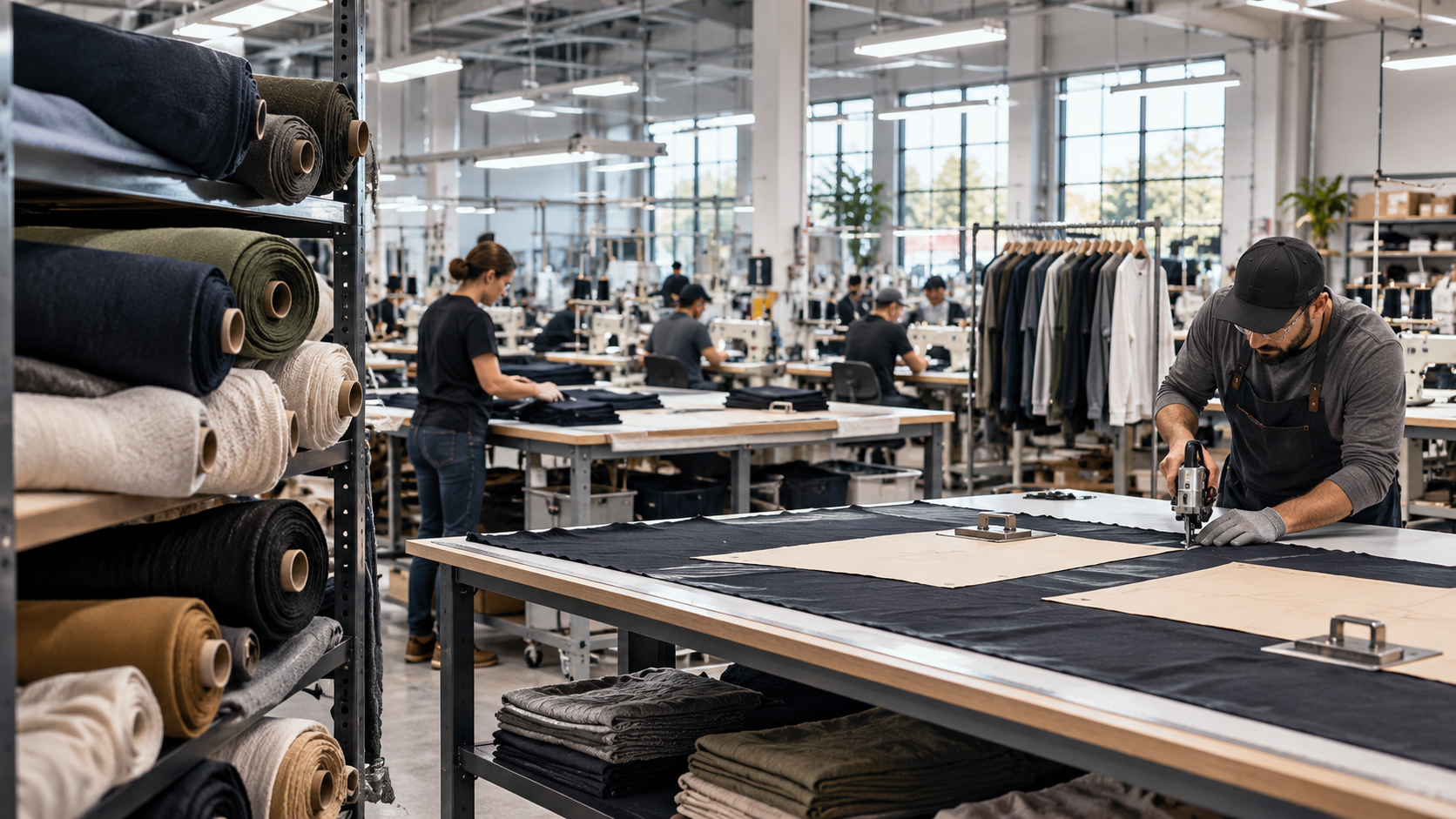
A trusted clothing manufacturer has a real, independently searchable business address, a documented sample process, and references you can call directly, not just names on a website. Trust in this industry is built on transparency, not promises.
Look for these baseline signals before you take any manufacturer seriously:
- A verifiable address. A real factory has a physical location you can find on Google Maps, in county business records, or through a state business registry search, not just a PO box.
- A named, contactable point of contact. Legitimate manufacturers put a real person’s name on quotes and emails, not a generic “sales team.”
- A paid sample process. Trusted clothing manufacturers charge for samples, typically $150 to $400 for a single garment in domestic production, because sampling has real labor and material costs.
- A willingness to sign an NDA. A Non-Disclosure Agreement (NDA) is a signed contract that legally prevents a manufacturer from sharing or reusing your design without permission. Any factory serious about your business will sign one without pushback.
- Third-party listings or directories. Factories listed in industry directories such as the CFDA’s supply chain directory, or verified on a platform like Maker’s Row, already sit among a pre-screened pool of trusted clothing manufacturers, saving you a layer of research.
What Are the Red Flags of an Untrustworthy Manufacturer?
The clearest sign of an untrustworthy manufacturer is a demand for full payment before any work begins, especially if that payment can only be made by wire transfer, cryptocurrency, or gift card. According to the FTC, scammers specifically favor these payment methods because they are difficult to trace and nearly impossible to reverse once sent. Trusted clothing manufacturers almost never ask for full payment before proving they can produce a single sample.
The table below lists the warning signs that should stop you before you send any money.
Red Flag | What It Signals |
Demands full payment upfront | Legitimate US factories typically ask for 30-50% upfront, balance on completion |
Only accepts wire transfer, crypto, or gift cards | FTC-flagged payment methods scammers use because they cannot be traced or reversed |
No verifiable physical address | Cannot be confirmed through Google Maps, state business registries, or county records |
Refuses to sign an NDA | A real factory has nothing to lose from an NDA and everything to lose from skipping one |
Will not provide a paid sample | Sampling costs a real factory money, so refusing one is refusing to prove capability |
Communicates only through a contact form | No named employee, no direct phone line, no traceable email domain |
Pricing far below every competing quote | Real US labor and material costs set a floor that a legitimate factory cannot undercut |
Pressures you to decide or pay immediately | Urgency and pressure are classic scam tactics used to prevent you from checking references |
Any one of these on its own is worth a second look. Two or more together is a reason to walk away, no matter how good the quote looks. None of these patterns show up when you work with genuinely trusted clothing manufacturers, which is exactly why the check takes less time than a single email exchange.
How Do You Verify a Manufacturer Is Legitimate?
You verify a manufacturer is legitimate by searching its business name alongside the word “complaint” or “review,” confirming its address independently, and requesting at least one client reference you can contact directly. This takes less time than a single sample round and eliminates most bad actors before you commit any money.
SCORE, the SBA’s mentoring partner, recommends this same due-diligence approach for vetting any new supplier before signing a contract: verify identity, check references, and confirm stability before money changes hands. That short checklist is what separates trusted clothing manufacturers from factories still waiting to be tested. For a full, step-by-step checklist covering portfolio review, sample evaluation, and payment terms once you have shortlisted a manufacturer, the guide to vetting a clothing manufacturer before committing walks through the full sequence.
Manufacturers listed on a platform such as the best clothing manufacturers in the USA have generally already cleared an initial verification layer, narrowing your search before you make a single call.
Also Read: How to Start a Clothing Brand in the USA: Step-by-Step Guide 2026 →
Find Trusted Clothing Manufacturers on Maker’s Row
Maker’s Row is a marketplace connecting apparel brand owners with verified US clothing manufacturers, which removes most of the guesswork from the trust question before you ever start a conversation. Post your project for free and pre-verified manufacturers respond directly, instead of you chasing down every business registry yourself.
FAQs About Identifying Trusted Clothing Manufacturers
A clothing manufacturer is legitimate if it has a verifiable physical address, a named point of contact, a paid sample process, and client references you can independently confirm. Search the business name alongside “complaint” or “review” before your first call, and treat any resistance to basic questions as a warning sign. These checks are the fastest way to separate trusted clothing manufacturers from the rest of the field.
Common clothing manufacturer scams include demanding full payment before any sample or production work begins, requesting payment only by wire transfer, cryptocurrency, or gift card, and disappearing after a deposit is sent. The FTC specifically flags these payment demands as tactics used to make transactions untraceable and irreversible.
Yes, a deposit is normal and expected. Legitimate US clothing manufacturers typically request 30 to 50 percent of the total cost upfront, with the balance due on completion. What is not normal is a demand for 100 percent payment before any work has started.
Email-only communication is not automatically a red flag, but a manufacturer with no phone number, no named employee, and no verifiable address behind that email address is. Cross-check the email domain against the company’s registered business name before proceeding.
You can check whether a US clothing manufacturer is registered through your state’s Secretary of State business search, which lists incorporated companies by name and address at no cost. A manufacturer with no record in the state where it claims to operate is a significant warning sign.
Yes, manufacturers on Maker’s Row go through a verification process before appearing in search results, which is part of why the platform lists a pre-screened directory rather than an unfiltered one. You should still confirm references and read contract terms directly with any factory before committing production dollars.
Ready to Work With Trusted Clothing Manufacturers?
The red flags are easy to spot once you know what to look for. When you are ready to connect, trusted clothing manufacturers are already active on Maker’s Row.