What Is Garment Dyeing? A Guide for Clothing Brand Owners (2026)

You have picked a fabric and approved a fit sample. Now your manufacturer asks whether you want the piece garment dyed or dyed by the yard. If you are new to production, that question can stop a conversation cold. This guide explains what garment dyeing is and why it changes the look of a finished piece. It also covers how to work with a US manufacturer who offers it.

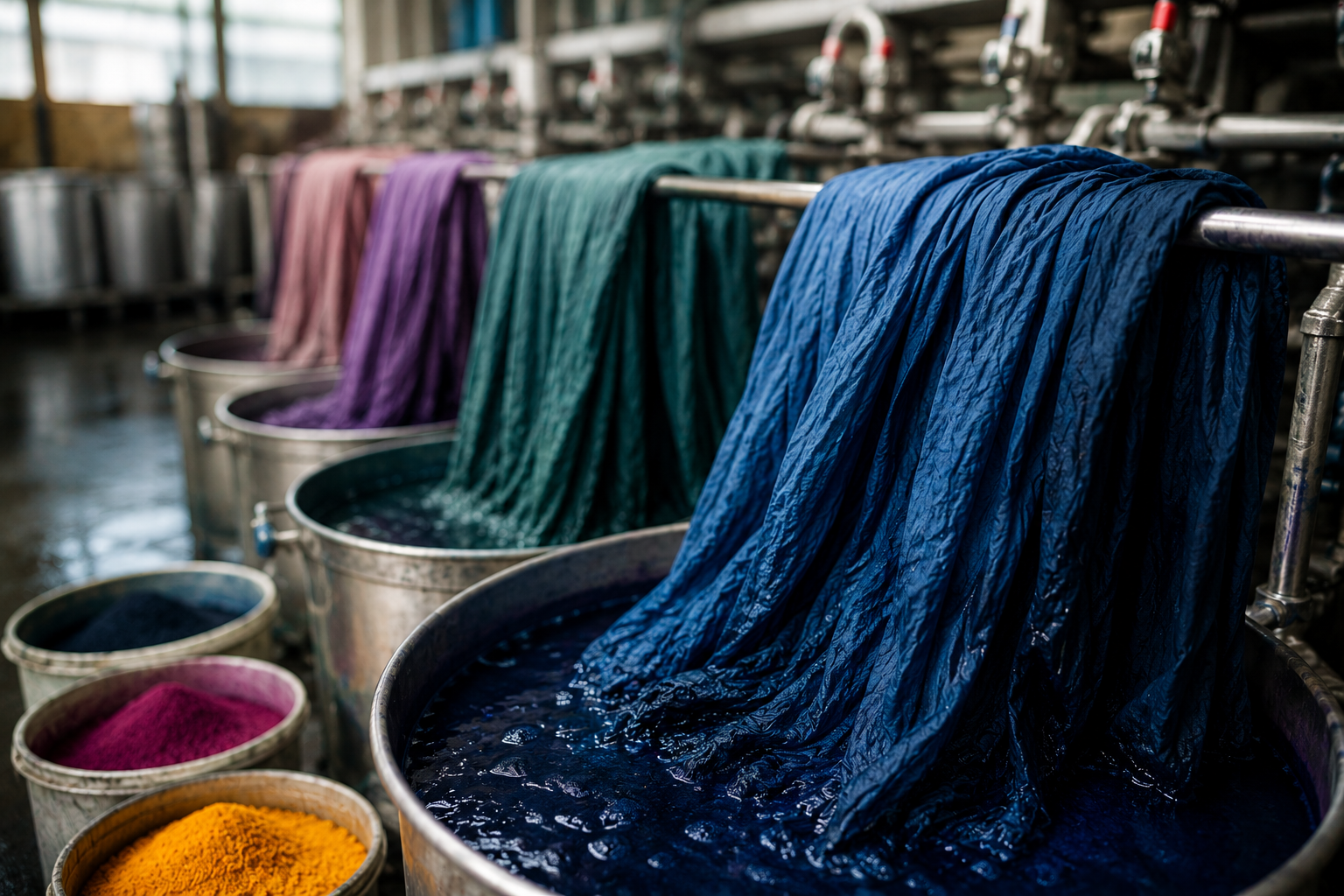
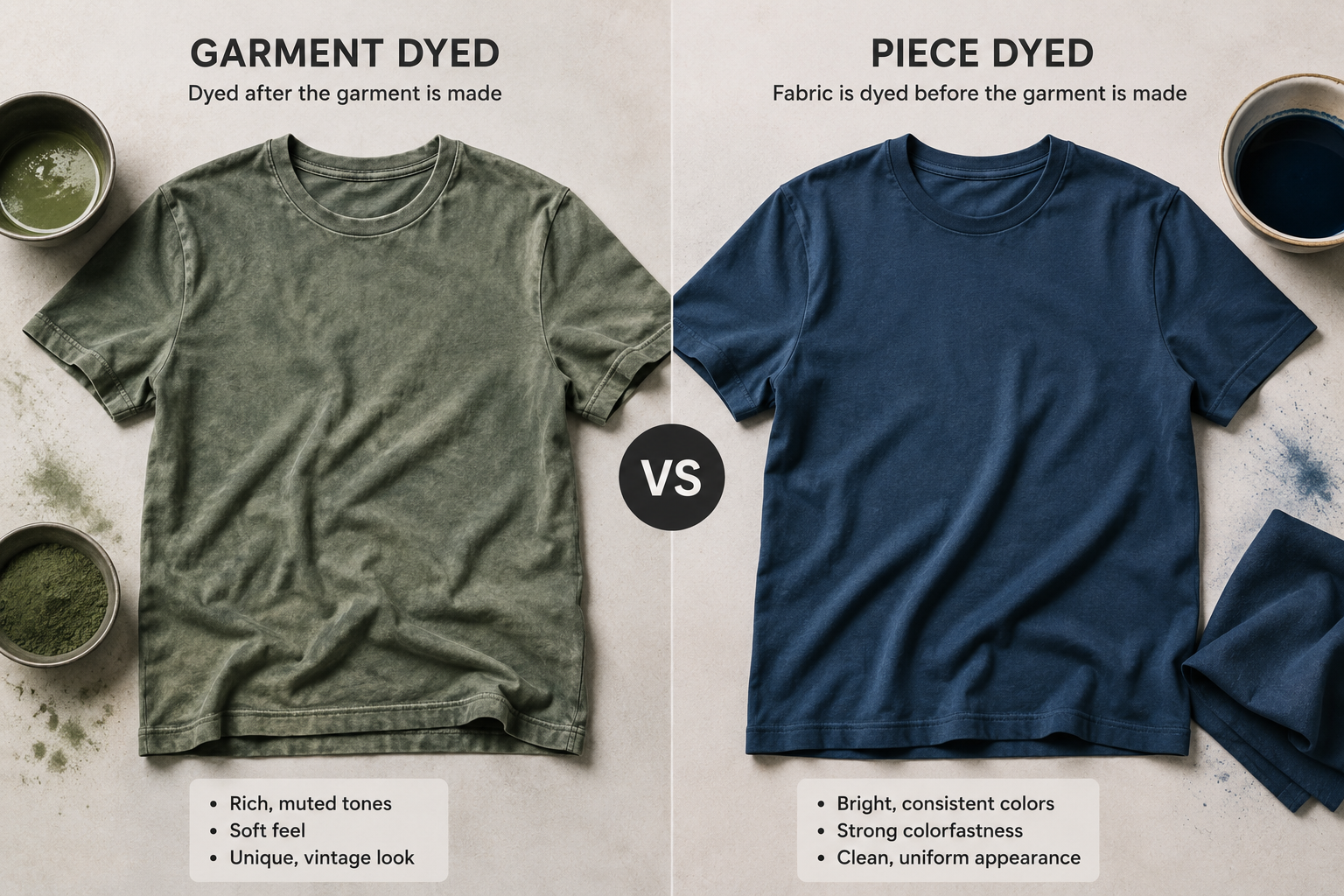
Garment dyeing is the process of dyeing a fully constructed garment after it has been cut and sewn, rather than dyeing the fabric first. For clothing brands, this means color is applied to the finished product itself, seams and stitching included. The result is the soft, slightly irregular look associated with vintage tees, washed hoodies, and lived-in denim.

Brand owners need to understand this process because it changes your production timeline, your minimum order quantity, and the finish your customer actually receives. A manufacturer quoting a price for piece-dyed fabric is not quoting the same product as one who dyes after construction. This guide covers the definition, why it matters, real production scenarios, how to work with the right manufacturer, and where to find one.

What Is Garment Dyeing? 

Garment dyeing is a finishing technique where color is applied to a completed garment rather than to raw fabric. The standard alternative, piece dyeing, colors the fabric on the roll before it is cut and sewn. Because this happens last, the dye settles unevenly across seams and thicker layers of fabric. That creates the tonal depth many streetwear and vintage-inspired brands specifically want.

The American Apparel and Footwear Association (AAFA) notes that finishing steps like dyeing and washing are a standard part of US apparel production. This holds true across manufacturers of every size, from small sample studios to large cut-and-sew factories. That means this technique is not a specialty service reserved for large brands. It is available at small batch quantities from a number of domestic manufacturers, provided you know what to ask for.

Aspect

Garment Dyeing

Piece Dyeing

When color is applied

After the garment is sewn

Before fabric is cut

Color consistency

Slight variation at seams and ribbing

Even, uniform color throughout

Typical look

Soft, worn-in, vintage-inspired

Clean, saturated, consistent

Best for

Tees, hoodies, fleece, denim

Wovens, tailored pieces, prints

MOQ implications

Often runs per dye lot, smaller batches possible

Usually tied to fabric roll minimums

Why This Matters for Brand Owners

Garment dyeing is not just an aesthetic choice. It directly affects three decisions you make before you ever place a production order.

  • Minimum order quantity: This process often runs in smaller dye lots than piece-dyed fabric. That can lower your MOQ per colorway compared to buying pre-dyed yardage.
  • Lead time: Dyeing after construction adds a wash and finishing step to your calendar, typically one to two weeks beyond a standard cut-and-sew timeline.
  • Fit and shrinkage: Garments can shrink slightly during the dye and wash cycle. A manufacturer experienced in this technique accounts for it in the pattern before cutting.
  • Color consistency across a run: Because the whole garment goes into the dye bath together, expect natural variation piece to piece. If your brand needs exact color matching, piece dyeing may be the better fit.

Knowing these tradeoffs before you approach a manufacturer means you can ask specific questions instead of learning them mid-production.
garment dyeing

Real Examples in Practice

Example: A verified domestic garment dyeing facility

TS Designs, based at 2053 Willow Springs Ln in Burlington, North Carolina, runs its own 5,000-square-foot dye house rather than outsourcing the finishing step. The company prints on undyed shirts first. Color is applied last, once the piece is fully constructed and printed. TS Designs has been a certified B Corporation since 2008. Orders that combine its screen print process with garment dyeing require a minimum of 100 units.

Example: A denim brand chasing a faded, worn-in look

A denim brand wants jeans that feel broken-in from the first wear rather than stiff off the shelf. The manufacturer sews the jeans from raw denim, then dyes and washes them as a finished piece. This produces the fading at the seams and pocket edges that pre-dyed fabric cannot replicate. This same technique defines the look for brands building a retro aesthetic. That is why it comes up so often in sourcing conversations for vintage clothing manufacturers.

How to Work With the Right Manufacturer

  1. Confirm the fiber content before you commit to a color. Natural fibers like cotton take dye differently than blends. Ask your manufacturer which fiber content their dye process is calibrated for.
  2. Request a lab dip or dyed sample before full production. A lab dip shows how your chosen color will actually look once applied to the finished piece, not just on a swatch.
  3. Ask about MOQ per dye lot, not just per style. Minimums for this process are frequently set by the dye machine capacity, which can differ from your overall production minimum.
  4. Get separate lead times for sampling and for the dye and finishing step. These are usually quoted separately from your base sewing timeline.
  5. Ask how the manufacturer manages shrinkage and shade variation. An experienced manufacturer builds shrinkage allowance into the pattern and can explain their tolerance for color variation across a dye lot.

According to research from Cascale, the nonprofit formerly known as the Sustainable Apparel Coalition, the choice of dyeing method measurably changes water and energy use. Switching from batch dyeing to continuous dyeing is one example the group’s own data highlights. Asking your manufacturer which method they use is a reasonable question if sustainability is part of your brand story.

Also Read: How to Start a Clothing Brand in the USA →

Also Read: Best Small Batch Manufacturers in the USA →

garment dyeing fabric and color swatches

Finding a Manufacturer on Maker’s Row

Finding a US manufacturer who offers garment dyeing at a small batch scale takes work. Many factories only do piece dyeing, and others require volumes far above what a new brand can commit to. On Maker’s Row, you describe your requirements, including fiber content, target MOQ, and finish, in your project brief. Manufacturers who specialize in that process respond directly.

This matters because the capability is not something every cut-and-sew factory offers in-house. Some manufacturers handle sewing and outsource the dye step to a separate finishing partner. That adds a coordination layer worth knowing about before you commit to a timeline. You can browse verified US manufacturers to see the range of dyeing and finishing capabilities available before you post your own project.

FAQs About Garment Dyeing

What is the difference between garment dyeing and fabric dyeing?

Garment dyeing colors a fully sewn piece, while fabric dyeing, also called piece dyeing, colors the fabric before it is cut and sewn. The former produces natural color variation at seams and ribbing, while the latter produces even, consistent color across the whole piece. Brands choose between the two based on the finished look they want and their production volume.

Does this process shrink clothes?

Yes, garment dyeing typically causes some shrinkage because the finished piece goes through a heated dye bath and wash cycle. An experienced manufacturer builds a shrinkage allowance into the original pattern to account for this. Always request a washed, dyed sample before finalizing your size specifications.

Is it more expensive than piece dyeing?

Cost depends on your order volume and colorway count. Dyeing a finished garment can lower per-unit costs at smaller quantities because it avoids full fabric roll minimums. At high volumes, though, it may cost more per unit than piece-dyed fabric bought in bulk. Request quotes for both methods at your target quantity before deciding.

Can I find garment dyeing manufacturers near me?

These manufacturers are concentrated in regions with an established cut-and-sew industry, including Los Angeles, North Carolina, and parts of the Northeast. A local search will surface some options. Posting your project on Maker’s Row lets manufacturers with this capability respond directly, including ones a local search might miss.

What fabrics work best for garment dyeing?

Natural fibers, especially cotton, cotton fleece, and cotton-rich blends, take dye most predictably once a garment is fully constructed. According to the U.S. Bureau of Labor Statistics, cotton and cotton-blend goods make up a substantial share of US apparel manufacturing output. That is part of why this technique is so common on tees, hoodies, and sweatshirts.

How long does garment dyeing add to production time?

This step typically adds one to two weeks to a standard production timeline, covering the dye bath, rinse, and finishing steps. Always request this as a separate line item in your manufacturer’s timeline rather than assuming it is included in the base sewing lead time.

Can a small brand order garment dyed clothing at low quantities?

Yes. Several US manufacturers offer this service at small batch quantities, particularly for blanks-based programs rather than full custom cut-and-sew. MOQs vary by factory and dye lot size, so confirm the specific minimum for these styles rather than assuming it matches a factory’s general MOQ.

Ready to Put This Into Practice?

Your next production decision does not have to start with a guess. The manufacturers who understand garment dyeing, finishing, and small batch color runs are already on Maker’s Row.

Ready to bring your ideas to life?

Start your project for free and connect with expert factories today!

You may also like

Ready to bring your ideas to life?

Start your project for free and connect with expert factories today!

Get 10 Free Credits & Connect with Top USA Manufacturers!

Get 10 Free Projects & Connect with Top Brands!