Starting a denim brand is one of the most exciting moves a creative entrepreneur can make. It is also one of the most confusing, since most guides tell you to find a manufacturer without explaining how denim production actually works. This guide is different. It gives you the exact steps from concept to first production run, including how to find a US denim manufacturer even if you have never done this before.
Denim remains one of the most durable categories in American fashion, and demand for premium, well made jeans keeps growing. Levi Strauss recently expanded its premium Blue Tab line into more stores to meet rising demand for higher priced denim, according to Business of Fashion, a signal that shoppers are willing to pay more for quality construction and a clear brand story.
New founders trying to start a denim brand usually run into the same three obstacles: they do not know the fabric and construction decisions that separate denim from other apparel categories, they underestimate the cost of sampling a garment that requires washing and finishing, and they spend months on cold outreach to factories that never reply. This guide solves all three, walking through every step of how to build a brand that reaches production.
Step 1: Define Your Denim Brand Identity and Hero Product
Before you talk to a single manufacturer, decide what one denim product will define your brand. Most new founders try to launch a full line of jeans, jackets, and shirts at once. That decision triples your sampling cost and your production risk before you know if anyone wants to buy from you.
Pick one hero product. A classic five pocket jean in one wash and one fit is a stronger launch than five styles split across two washes. Write a one to two page brand brief covering your denim aesthetic (raw, stretch, workwear, vintage wash), your price point, and your top three competitor brands. Note what those competitors do well and where your line fills a gap they leave open.
Decide your wash and finish direction early. Raw, selvedge, stretch, and garment washed denim each require different manufacturing partners and carry different price points, so this decision shapes every later step, including which factories you approach.
Step 2: Know Your Target Customer
Your denim manufacturer needs to know what you are making. Your customer needs to know why they should buy your brand over an established name. Both answers come from the same research.
Define who wears your jeans: their age range, their body type range, and the occasions they wear denim for. A brand targeting workwear-inclined men in their thirties needs a different fit block, fabric weight, and price point than a label targeting fashion-forward women in their twenties. Write down your answer to this question: who buys this denim brand, and why do they choose it over what already exists on the shelf?
This research also shapes your fit standards. Denim fit is unforgiving. A rise, inseam, or thigh measurement that misses your customer by even half an inch creates returns and bad reviews. Confirm your target fit block before you move to Step 3, since changing it later means resampling from scratch.
Step 3: Build Your Product Concept and Tech Pack
A tech pack is the document your denim manufacturer uses to produce your jeans accurately. For denim specifically, it needs more detail than most garment categories, since fabric weight, wash process, and hardware all affect the final fit and hand feel of the product.
Your denim tech pack should specify: fabric weight in ounces, fiber content and stretch percentage if applicable, wash and finish instructions, hardware (rivets, buttons, zipper brand and size), pocket bag fabric, and a full graded measurement spec across your size range. Small details in construction and finish are what separate denim that reads as premium from denim that reads as generic, so document every one of them.
Also Read: What Is a Tech Pack? Complete Guide for Clothing Brand Owners →
Also Read: What Is MOQ? A Brand Owner’s Guide to Minimum Order Quantities →
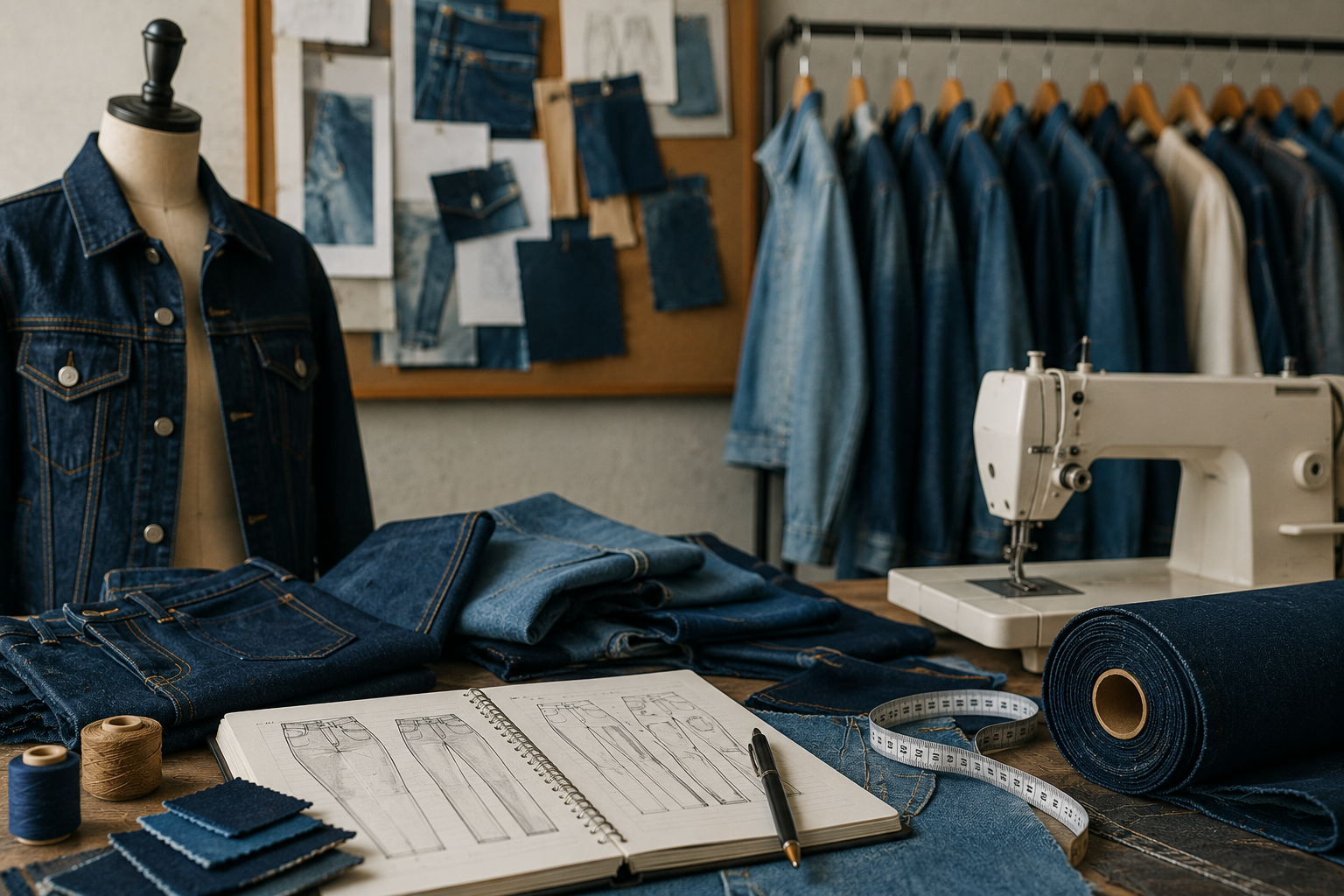
Fabric choice deserves its own research pass before you approach a factory. How your denim fabric behaves over time, not just how it looks in a swatch, determines whether your customers are happy with the product six months after purchase.
Step 4: Find Your Denim Manufacturer
This is where most new founders get stuck, and it determines whether your brand actually launches. Denim manufacturing is more specialized than general cut and sew. Not every factory that makes t-shirts or dresses can produce a properly constructed jean with correct topstitching, bar tacks, and a clean fly front, so your search needs to be specific to denim.
The old way is cold emailing factories found through a Google search, attending trade shows like the LA Textile Show, or hoping an industry contact knows a denim specialist. This process routinely takes three to six months, and the majority of cold outreach never gets a reply. Factories that do specialize in denim often already have a full production calendar and are selective about new brand relationships, which makes cold outreach even slower for this category specifically.
What to look for in a denim manufacturer: prior experience with denim specifically, not just general cut and sew; an in-house or partnered wash and finish facility, since outsourcing washing adds a full extra step to your timeline; MOQ that matches your production stage; and a sample policy that includes a washed sample, not just a raw unwashed one, since denim changes significantly after washing.
Finding the right clothing manufacturer does not have to mean months of cold emails. On Maker’s Row, post your denim project for free and verified US manufacturers bid directly. Review bids, check profiles, and connect when ready. Describe your fabric weight, wash type, and target MOQ in your project brief so denim-specialized factories can respond with accurate quotes.
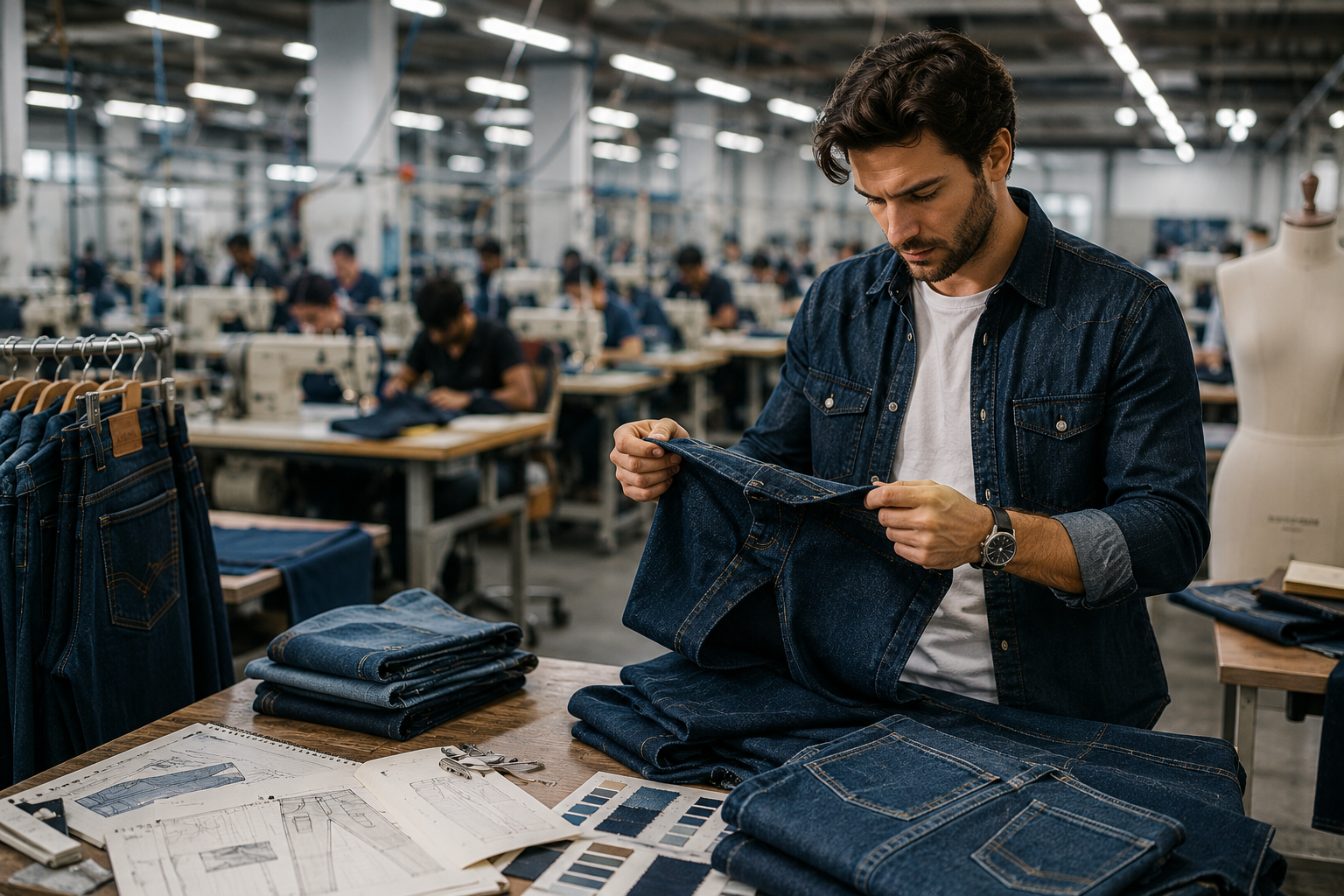
For a broader comparison of sourcing methods, the complete guide to finding a US clothing manufacturer covers cold outreach, trade shows, referrals, and directories side by side, which is useful if your brand also plans to expand into other categories later.
Step 5: Order Samples and Refine Your Fit
Never commit to a production run before ordering samples, and for denim, plan on at least two rounds. The first sample confirms construction and fabric hand feel. The second confirms fit and wash after the garment has gone through its actual wash and finish process, since raw denim looks and measures differently than washed denim.
Fit your sample on a real body in your target size range, not just a dress form. Denim sits differently on a body than on a form, particularly through the rise and thigh. A Los Angeles-based denim founder caught a rise measurement issue during a body fitting that a dress form fitting had missed entirely, saving a full resample and roughly three weeks of production delay.
Confirm your wash and finish match your original brief exactly. Wash houses vary in water temperature, chemical process, and timing, all of which shift the final color and hand feel. Small variations between your approved sample and your bulk production run are common in denim specifically, so build in a bulk pre-production sample check before full production begins.
Step 6: Plan Your Production Run and Budget
Denim production costs more per unit than most basic apparel categories, largely due to the wash and finish step. US cut and sew denim production typically runs higher per unit than a basic tee or hoodie once fabric, construction, and washing are all factored in, so budget accordingly rather than assuming denim pricing matches simpler garment categories.
Plan your first production run around your confirmed MOQ, not around an ambitious sales forecast. Launching with 150 to 300 units of one style in one wash is a more sustainable first run than splitting a similar budget across three washes and two fits. According to the Small Business Administration, new product businesses should document total landed cost, meaning production plus shipping plus any duties, before committing to a production quantity.
Build a cash flow timeline that accounts for the full denim production cycle: tech pack finalization, sampling, wash testing, bulk production, and shipping. This cycle typically runs longer than basic apparel because of the wash and finish stage, so plan your launch date with that timeline in mind rather than a generic apparel production estimate.
Step 7: Launch and Market Your Denim Brand
Your launch marketing should lean into what makes denim different from other categories: the story behind your wash, your fit philosophy, and the craft behind construction details most shoppers never think about until they are pointed out. Behind the scenes content showing your wash process or your factory relationship performs well for this category specifically, since customers are curious about a process they associate with quality and durability.
Price your first drop to reflect your actual production cost plus a sustainable margin, not a race to the bottom against fast fashion denim. A SCORE mentor can help you model your first season’s pricing and cash flow before you commit to a public launch date, which is worth doing before your first unit ships.
Track fit feedback closely after launch. Denim fit issues surface in customer reviews faster than most other categories, since customers try jeans on immediately and know within minutes if the rise or inseam is off. Use that early feedback to refine your pattern before your second production run rather than waiting for a full season of data.
FAQs: Starting a Denim Brand
Your total depends heavily on fabric weight, wash complexity, and your confirmed MOQ, since washing and finishing add cost that basic apparel categories do not carry. Budget for tech pack development, at least two rounds of sampling with a washed sample, and your first production run, then confirm exact quotes with shortlisted manufacturers before setting a fixed number.
Yes. Many successful founders had no prior manufacturing background before their first production run. What matters is a complete tech pack, a realistic MOQ target, and a manufacturer experienced specifically with denim construction and washing, since that experience compensates for gaps in your own technical knowledge.
Post a project brief on Maker’s Row specifying your fabric weight, wash type, and target MOQ. US denim manufacturers with wash and finish capability respond directly to briefs that are specific about these details. Cold outreach to general cut and sew factories often wastes time, since not every factory works with denim construction and washing.
MOQ is the minimum number of units a factory will produce in one order, typically per style and per wash for denim specifically. US denim manufacturers commonly set MOQs between 100 and 500 units per style and wash combination, which affects your total first-order budget more than it would for a single-wash basic garment.
Plan for four to six months from concept to delivered inventory. Tech pack development takes two to four weeks, sampling and fit revisions take four to eight weeks due to the extra wash testing round, and bulk production plus shipping typically adds another six to ten weeks.
Yes. A denim tech pack needs more detail than most garment categories, including fabric weight, wash instructions, and hardware specifications, since factories cannot quote accurately or produce a correct sample without this information documented upfront.
Request a signed non-disclosure agreement before sharing your tech pack with any factory. The United States Patent and Trademark Office provides resources on design patents for brand owners who want formal protection for a unique pocket shape, stitch pattern, or other distinctive construction detail.
Some US denim manufacturers accept first orders as low as 100 to 150 units per style and wash, though pricing per unit is higher at these lower volumes. Confirm this minimum directly with your shortlisted factories, since it varies more in denim than in simpler apparel categories.
Your Denim Brand Is Closer Than You Think
Your denim brand is one manufacturer away from becoming real. The factories are on Maker’s Row, ready to bid.