You found a production method that sounds perfect for launching your first collection. The manufacturer can handle everything — fabrics, construction, finishing — and you just add your label. But is that private label? Is it white label? Cut and sew? The terms feel interchangeable until you get a quote that does not match what you expected. This guide explains exactly what private label clothing is, how it differs from other production models, and how to decide whether it is right for your brand.
Private label clothing is one of the most misunderstood terms in the apparel industry. Understanding it correctly changes the manufacturers you approach, the budgets you plan, and the timelines you set. For brand owners in the USA, it can be the fastest route from idea to product — or a costly mismatch if the model is not what you needed.
This guide covers: what private label clothing means, how it works in practice, how it compares to cut and sew and white label production, what it costs, and how to find private label manufacturers in the USA.
What is Private Label Clothing?
Private label clothing is apparel manufactured by a third-party factory and sold under your brand name. For clothing brands, this means you own the brand identity, set the price, and control the marketing — while the manufacturer handles production using your specifications.
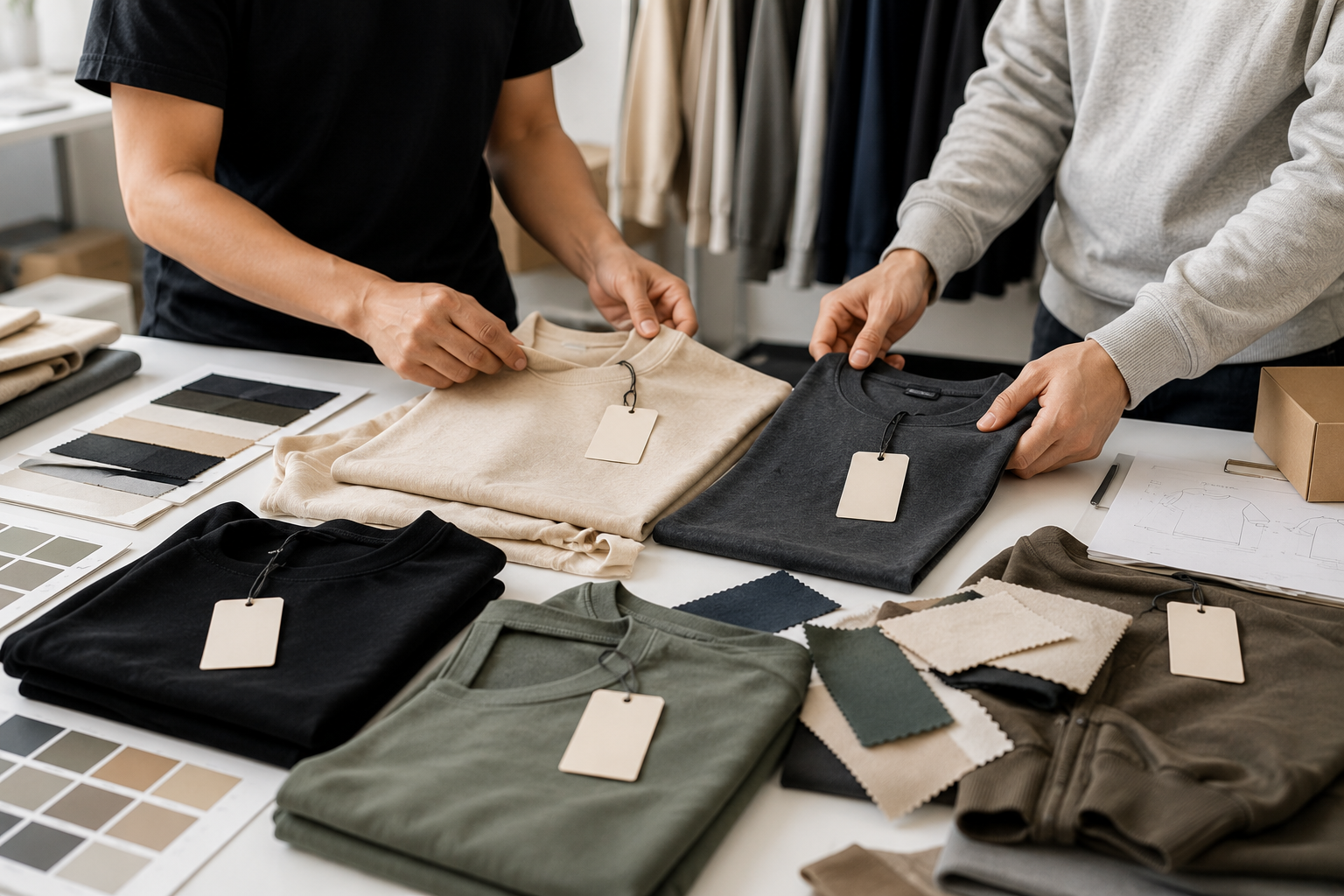
The factory may start from a base garment or pattern they already produce, which you then customise. Customisation typically covers:
Element | What You Control |
Fabric | Weight, content, colour |
Fit | Sizing, cut adjustments |
Branding | Labels, hangtags, woven patches |
Packaging | Polybag, box, tissue paper |
Colourways | Seasonal colour options |
Private label sits between white label and fully custom cut and sew manufacturing. The American Apparel and Footwear Association notes that domestic private label production has grown alongside the broader rise of independent brand launches, as more entrepreneurs seek accessible production models without overseas minimums.
Why Private Label Clothing Matters for Brand Owners
Understanding what private label clothing is affects three decisions every new brand faces.
- Manufacturer selection. Not all factories offer private label programs. Some work only with brands that provide their own patterns and tech packs (cut and sew). Others offer pre-existing base styles you can customise (private label). Knowing the difference before you reach out saves weeks of back-and-forth.
- Budget planning. Private label programs often carry lower per-unit costs than full custom production because the manufacturer is not starting from zero. The base construction is already developed and tested. Your customisation adds cost only where you add it.
- Time to market. A brand using private label can reach a production-ready garment faster than one commissioning an entirely new pattern. The Small Business Administration recommends new product brands plan for total landed cost from the start, and private label’s lower development overhead makes that calculation simpler.
- Brand ownership. Private label means your label is on the product. You own the pricing, the positioning, and the customer relationship. This is the core difference from reselling someone else’s branded goods.
Private Label Clothing in Practice: Real Examples
Example: Launching a basics line in Los Angeles A solo founder in Los Angeles wanted to launch a line of elevated basics — heavyweight tees and fleece joggers. Rather than developing original patterns, she approached a private label manufacturer offering base fits she could customise by weight, colour, and neck construction. She produced 150 units per style in two colourways, with her woven label and custom hangtag. Time from contract to delivered goods: nine weeks.
Example: Private label activewear in New York A New York-based wellness brand needed a legging and sports bra set for their studio retail shelf. They worked with a New Jersey private label manufacturer offering moisture-wicking base fabrics in 12 colourways. They customised waistband width, logo placement, and packaging only. MOQ was 100 units per style. This allowed them to test three colourways before committing to a larger run.
Example: Scaling from private label to cut and sew A Chicago streetwear brand started with a private label hoodie — a manufacturer’s base fleece style with custom embroidery and woven labels. After 400 units sold out in six weeks, they used the revenue and customer data to commission a fully custom cut and sew hoodie with a proprietary silhouette. Private label was the proof of concept. Cut and sew was the scale.
How to Work With a Private Label Clothing Manufacturer
Getting private label right comes down to four steps.
- Define what you need to customise. Private label works best when the base garment is 70–80% of what you want and customisation handles the rest. If you need a completely original silhouette, cut and sew is likely a better fit. Write down your must-have customisations before reaching out to any factory.
- Request a sample of the base style. Before committing to any order, ask for a production sample of the manufacturer’s existing base garment. Evaluate the fabric weight, construction quality, and fit accuracy. Do not rely on photos alone.
- Confirm MOQ per variation. Private label MOQs in the USA typically range from 50 to 300 units per style per colourway. If you want three colourways of the same style, confirm whether MOQ applies per colourway or per total. This distinction alone can triple your minimum commitment. For a full breakdown of how MOQs work, read the Maker’s Row guide on what is MOQ in clothing manufacturing.
- Submit your branding specifications in writing. Label placement, woven patch size, hangtag copy, care instruction content — provide all of this in a written brief or simple spec sheet. Verbal instructions create disputes. Written specs create accountability.
- Start with one style. The most common private label mistake is launching four or five styles simultaneously. Start with one hero product, prove the market, and use that revenue to fund the next style. For a step-by-step guide to this approach, see How to Start a Clothing Brand in the USA.
Also Read: Best Private Label Clothing Manufacturers in the USA →
Private Label Clothing on Maker’s Row
Finding the right private label clothing manufacturer does not have to mean months of cold emails. On Maker’s Row, post your private label clothing project for free and verified US manufacturers bid directly. Review bids, check profiles, connect when ready.
When you post your project, include your target style category, customisation requirements, colourways, and MOQ range. Manufacturers who respond have already reviewed your specifications and confirmed they can work within them. Many reply within 24–48 hours of a new project being posted.
FAQs About Private Label Clothing
Private label clothing is apparel produced by a third-party manufacturer and sold under your brand name. You customise elements like fabric, fit, colour, labels, and packaging, while the manufacturer handles construction and production.
White label products are generic, unbranded items sold to multiple brands without customisation. Private label clothing is made for your brand specifically and allows customisation of fabric, fit, and branding. White label is faster and cheaper; private label gives you more distinctiveness in the market.
Private label starts from a manufacturer’s existing base style, which you customise. Cut and sew manufacturing builds a garment entirely from your own pattern and specifications. Cut and sew gives more control over the silhouette but requires a tech pack, longer development time, and typically higher per-unit cost. For brands ready for cut and sew, see the Maker’s Row guide to cut and sew manufacturers in the USA.
Private label clothing in the USA typically costs $12–$45 per unit for basics like tees, hoodies, and joggers, depending on fabric weight, customisation complexity, and order quantity. Higher MOQs generally reduce per-unit cost. Add branding costs — woven labels, hangtags, custom packaging — which typically run $0.50–$3.00 per unit on top of production.
Most US private label clothing manufacturers work with MOQs between 50 and 300 units per style. Some small-batch specialists start at 25 units. MOQ applies per style and, often, per colourway — confirm this before planning your launch budget.
Yes. Private label clothing is a legal and widely used production model. The brand owner is responsible for compliance with US labelling laws, including fibre content, care instructions, and country of origin. The Federal Trade Commission publishes clothing labelling requirements that apply to every private label product sold in the USA.
Post a project on Maker’s Row with your style category, customisation needs, and target MOQ. Verified US manufacturers will bid directly. You can also browse manufacturer profiles by category and location before posting.
Ready to Put Private Label Clothing Into Practice?
Your private label clothing brand is one manufacturer away from becoming real. The factories are on Maker’s Row, ready to bid.