You send your artwork to a factory, and the reply is one line: sublimation only works on polyester. That answer can feel like a rule you missed. It is a real rule, and it shapes your fabric and your factory shortlist.
What is sublimation printing? It is a digital method that uses heat and pressure to turn dye into gas, which bonds with polyester fibers. If you are launching your first line, it decides which fabrics, garment colors, and factories are open to you. This guide explains the process, then shows real US factory examples and the steps to work with it.
What Is Sublimation Printing and How Does It Work?
What is sublimation printing? Sublimation printing is a process that uses heat and pressure to move dye from transfer paper into polyester fibers or polyester-coated surfaces. For clothing brands, this means your design becomes part of the fabric instead of a layer sitting on top.
Here is how the process runs, from artwork to finished fabric:
- A printer lays sublimation ink onto transfer paper, usually as a mirrored image. Transfer paper is coated paper that carries the printed dye until heat moves it into the fabric.
- The paper sits face down on the fabric inside a heat press. A heat press is a machine that applies controlled heat and pressure to a surface.
- Heat turns the dye from a solid into a gas without a liquid stage. Time, temperature, and pressure vary by fabric and equipment, so your factory sets them during sampling.
- The gas bonds with the polyester fibers, and you peel the cooled paper away.
Because the bond forms inside the fiber, a sublimated print does not sit on the surface the way ink does. Polyester is the fiber that makes it possible. As of 2024, polyester made up 59% of the 132 million tonnes of fiber produced worldwide, according to the Textile Exchange Materials Market Report 2025. That scale gives sublimation a large pool of compatible fabrics.
Property | What It Means for Your Brand |
Fabric | Polyester or polyester-coated surfaces only, because the dye does not bond with cotton |
Garment color | White or light bases give the truest color |
Print layer | Dye sits inside the fibers, so there is no raised ink layer |
Colors per design | Full color, including photographs, from one digital file |
Tooling | No screens, so artwork changes carry no screen cost |
Why Does Sublimation Printing Matter for Your Brand?
Many founders ask, “what is sublimation printing worth to us?” It matters because it sets your fabric, garment color, and factory shortlist before you design a single style. Each point below ties to a decision in your first production brief.
- Your fabric narrows to polyester. Cotton cannot take the dye, and cotton-polyester blends print with a faded, vintage look because the dye bonds only with the polyester. The higher the polyester share, the stronger the color, so ask your factory for its minimum.
- Your colors need no screens. Zipline Activewear in City of Industry, California, says its sublimation setup supports rapid graphic changes without tooling costs.
- Your factory list shrinks. The U.S. Bureau of Labor Statistics counted 6,199 private apparel manufacturing establishments in the first quarter of 2026 (preliminary). Ask each one whether it prints in-house or sends fabric out.
- Your label needs accurate claims. The FTC requires a label listing fiber content, country of origin, and the manufacturer or dealer identity. A US printer working with imported fabric cannot use an unqualified “Made in U.S.A.” label, according to the FTC textile labeling guide.
To choose a method, compare sublimation with the two options brand owners hear about most. Screen printing pushes ink through a fine mesh screen, one screen per color. Digital direct-to-garment (DTG) printing is inkjet printing straight onto your product using CMYK inks.
Method | Fabrics It Suits | How Color Works | Order-Size Pattern |
Sublimation | Polyester, polyester-coated | Full color from one digital file | MOQs of 72 to 200 units per style at three profiled US factories |
Screen printing | Cotton, polyester, nylon, and more | One screen per color, Pantone-matched | Usually a minimum order, with per-unit price falling as quantity rises |
Digital (DTG) | Nearly all 100% cotton | CMYK mix approximates the target color | Flat per-unit price, flexible for smaller orders |
The screen printing and DTG rows summarize Maker’s Row’s screen printing vs digital printing guide, last updated March 2026.
Sublimation Printing in Practice: Real Examples
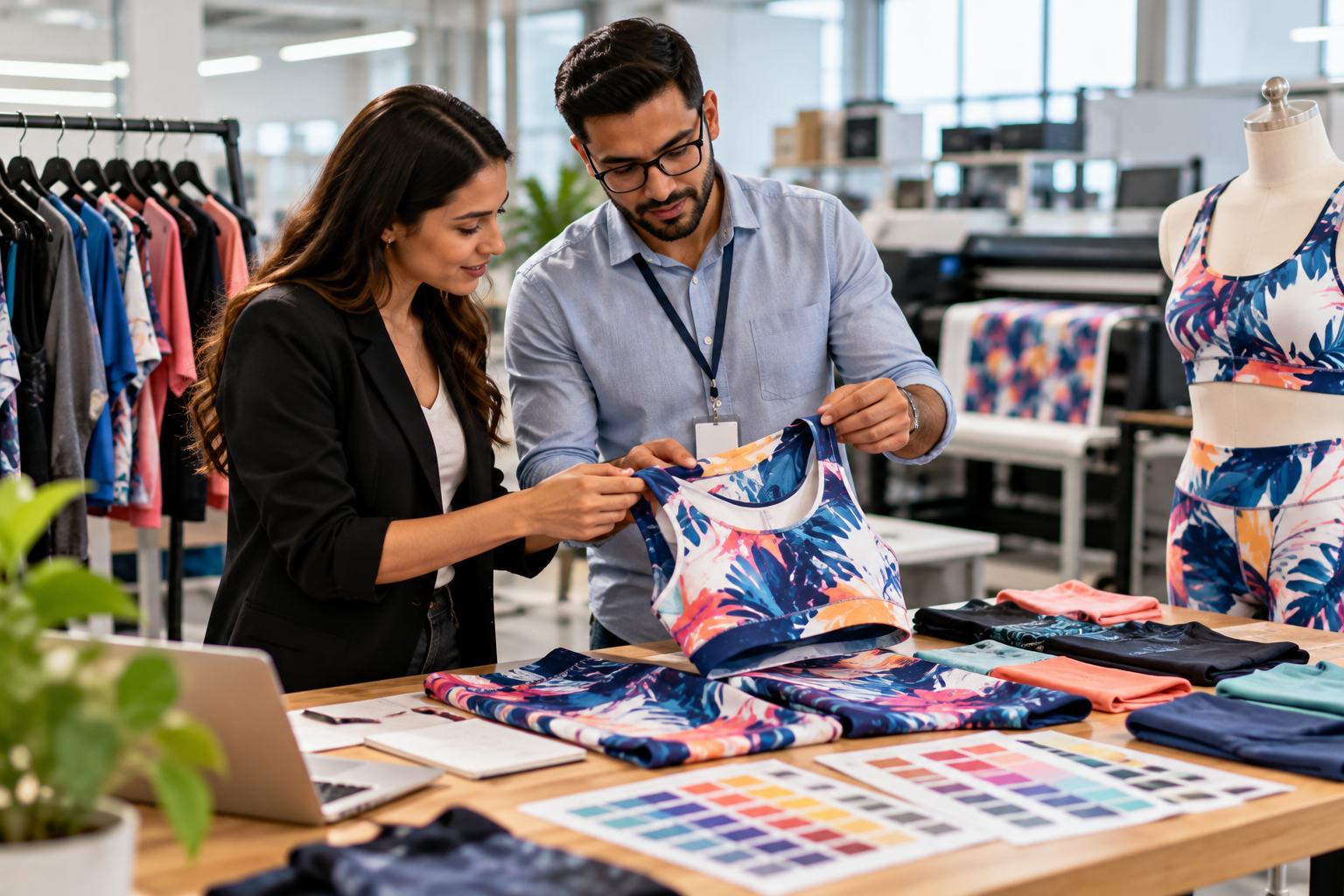
Real US production examples show what is sublimation printing in daily use: stretch fabric, team kits, and all-over graphics. An all-over print is a design that covers the entire garment surface, edge to edge. Each example below comes from a published Maker’s Row account.
Example: Ski suits printed in Paterson, NJ
Racysuits chose a polyester-spandex blend for four-way stretch, then had the print made at TexPrint USA, a family-run textile company with more than 45 years of experience. The printed fabric shipped to a cut and sew factory for assembly. That account is from 2018, so treat it as a process example, not current capacity. Read the full custom print fabrics story.
Example: Team kits in Winter Park, FL
dasFlow has made custom sublimated athleisure apparel near Orlando since 2016. It lists a 100-unit MOQ, negotiable for repeat orders, and a 2 to 3 week production window, per our Florida clothing manufacturers guide.
Example: All-over print activewear in California
Thunderbird Sportswear in North Hollywood lists a 72-unit MOQ per style for sublimation and private label team sportswear, per our private label activewear manufacturers guide. Zipline Activewear in City of Industry lists 200 units per style, per our sportswear manufacturers guide. Both fit brands that rely on bold graphics.
How Do You Work With Sublimation Printing?
You work with sublimation printing by choosing polyester fabric first, then matching your artwork, factory, and sample plan to that choice. Follow these steps in order.
- Pick the fabric before the design. Ask each factory for the exact fiber content in writing, since it goes on your label.
- Choose a light base color. Sublimation dye is translucent, so it shows truest on white or light-colored fabrics.
- Write print specs into your tech pack. A tech pack is a design specification document that tells a manufacturer exactly how to make your garment. List print placement in inches and color references, and use our professional tech pack guide as a template.
- Ask how the factory handles seams and stretch. Ask whether it prints yardage before cutting or prints cut panels, because stretched seams on leggings or swimwear can show white creases. If printing and sewing happen at different sites, confirm who owns each step. Cut and sew manufacturing builds a garment from raw fabric using your pattern and specifications. See our cut and sew manufacturers guide.
- State your MOQ range in the brief. MOQ (minimum order quantity) is the smallest number of units a manufacturer will produce per style. Our MOQ guide explains how to negotiate it.
- Order a sample and wash it. Check color against your reference and see how the print holds up after one wash cycle before approving bulk production.
Also Read: How to Start a Custom Print Clothing Business in the USA →
Sublimation Printing on Maker’s Row
Maker’s Row is a marketplace connecting apparel brand owners with verified US manufacturers, and it is where you can post a sublimation project for bids. Finding the right sublimation manufacturer does not have to mean months of cold emails. On Maker’s Row, post your sublimation project for free and verified US manufacturers bid directly. Review bids, check profiles, connect when ready.
State your fabric, garment color, and MOQ range in your project brief, and manufacturers who run sublimation in-house respond directly. On Maker’s Row, brand owners post unlimited manufacturing projects for free and receive bids from verified US factories at no upfront cost. To connect directly, subscription plans give full access.
FAQs About Sublimation Printing
Sublimation printing is used to put full-color designs on polyester apparel and polyester-coated items such as mugs, mousepads, and phone cases. In apparel, Maker’s Row factories use it for activewear, team uniforms, rash guards, and ski suits. It suits designs with many colors or photographic detail. It does not suit cotton garments.
Sublimation moves dye into polyester fibers with heat, while screen printing pushes ink through a mesh screen onto the surface. Screen printing works on more materials, including cotton and nylon. Sublimation needs no screens, so artwork changes carry no screen cost. Compare both against your fabric and order size before choosing.
No, sublimation dye does not bond with cotton, so a 100% cotton garment will not hold the print. Blends print with a faded look because only the polyester takes the dye. Polyester content must be high for strong color. Confirm the minimum with your factory before you order fabric.
Sublimation prints resist cracking and peeling because the dye bonds inside polyester fibers instead of sitting on top. Resistance is not a guarantee, so wash-test every sample before bulk production. Check color against your reference after one wash cycle. Blends with a lower polyester share already print fainter, so they deserve extra testing.
No neutral published price list exists for sublimation printing, because cost depends on fabric, print coverage, garment construction, and order size. Ask factories for itemized quotes that split fabric, printing, and cut and sew labor. The U.S. Bureau of Labor Statistics reports a median hourly wage of $17.37 for US sewing machine operators in 2025. Labor is a real share of any domestic quote. Compare quotes at the same quantity per style.
Three US factories profiled by Maker’s Row list sublimation minimums of 72, 100, and 200 units per style. Thunderbird Sportswear lists 72, dasFlow lists 100, and Zipline Activewear lists 200. Confirm whether a minimum applies per style, per color, or per total order. Our MOQ guide covers negotiation.
Not effectively, because sublimation dye is translucent and shows truest on white or light-colored fabrics. Plan dark designs on a light polyester base. If your brand needs dark garments, ask the factory which options it offers.
Ready to Put Sublimation Printing Into Practice?
You are ready to use sublimation printing when you have a polyester fabric, a print file, and a target quantity per style. Your sublimation-printed apparel brand is one manufacturer away from becoming real. The factories are on Maker’s Row, ready to bid.