Walk into any fabric trade show in 2026 and one term is everywhere: biodegradable. Buyers are asking for it. Retailers are requiring proof of it. Consumers are starting to demand it on hang tags. For brand owners, this shift is not just a positioning decision. It is a production decision with real consequences for material costs, manufacturer availability, and what you can honestly say about your product.
The problem is that biodegradable fabrics is not a single thing. It is a category with ten distinct types, each with different properties, different manufacturing implications, and different signals for your customer. Choosing the wrong one means samples that don’t match your sustainability story, manufacturers who can’t source the material, and claims you can’t back up.
This guide breaks down every major type of biodegradable fabric so you can make the right call before you brief a manufacturer.
Why Biodegradable Fabrics Matter for Brand Owners
Biodegradable fabrics matter for one practical reason before they matter for environmental ones: the market is moving and your manufacturer conversations need to reflect it.
According to Textile Exchange’s Materials Market Report 2025, global fiber production reached 132 million tonnes in 2024, with fossil-based synthetics still making up the majority. Recycled fibers accounted for just 7.6% of total production. That gap between what the market produces and what sustainability-focused brands need is exactly where new brand opportunities exist in 2026.
Knowing which biodegradable fabrics are available, how they perform, and what certifications support your claims lets you source with confidence, brief manufacturers accurately, and build a product story you can actually defend.
Complete List: 10 Types of Biodegradable Fabrics
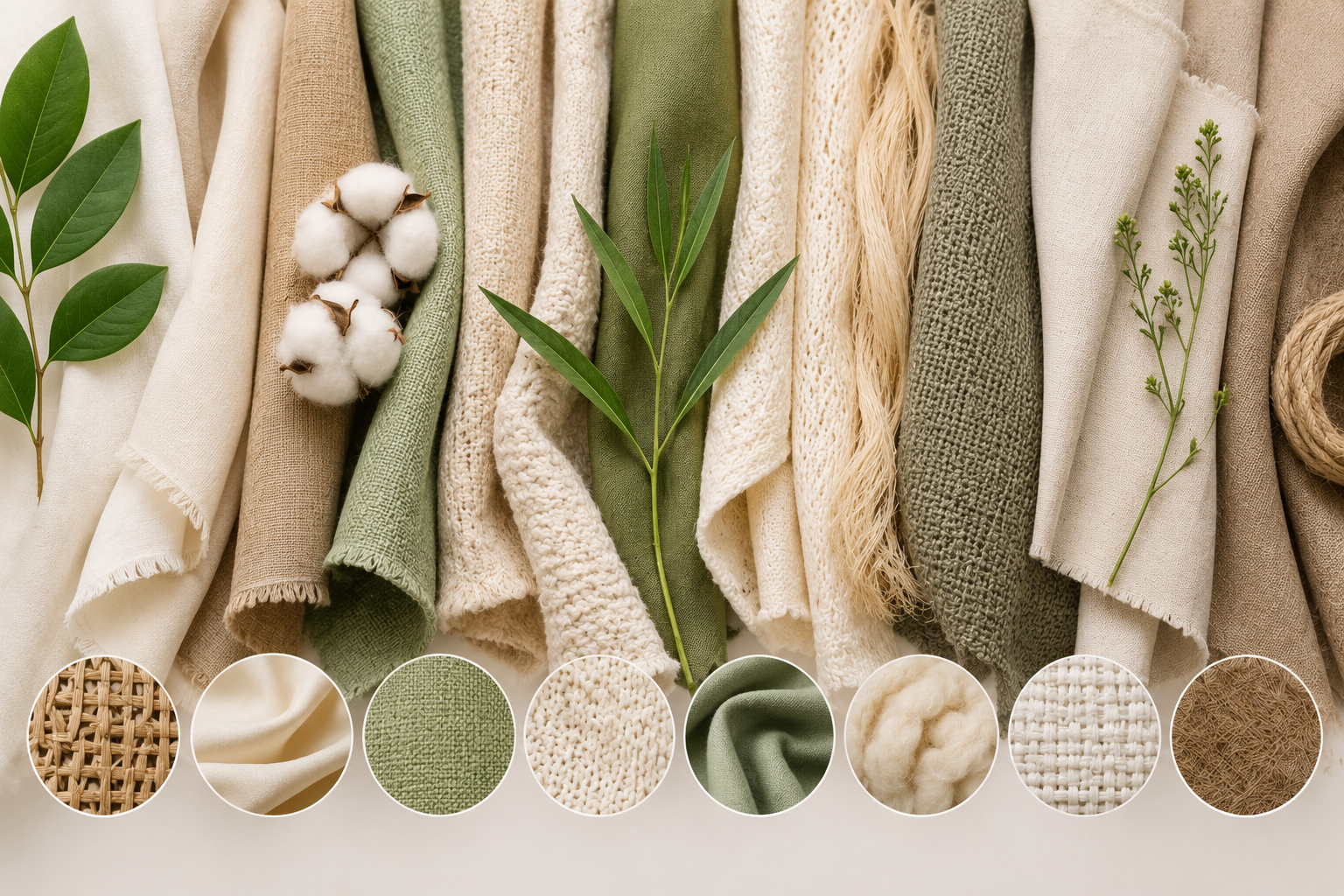
1. Organic Cotton
Organic cotton is natural cotton grown without synthetic pesticides, herbicides, or GMO seeds, processed to certified standards across the supply chain.
Best for: T-shirts, basics, innerwear, childrenswear, casualwear Properties: Soft, breathable, hypoallergenic, fully biodegradable in soil in roughly two months under compost conditions. Common use in fashion: The most widely available biodegradable fabric for new brand owners.
Look for GOTS (Global Organic Textile Standard) certification, which covers the full chain from fiber to finished product. US manufacturer MOQs typically start at 50–150 units for cut-and-sew. Organic cotton costs 20–30% more per yard than conventional, but the certification story is among the strongest in the category.
2. Linen (Flax)
Linen is made from flax plant stalks. It requires no irrigation in most growing regions and minimal pesticide use, making it one of the lowest-footprint natural fibers available.
Best for: Shirting, trousers, dresses, summer collections, lifestyle brands Properties: Strong, breathable, moisture-wicking, slightly textured. Biodegrades in soil in under two months and gets softer with each wash. Common use in fashion: Now used across tailored and casual categories, well beyond its traditional beachwear home.
Linen is widely available through US fabric distributors. Cut-and-sew MOQs typically start at 50 units per style. Look for European Flax certification for verified fiber origin.
3. Hemp
Hemp fabric comes from the bast fibers of the Cannabis sativa plant. It requires no synthetic pesticides, consumes roughly half the water of conventional cotton, and improves soil quality after harvest.
Best for: Outerwear, bags, workwear, casualwear, outdoor and values-led brands Properties: One of the strongest natural fibers available. UV-resistant, antimicrobial, fully biodegradable. Under optimal conditions, hemp breaks down in as little as two weeks. Common use in fashion: Strong traction in premium basics, outdoor apparel, and lifestyle brands built around sustainability.
US hemp availability has grown since the 2018 Farm Bill clarified domestic cultivation rules. Expect MOQs of 100–300 units for cut-and-sew programs. Hemp blended with organic cotton (typically 55/45) is the most practical entry point for brands new to the fiber.
4. Lyocell (TENCEL)
Lyocell is a semi-synthetic fiber made by dissolving sustainably sourced wood pulp in a non-toxic solvent. TENCEL is the leading brand, produced by Lenzing, and is certified by TÜV AUSTRIA as biodegradable in soil, freshwater, and marine environments.
Best for: Dresses, tops, elevated basics, activewear linings, luxury casual Properties: Smooth, moisture-wicking, naturally wrinkle-resistant, breathable. Produced in a closed-loop system reusing over 99% of solvent. Biodegrades in roughly 55 days in soil conditions. Common use in fashion: The go-to for brands that want biodegradable materials with premium hand feel and strong third-party credentials.
TENCEL Lyocell is widely available through US fabric distributors at 50–100 unit MOQs for cut-and-sew. Look for the official TENCEL brand hang tag as your certification verification.
5. Bamboo (Mechanically Processed)
Mechanically processed bamboo fabric, sometimes called bamboo linen, retains the biodegradability of the raw plant. Note: bamboo viscose involves chemical processing that reduces or eliminates biodegradability claims.
Best for: Casualwear, basics, baby apparel, loungewear Properties: Soft, moisture-wicking, naturally antibacterial, thermoregulating. Mechanically processed bamboo is fully biodegradable. Common use in fashion: Bamboo basics and baby apparel represent the strongest market categories.
When briefing manufacturers, specify mechanically processed bamboo if end-of-life biodegradable claims matter to your brand. US manufacturers source imported bamboo fabric for cut-and-sew programs at MOQs starting at 100 units. Look for OEKO-TEX Standard 100 to confirm no harmful chemical residues.
6. Wool (Untreated Natural)
Natural wool, particularly from sheep certified to Responsible Wool Standard (RWS) or ZQ Merino, is fully biodegradable when left untreated or minimally processed.
Best for: Knitwear, outerwear, base layers, cold-weather collections, performance apparel Properties: Naturally temperature-regulating, moisture-wicking, odor-resistant, durable. Biodegrades over months to years depending on fiber fineness and treatment level. Common use in fashion: Premium knitwear and outdoor performance categories.
US wool knitwear manufacturers are concentrated in the Northeast and Pacific Northwest. MOQs typically start at 100–200 units per style. Untreated or minimally treated wool is essential for biodegradability claims; superwash treatments significantly reduce it.
7. Silk
Natural silk is produced by silkworms feeding on mulberry leaves. It is fully biodegradable and one of the strongest natural fibers by weight.
Best for: Lingerie, scarves, luxury blouses, eveningwear, bridal Properties: Naturally smooth, temperature-regulating, hypoallergenic, biodegradable. Decomposes in soil over one to five years depending on conditions. Common use in fashion: Luxury categories where hand feel and visual sheen are primary purchase drivers.
Most US brands import silk fabric and use US-based cut-and-sew manufacturers. MOQs for silk garments typically start at 100–200 units. Peace silk, which allows the silkworm to emerge before cocoon processing, adds an additional ethical positioning layer.
8. Jute
Jute is a plant-based bast fiber, most commonly recognized as the material in burlap. It is coarser than most natural fibers and is used primarily in accessories, bags, and outerwear trims rather than next-to-skin garments.
Best for: Bags, totes, belts, hat trims, outerwear details, sustainable packaging Properties: Exceptionally strong, low cost, fully biodegradable, one of the most environmentally efficient crops grown. Decomposes fully in one to two years in soil. Common use in fashion: Accessories and bags for brands needing a biodegradable alternative to canvas or synthetic webbing.
Jute is the most cost-effective biodegradable fabric on this list. US accessories manufacturers, particularly in bag and tote production, can source it readily.
9. Modal
Modal is a type of rayon made from beech tree cellulose. Lenzing’s TENCEL Modal is the most widely certified version. It is biodegradable under compostable conditions when produced by certified manufacturers.
Best for: Underwear, activewear, T-shirts, soft basics, loungewear Properties: Exceptionally soft, shrink-resistant, moisture-wicking, colorfast. Biodegradable in soil and compostable under industrial conditions when sourced from certified suppliers. Common use in fashion: A preferred fabric for underwear and basics brands wanting biodegradability without sacrificing softness.
Modal is widely stocked by US fabric suppliers with cut-and-sew MOQs from 50–100 units. Priced comparably to TENCEL Lyocell. Look for Lenzing certification or OEKO-TEX documentation from your supplier.
10. PLA (Polylactic Acid) Fiber
PLA fiber is a bio-based synthetic made from fermented plant starches, primarily corn or sugarcane. It is the only synthetic-feeling biodegradable fiber on this list.
Best for: Activewear, athleisure, performance blends, brands transitioning away from conventional polyester Properties: Lightweight, moisture-wicking, smooth like polyester. Compostable under industrial composting conditions (requires temperatures above 140°F). Does not biodegrade in home compost or ambient soil. Common use in fashion: A niche but growing option for performance brands wanting a bio-based, compostable alternative to conventional polyester.
PLA is the most technically complex biodegradable fabric for brand owners. End-of-life messaging requires nuance because industrial composting infrastructure is not widely accessible to consumers. US manufacturers working with PLA are fewer, and MOQs tend to start at 200–500 units. Verify ASTM D6400 or EN 13432 compostability certification before making any marketing claims.
Comparison Table: Biodegradable Fabrics at a Glance
Fabric | Best For | Biodegrades In | Cost Range | USA Availability |
Organic Cotton | Basics, tees, childrenswear | ~2 months (compost) | $$ | High |
Linen | Shirting, dresses, casualwear | ~2 months (compost) | $ | High |
Hemp | Outerwear, bags, casualwear | ~2 weeks (optimal) | $$ | Moderate |
Lyocell (TENCEL) | Elevated basics, activewear | ~55 days (soil) | $$-$$$ | High |
Bamboo (Mech.) | Basics, baby, loungewear | Months (soil) | $$ | Moderate |
Wool (Untreated) | Knitwear, outerwear | Months to years | $$$ | Moderate |
Silk | Lingerie, luxury, bridal | 1–5 years | $$$$ | Low-Moderate |
Jute | Bags, accessories, trims | 1–2 years | $ | Low |
Modal | Underwear, basics, activewear | Industrial compost | $$-$$$ | High |
PLA Fiber | Activewear, performance blends | Industrial compost only | $$$ | Low |
How to Choose the Right Biodegradable Fabric for Your Brand
Choosing a biodegradable fabric is not about finding the most sustainable option in the abstract. It is about finding the right fabric for your specific product, customer, and production stage. Ask yourself these four questions before committing.
What is the primary use case? Next-to-skin basics require softness: organic cotton, modal, or lyocell. Outerwear and bags can handle coarser textures like hemp or jute. Performance activewear needs moisture management, and lyocell, bamboo, or modal deliver that.
What biodegradability claim do you want to make? If you need “fully biodegrades in soil,” hemp, linen, and organic cotton are your cleanest options. PLA requires industrial composting infrastructure, and that caveat must be clear to avoid FTC Green Guides issues.
What certifications will support your marketing? GOTS for organic cotton, European Flax for linen, TENCEL certification for lyocell and modal, Responsible Wool Standard for wool. These are marketing assets as much as compliance tools.
What is your price ceiling? Linen and jute are the most affordable. Silk and PLA are the most expensive. Organic cotton and lyocell sit in the accessible mid-range and are the best starting points for most brand owners launching in the $50–$150 retail range.
Also Read: Top Sustainable Fabric Manufacturers in the USA →
Also Read: Garment Fabric Manufacturers: Top Facts and FAQs →
Finding Biodegradable Fabric Manufacturers on Maker’s Row
Finding a manufacturer who can actually work with biodegradable fabrics requires more than a Google search. Many skilled US factories that handle organic cotton, lyocell, hemp, and linen do not have strong web presences. They respond to specific project briefs, not general inquiries.
On Maker’s Row, post your biodegradable fabric project for free and verified US manufacturers bid directly. Describe your material requirements in your project brief, including fiber type, preferred certifications, target MOQ, and whether you need the manufacturer to source fabric or if you are supplying it. Manufacturers who specialize in those exact materials respond to you.
Factories on Maker’s Row are active and responsive. Many reply within 24–48 hours of a new project being posted. Review which manufacturers have worked with sustainable materials before placing any commitment.
FAQs About Biodegradable Fabrics
A biodegradable fabric is a textile that decomposes through biological processes into non-toxic components, primarily water, carbon dioxide, and organic matter, without leaving harmful residues in the environment. Natural fibers like organic cotton, linen, and hemp are inherently biodegradable. Semi-synthetic fibers like TENCEL Lyocell and Modal are certified biodegradable when produced under controlled conditions. Synthetic fibers like conventional polyester and nylon are not biodegradable and can persist in the environment for hundreds of years.
It depends on how the bamboo was processed. Mechanically processed bamboo fabric, sometimes called bamboo linen, retains the natural biodegradability of the plant fiber and decomposes naturally. Chemically processed bamboo viscose goes through a transformation that alters the fiber, reducing or eliminating biodegradability depending on the processing agents used. When evaluating bamboo fabric for biodegradable claims, always ask your supplier for documentation and specify mechanically processed fiber.
Not exactly. All untreated natural cotton is technically biodegradable, but conventional cotton treated with synthetic dyes or chemical finishes may release harmful compounds during decomposition. GOTS-certified organic cotton is grown without synthetic chemicals and processed with biodegradability criteria in mind throughout the supply chain. Organic cotton is both biodegradable and produced to a verified environmental standard, making it the stronger claim for brand owners.
The four most important are GOTS for organic fibers, OEKO-TEX Standard 100 for harmful substance testing, the TENCEL brand certification for lyocell and modal, and ASTM D6400 or EN 13432 for compostability claims. Certifications matter for your cut-and-sew partner as much as for your fabric supplier. Confirm your manufacturer’s processing methods are compatible with your chosen fiber’s certification requirements.
Yes. US manufacturers working with organic cotton, linen, hemp, lyocell, and modal are well-established, particularly in California, New York, and the Southeast. Wool knitwear manufacturers are concentrated in the Northeast and Pacific Northwest. Finding them requires getting your project brief in front of the right factories. Maker’s Row connects you with verified US manufacturers who specialize in sustainable materials.
Make only the claims your certifications support. If your lyocell is TENCEL-certified and TÜV AUSTRIA-verified for biodegradability in soil and marine environments, you can say so. If your bamboo is chemically processed viscose, you cannot claim it is biodegradable without qualification. The FTC Green Guides require that environmental claims be specific and substantiated. The Sustainable Apparel Coalition offers frameworks brands use to verify environmental claims across the supply chain. Work with manufacturers who can provide chain-of-custody documentation for the fiber you are using.
Organic cotton and linen are the best starting points for most new brands. Both are widely available through US manufacturers, accessible at lower MOQs than specialty fibers, and carry well-recognized certifications. TENCEL Lyocell is a strong alternative for brands in elevated basics or casualwear that want premium hand feel. For more guidance on material sourcing, see what garment fabric manufacturers look for in sustainable briefs →
Now You Know the Types: Here Is Your Next Step
Your biodegradable clothing brand is one manufacturer away from becoming real. The factories that specialize in organic cotton, TENCEL, hemp, linen, and the other biodegradable fabrics on this list are on Maker’s Row, ready to bid on your project.