Pet apparel has moved well past the novelty aisle. It is now a fashion category that serious brand owners are entering with the same rigor as human clothing lines. This guide breaks down the brands doing it right, and what independent labels can learn from each one.
The past decade has reshaped how pet owners shop. Dogs and cats are increasingly treated as family members. That shift shows up directly in what people buy them to wear. Pet apparel now ranges from technical outdoor gear to seasonal fashion collections. New independent brands launch every year to meet that demand.
What separates the brands people stick with from the rest? Usually it comes down to fit, fabric choice, and a clear point of view, not just a cute product photo. The brands below built real followings by solving one specific problem. Each one committed to a single aesthetic instead of trying to cover every category at once.
If you are building a brand in this space, this guide shows you what the best of them are doing right now, and where to find the manufacturing partner to bring your own line to life.
What Makes a Great Pet Apparel Brand?
The strongest brands in this category share a few traits, regardless of price point or aesthetic.
- Design philosophy: A clear point of view, whether that is technical outdoor performance or minimalist city style, instead of chasing every trend at once.
- Quality of materials: Fabric that holds up to chewing, weather, and repeated washing without losing shape. The AAFA tracks material and sourcing standards. These increasingly apply to this category too.
- Manufacturing consistency: A dependable production partner who can maintain fit and sizing across a growing product line.
- Brand identity: Visual and verbal branding that pet owners want to be associated with, not just the pet.
- Community and audience: An engaged following built before the product line expanded past a hero item.
For a broader look at where the industry is headed, see our guide to apparel industry trends.
Best Pet Apparel Brands in the USA 2026
1. Canine Styles
Canine Styles has outfitted New York City dogs in tailored coats, sweaters, and seasonal collections since it opened, making it one of the longest-running pet apparel brands in the country.
- Founded: 1989
- Known for: Seasonal pet fashion collections and tailored outerwear
- Price range: $$$
- What sets them apart: Canine Styles has run as a Manhattan boutique for more than three decades. That track record is rare. Fashion cycles change fast, and many newer competitors have already come and gone.
2. Ruffwear
Ruffwear designs technical gear for dogs that hike, run, and work alongside their owners outdoors.
- Founded: 1994
- Known for: Performance harnesses, trail jackets, and technical dog gear
- Price range: $$
- What sets them apart: Every Ruffwear product is developed and field-tested in Bend, Oregon, with real trail conditions guiding design decisions instead of seasonal trend forecasts.
3. Kurgo
Kurgo started with a single car safety product and grew into a full outdoor gear line for active dogs.
- Founded: 2003
- Known for: Travel harnesses, car seat covers, and outdoor apparel
- Price range: $$
- What sets them apart: Kurgo’s founders built their first prototype in a home garage. They were solving one specific problem for their own dog. That is a reminder that one well-made product can be enough to start a brand. Radio Systems Corporation acquired Kurgo in 2018. The brand still operates under its original name.
4. ThunderWorks (ThunderShirt)
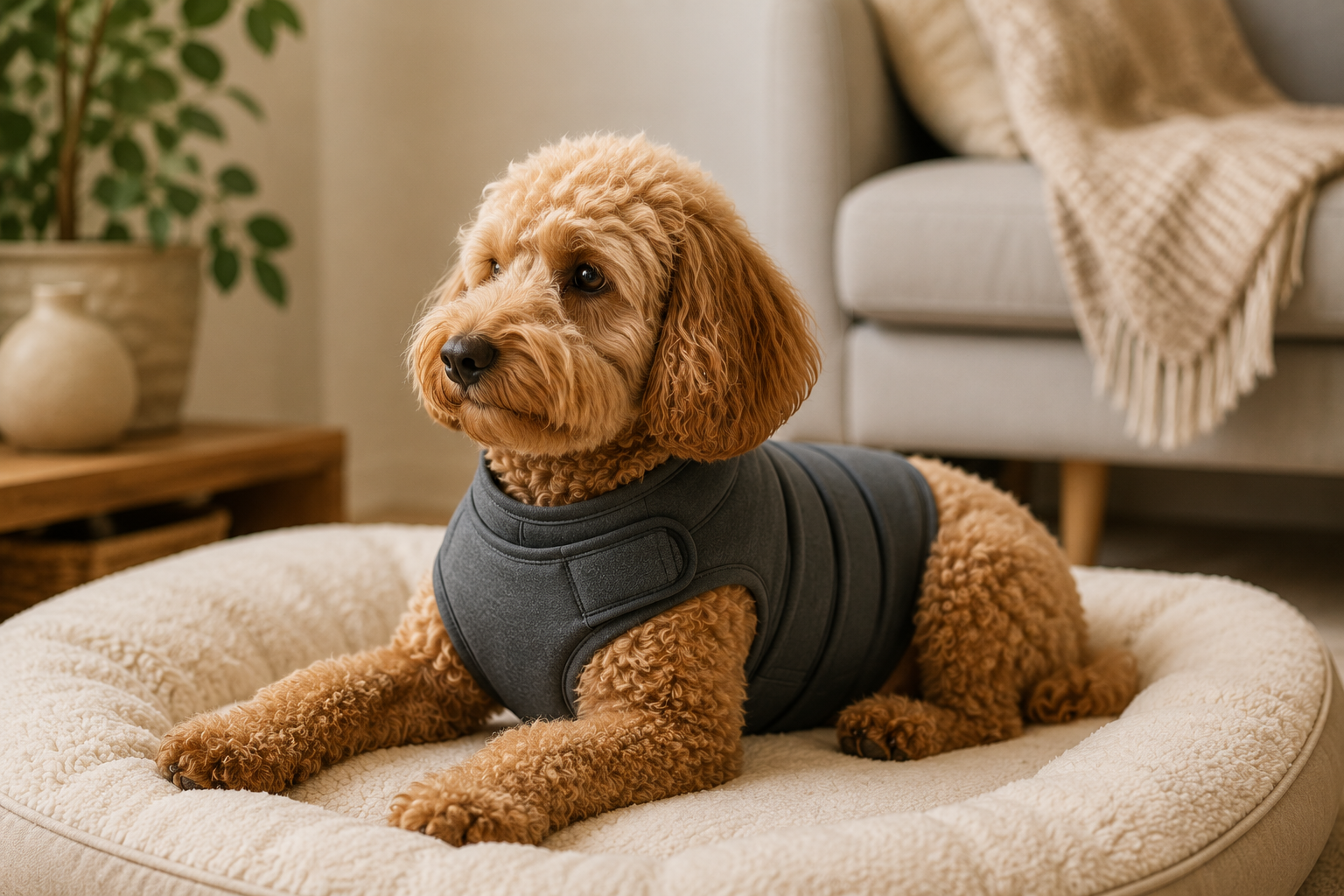
ThunderWorks built its entire company around one functional garment: the ThunderShirt, a compression vest designed to calm anxious dogs and cats.
- Founded: 2009
- Known for: Calming compression apparel
- Price range: $
- What sets them apart: ThunderWorks proves a brand does not need a large catalog to succeed. Its flagship product is recommended by veterinarians and trainers. That single-product focus has carried the brand for over a decade.
5. Wild One
Wild One is a New York City pet lifestyle brand known for minimalist, function-first design across its collars, harnesses, and gear, with some apparel crossover.
- Founded: 2017 (product line launched 2018)
- Known for: Sleek, color-coordinated Walk Kits and pet gear
- Price range: $$
- What sets them apart: Wild One applies the same restrained aesthetic across every product. That consistency helped it land retail partnerships with Nordstrom and Bloomingdale’s early on. Its catalog leans more toward accessories than clothing. Even so, its design approach has shaped how newer competitors present themselves.
6. Little Beast
Little Beast makes dog onesies, hoodies, and sweaters known for bold colors and prints, a departure from the muted tones common in the category.
- Founded: 2018 (apparel line launched 2020)
- Known for: Colorful dog apparel and collaborations with human fashion labels
- Price range: $$
- What sets them apart: Little Beast started in an 800-square-foot New York City apartment. It grew into a go-to collaborator for fashion labels entering pet clothing. Past projects include work with Sandy Liang and Wray.
What These Brands Have in Common
A few patterns show up across every brand on this list, regardless of price point or product category.
Most started with one hero product instead of a full line. Ruffwear began with harnesses. Kurgo began with a single car barrier. ThunderWorks built its entire business around one compression vest. None of them tried to launch a complete catalog on day one.
Most also found the right manufacturing partner before scaling. Many brands in this category start with a small-batch manufacturer. Small-batch factories understand limited-run apparel construction. That matters more early on than bulk textile capacity.
Several built community and brand identity before expanding their product count. Wild One and Little Beast both grew their following through social media and design collaborations before adding new categories.
Every brand on this list started exactly where you might be right now, with a strong idea and a need to find the right manufacturer to bring it to life.
How to Start Your Own Brand
If you have been dressing your own dog in pieces you wish existed on the market, that instinct is worth taking seriously. Every brand above started with exactly that kind of frustration.
- Define your hero product. Pick one item, whether it is a harness, a rain jacket, or a sweater, and make it exceptional before building out a full collection. ThunderWorks and Kurgo both built lasting brands around a single product.
- Build your brand identity. Decide on your aesthetic, your target customer, and what makes your line different from the dozens of similar-looking options already on the market. Free mentorship through organizations like SCORE can help you pressure-test your positioning before you spend on production.
- Find your manufacturer. This is the step most first-time brand owners underestimate. Dog and cat clothing needs different fit standards than human clothing. Think leg holes, harness openings, and breed-specific sizing. Consider a private label manufacturer that already understands small-brand production timelines.
Find a Manufacturer on Maker’s Row
Finding the right manufacturer does not have to mean months of cold emails. On Maker’s Row, post your project for free and verified US manufacturers bid directly. Review bids, check profiles, connect when ready.
FAQs About Pet Apparel Brands
Popularity depends on the segment. Ruffwear and Kurgo lead in performance and outdoor gear. Canine Styles and Little Beast are better known for fashion-forward pieces. No single brand dominates the whole category the way one might in human fashion.
Some brands manufacture domestically. Others design in the USA and produce overseas. Little Beast, for example, designs in New York and manufactures in South Korea. Check a brand’s own sourcing page if domestic production matters to you. Apply that same scrutiny to your own supply chain if you are launching a brand.
Established brands usually build direct factory relationships over years. Most start with a single small-batch order before scaling up. Newer brands increasingly use B2B sourcing platforms like Maker’s Row instead. That connects them to verified US manufacturers without needing existing industry contacts.
Startup costs vary widely based on your hero product, materials, and minimum order quantities. The SBA advises new business owners to budget for ongoing operating costs, not just the first production run. Request quotes from multiple manufacturers before setting a budget.
Minimum order quantities vary by manufacturer and product complexity. Many small-batch producers offer lower MOQs than mass-market factories require. Confirm MOQ, sample costs, and lead times before committing to a production run.
Your Pet Apparel Brand Starts With One Decision
Every brand on this list started with one well-made product and the will to find the right manufacturing partner. Yours can too.