A wholesale buyer asks if your line comes in an adaptive fit. A customer emails asking whether your leggings work for someone who uses a wheelchair. If you are new to inclusive design, that question can feel bigger than it should. This guide explains exactly what adaptive clothing is, why it matters for a growing share of shoppers, and how to work with a US manufacturer to bring an adaptive line to production.
Adaptive clothing is apparel designed with modified closures, openings, and construction so it is easier to put on, take off, and wear for people with disabilities, limited mobility, sensory sensitivities, or age-related physical changes. For clothing brands, this means rethinking specific construction details rather than reinventing your entire product line.
Brand owners are paying attention to adaptive design for a simple reason: the customers who need it are currently underserved, and the manufacturing changes required are smaller than most founders assume. This guide covers what the category actually includes, real examples of how brands apply it, how to source and manufacture it, and how to find a US factory that can execute it well.
What Is Adaptive Clothing?
It is clothing built with alternative fastenings, seams, and openings that make dressing easier for people who face physical or sensory barriers with standard garments. For clothing brands, this means a shirt might swap buttons for magnets, or a pair of pants might open flat at the side seam instead of pulling on over the legs.
The category covers a wide range of needs, not one single modification. A garment built for someone with limited hand dexterity looks different from a garment built for someone who dresses while seated. The table below breaks down the most common adaptive features and who typically needs them.
Feature | What It Solves | Common Application |
Magnetic closures | Limited hand dexterity, arthritis | Shirts, jackets, adaptive clothing for men |
Side-seam or back openings | Seated dressing, wheelchair use | Pants, adaptive clothing for women |
Velcro in place of laces | One-handed dressing, prosthetics | Footwear, outerwear |
Seamless or tagless interiors | Sensory sensitivity | Everyday basics, children’s wear |
Adjustable, elasticated waists | Fluctuating body shape, catheter access | Pants, skirts |
Extended or reinforced zippers | Limited grip strength | Jackets, dresses |
According to the American Apparel and Footwear Association (AAFA), inclusive sizing and functional design have become a consistent theme in domestic apparel production as manufacturers respond to demand from underserved customer segments.
Why It Matters for Brand Owners
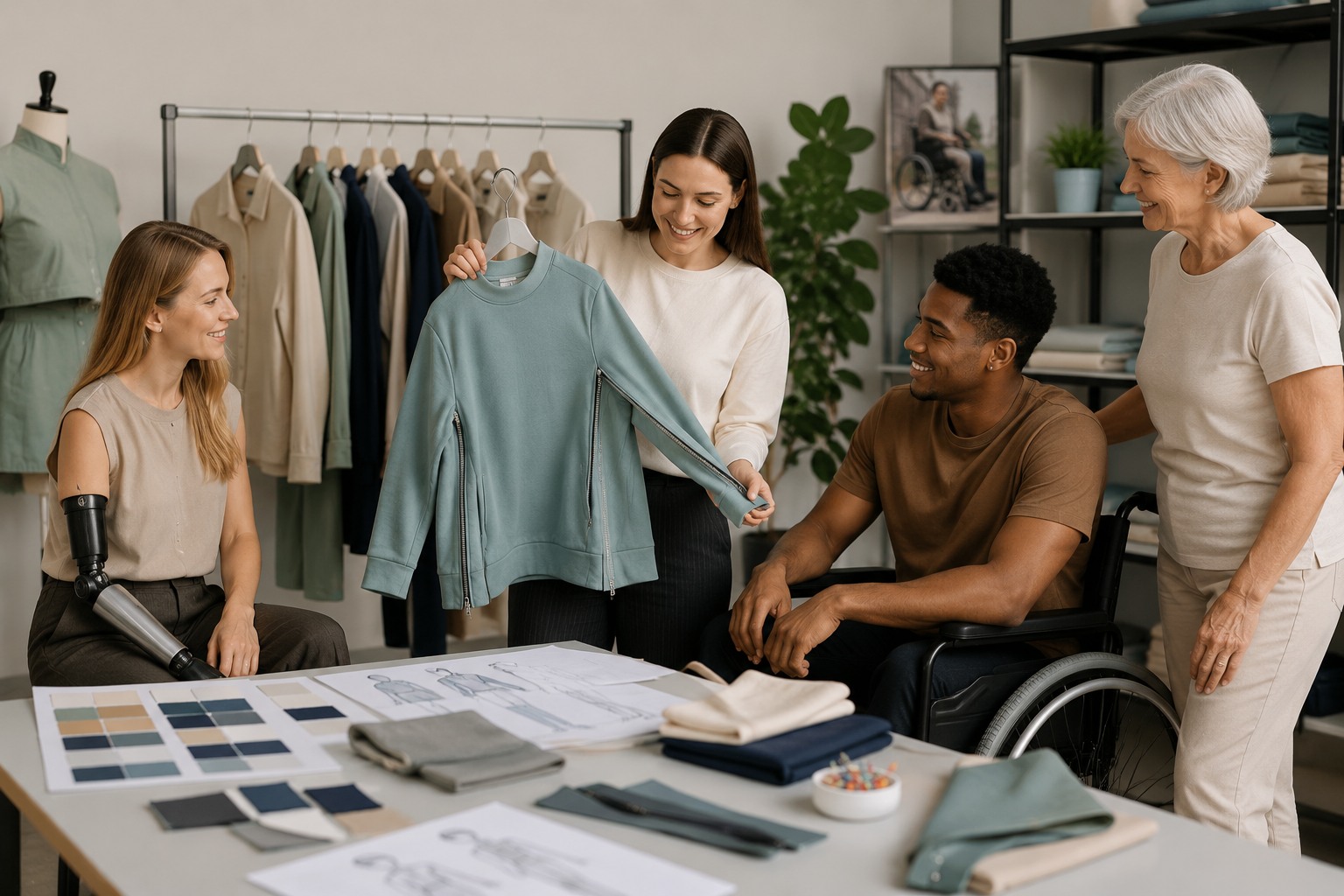

Understanding the category is not just a values statement. It connects to real business decisions.
- The customer base is large and underserved. Millions of Americans live with a disability or mobility limitation, and mainstream retailers have historically offered very few options built for their needs. A brand that solves this well faces less direct competition than a brand entering a saturated category.
- Mainstream retailers are already validating the category. Target and Kohl’s both carry dedicated adaptive lines, and Tommy Hilfiger’s Tommy Adaptive collection has run for several seasons. That retail presence signals real, sustained consumer demand rather than a short-lived trend.
- The manufacturing lift is often smaller than founders expect. Many adaptive modifications, like swapping a button placket for a magnetic closure, are construction changes a capable cut and sew factory can execute without a full pattern redesign.
- Loyalty in this category runs deep. A shopper who finally finds clothing that fits their needs well tends to become a repeat customer, because the alternative is going back to garments that do not work for their body.
Real Examples: Adaptive Design in Practice
Example: The magnetic closure pivot
A Chicago-based basics brand redesigned their best-selling button-down shirt with hidden magnetic closures instead of buttons, keeping the exact same exterior look. They worked with their existing cut and sew manufacturer to adjust the placket construction, added the style as a second SKU rather than replacing the original, and it became one of their top three sellers within two seasons.
Example: Seated-fit denim
A Los Angeles denim brand introduced a seated-fit style with a higher back rise, flatter back pockets, and a side-zip opening for wheelchair users. They tested the pattern with actual wheelchair users during sampling rather than relying on a standard fit model, which caught fit issues a typical sample review would have missed.
Example: Sensory-friendly kidswear
A Texas-based children’s brand removed all interior tags, flattened seams at the neckline, and switched to tagless printed labels across their core line after parent feedback about sensory sensitivity. The change applied to their entire collection rather than a separate adaptive line, which simplified production and widened the customer base for every style.
How to Source and Manufacture Adaptive Clothing
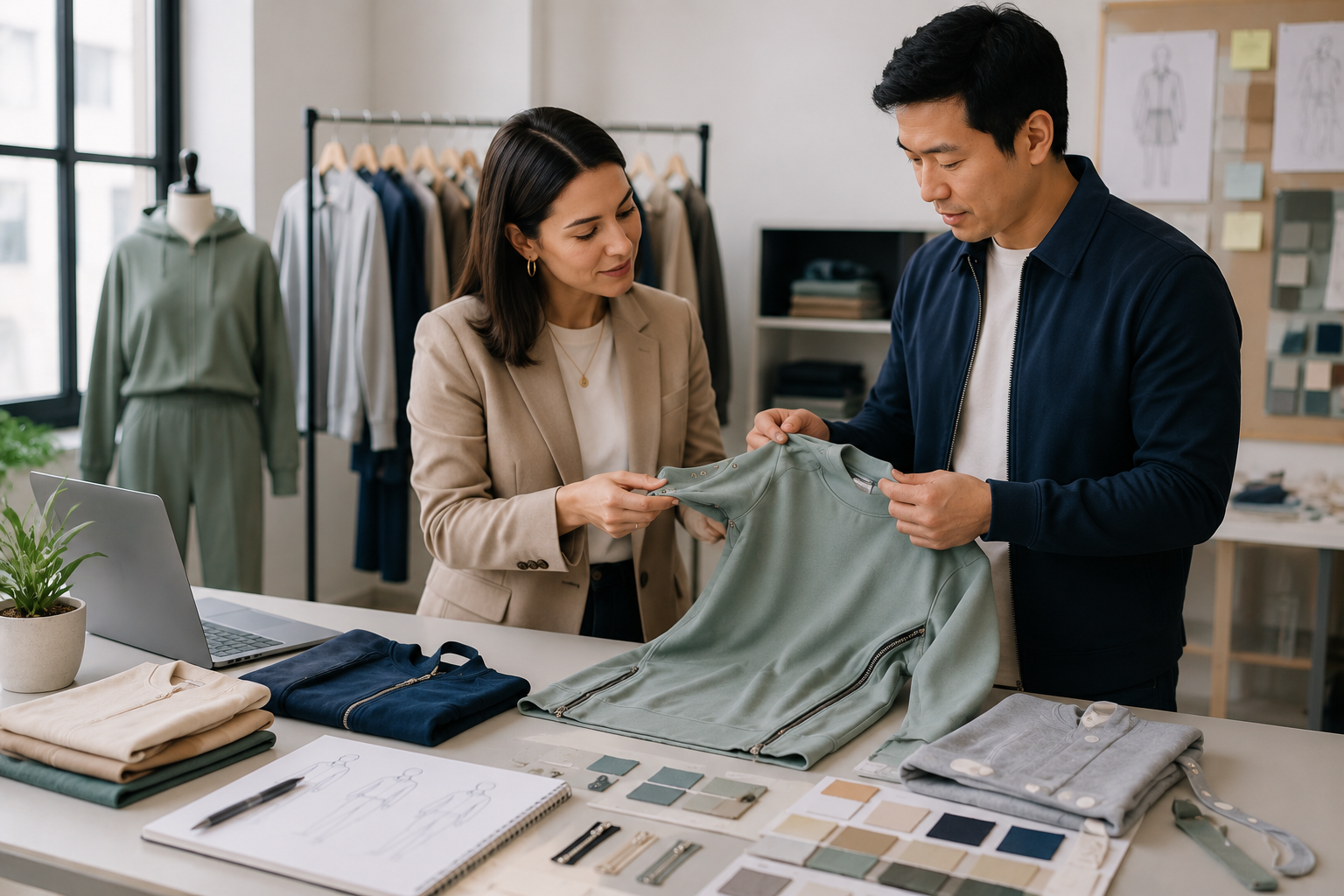
Sourcing this category does not require a specialized adaptive-only factory. It requires a manufacturer comfortable with a few nonstandard construction techniques and a sourcing process that includes real user feedback.
- Define the specific modifications your product needs. This is not one feature. Decide whether your priority is closures, openings, seam placement, or fabric sensitivity, and be specific in your brief rather than asking a factory to “make it adaptive.”
- Build a tech pack that documents every modification. Standard garment tech packs do not typically cover magnetic hardware placement or seated-fit rise adjustments. Add detailed notes and diagrams for every adaptive feature so the factory is not guessing.
- Choose a manufacturer with cut and sew flexibility, not just volume capacity. A factory that only runs standard patterns at scale may struggle with modified closures or nonstandard seam construction. According to the U.S. Bureau of Labor Statistics (BLS), the domestic apparel manufacturing workforce is concentrated in smaller facilities built for flexible, small-batch production, which is exactly the kind of factory equipped to handle custom adaptive construction.
- Sample with real users, not just a standard fit model. The Los Angeles denim example above shows why this matters. A standard fit review will not catch problems that only surface when someone actually needs the adaptive feature to work.
- Confirm any relevant certifications before production. If your product targets medical or care settings, ask your manufacturer about compliance requirements early, since retrofitting a garment for certification after production is expensive.
The Small Business Administration (SBA) recommends that founders entering a specialized product category validate demand with a small first run before committing to a full collection, a principle that applies directly to a first adaptive style.


Adaptive Clothing Manufacturing on Maker’s Row
Finding a manufacturer comfortable with nonstandard construction does not have to mean months of cold emails to factories who have never worked on adaptive features before. On Maker’s Row, post your adaptive clothing project for free and verified US manufacturers bid directly. Review bids, check profiles, connect when ready.
Describe your specific modifications (magnetic closures, seated fit, tagless construction, or whatever your product requires) directly in your project brief. Manufacturers in the USA who have handled similar custom construction work respond directly, so you are not explaining the concept from scratch to every factory you contact.
For your first adaptive style, many brand owners start with a cut and sew manufacturer already comfortable with custom construction, since the closure and seam modifications common in this category fall closer to custom work than standard private label production. Confirming your target MOQ before you reach out also narrows your factory search considerably, since many cut and sew partners will quote lower minimums for a first test run.
FAQs About Adaptive Clothing
Adaptive clothing is apparel modified with alternative closures, openings, and construction to make dressing easier for people with disabilities, limited mobility, or sensory sensitivities. Common modifications include magnetic buttons, side-seam openings, and seamless interiors. The category spans everyday basics, outerwear, and footwear rather than a single garment type.
Inclusive sizing addresses body size and shape, while adaptive clothing addresses how a garment is put on, closed, and worn. A brand can offer inclusive sizing without any adaptive features, and a garment can be adaptive at a single size. The two categories often overlap but solve different barriers.
Adaptive clothing is worn by people with physical disabilities, limited hand dexterity, wheelchair users, people recovering from surgery, older adults with age-related mobility changes, and people with sensory sensitivities such as autism. Caregivers also frequently purchase these garments for the person they support.
Look for a cut and sew manufacturer experienced with custom construction rather than a factory that only runs standard patterns at high volume. On Maker’s Row, describing your specific adaptive modifications in your project brief helps manufacturers with relevant experience self-select and respond directly.
Adaptive clothing can cost somewhat more per unit due to specialty hardware like magnetic closures and additional construction steps, but the increase is usually modest rather than dramatic for most modifications. A tech pack that documents every adaptive feature in detail keeps sampling rounds, and their associated costs, to a minimum.
Most adaptive clothing sold at retail does not require special certification, since it is still classified as standard apparel. Products marketed for specific medical or care settings may face additional compliance requirements, so confirm this with your manufacturer and legal counsel before entering that specific market.
Ready to Put Adaptive Clothing Into Practice?
Your adaptive clothing line is one manufacturer away from becoming real. The factories on Maker’s Row include cut and sew partners experienced with custom construction, ready to bid on your project.