Garment construction is the process of assembling cut fabric pieces into a finished, wearable piece of clothing using specific sewing, seaming, and finishing techniques. For clothing brand owners, this means the manufacturing steps that turn your pattern and fabric into the physical product a customer receives.
Weak garment construction shows up fast: seams that pucker, hems that unravel, and pieces that lose shape after a few washes. Knowing the basics of garment construction helps you evaluate manufacturer quality before you commit to a full production run and gives you the vocabulary to ask specific questions during sourcing calls.
This guide breaks down what garment construction means, why it matters for your brand, and how to apply that knowledge when you search for a US manufacturer.
What Is Garment Construction? (Definition)
Garment construction is the process of assembling cut fabric pieces into a finished garment through cutting, sewing, seaming, and finishing techniques. For clothing brands, this means the physical build quality of every unit your manufacturer produces.
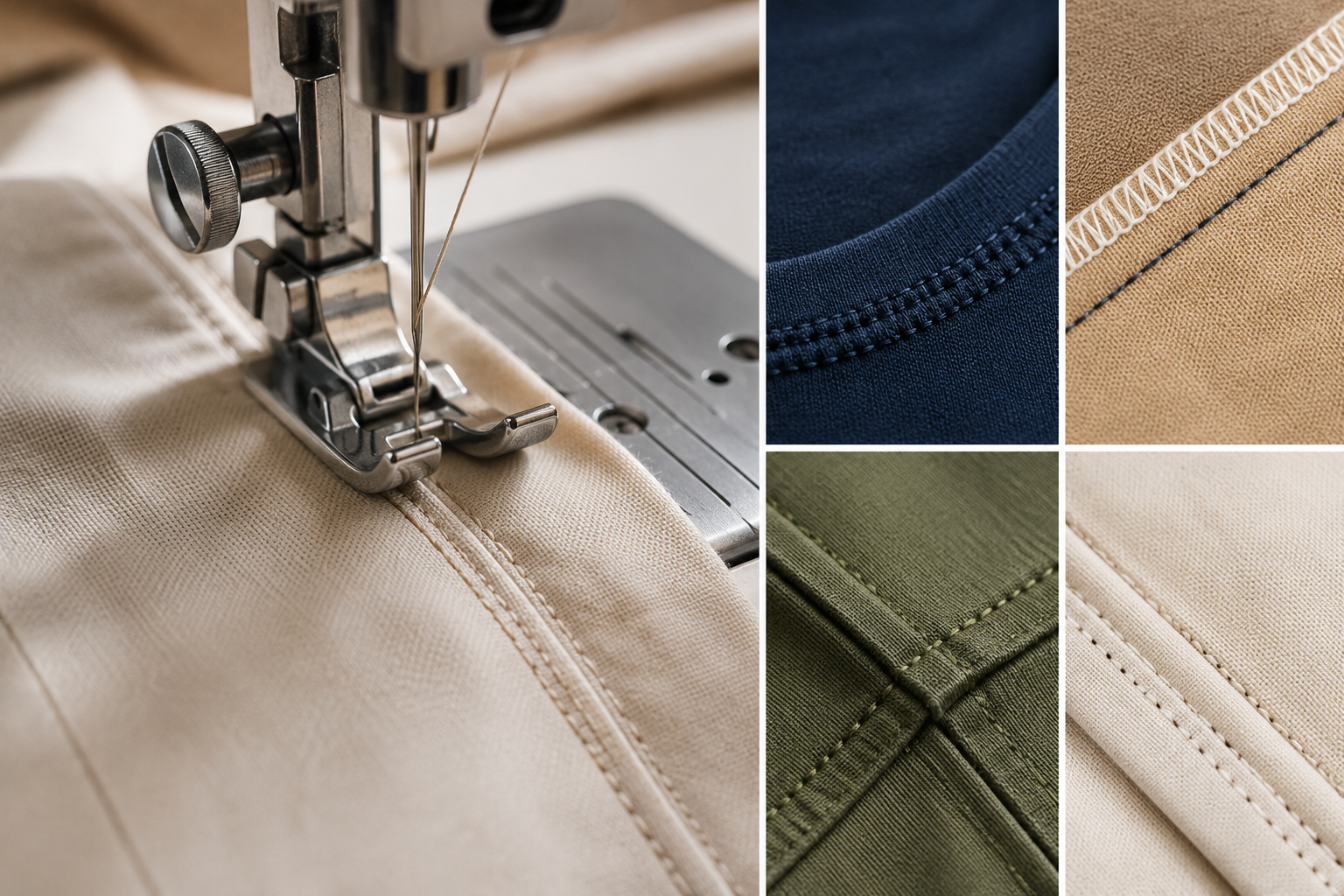
Construction quality depends on stitch type, seam finish, and how a factory handles fabric during assembly. A tech pack (the document that specifies measurements, materials, and construction details for a manufacturer in the USA) tells your factory exactly how a garment should come together, down to the seam type on each panel.
Different construction methods suit different products. A raw denim brand needs different seam strength than a silk blouse label.
Construction Method | Description | Common Use | Durability |
Cut and sew | Fabric cut from a pattern, then sewn into a finished garment to spec | Custom, brand-owned designs | High |
Serged seams | Edges overlocked to prevent fraying | T-shirts, knitwear | Medium to high |
Flat-felled seams | Two fabric layers folded and stitched flat | Denim, workwear | Very high |
French seams | Seam fully enclosed for a clean interior finish | Delicate wovens, blouses | Medium |
Bound seams | Raw edge wrapped in binding fabric | Unlined jackets, activewear | High |
According to the AAFA, buyers evaluating apparel manufacturers weigh construction consistency alongside price and lead time, making it one of the more heavily scrutinized quality factors during sourcing.
Why Does Garment Construction Quality Matter for Your Brand?
Garment construction quality matters because it directly affects your return rate, customer reviews, and repeat purchases.
- Fewer returns: A seam that fails after one wash generates a return and a refund, both of which cut into thin startup margins.
- Stronger reviews: Customers notice construction details like even stitching and secure hems, and they mention them in reviews far more than they mention fabric choice alone.
- Better manufacturer conversations: Knowing construction terms lets you ask a factory specific questions instead of vague ones, which speeds up sampling.
- Lower long-term cost: Getting construction right on the first sample avoids paying for a second or third revision round.
As of 2026, BLS data shows the US apparel manufacturing sector employs roughly 83,000 workers across thousands of domestic facilities, many of them small operations built around specific construction skills such as tailoring, cut and sew, or technical outerwear assembly.
Garment Construction in Practice: Real Examples
Example: Activewear Seam Failure in Los Angeles
A Los Angeles activewear brand ordered 300 units of leggings from a factory using standard overlocked seams instead of flatlock stitching. The seams irritated skin during workouts, and the brand absorbed a 15% return rate on the first run. Switching to a flatlock-seam factory for the reorder cut returns to under 3%.
Example: Outerwear Spec Match in Brooklyn
A Brooklyn outerwear brand specified bound and taped seams in its tech pack for a 150-unit rain jacket run. The manufacturer followed the spec exactly, and the jackets passed a third-party water-resistance test on the first attempt, avoiding a costly resample.
Example: Denim Durability in Nashville
A Nashville denim brand requested flat-felled seams for a 200-unit jean run to match the durability customers expect from raw denim. The finished product held up through repeated wash testing without seam separation, a detail the brand now features in its marketing.
How Do You Apply Garment Construction Knowledge When Sourcing?
Applying garment construction knowledge when sourcing comes down to five practical steps.
- Learn the construction terms relevant to your product category before you contact any factory. A denim brand needs different vocabulary than a knitwear brand.
- Specify construction details in your tech pack, not just measurements. Name the seam type, stitch density, and finishing method for every seam that matters.
- Ask manufacturers directly about seam type and stitch density during your first sourcing call. Their answer tells you how experienced they are with your product category.
- Request a construction-focused sample review, not just a fit check. Pull at seams and check stitch consistency before approving.
- Compare construction quality across at least two manufacturer samples before committing to a full production run.
The SCORE network recommends new brand owners work with a technical designer or mentor during tech pack development, since construction errors caught before production are far cheaper than errors caught after.
Garment Construction on Maker’s Row
On Maker’s Row, state your construction requirements, such as seam type, stitch density, or finishing method, directly in your project brief. Manufacturers who work with those specific techniques respond directly, so you are not starting every conversation from zero.
Maker’s Row is a marketplace connecting apparel brand owners with verified US manufacturers. Factories on the platform are used to reading detailed construction specs from first-time founders, not just established brands.
For technical steps like pattern making or building a tech pack, pairing those documents with a clear project brief gives a garment factory everything it needs to quote accurately on the first try
FAQs About Garment Construction
Garment construction is the overall process of assembling a garment, while cut and sew is one specific construction method within it. In cut and sew, a manufacturer cuts fabric from your pattern and sews it together to your exact specifications, giving you full control over the finished construction.
The main types include cut and sew, serged seams, flat-felled seams, French seams, and bound seams. Each method affects durability, finish, and cost differently, which is why the right choice depends on your specific product category.
Garment construction affects manufacturing cost because more complex seams and finishing techniques require additional labor time and specialized equipment. A flat-felled seam on denim takes longer to sew than a basic overlocked seam, and that time gets reflected in your per-unit quote.
Yes, understanding basic garment construction helps even non-designer brand owners evaluate manufacturer quality and communicate clearly during sourcing. You do not need to sew yourself, but knowing the vocabulary prevents miscommunication with your factory.
Order a paid sample and inspect the seams, stitch consistency, and finishing before approving a full production run. Pull gently at stress points like underarms and hems, since that is where weak construction fails first.
The USPTO offers design patent protection for garments with genuinely novel construction elements, though standard techniques like cut and sew or serging are not patentable on their own. Most brand owners protect their advantage through trade secrets and manufacturer relationships rather than patents.
Ready to Put Garment Construction Knowledge Into Practice?
Your clothing brand is one manufacturer away from becoming real. The factories are on Maker’s Row, ready to bid.