Starting a seamless leggings brand is one of the most exciting moves a creative entrepreneur can make right now. It is also one of the most confusing, since most guides tell you to “find a manufacturer” without explaining how seamless knitting actually works or who produces it domestically. This guide is different. It gives you the exact steps from concept to your first production run, including how to find the right US manufacturer even if you have never done this before.
This category is having a real moment. The global seamless apparel market reached an estimated USD 69.65 billion in 2025, and leggings alone accounted for roughly 23.6% of that revenue, according to Grand View Research. Consumers want the second-skin fit and chafe-free construction that seamless knitting delivers, and they are willing to pay for it.
New brand owners trying to start a seamless leggings brand run into three obstacles every time: finding a manufacturer who actually works with seamless knit technology, understanding costs that differ from standard cut-and-sew production, and not knowing the sequence of steps between idea and first order. This guide solves all three, in order, so you can move from concept to a real production run without six months of dead-end research.
Step 1: Define Your Hero Product and Brand Identity
Your hero product is the single style that proves your seamless leggings brand works before you build a full collection. Pick one silhouette, one compression level, and one price point, and execute it better than the brands already on the shelf.
Write a 1 to 2 page brand brief covering your target customer, your price point, and your top three competitor brands in this category. Name what you will do differently: a specific compression zone, a specific waistband height, a specific fabric weight. Vague positioning like “premium activewear” gets ignored by both customers and manufacturers. Specific positioning like “high-waisted seamless leggings with targeted glute compression for studio workouts” gets remembered and gets accurate manufacturer quotes.
Decide your aesthetic and brand values now: minimalist and technical, or bold and color-driven. This decision shapes every fabric and trim choice you make in Step 3.
Step 2: Know Your Target Customer
Your target customer for a seamless leggings brand is defined by activity, body confidence goals, and price sensitivity, not just age and gender. A 28-year-old buying them for Pilates has different fit and support needs than a 45-year-old buying them for everyday comfort wear.
Build a one-page customer profile: what activity are they doing in these leggings, what compression or support level do they expect, and what do they currently buy instead. Interview five to ten people who fit this profile before you finalize your product concept. Their answers about fit complaints and price expectations will shape your tech pack more than any trend report.
The Service Corps of Retired Executives (SCORE) notes that founders who validate customer demand before committing to inventory consistently report smoother first launches than those who design in isolation and hope for fit.
Also Read: What Is MOQ? Complete Guide for Brand Owners →
Step 3: How Do You Build a Tech Pack for Seamless Leggings?
A tech pack for seamless leggings is the technical document that tells a manufacturer exactly how your garment should be knitted, shaped, and finished, and it looks different from a standard cut-and-sew tech pack. A tech pack is a detailed document that communicates every measurement, material, and construction detail a manufacturer needs to produce your garment correctly. For this product specifically, that includes knit density, compression mapping, and seam-free zone placement, not just a flat sketch and a size chart.
Your tech pack needs a body measurement grid across your full size run, a compression map showing where the knit tightens for support, yarn and fiber content (commonly nylon-spandex or polyester-spandex blends), and a waistband construction spec. Seamless garments are knitted as one continuous piece on circular knitting machines rather than cut from flat fabric and sewn, so your document should specify knit gauge and machine type where you know it.
Also Read: Tech Pack Clothing: What It Is and How to Create One →
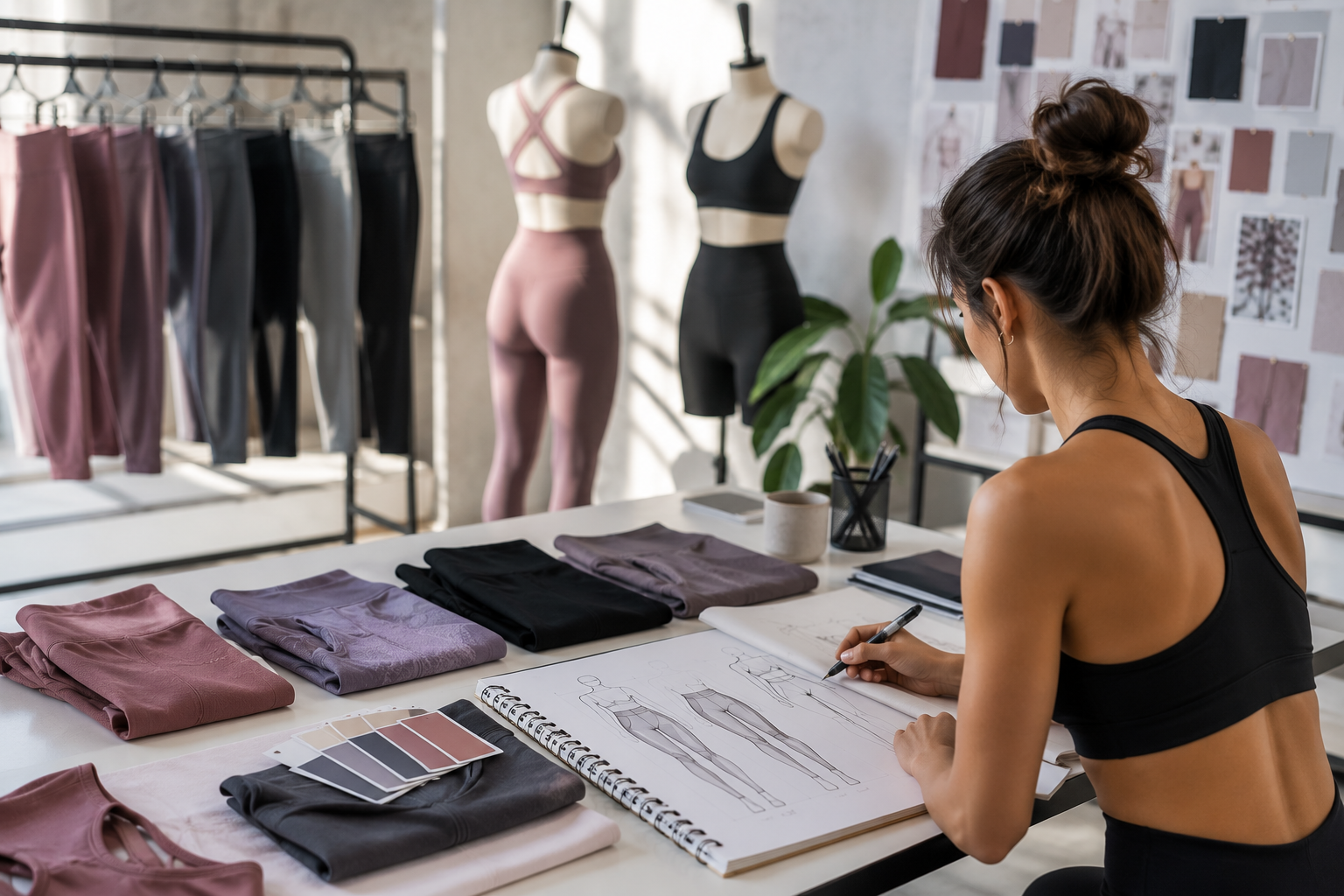
Step 4: How Do You Find a Manufacturer for Seamless Leggings?
You find a manufacturer for seamless leggings by identifying US factories with circular knitting capability specifically, since standard cut-and-sew factories cannot produce true seamless construction. This is where most new brand owners get stuck, and it determines whether your brand actually launches on schedule.
The old way means cold emails to factories found through generic Google searches, walking trade show floors hoping to find a seamless knit specialist, or asking industry contacts who may not know one either. This process routinely takes three to six months, and most cold outreach to specialized seamless knitters never gets a reply, because seamless production is a narrower category of manufacturing than general apparel cut-and-sew.
Here is what to confirm before you reach out to any factory.
Criteria | What to Confirm |
Seamless knitting capability | Circular knit machines on-site, not outsourced to a cut-and-sew partner |
MOQ | Typically 200 to 500 units per style for seamless production |
Location | Domestic factories cut sampling turnaround roughly in half versus overseas |
Sample policy | Sample cost, credited toward first order or not, turnaround time |
Communication speed | Response time to a new inquiry within 24 to 48 hours |
MOQ (minimum order quantity) is the smallest number of units a manufacturer will produce in a single order. This category typically runs higher than standard cut-and-sew leggings, often 200 to 500 units per style, because circular knitting machines are set up and calibrated per style rather than per cut pattern. According to AAFA industry data, domestic apparel production carries higher per-unit setup costs than overseas manufacturing, which is part of why US seamless knitters set these minimums.
A Los Angeles-based activewear founder spent four months emailing generic cut-and-sew factories before learning that this product requires circular knit machinery most cut-and-sew shops do not own. Once she searched specifically for circular knit manufacturers, she had three qualified quotes within two weeks and placed her first 250-unit order six weeks later.
Finding the right manufacturer does not have to mean months of cold emails. On Maker’s Row, post your project for free and verified US manufacturers bid directly. Review bids, check profiles, connect when ready. Maker’s Row is a marketplace connecting apparel brand owners with verified US manufacturers, including specialized seamless knit facilities that rarely show up in a general search. Factories on Maker’s Row are active and responsive, and many reply within 24 to 48 hours of a new project being posted.
You can also review private label activewear manufacturers and sportswear clothing manufacturers that offer compression and technical knit programs, some of which include circular knitting lines suited to seamless leggings. If you want a broader step-by-step on outreach itself, How to Find a Clothing Manufacturer in the USA covers the general search process this step builds on.
Step 5: Order Samples and Refine
Order samples from at least two seamless knit manufacturers before committing to a full production run for your brand. Seamless fit is harder to predict from a flat spec sheet than cut-and-sew, because the compression comes from knit tension, not seam placement, so what looks right on paper can still feel wrong on a body.
Test your sample on at least three body types within your target size range, not just a single fit model. Check for roll-down at the waistband, run resistance at stress points like the inner thigh, and consistency of compression across the size run. Budget two to three sample rounds; this category commonly needs more fit iteration than woven or cut-and-sew garments because knit tension varies more than cut-fabric tolerances.
Document every revision request in writing with annotated photos rather than vague notes like “tighter through the waist.” Specific feedback shortens each sample round and keeps your manufacturer from guessing.
Step 6: Plan Your Production Run and Budget
Your production budget for a seamless leggings brand needs to account for higher per-unit costs than basic cut-and-sew leggings, since circular knitting and compression-zone engineering both add cost. Expect a landed cost of roughly $12 to $22 per unit for a mid-weight style at 250 to 500 units, depending on yarn content and compression complexity, though you should always request an itemized quote rather than relying on published ranges.
Calculate your total production spend before you commit: unit cost times your MOQ, plus sampling, labeling, and shipping. If a 300-unit MOQ carries an $18 landed cost, that is $5,400 in production spend before marketing or packaging. The Small Business Administration (SBA) recommends new product businesses calculate full landed cost, not just factory pricing, before committing capital to any first production run.
Build in a buffer for a second sample round. Brands that budget for revision from the start avoid the cash crunch that comes from an unplanned fourth sample.
Step 7: Launch and Market Your Brand
Launch your seamless leggings brand with your single hero style before expanding into a full size and colorway matrix. A focused launch lets you validate demand and collect real fit feedback before you commit capital to additional SKUs.
Photograph your product on real bodies in motion, not just static studio shots, since seamless leggings sell on how they move and compress, not just how they look flat. Use early customer feedback on fit and compression to guide your second style, rather than guessing at what to add next.
Your seamless leggings brand is closer to shelf-ready than it feels once your first sample is approved. The gap between sample and launch is logistics, not creativity.
FAQs: Starting a Seamless Leggings Brand
A first production run of 250 to 300 units typically requires $4,000 to $7,000 in production cost alone, before sampling, packaging, or marketing. Sampling adds another $500 to $1,500 across two to three rounds. Budget conservatively and confirm every figure with itemized manufacturer quotes rather than published averages.
Yes, though you should expect a steeper learning curve than starting a basic cut-and-sew brand, since seamless knitting is a more specialized manufacturing category. Working with a manufacturer experienced in guiding first-time brands through tech pack development shortens that curve significantly.
Search specifically for factories with circular knitting capability, not general cut-and-sew apparel factories, since standard cut-and-sew shops cannot produce true seamless construction. Posting a detailed project brief on a platform like Maker’s Row filters your search to manufacturers actually equipped for seamless knit production.
MOQ, or minimum order quantity, is the smallest number of units a manufacturer will produce per style in one order. Seamless leggings MOQs commonly run 200 to 500 units, higher than standard cut-and-sew leggings, which directly increases your upfront capital requirement.
Most brand owners move from concept to first production-ready sample in three to five months, accounting for tech pack development, manufacturer sourcing, and two to three sample rounds. Seamless production sometimes adds two to four weeks versus cut-and-sew because of the specialized knitting process.
Yes. A complete tech pack with compression mapping and knit specifications lets a seamless knit manufacturer quote accurately and reduces the number of sample rounds needed to reach a production-ready fit.
Compression mapping and construction details are generally not eligible for design patent protection on their own, but original prints, logos, and certain ornamental design elements may be. The United States Patent and Trademark Office (USPTO) provides guidance on what apparel elements qualify for trademark or design patent protection before you share proprietary details with a factory.
Most US seamless knit manufacturers set a floor around 200 units per style, higher than the 50 to 100 unit minimums common in standard cut-and-sew leggings production, because circular knitting setup and calibration costs more per style regardless of order size.
Your Seamless Leggings Brand Is Closer Than You Think
Your seamless leggings brand is one manufacturer away from becoming real. The factories are on Maker’s Row, ready to bid.