You post in a brand owner forum asking for a “supplier.” Someone replies asking if you actually mean a manufacturer. Another person mentions a wholesaler, and now you are three terms deep with no clear answer. These words get used interchangeably online. They mean different things, and picking the wrong one wastes weeks of outreach to businesses that cannot do what you need.
A manufacturer vs supplier distinction comes down to one thing: a manufacturer physically produces your product. Supplier is the broader term for any business that provides goods you need, including manufacturers, fabric mills, and wholesalers.
For a clothing brand, mixing these up means emailing a wholesaler and asking them to build a garment from your sketch. Or asking a fabric mill to place a bulk order of finished hoodies. Neither request goes anywhere.
This guide breaks down exactly what separates a manufacturer, a supplier, and a wholesaler. You will see real examples from clothing brands and a clear framework for figuring out which one your business actually needs at each stage.
What Is the Difference Between a Manufacturer, Supplier, and Wholesaler?
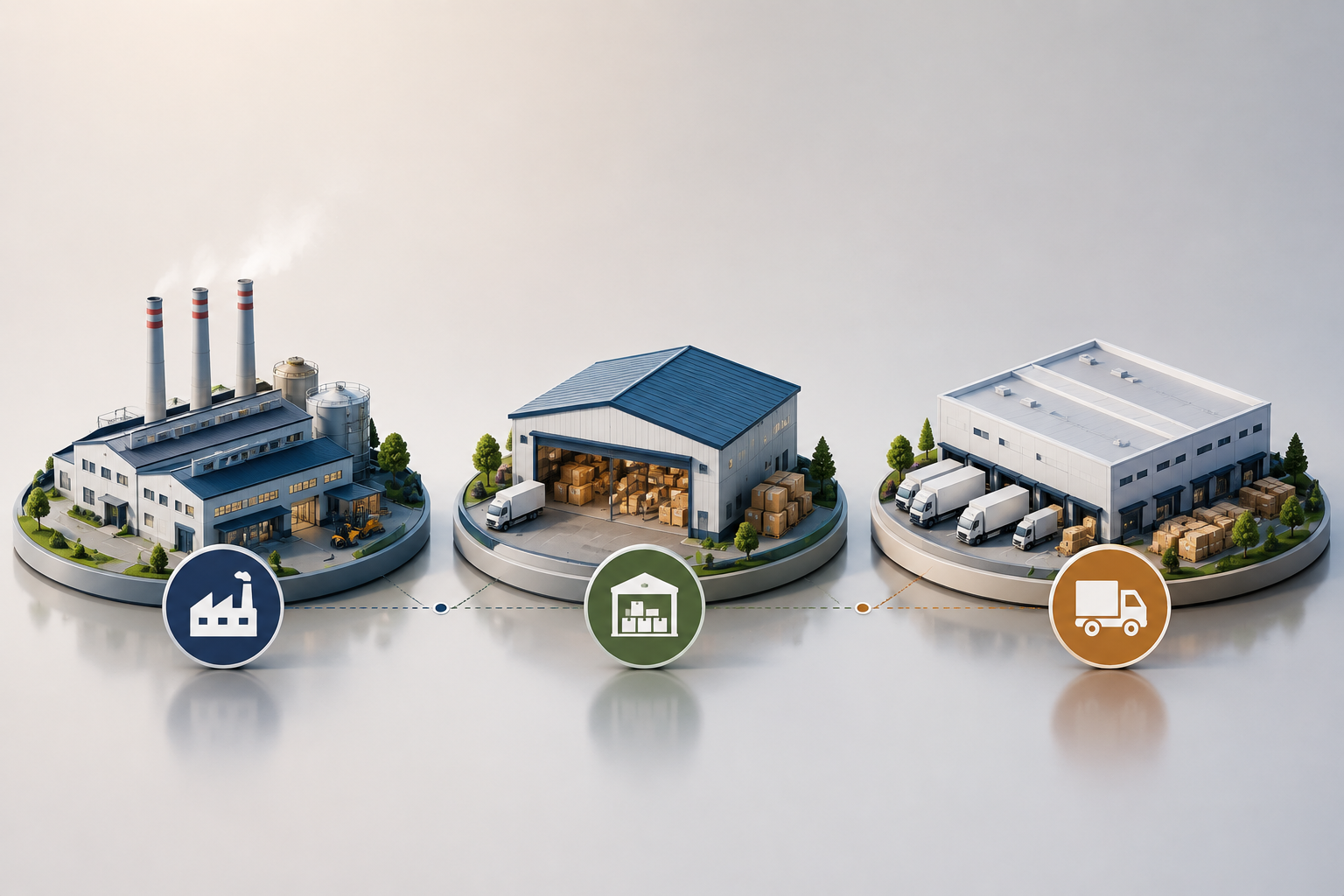
A manufacturer is a business that physically makes a product from raw materials, using labor, machinery, or both. For clothing brands, this means the factory that cuts your fabric, sews your garments, and finishes them for sale. The manufacturer vs supplier line starts here. A manufacturer is always a type of supplier, but most suppliers are not manufacturers.
According to the U.S. Bureau of Labor Statistics, apparel manufacturing (NAICS 315) employed roughly 71,800 workers across more than 6,199 establishments in the US as of July 2026.
Supplier is the umbrella term. Any business that supplies goods or materials to your brand counts as a supplier. A manufacturer is technically one type of supplier.
A fabric mill, a button vendor, a printing shop, and a factory are all suppliers in the general sense. That overlap is exactly why the manufacturer vs supplier distinction gets lost so easily online.
A wholesaler buys finished goods in bulk and resells them, usually without changing the product. A wholesaler does not make your product. They resell an already-made product, either yours or someone else’s, at a bulk price.
According to the U.S. Census Bureau’s NAICS classification, wholesale trade establishments sell merchandise generally without transformation, acting as an intermediate step between production and the final buyer.
Role | What They Do | Example in Apparel | When a Brand Owner Works With Them |
Manufacturer | Cuts, sews, knits, or otherwise produces the physical garment | A cut and sew factory building your hoodie from your tech pack | When you need your original design physically made |
Supplier | Umbrella term for anyone providing goods or materials | A fabric mill, a trim vendor, or a manufacturer itself | Any time you are sourcing an input, service, or finished good |
Wholesaler | Buys finished goods in bulk and resells them | A distributor buying 500 finished t-shirts and reselling to boutiques | When you want to stock or resell existing products, not develop your own |
Why This Difference Matters for Your Clothing Brand
Getting the manufacturer vs supplier question wrong does not just waste an email. It can cost weeks of your production timeline.
- Wrong outreach, wrong response. A wholesaler cannot quote you a per-unit production cost for a garment that does not exist yet. That is the most common manufacturer vs supplier mistake new brand owners make. Only a manufacturer can.
- Budget planning breaks down. Manufacturer pricing includes labor and construction. Wholesaler pricing reflects bulk resale of an already-finished item. Mixing these numbers into one budget produces a plan that does not match reality.
- MOQ expectations differ by role. MOQ (minimum order quantity) is the smallest number of units a business will sell or produce in a single order. A manufacturer’s MOQ reflects production setup costs. A wholesaler’s MOQ reflects the case pack or pallet size they already have in stock.
- Contract terms are structured differently. A manufacturer agreement usually covers tech pack approval, sampling rounds, and production timelines. A wholesale agreement usually covers unit price breaks, minimum case orders, and reorder terms.
Understanding these roles before you reach out saves you from the single most common early sourcing mistake new brand owners make.
Manufacturer vs Supplier vs Wholesaler: Real Examples
The manufacturer vs supplier mix-up rarely shows up as a definitions quiz. It shows up as a wasted email, a stalled timeline, or a quote that makes no sense for the product being described.
Example: The founder who emailed a wholesaler for a custom run. A first-time brand owner in Denver found a wholesale apparel distributor online. She emailed asking them to produce a custom hoodie design in 200 units. The distributor replied that they only resell existing blank stock and do not manufacture anything.
She lost two weeks before finding a real cut and sew manufacturer in North Carolina. A cut and sew manufacturer builds a garment from your own pattern and fabric, rather than reselling an existing one. This factory was willing to build her design from scratch.
Example: Using a wholesaler intentionally to test a concept. A Miami swimwear founder deliberately chose the wholesaler side of the manufacturer vs supplier divide. She wanted to test demand before investing in custom manufacturing. She bought 100 units of blank, undecorated swim shorts from a wholesaler.
She added custom screen printing through a separate print supplier and sold out at a pop-up market in three weeks. Only after validating demand did she move to a full custom manufacturer for her second run.
Example: Confusing supplier with manufacturer in a tech pack email. A Chicago streetwear brand sent a full tech pack to a company listed as a “textile supplier.” They asked for a production quote. The company replied that they sell raw fabric only and do not cut, sew, or assemble garments. The brand owner had to search separately for a cut and sew manufacturer who could build the finished product.
All three examples come back to the same manufacturer vs supplier confusion. It is about matching the request to the role, not just the word in the company name.
Which One Do You Actually Need?
Most clothing brand owners building an original product need a manufacturer, not a supplier or wholesaler. Use this manufacturer vs supplier framework before you reach out to anyone.
- Ask what you are actually starting with. If you have a design, sketch, or tech pack and nothing physical exists yet, you need a manufacturer. If a product already exists and you want to resell it, you need a wholesaler.
- Confirm whether you need custom construction or an existing base style. Private label clothing is apparel a manufacturer produces from an existing base garment that you customize. It sits between full custom manufacturing and simple wholesale resale.
- Check your MOQ tolerance before contacting anyone. Read the full breakdown of how MOQ works so you know what number to expect from each type of partner.
- Separate your material sourcing from your production sourcing. You may need a fabric supplier and a manufacturer as two separate relationships. Or you may need one full-package manufacturer: a factory that sources fabric and trims, then cuts, sews, and finishes under one contract.
- Match the outreach to the role. Search specifically for clothing manufacturers if you need something built from your own design. Search for wholesale distributors only if you plan to resell an existing product. Getting the manufacturer vs supplier match right at this step avoids every problem described above.
Also Read: How to Start a Clothing Brand in the USA: Step-by-Step Guide 2026 →
The Small Business Administration recommends new product businesses confirm their sourcing model early. This one decision shapes your budget, your lead time, and every vendor conversation that follows.
Finding the Right Manufacturer on Maker’s Row
Maker’s Row is a marketplace connecting apparel brand owners with verified US manufacturers. It is not a wholesale distributor or a general supplier directory. Once you have settled the manufacturer vs supplier question for your product, this is the step that gets you to an actual production partner fastest.
Finding the right clothing manufacturer does not have to mean months of cold emails. On Maker’s Row, post your clothing project for free and verified US manufacturers bid directly. Review bids, check profiles, connect when ready.
Describe your product, your target MOQ, and whether you need full custom cut and sew or a private label base style. Manufacturers who respond have already confirmed they can meet your specifications. You are not starting from a cold search or a manufacturer vs supplier guessing game.
FAQs About Manufacturers, Suppliers, and Wholesalers
These are the questions brand owners ask most often once they understand the basic role split and want the finer distinctions clarified.
A manufacturer physically produces a product from raw materials. Supplier is a broader term covering any business that provides goods or materials, including manufacturers themselves. Every manufacturer vs supplier comparison comes back to the same rule: every manufacturer is technically a supplier, but not every supplier is a manufacturer.
Fabric mills, trim vendors, and printing shops are all suppliers without being manufacturers.
A supplier is the general term for any business providing goods or materials. A wholesaler specifically buys finished goods in bulk and resells them without transforming the product. A wholesaler is one type of supplier, alongside manufacturers, raw material vendors, and service providers.
You need a manufacturer if you are producing an original design from a tech pack or sketch, since only a manufacturer builds a physical garment. You need a wholesaler only if you plan to resell an already-finished product without custom production, such as blank apparel you decorate yourself. This is the single most useful manufacturer vs supplier question to answer before you contact anyone.
Yes, a manufacturer is technically a type of supplier because they provide you with a finished good, the garment they produced. In everyday sourcing conversations, brand owners typically use “supplier” for raw material vendors. They use “manufacturer” specifically for the factory doing production, even though the broader definition overlaps.
A full package manufacturer sources fabric and trims, builds patterns, and completes cutting, sewing, and finishing under one contract. This absorbs what would otherwise be several separate supplier relationships. It differs from working with a fabric supplier and a cut and sew manufacturer separately, since one vendor manages the entire process.
Ask directly whether the business produces goods in-house or resells goods produced elsewhere, since some wholesalers describe themselves loosely as manufacturers online. Request to see their production facility and ask for client references.
Confirm they can work from your own tech pack rather than only offering pre-made stock. Platforms like Maker’s Row list verified US manufacturers specifically, which removes the guesswork of separating real production partners from resellers.
Ready to Find Your Manufacturer, Not Just a Supplier?
The manufacturer vs supplier question does not have to slow your brand down once you know which one you actually need. Your clothing brand is one manufacturer away from becoming real. The factories are on Maker’s Row, ready to bid.