To choose a waterproof fabric for winter outerwear, match the fabric to how wet and how active your customer will be: laminated membranes suit wet, high-output use, coated nylon suits budget shells, and waxed cotton suits low-output heritage styles. Whichever fabric you pick, stitched seams stay a leak point unless the factory tapes or otherwise seals them. Hydrostatic head, the waterproof rating measured in millimeters of water, and breathability decide winter comfort more than the fabric name does.
Let’s talk about why this choice trips up new brands. Suppliers use “waterproof,” “water-resistant,” and “weatherproof” as if they meant the same thing, and they do not. For winter outerwear, the wrong pick means soaked insulation, cold customers, and returns.
This guide compares the main waterproof fabric options side by side. You will get plain definitions, one comparison table, and five questions that narrow your choice before you brief a factory.
What Makes a Fabric Waterproof, Not Just Water-Resistant?
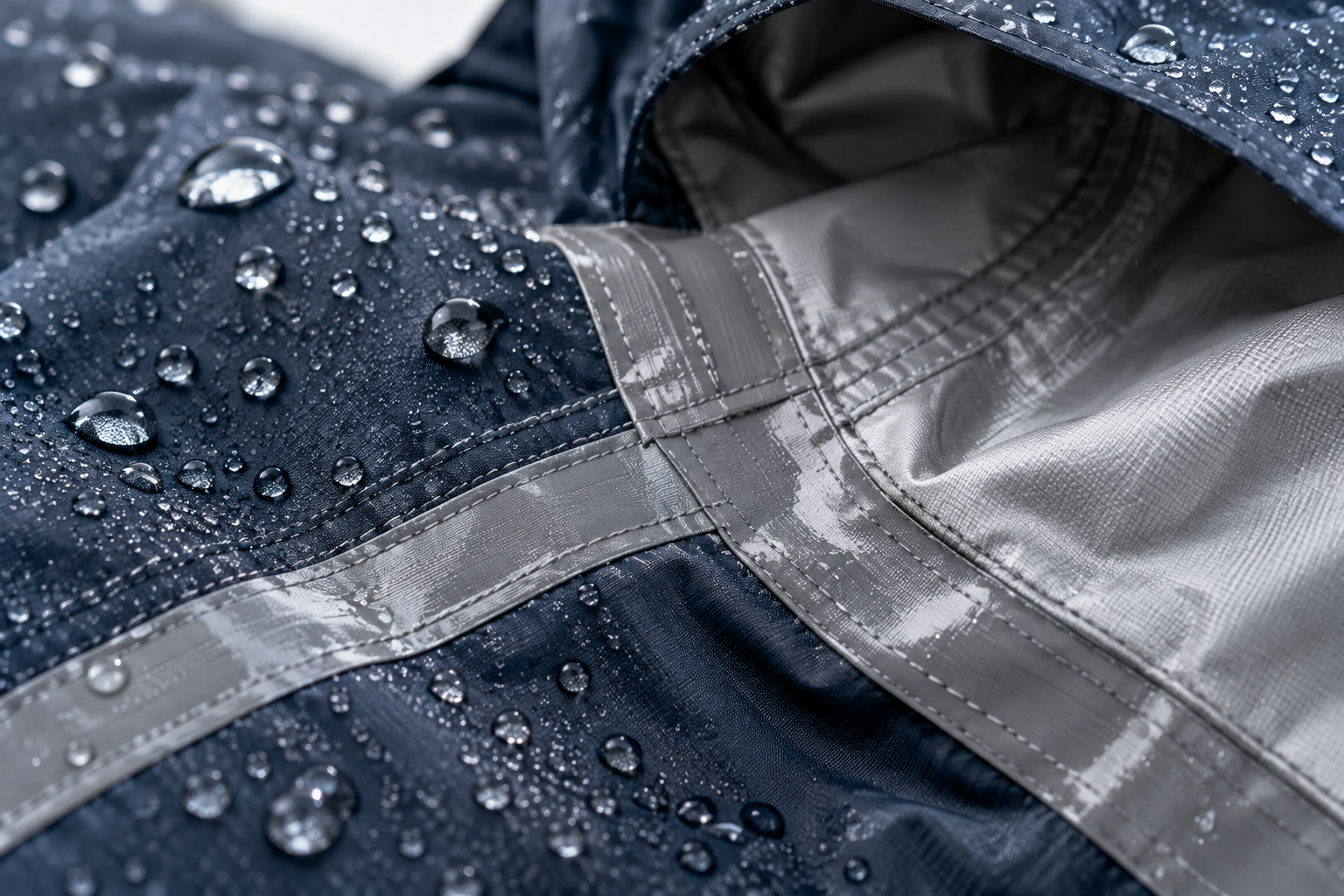
A waterproof fabric blocks liquid water through a coating, laminate, or membrane, while a water-resistant fabric only slows water down. Hydrostatic head is the height of a water column, measured in millimeters, that a fabric resists before water passes through. Ask suppliers for this number in writing, because higher ratings mean more pressure resistance.
DWR (durable water repellent) is a surface finish that makes water bead and roll off the outer fabric. It does not make a fabric waterproof, and it wears off with use. Ask your factory whether the finish is PFAS-free, because US state rules on PFAS in textiles have tightened, and confirm the rules for each state where you sell.
Seam taping is the process of covering stitched seams with waterproof tape so water cannot pass through the needle holes. Maker’s Row’s outerwear manufacturer guide recommends covering taped seams in your tech pack, so write it into your spec from day one.
Which Waterproof Fabric Is Best for Winter Outerwear?
Laminated membrane is the best choice for wet, high-output winter use, while coated fabrics win on price and waxed cotton wins on heritage style. A laminated membrane is a thin waterproof, breathable film bonded between an outer fabric and an inner liner. Gore-Tex, made by W. L. Gore & Associates, is the best-known example.
Fabric | How It Works | Best For | Breathability | Relative Cost | Watch Out For |
Laminated membrane | Waterproof film bonded between outer fabric and liner | Ski, mountain, and wet-snow shells | High | $$$ | Needs taped seams and an experienced factory |
PU-coated nylon or polyester | Polyurethane layer on the fabric back | Budget shells and insulated parkas | Low to medium | $ to $$ | Trapped sweat can dampen insulation |
Waxed cotton | Wax worked into tightly woven cotton | Heritage jackets and barn coats | None | $$ | Heavy, and needs re-waxing |
PVC or rubberized fabric | Solid polymer layer | Workwear and extreme wet | None | $ to $$ | Stiff feel and narrow style range |
DWR-finished woven | Surface finish on a tight weave | Dry cold and light snow | High | $ | Water-resistant only, not waterproof |
Relative cost tiers are general guidance, not quotes, so request itemized quotes from each factory. Winter raises the stakes on breathability, because sweat vapor trapped inside a shell dampens insulation and makes a jacket feel colder. Maker’s Row’s winter clothing manufacturer guide explains how climate and activity decide your fabric, insulation, and price.
How Do You Choose the Right Waterproof Fabric for Your Brand?
You choose by answering five questions about weather, effort, budget, claims, and seams, in that order.
- How wet will your customer’s winter be? Wet snow and sleet call for a laminated membrane or coated fabric, while dry cold needs only a DWR-finished shell.
- How hard will they work in the jacket? Skiers and hikers need high breathability, but commuters can accept a coated waterproof fabric.
- What price and MOQ can you carry? MOQ (minimum order quantity) is the smallest number of units a manufacturer will produce per order. Maker’s Row’s jacket manufacturer guide notes that lined, structured outerwear typically carries higher minimums than simpler styles.
- Which claims will you make? For recycled-content claims, ask suppliers about certification under Textile Exchange standards, which set criteria for third-party certification of recycled materials and chain of custody. The Sustainable Apparel Coalition also offers the Higg Materials Sustainability Index for comparing material impacts.
- Can your factory tape or seal seams? Confirm this before sampling, because a leaking seam undoes the rating of even a strong waterproof fabric.
Also Read: Best 7 Waterproof Clothing Manufacturers In The USA (2026) →
Find Waterproof Outerwear Manufacturers on Maker’s Row
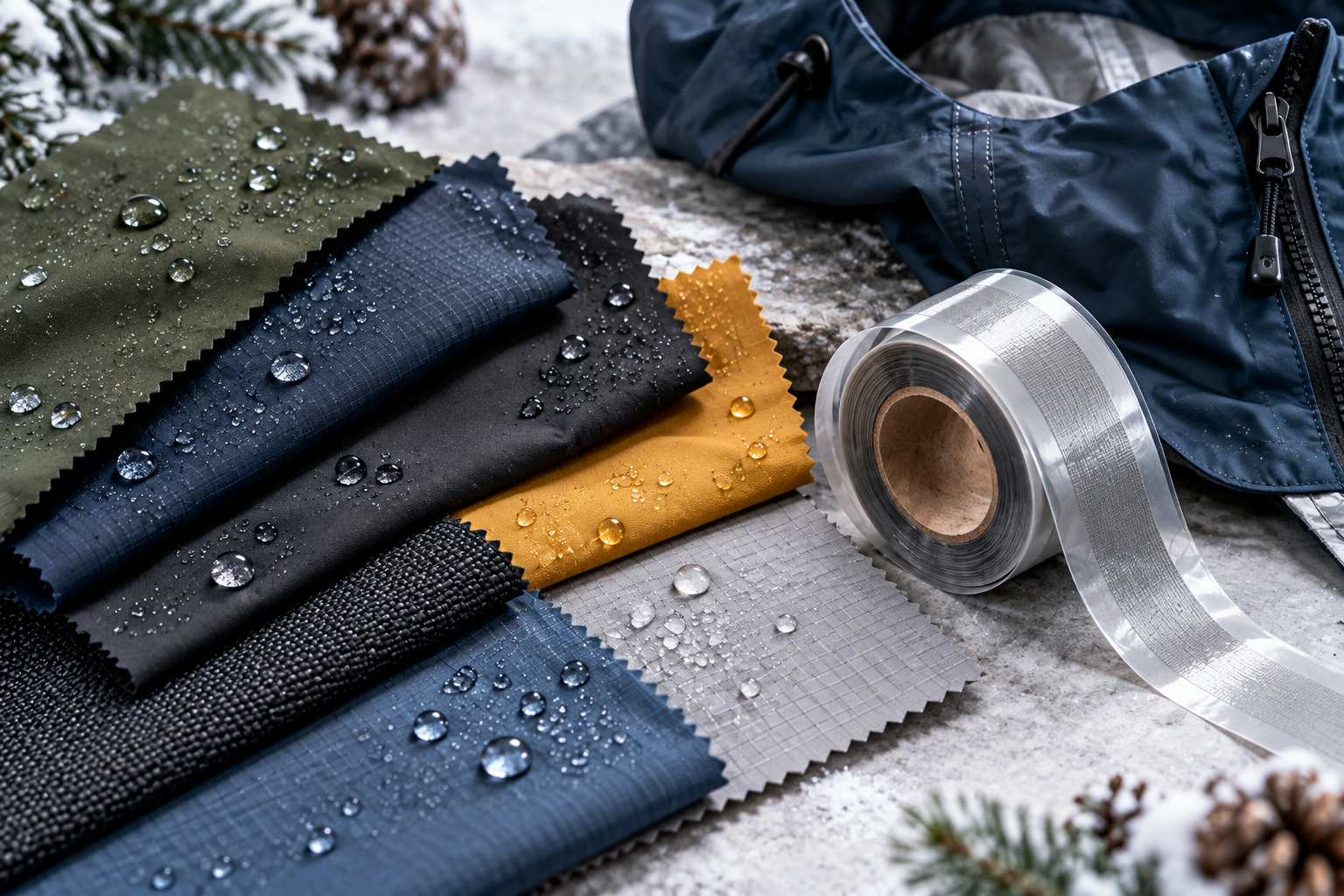
Maker’s Row is a marketplace connecting apparel brand owners with verified US manufacturers. Post your waterproof outerwear project for free and verified US manufacturers bid directly, so list your fabric type, seam-taping needs, and target MOQ in the brief.
FAQs About Choosing Waterproof Outerwear Fabric
A laminated membrane is the best pick for most winter jackets because it blocks liquid water and still lets sweat vapor escape. Coated nylon is the budget alternative, and it breathes less. Choose based on how hard your customer works outdoors.
Waterproof fabric blocks liquid water through a coating, laminate, or membrane, while water-resistant fabric only sheds light moisture. A DWR finish makes a fabric water-resistant, and it wears off with use. Check the hydrostatic head rating to see how much pressure a fabric resists.
Yes, waxed cotton blocks liquid water, but the wax also blocks water vapor, so the fabric does not breathe. Wax wears down, so jackets need re-waxing over time. It suits heritage styles better than high-output winter sports.
Yes, a waterproof jacket needs taped or sealed seams, because stitching leaves needle holes that water can pass through. Maker’s Row’s waterproof clothing manufacturer guide calls seam-sealing capability the biggest differentiator between a truly waterproof garment and a water-resistant one. Ask every factory about it before sampling.
MOQs vary by factory and construction, and they typically rise for lined, structured pieces. Per Maker’s Row’s waterproof clothing manufacturer guide, The Evans Group in Los Angeles lists studio-level minimums from 10 pieces per style and 50 to 100-plus pieces at factory level. Confirm current minimums directly, because factories revise them.
Yes, US factories make waterproof outerwear, but the domestic base is narrow, so confirm technical capability early. As of August 2026, BLS preliminary data show apparel manufacturing employing about 72,000 workers, and the first quarter of 2026 counted 6,199 private establishments. Browse the clothing manufacturers directory to find factories with seam-taping experience.
When You Are Ready to Choose Your Fabric
When you are ready, your winter outerwear brand is one manufacturer away from becoming real. The factories are on Maker’s Row, ready to bid.