Starting your own tie line is one of the most satisfying ways to turn a style idea into a real brand. It is also confusing, because most guides say “find a manufacturer” without explaining how. This guide shows you how to find custom tie manufacturers in the USA, from your first sketch to an approved sample. It is written for founders launching a neckwear line who have never worked with a factory before.
Custom neckwear sells to wedding parties, clubs, companies, and style-led shoppers who cannot find the pattern they want in a department store. A small brand can win those buyers with one strong design and a clear story. Making that design well depends on working with custom tie manufacturers who match your project.
New founders hit the same three walls. You do not know where to find custom tie manufacturers who accept small orders. Minimum order sizes can feel out of reach for a first run. And nobody tells you which steps come first.
This guide solves all three. You will write a simple brief, build a spec sheet, compare makers in a table, and vet samples before you spend on a full run. Each step gives you something to do today.
Step 1: Define Your Tie Brand and Hero Product
Your hero product is the one tie you would be proud to see in every customer’s closet, and defining it first tells custom tie manufacturers exactly what to quote. Without it, every factory answers a different question, and you cannot compare their prices.
Write a one to two page brand brief this week. Cover your target customer, your target retail price, and three competitor brands whose ties you admire. Then choose one hero style: a classic self-tie necktie, a bow tie, or a knit tie. Pick one fabric story, such as woven silk, cotton, or wool, and one or two colorways.
Resist the urge to launch twelve designs. A single design in two colorways is easier to sample, easier to price, and easier to explain to a factory. Your brief becomes the first page of every conversation you have with custom tie manufacturers.
Also Read: What Is a Tech Pack? Complete Guide for Brand Owners →
With your hero tie defined, you can work out who will buy it and what you can afford.
Step 2: Know Your Buyer and Your Budget
Your buyer’s price ceiling sets your maximum cost per tie, and that number decides which custom tie manufacturers you can afford. Work backward from the retail price instead of forward from a factory quote.
Start with a simple formula. Take your target retail price, subtract the gross margin you want, and the remainder is the most you can pay per tie. As an illustration only, a $60 retail price with a 50% gross margin leaves about $30 per tie. That is example math, not a quote, and it shrinks if you also sell wholesale to boutiques.
Next, learn what minimums will do to your cash. MOQ (minimum order quantity) is the smallest number of units a manufacturer will produce in one order. Your first run costs the MOQ multiplied by the unit price, so a lower MOQ means lower cash risk. Ask every one of your shortlisted custom tie manufacturers for its minimum early.
The SBA’s startup cost worksheet helps you list one-time and ongoing costs, and a free SCORE mentor can pressure-test your numbers.
Also Read: What Is MOQ? Complete Guide for Brand Owners →
Once you know your budget, you can write the document every factory will ask for.
Step 3: Build Your Tie Spec Sheet
A tie spec sheet is a one to two page document that tells a factory exactly how to make your tie. It does the job of a tech pack, the blueprint document that guides a garment’s production, and it is the fastest way to get accurate quotes from custom tie manufacturers.
Include these items:
- Tie type (self-tie, bow tie, or knit) and the finished blade width and length in inches
- Face fabric, fiber content, weave or print method, and color references
- Interlining type, which gives the tie its body and decides how it holds a knot
- Construction method, such as hand-finished slip stitching or machine finishing
- Label text, label placement, and keeper loop details
- Packaging, such as tissue, boxes, or hang tags
Add a flat sketch with labeled callouts and a photo of the closest tie you have seen. Ask one friend to read it cold and tell you what is unclear. Every question a friend asks is a question that custom tie manufacturers would otherwise spend your time answering.
With a clear spec sheet in hand, you are ready for the step that stalls most founders.
Step 4: Where Do You Find Custom Tie Manufacturers?
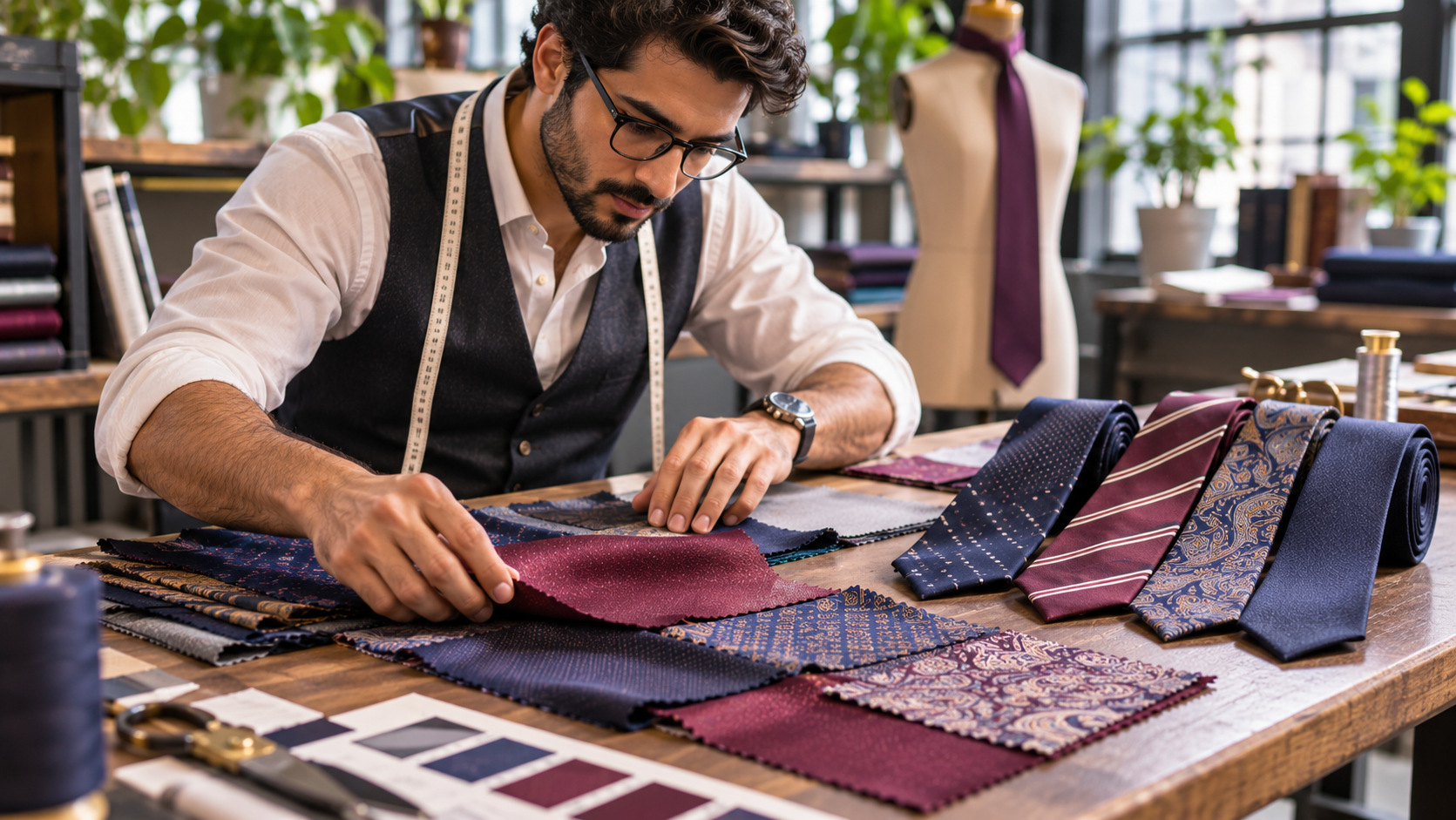
Search neckwear specialists, public industry directories, and verified marketplaces, then compare each maker on minimums, location, sample policy, and response speed. This is where most brand owners get stuck, and it decides whether your tie line actually launches.
The old way is slow. You search Google, attend trade shows, ask for referrals, and send cold emails, then wait weeks for uneven replies.
Ties also need specialist skills, and the main one is bias cutting. Cutting on the bias means cutting fabric at a 45-degree angle to its weave, which helps a tie drape and hang straight. That is why custom tie manufacturers often differ from general garment contractors.
Two free resources help you narrow the field. The U.S. Census Bureau classifies neckties under apparel accessories and other apparel manufacturing, so filter business directories by that category when you search for custom tie manufacturers. Industry lists such as the CFDA production directory also name neckwear makers, mostly in New York.
Real founders show how the search for custom tie manufacturers plays out. Burks & Bailey, a bow tie brand, saw early outreach fail before one email describing their vision led to a call with a Portland manufacturer. In their founder story, they were still working with that maker about two years after launch.
In a 2013 Maker’s Row profile, Brooklyn tie brand Everett said a nearby factory made quality checks easy. Co-founder James Brooks said US production cost about the same as producing abroad once shipping and logistics were counted.
Use the table below to compare every shortlisted maker on the same terms:
Factor | What to ask | Why it matters |
Minimum order | Is the minimum per design or per colorway? | Sets your first-run cash risk |
Location | Which city and state is the factory in? | Closer factories cut sample time and allow visits |
Sample policy | What is the fee, turnaround, and credit toward production? | Shows how fast you can fix mistakes |
Communication speed | How long did a first reply take? | Predicts how problems get handled later |
Fabric sourcing | Is the cloth domestic or imported? | Affects your origin label and lead time |
Construction | Is finishing done by hand or machine? | Changes price, drape, and look |
The same vetting logic applies across soft goods, and our guide on how to find a clothing manufacturer in the USA walks through it in more detail.
Find Custom Tie Manufacturers on Maker’s Row
Maker’s Row is a marketplace connecting apparel and accessory brand owners with verified US manufacturers. Finding the right tie manufacturer does not have to mean months of cold emails. On Maker’s Row, post your tie project for free and verified US manufacturers bid directly. Review bids, check profiles, connect when ready.
You can post projects and receive bids at no upfront cost. Replying to factories and searching profiles needs a paid subscription. If you want to browse first, see our directory of verified US clothing manufacturers to learn how profiles and bids look.
Step 5: How Do You Vet Samples and Quotes?
Order samples from at least two custom tie manufacturers and compare them side by side before you pay for production. A sample is the only honest preview of what your first run will look like.
Request written quotes from three custom tie manufacturers using the same spec sheet. Each quote should state the unit price, the minimum, the lead time, the sample fee, and the payment terms. If one quote leaves out a line, ask for it before you compare totals.
When samples arrive, inspect them on the same day in the same light. Check these points:
- The tie hangs straight and does not twist, which shows the bias cut is sound
- The seam is even, with no puckering at the tipping
- The color matches your reference swatch in daylight
- The knot holds its shape and the blade does not collapse
- The label reads correctly and sits where your spec sheet says
Send a revision note to the winning maker in writing, and keep every version. Once one sample wins, you can plan the run itself.
Step 6: Plan Your Production Run, Labels and Budget
Your first production run costs your minimum order multiplied by the quoted unit price, plus labels, packaging, and shipping. Build those four lines into your budget before you commit.
Minimums differ by maker, fabric, and print method. Maker’s Row’s 2026 MOQ guide reports that US clothing manufacturers typically set minimums between 50 and 500 units per style. Custom tie manufacturers vary, so ask each one for a per-design figure in writing. Ask also whether woven designs need larger runs than printed ones, because loom setup often drives that difference.
Labels matter more than founders expect.
The FTC’s textile labeling guide says most textile products need a label with fiber content, country of origin, and the maker’s identity. Among neckties, it exempts only permanently knotted ones, unless you make a fiber claim. It also says a product made in the U.S. from imported materials must say so, which matters for silk.
Set your launch date backward from your final sample approval. Ask the maker for a written lead time, then add a buffer for shipping and a photoshoot. Next, you can get your brand ready for customers.
Step 7: Launch and Market Your Tie Brand
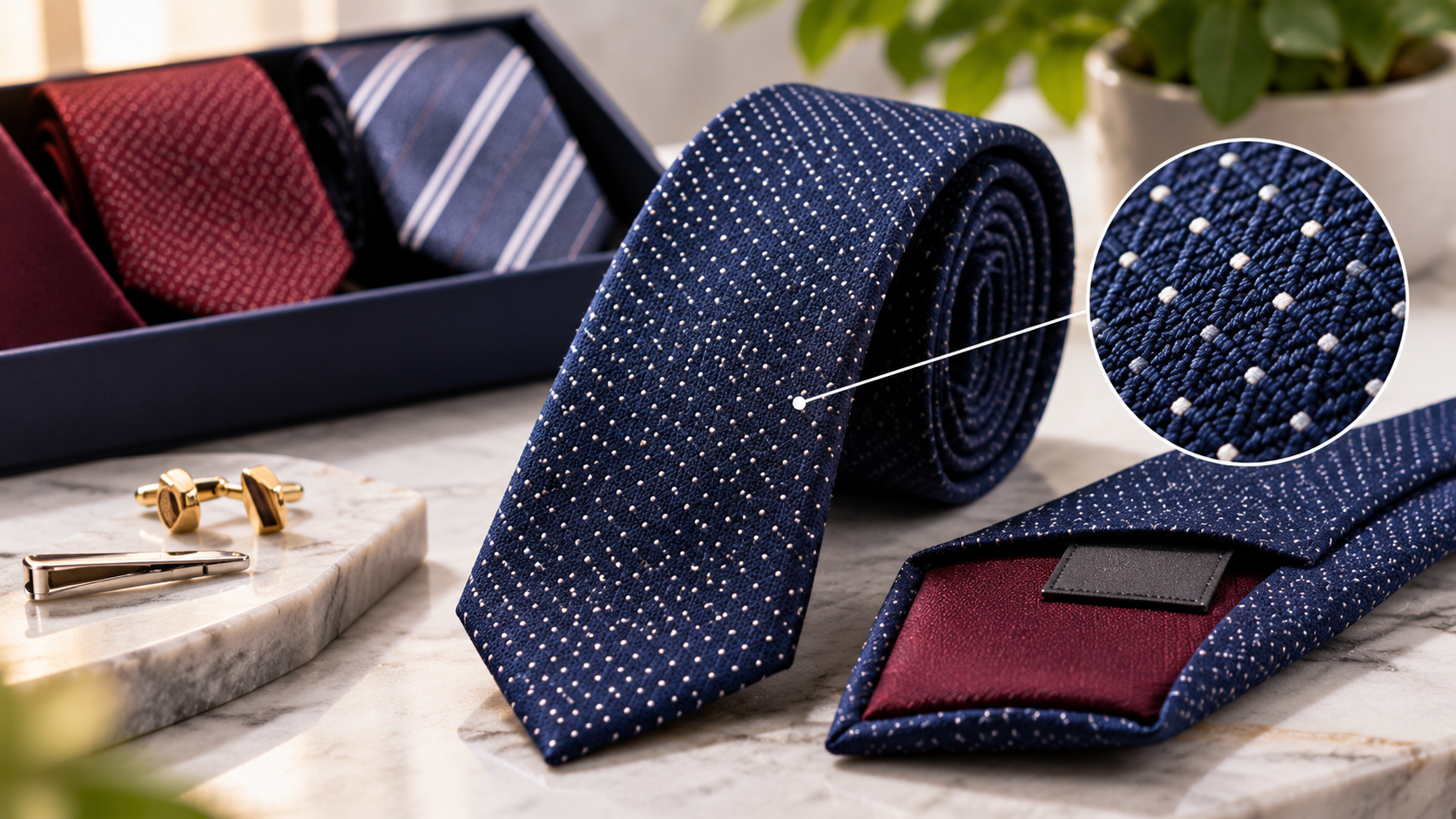
You launch a tie brand by securing your name, photographing real ties on real people, and selling to a small test audience first. Do the name check before your labels are printed.
Search the USPTO database for similar names, using the USPTO’s trademark basics as your guide. Your brand name goes on every label, so a conflict found late is expensive. Then photograph close-ups of the weave, the knot, and the label, because buyers cannot touch the cloth online.
Pre-sell to one group you already reach, such as a wedding party, a club, or a small company. Their feedback tells you which colorway to reorder. Keep your next order with your custom tie manufacturers small until the first run sells through.
FAQs: Custom Tie Manufacturers
These short answers cover the cost, minimum, and timing questions founders ask most before they contact a factory.
You need enough to cover your minimum order multiplied by the unit price, plus samples, labels, packaging, and shipping. The total depends on your maker’s minimum and your fabric, so get written quotes from custom tie manufacturers first. The SBA’s startup cost worksheet helps you list every line.
Yes, you can start with no experience if you bring a clear brief and a spec sheet. Custom tie manufacturers handle the sewing and finishing, and you handle the design and the customer. A free SCORE mentor can also help with planning.
Shortlist three custom tie manufacturers from neckwear specialists and industry directories, then compare them on minimums, location, sample policy, and response speed. You can also post your project on Maker’s Row and let verified US manufacturers bid. Always order samples before you commit.
MOQ is the smallest number of units a manufacturer will produce per order, and it sets your first-run cost. Maker’s Row’s MOQ guide reports that US clothing manufacturers typically range from 50 to 500 units per style. Ask each of the custom tie manufacturers on your list for its own figure.
The timeline depends on how many sample rounds you need and the lead time your custom tie manufacturers quote. Each round adds revision and shipping time, so ask for lead times in writing. Set your launch date backward from your final sample approval.
You need a spec sheet, which is the tie version of a tech pack. Maker’s Row’s tech pack template guide notes that most professional US manufacturers require or strongly prefer one before quoting. A clear spec sheet cuts back-and-forth and sample errors.
Protect your brand name and logo through a USPTO trademark search and filing. Ask an intellectual property attorney about copyright on your artwork. Many brands also ask custom tie manufacturers to sign a confidentiality agreement before sharing files. Keep dated copies of every design you send.
The minimum varies by maker, fabric, and print method, so ask each of the custom tie manufacturers on your shortlist for a per-design figure. Starting with one design in two colorways keeps your first order small. Our list of small batch manufacturers shows how minimums compare in clothing.
Your Custom Tie Brand Is Closer Than You Think
Your custom tie brand is one manufacturer away from becoming real. The factories are on Maker’s Row, ready to bid.