Most clothing brands don’t fail because the product was wrong. They fail because the founder reached out to factories before they were ready, wasting months on inaccurate samples, mismatched MOQs, and manufacturers who stopped responding after the second email. This clothing manufacturing checklist covers the 7 things every brand owner must complete before production begins, so you arrive at every factory conversation prepared.
Getting this clothing manufacturing checklist right is the difference between launching in three months and chasing factories for a year. Every item below is within reach before you spend a dollar on production. According to the American Apparel and Footwear Association, US domestic production lead times run 30–60% shorter than overseas manufacturing, but only when brands arrive at the factory conversation with the right documents and decisions already locked.
1. Lock Your Hero Product Before Everything Else
The first item on any clothing manufacturing checklist is deciding exactly what you are making and committing to one product, not a collection.
Ten styles means ten tech packs, ten sets of samples, ten separate factory conversations, and ten times the upfront capital, before you have proven a single piece sells. A Portland streetwear brand launched with one garment: a midweight fleece crewneck in two colourways, 150 units, produced by a local manufacturer. They sold through in six weeks and placed a second order for 300. That focus made the manufacturing process faster, cleaner, and cheaper.
Pick the one piece that defines your brand. Nail the manufacturing process on that first. Everything else follows once you have proven the product and the factory relationship.
2. Write a Brand Brief Manufacturers Can Actually Use
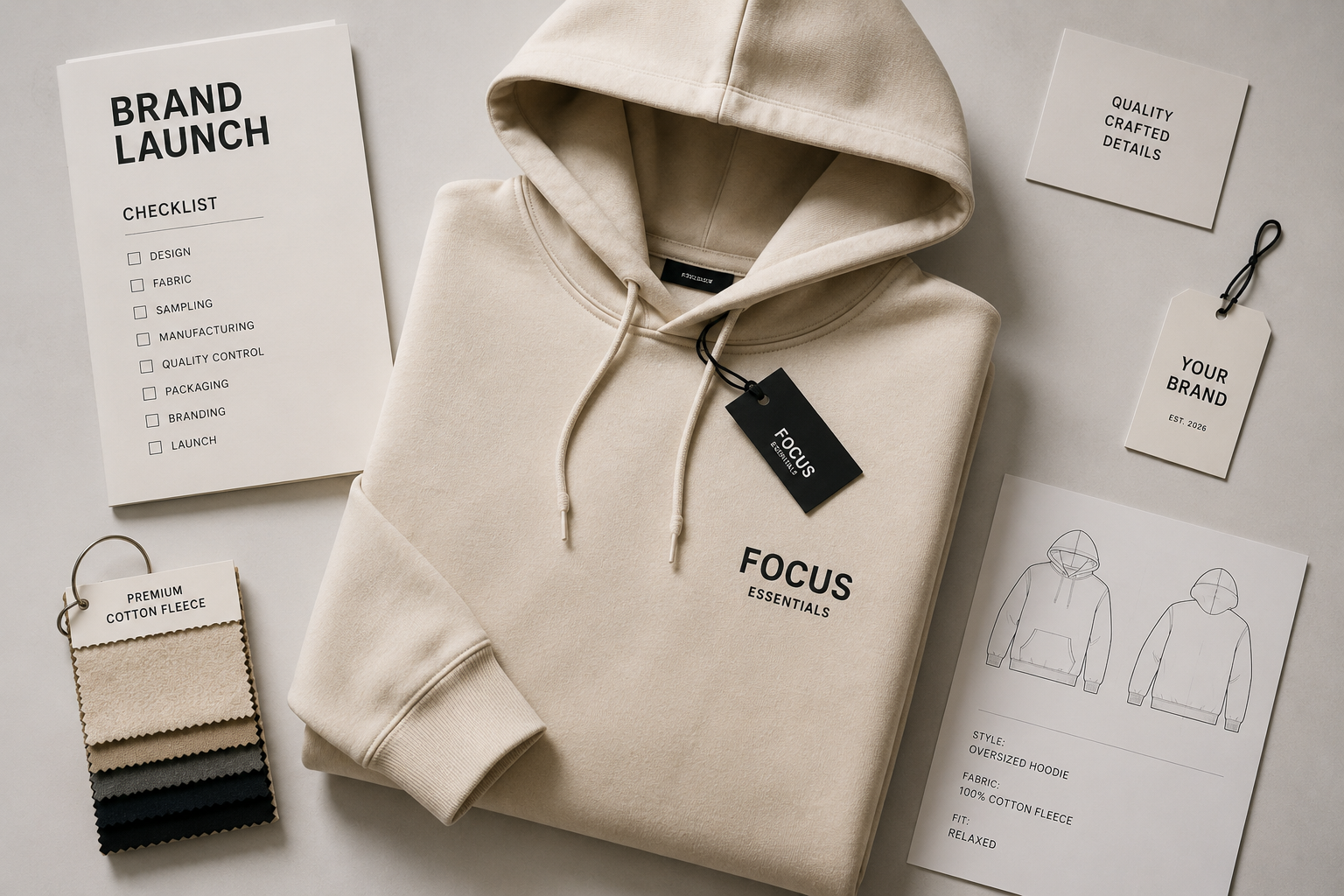
Manufacturers receive dozens of enquiries every week. The briefs that get fast, serious responses share one thing: they are specific. A one-page brand brief tells the factory what you are making, who it is for, and what quality level you are targeting, before they open your tech pack.
Your brief should cover: your product category and aesthetic, your target retail price, your intended sales channel (direct-to-consumer, wholesale, or both), your top three competitor brands with reference images, and your target production timeline. One page is enough. It becomes the anchor for every factory conversation you have.
SCORE’s guidance for small business founders consistently identifies clear written briefs as one of the highest-impact preparation steps before any supplier conversation, cutting sourcing time significantly compared to brands that approach manufacturers verbally.
3. Know Your MOQ and Budget Before You Ask for a Quote
This step on the clothing manufacturing checklist stops more wasted factory conversations than any other. Nothing kills momentum faster than discovering the minimum order quantity after three rounds of emails.
MOQ, or minimum order quantity, is the fewest units a manufacturer will produce per run. For US clothing manufacturers, this typically ranges from 50 units at small-batch cut-and-sew operations to 300–500 units at larger facilities. Your MOQ determines your upfront capital commitment and your inventory risk. The Maker’s Row apparel manufacturing cost guide covers realistic cost ranges by category and volume, worth reading before you set your budget.
Before contacting any factory, define three numbers: the minimum units you can afford to produce, the maximum units you can realistically sell or store in your first season, and your total production budget including sampling, labelling, and shipping, not just the per-unit factory cost.
A brand that says “we need 100 units, our production budget is $8,000, and we need delivery within 10 weeks” gets a useful quote. A brand that says “we want to make hoodies, how much does it cost?” gets ignored or gets a number that means nothing.
4. Build Your Tech Pack Before Contacting Any Factory
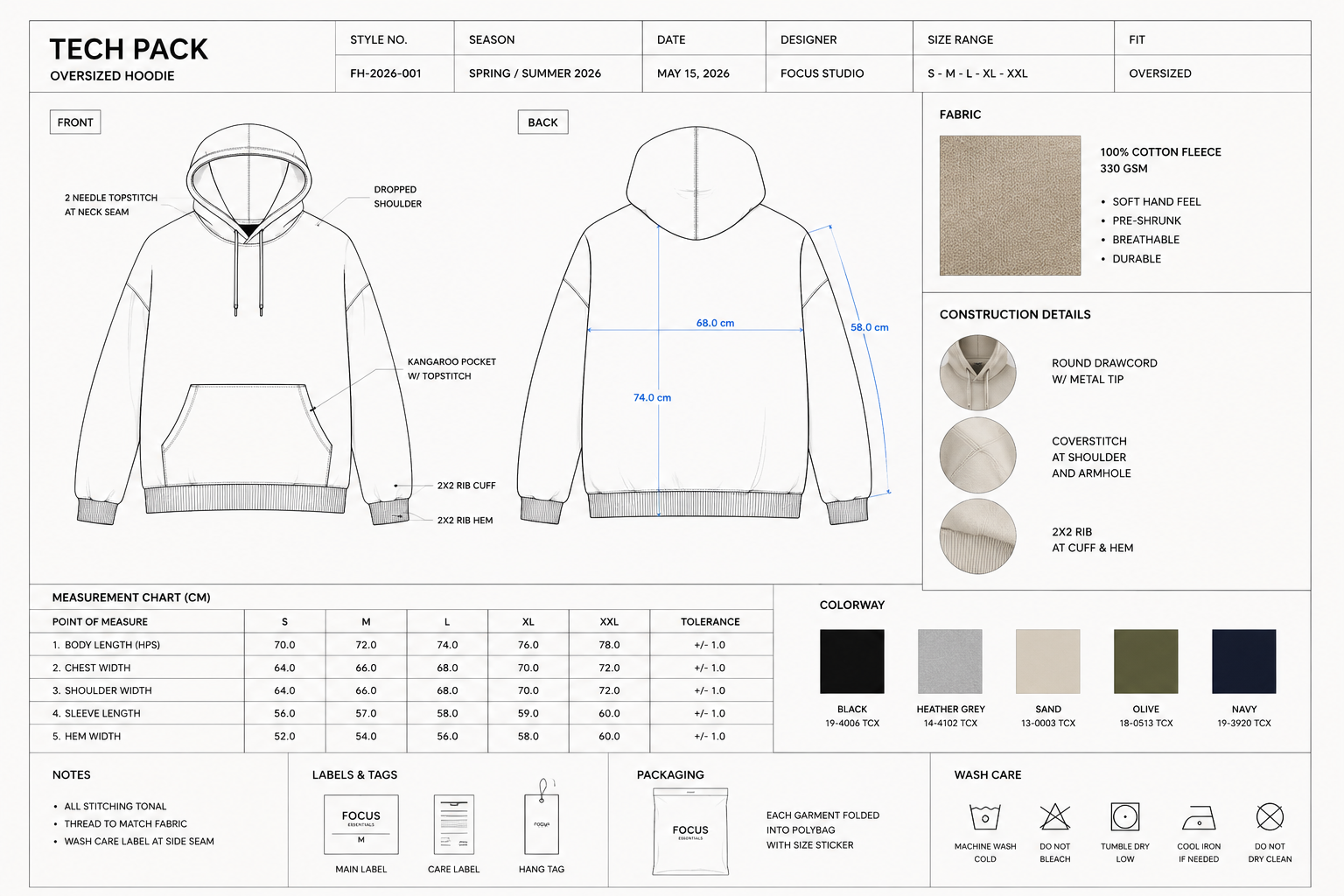
This is the most critical item on the clothing manufacturing checklist. A tech pack is the document factories use to produce your garment accurately. Without one, you are asking the manufacturer to guess, and guessing produces samples that do not match your vision, burns revision rounds, and loses factory confidence fast.
A complete tech pack includes: a technical flat sketch of the garment (front, back, and detail views), a full size spec table with all measurements, fabric and trim specifications including weight and fibre content, Pantone colour references, label and care label requirements, and any special construction notes.
If you cannot build one yourself, hire a freelance technical designer. Rates typically run $150–$400 per style depending on complexity. According to SBA startup cost guidance, professional pre-production services like this belong in your launch budget from the start. The cost of one bad sampling round far exceeds the cost of a properly prepared tech pack.
For a simple style such as a basic tee or crewneck, a usable tech pack can be completed in 3–5 days. Complex styles with hardware, multiple panels, or unusual construction typically take 1–2 weeks with a technical designer.
5. Choose Your Manufacturing Model
Skipping this step on the clothing manufacturing checklist means approaching factories that cannot produce what you need. Before you search, know which production model fits your product and volume.
Cut and sew means full custom production, where the factory sources raw fabric and constructs the garment entirely to your specification. More design control, but higher MOQs and longer lead times. Best for brands with a specific aesthetic or technical requirement that off-the-shelf blanks cannot achieve.
Private label means customising existing factory blanks by adding your label, colourway, or minor design changes to a garment the factory already produces. Lower MOQ, faster turnaround, lower per-unit cost. Best for brands starting at lower volumes with standard garment construction.
CMT (Cut, Make, Trim) is similar to cut and sew but you source and supply the fabric yourself. More control over material quality, but more logistics on your side. The Maker’s Row cut and sew guide covers the practical difference between these models for brand owners deciding for the first time.
Knowing your model before you search means every factory you approach is actually capable of producing what you need.
6. Prepare Your Factory Questions in Advance
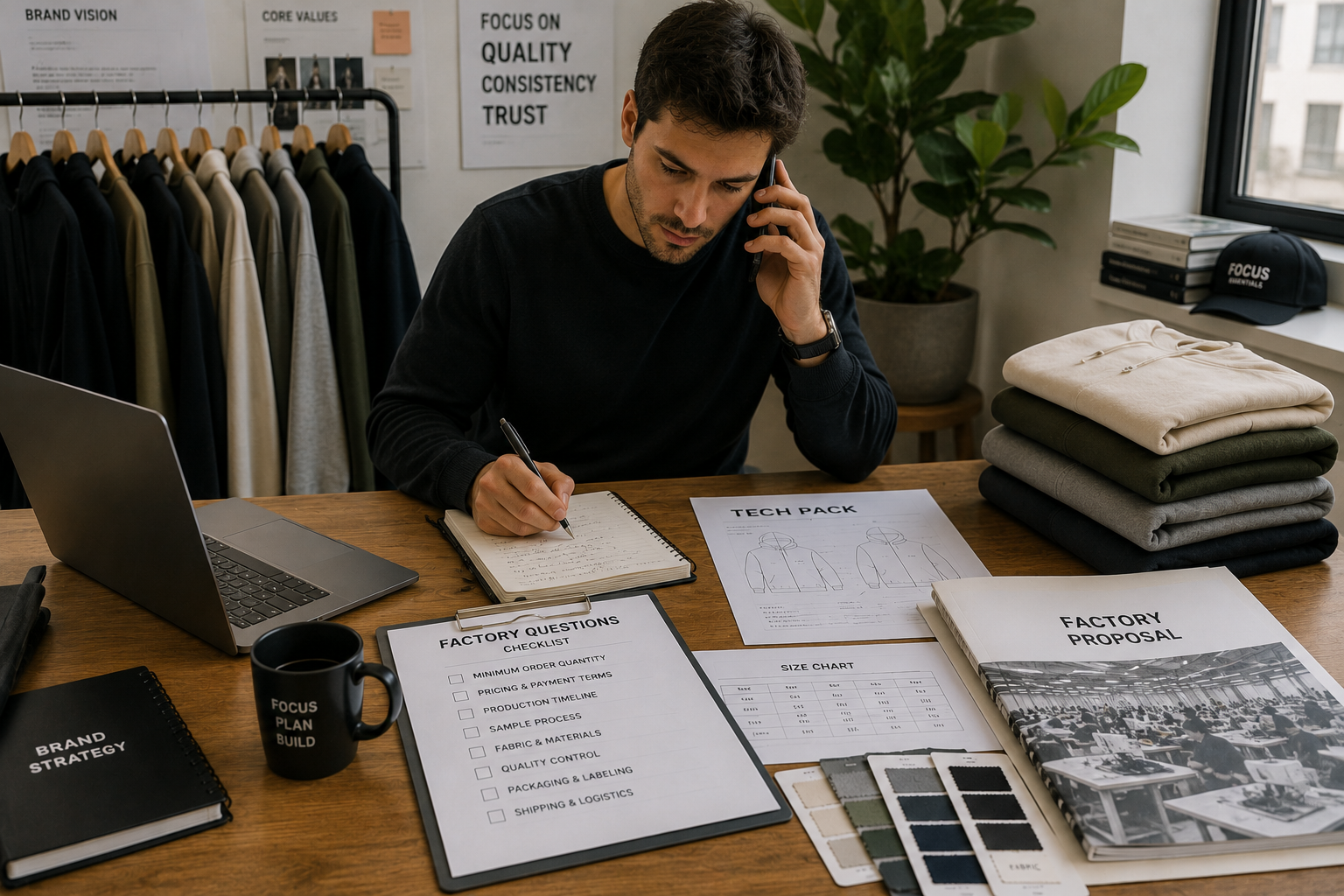
The first conversation with a manufacturer sets the tone for the entire relationship, and this step in the clothing manufacturing checklist is the one most brand owners skip. Those who arrive with prepared, specific questions get useful answers. Those who say “tell me about your factory” leave with nothing actionable.
Before any factory call or email, have these five questions ready:
- What is your MOQ per style, and does it change based on fabric or construction complexity?
- What is your lead time for sampling separately from production, and what does the sampling process look like?
- Do you work with brands at my production volume, and can you share examples of similar projects you have completed?
- What are your payment terms for a first order?
- What documents do you need from me to produce an accurate quote?
The Maker’s Row guide on questions to ask before contacting a factory is worth reading alongside this list, especially if you are approaching manufacturers for the first time.
7. Find Manufacturers Through a Verified Platform
The final item on this clothing manufacturing checklist determines how fast everything else pays off. Cold-emailing factories from a Google search is the slowest possible approach. Response rates are low, vetting is guesswork, and the factories most willing to work with emerging brands rarely rank well in search results.
The faster approach is a platform where verified US manufacturers are actively seeking new brand projects. Instead of you chasing factories one by one, you post a single brief and manufacturers bid on it. You compare profiles, specialisations, past work, and location, based on real information rather than a cold call.
BLS data shows over 11,000 apparel and textile manufacturing establishments operate across the USA. The problem is not supply. It is matching your spec and volume to the right factory efficiently. A verified platform does that matching in days, not months.
How Maker’s Row Helps You Work Through This Checklist
Finding the right clothing manufacturer does not have to mean months of cold emails. On Maker’s Row, post your clothing project for free and verified US manufacturers bid directly. Review bids, check profiles, connect when ready.
Complete all seven items on this clothing manufacturing checklist, then post your project brief on Maker’s Row. Manufacturers who match your product category, MOQ, and timeline respond directly, with many replying within 24–48 hours. On Maker’s Row, brand owners post unlimited manufacturing projects for free and receive bids from verified US factories at no upfront cost. To connect directly, subscription plans give full access.
FAQs About the Clothing Manufacturing Checklist
A clothing manufacturing checklist should cover seven core items before you contact any factory: a locked hero product, a one-page brand brief, confirmed MOQ and budget, a completed tech pack, a chosen manufacturing model, prepared factory questions, and a verified sourcing platform or method. Completing all seven before outreach results in better quotes, faster samples, and fewer wasted conversations with factories that are not the right fit.
Yes, a tech pack is non-negotiable for any serious production enquiry and belongs near the top of your clothing manufacturing checklist. Without one, factories cannot give accurate quotes or produce reliable first samples. For a simple style, a clean flat sketch with measurements and fabric spec is the minimum required. For complex construction, a full tech pack with Pantone references and trim detail is necessary before any factory can begin quoting accurately.
MOQ is minimum order quantity, the fewest units a manufacturer will produce in a single run. Confirming MOQ before outreach is a non-negotiable item on any clothing manufacturing checklist. US manufacturers typically set MOQs between 50 and 500 units per style. Your MOQ determines your upfront capital commitment and your inventory risk. Always confirm MOQ before requesting a quote, and build your total budget around factories whose minimum you can realistically meet and sell through.
From approved tech pack to delivered production run, expect 8–16 weeks with a US manufacturer. This covers manufacturer selection (1–3 weeks), sampling and revisions across 2–3 rounds (4–8 weeks), and production (4–8 weeks). Working domestically removes the overseas shipping lead time, which typically adds 4–6 weeks to comparable offshore timelines.
Cut and sew manufacturing builds garments from raw fabric entirely to your specification, giving full control over materials, construction, and design. Private label customises existing factory blanks with your branding, colourway, or minor design changes. Cut and sew typically carries higher MOQs and longer lead times. Private label is faster and lower-risk for brands starting at lower volumes. Choosing between them is a key decision on this clothing manufacturing checklist before you approach any factory.
Post a structured project brief on Maker’s Row specifying your product type, MOQ, and budget. Manufacturers who actively work with small and emerging brands respond directly, removing the guesswork of cold outreach entirely. Many small-batch factories on the platform are specifically set up for brand owners at the startup stage and flag this clearly in their profiles.
Start Applying This Checklist Today
Every day spent approaching manufacturers without completing this clothing manufacturing checklist is a day the right factory does not respond. Finish the preparation, then post your project where manufacturers are already looking.
Your clothing brand is one manufacturer away from becoming real. The factories are on Maker’s Row, ready to bid.