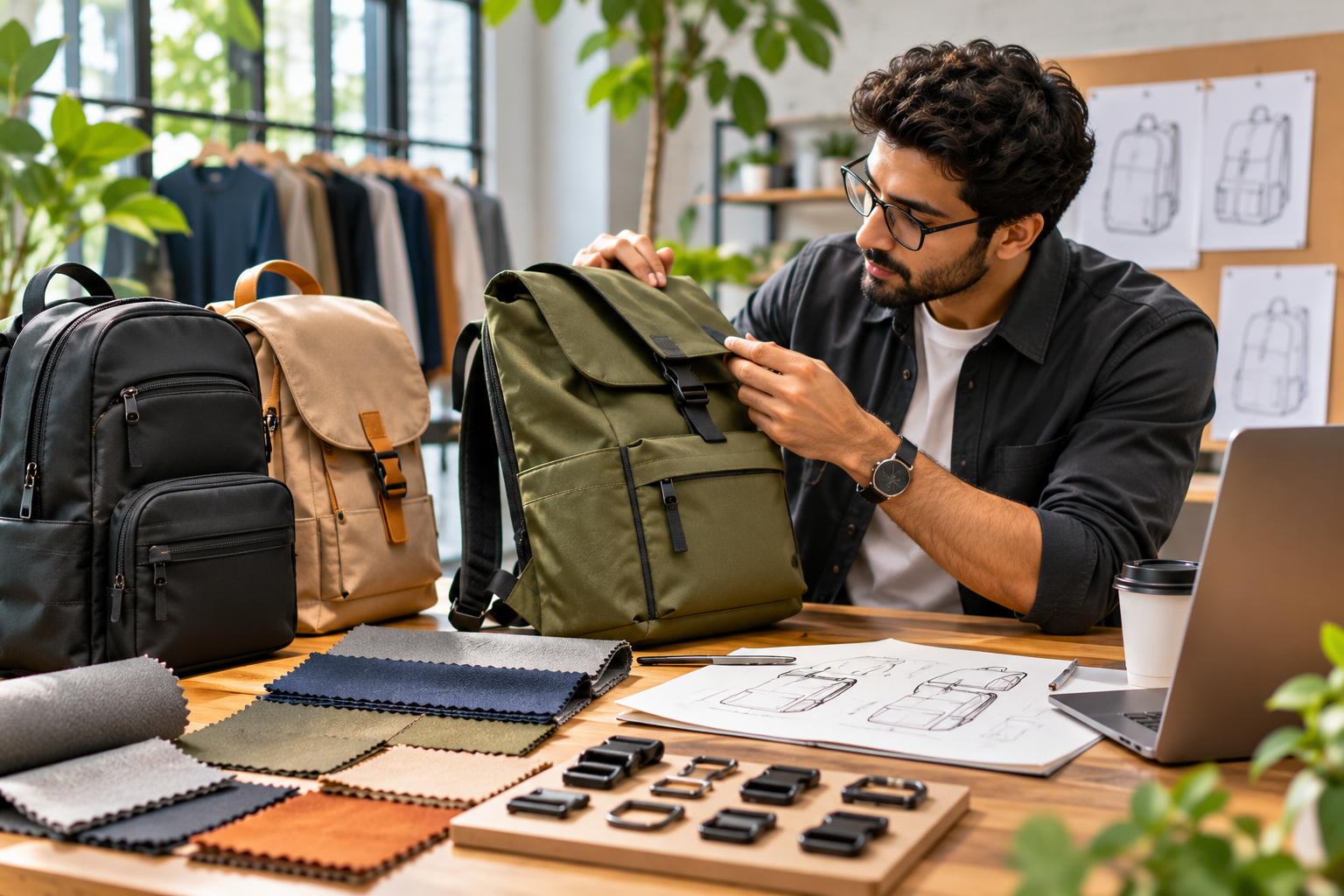
You can picture the backpack down to the zipper pull. Then a factory asks for liter capacity, fabric denier, and hardware brand, and the sketch stops being enough. This guide shows you how to choose a backpack spec a US factory can quote, even if this is your first bag.
A backpack hides more decisions than most soft goods. Capacity, fabric, coating, zippers, straps, padding, and stitching all change your cost per unit. They also change your MOQ. MOQ (minimum order quantity) is the smallest number of units a factory will produce in one run.
If you are launching your first line, you probably fear picking a spec that factories reject or customers return. Knowing how to choose a backpack starts with three big choices: size, material, and features.
You will leave with a one-page backpack spec, a clear view of feature costs, and a path to bids from US factories.
How to Choose a Backpack Size From the Load Up
Choose backpack size by listing the heaviest daily load your customer carries. Then pick a liter capacity that fits it with room to spare. Liter capacity is the total interior volume of a backpack, measured in liters. Start with the load, not the look.
Write down the five items your customer carries daily, such as a 15-inch laptop, a water bottle, a lunch, and a jacket. Pack them into a cardboard mock-up before you draw a single seam. Then match the result to a capacity band.
Backpack type | Starting capacity | Typical load | Confirm with your factory |
Mini pack | 10 to 15 L | Phone, wallet, light layer | Pocket depth, strap length |
Everyday daypack | 18 to 28 L | Laptop, notebook, lunch | Laptop sleeve fit, padding |
Weekend or travel pack | 30 to 40 L | Clothing for 2 to 3 days | Zipper opening style, carry handles |
Large load-carrying pack | 45 L and up | Heavy gear | Frame, hip belt, torso sizing |
These are common working ranges, not a regulated standard. Validate each one with a sample.
A bigger bag is not a safer bet. Every extra liter adds fabric and sewing time, which raises your cost per unit. If you plan load-carrying packs, budget for two torso sizes, because one fit rarely suits every back.
Which Backpack Material Should You Pick?
Pick nylon for light strength, polyester for value, and canvas or leather for a premium look. Match the fabric to how hard your customer will use the bag. Denier is a unit of yarn thickness: one denier equals one gram per 9,000 meters of yarn. A higher denier usually means a heavier, tougher fabric, but the weave and coating matter as much as the number.
Ripstop is a woven fabric with a grid of reinforcing threads that stops small tears from spreading. Ask each factory for swatches, then scrape, soak, and fold them before you commit.
Material | Strength | Weight | Water resistance | Best for |
Nylon, including ripstop | High | Light | Good with coating | Commuter and travel packs |
Polyester | Medium to high | Light to medium | Good with coating | Value lines, bold colors |
Waxed canvas | Medium to high | Heavy | Good, rewax over time | Heritage and lifestyle brands |
Full-grain leather (top layer, least processed) | High | Heavy | Fair, needs care | Premium fashion packs |
Recycled nylon or polyester | Comparable when well made | Comparable | Good with coating | Brands with sustainability claims |
Ugmonk shows how one material choice shapes a whole project. Its founder chose waxed canvas with full-grain, vegetable-tanned (plant-tanned) leather trim for a messenger bag. He contacted more than 40 manufacturers before finding a Portland, Oregon factory.
The first run sold out in two weeks, according to his 2014 Maker’s Row case study. He also reports higher costs than planned, because he built the bag to a high standard.
[IMAGE: waxed canvas, nylon ripstop and leather swatches side by side | ALT: backpack material swatches compared for strength and weight]
Which Backpack Features Are Worth Paying For?
Pay for the features your customer touches every day, such as zippers, strap anchors, and a laptop sleeve. Skip decoration that adds sewing steps without adding use. A bar tack is a dense block of stitches that reinforces a stress point, like the base of a strap.
Feature | What it adds | Effect on production | Verdict |
Name-brand zippers, such as YKK | Reliable closure | Higher hardware cost, fewer closure failures | Pay for it |
Bar tacks at strap anchors and handles | Strength where bags fail | Small added sewing time per point | Pay for it |
Padded laptop sleeve | Protects electronics | Extra cut pieces and foam | Pay if you target commuters |
Water-resistant coating or taped seams (waterproof tape over stitching) | Weather protection | Added material and process steps | Pay only if you claim weather resistance |
Hip belt or sternum strap | Load transfer | More pieces, more sample rounds | Skip unless packs carry heavy loads |
Many small pockets | Organization | Each pocket adds cutting and stitching | Limit to two or three |
Every feature adds cut pieces, sewing operations, or both. More operations mean more sample rounds and a higher quote. Maker’s Row’s 2026 custom handbag manufacturer guide reports that standard samples take two to four weeks. Custom hardware or specialty leather can stretch that to four to eight weeks.
Ask each factory which feature it would cut first. Its answer shows you what it builds best.
What Goes Into a Backpack Spec for Factories?