Starting a streetwear brand is one of the most rewarding moves a creative entrepreneur can make. It is also one of the most confusing: most guides tell you to “find a manufacturer” without explaining how to find one that responds, works with small orders, and delivers consistent quality. This guide is different. It gives you the exact steps for how to start a streetwear brand, from concept to first production run, including how to find a US manufacturer even if you have never done this before.
If you are figuring out how to start a streetwear brand that actually launches, the answer begins with getting the manufacturing side right. The global streetwear industry is valued at over $185 billion according to Business of Fashion, and new US brands enter the market every month. The ones that survive figured out production before they ran out of money.
Most founders who want to start a streetwear brand face the same three obstacles: finding a manufacturer who works with small orders, understanding what production actually costs, and not knowing the right sequence of steps. This guide solves all three. By the end, you will know exactly how to start a streetwear brand and where to find the manufacturer to make it real.
Step 1: Define Your Brand Identity and Hero Product
The first step to start a streetwear brand is deciding what you stand for, and committing to one product done exceptionally well.
Anyone who wants to start a streetwear brand quickly learns that a crowded space has no room for vague aesthetics. Before you spend a dollar on production, you need clear answers to these three questions:
What is your brand point of view? This is more than a logo. It is the visual language, cultural reference point, and attitude your brand carries. Think about which community you are speaking to: skaters, musicians, sneakerheads, a specific city scene. Name it clearly and write it down.
What is your hero product? Every founder who has worked out how to start a streetwear brand that lasts will tell you the same thing: begin with one product. Supreme built its identity on the box logo tee. Palace launched on the tri-ferg hoodie. Pick one item, whether a graphic tee, heavyweight hoodie, or cargo pant, that you can produce well at a manageable cost.
What is your price point? Your price point determines your manufacturer tier, your margin, and your customer. Write a 1-2 page brand brief covering your target customer, your top three competitor brands, your hero product, and your target retail price. This document will follow you into every manufacturer conversation.
Step 2: Know Your Target Customer
Before you approach a single factory, you need to know exactly who you are selling to. It sounds obvious, but this is the step most people skip when they start a streetwear brand, and it is the reason so many first collections miss the mark.
Streetwear has fragmented into dozens of distinct communities. A brand built for LA skate culture looks different from one for NYC sneakerheads, which looks different from one rooted in Atlanta hip-hop. The more specific your customer, the easier it is to design for them, price for them, and find them online.
Create a one-page customer profile before you start a streetwear brand. It should cover:
- Age range and location
- Where they currently shop (brands, retailers, resale platforms)
- What they spend on individual pieces
- What content they consume and which creators they follow
This profile drives every decision from graphic direction to fabric weight to which platforms you use at launch. Founders who skip it end up with product nobody asked for.
Step 3: Build Your Product Concept and Tech Pack
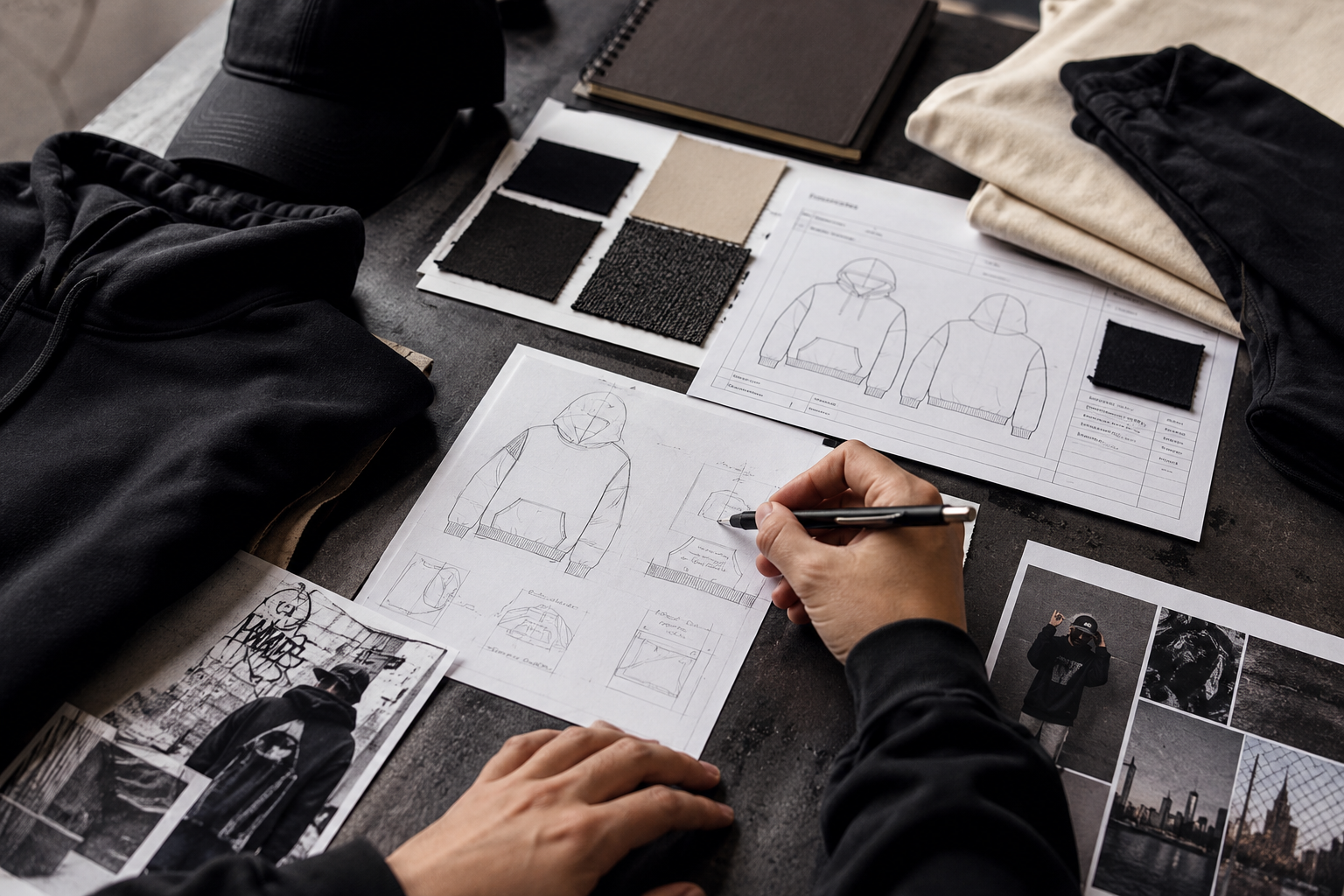
Knowing how to start a streetwear brand means knowing what a tech pack is and why you cannot skip it. A tech pack is the blueprint your manufacturer needs to produce your garment correctly. Without one, every sample will be a guess, and guesses cost money.
A basic tech pack for your first piece includes:
- Technical flat sketches (front, back, and detail views)
- Fabric specifications (weight, content, and finish)
- Colorway references (Pantone codes or physical swatches)
- Construction details (seam type, stitch density, and hem finish)
- Label and tag placement
- Sizing grading chart
You do not need to be a technical designer to build this. Tools like Adobe Illustrator or fashion-specific software like Techpacker make it manageable for first-time founders. Alternatively, hire a freelance technical designer for $150-500 per style. That cost is far lower than paying for bad samples from a factory that had to guess.
Also Read: What to Look for in Clothing Manufacturers for Startups in the USA
Also Read: Clothing Manufacturer Readiness Checklist
Step 4: How to Start a Streetwear Brand by Finding the Right Manufacturer
This is the step where most people who want to start a streetwear brand get stuck, and it is the one that determines whether your brand actually launches. Get it wrong and you lose months. Get it right and you have a production partner who helps you grow.
The old way means cold-emailing factories, attending trade shows like MAGIC, and waiting weeks for a response. Most factories do not reply to unknown brands. The ones that do often quote MOQs of 300-500 units per style, which prices out most early-stage founders entirely.
What to look for when you start a streetwear brand and need a manufacturing partner:
MOQ: Look for factories that work with 50-150 units for your first production run. Many US cut-and-sew manufacturers accommodate smaller brands when you approach them with a clear brief and a tech pack.
Speciality: To start a streetwear brand with real product differentiation, you want cut-and-sew capability for custom garment construction, not just screen printing on purchased blanks. The quality difference is significant.
Sample policy: Will the factory produce a single sample before committing to a full run? Some charge $100-400 per sample. Others fold it into the production quote. Confirm this before signing anything.
Communication speed: A manufacturer who takes two weeks to answer one email will cost you months during production. Response speed in the sourcing phase signals how they will operate on your actual order.
Location: US-based manufacturers mean faster sampling, easier quality checks, and the ability to visit the facility in person. Understanding what production costs before you commit is essential. The Apparel Manufacturing Cost USA guide breaks down what to expect at different volumes.
Find Your Streetwear Brand Manufacturer on Maker’s Row
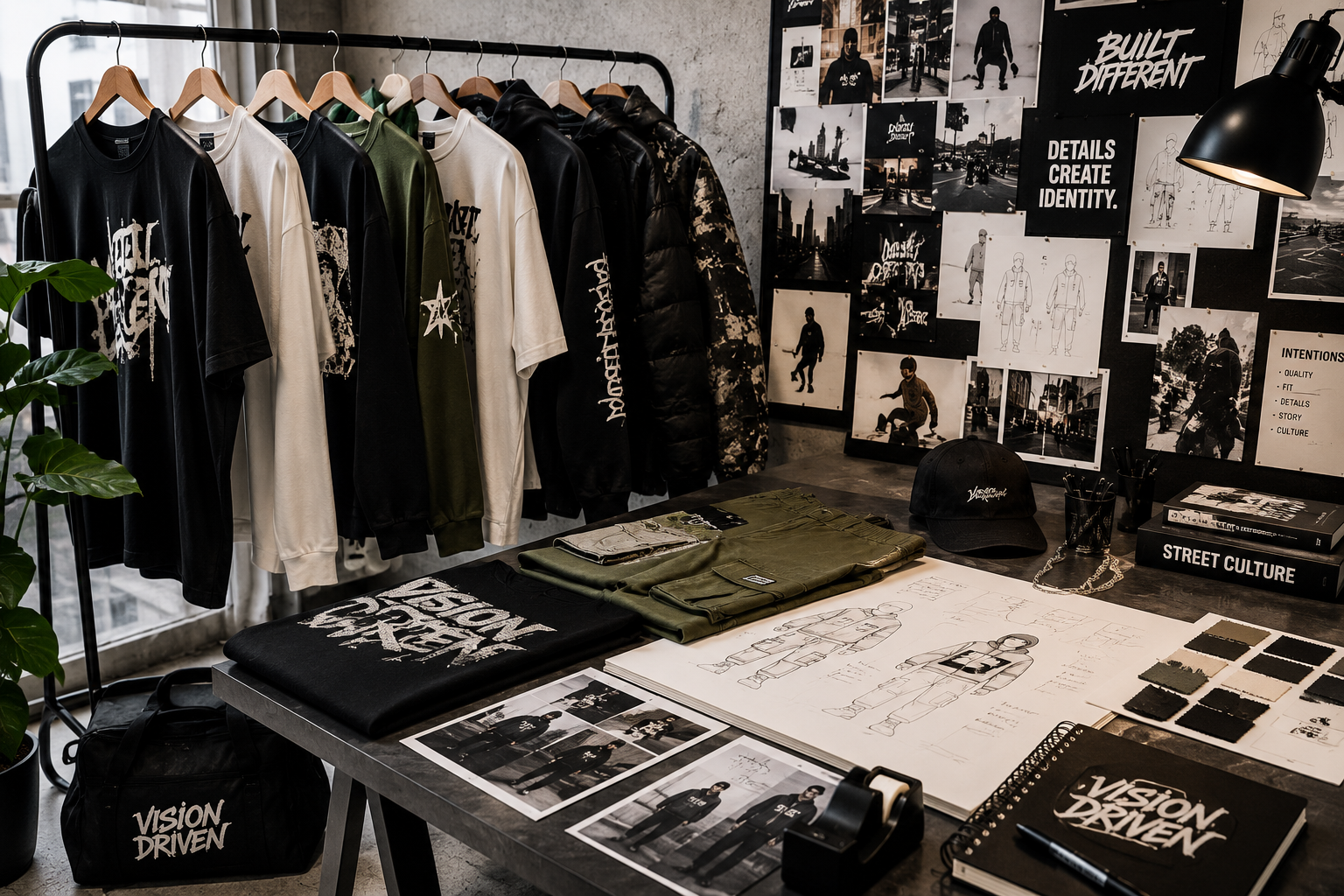
If you want to know how to start a streetwear brand without spending months cold-emailing factories, this is the answer: let the manufacturers come to you. On Maker’s Row, post your project for free and verified US manufacturers bid directly. Review bids, check profiles, and connect when you are ready.
Many factories that work with founders starting a streetwear brand, including cut-and-sew shops, screen printing specialists, and embroidery facilities, are active on Maker’s Row and respond within 24-48 hours of a new project being posted. Brand owners post unlimited manufacturing projects for free and receive bids from verified US factories at no upfront cost. To connect directly, subscription plans give full access.
Step 5: Order Samples and Refine
Anyone learning how to start a streetwear brand that delivers consistent quality needs to treat sampling as a non-negotiable step. Never commit to a full production run without holding a finished sample in your hands first.
When your sample arrives, check these specifics:
- Fabric hand-feel and weight: Does it match your specification sheet?
- Construction quality: Are seams consistent? Any puckering or pulling at stress points?
- Fit: Does the garment grade correctly across your size run?
- Print or embroidery quality: Check color accuracy, registration, and durability after a wash test.
- Label placement: Is it positioned and sewn exactly as specified?
Order samples from at least two manufacturers before committing to one. A Brooklyn-based founder compared samples from three US factories and found a 40% quality difference between the lowest and highest-quality options at nearly identical cost per unit. Competition between suppliers always benefits the brand.
Document every change request in writing and use your tech pack as the reference for every revision. Most brands need 2-3 sample rounds before production-ready approval.
Step 6: Plan Your Production Run and Budget
Once your sample is approved, build a production plan before you place your order. Skipping this step is the fastest way to run out of cash before your first sale arrives.
A realistic budget for a first production run when you start a streetwear brand typically includes:
- Sampling costs: $150-400 per style, per factory
- Production cost per unit: $18-50 for a cut-and-sew tee or hoodie, depending on complexity, fabric, and order volume
- Trims and labels: $1-3 per unit, covering woven labels, hangtags, and poly bags
- Shipping and duties: 5-15% of production cost depending on freight method
The SBA’s small business planning tools can help you build a startup cost model if this is your first business. Plan for your first run to take 8-14 weeks from sample approval to delivery.
Order conservatively on your first run. A Los Angeles founder who figured out how to start a streetwear brand on a tight budget began with 100 units of a single heavyweight tee at $28 cost-per-unit and sold out in three weeks through Instagram and one pop-up. They used that data to negotiate better pricing on 300 units in their second cycle.
Also Read: How to Find a Clothing Manufacturer in the USA
Step 7: Launch and Market Your Streetwear Brand
Your manufacturer is confirmed and your units are on the way. The final step in how to start a streetwear brand is building the audience that buys from you.
Streetwear marketing is community-first, not ad-first. The brands that break through own a specific corner of culture before they own inventory. Here is what works for founders at this stage:
Build the audience before the drop. Post design process content, behind-the-scenes production footage, and cultural references that communicate your aesthetic for 4-8 weeks before launch. People buy from brands they have been following, not brands they discovered today.
Launch with scarcity. A limited first drop of 50-150 units creates urgency. Selling out is one of the most powerful early signals a brand can send: it proves real demand exists.
Choose one primary platform. Instagram and TikTok are the standard channels when you start a streetwear brand. Pick one, post consistently, and build genuine community relationships before spreading across other platforms. Trying to be everywhere at launch is a mistake that drains time and produces nothing.
Protect your brand from day one. Before you launch, file for trademark protection on your brand name and logo. The USPTO trademark registration process can be started online and typically costs $250-350 per class.
According to SCORE, one of the most common mistakes first-time apparel founders make is over-investing in inventory before validating demand. Launch small, prove the market, then scale production with real data behind you.
FAQs: How to Start a Streetwear Brand in the USA
Most founders start a streetwear brand with $5,000-15,000 for their first production run. This covers sampling ($300-800), production of 100-200 units ($2,000-8,000 depending on garment complexity), basic branding, and a simple e-commerce setup. Costs vary based on your hero product and manufacturer.
Yes. No manufacturing or fashion design experience is required to start a streetwear brand. What you need is a clear brand concept, a tech pack for your hero product, and a manufacturer willing to work with new brands at small order quantities. Many successful founders had no industry background before launching.
The most efficient way to find a manufacturer when you start a streetwear brand is to post your project on Maker’s Row, where verified US factories actively bid on new brand projects. Specify your garment type, estimated quantity, and requirements such as cut-and-sew, screen print, or embroidery in your brief.
MOQ (minimum order quantity) is the smallest order a manufacturer will accept per style. US manufacturers working with founders who start a streetwear brand typically have MOQs of 50-300 units. For a first run, target manufacturers with MOQs of 50-150 units to manage risk while you validate demand.
Plan for 12-20 weeks from concept to delivery: 2-3 weeks for tech pack development, 3-5 weeks for sampling and revisions, and 8-12 weeks for production and shipping. Rushing the sampling stage is the most common cause of quality problems when you start a streetwear brand for the first time.
Yes, a tech pack is strongly recommended before approaching any manufacturer to start a streetwear brand. Without one, factories cannot quote accurately and samples will not match your vision. Even a basic tech pack with flat sketches, fabric specs, and construction notes is better than approaching a factory empty-handed.
Use a non-disclosure agreement (NDA) when sharing detailed designs with manufacturers. File for trademark protection on your brand name and logo through the USPTO. Copyright on original graphic artwork is automatic upon creation in the US, but registering it gives stronger legal grounds if you ever need to enforce it.
Many US cut-and-sew manufacturers will work with 50 units per style for an initial order. Some sample services accept single-unit orders for prototyping. Starting at 50-100 units lets you test market response without significant inventory risk.
Your Streetwear Brand Is One Step Away
Your streetwear brand is one manufacturer away from becoming real. The factories are on Maker’s Row, ready to bid.
Now you know exactly how to start a streetwear brand: define your hero product, know your customer, build your tech pack, find a verified US manufacturer, sample rigorously, plan your production budget, and launch to an audience you built before the drop. Every step is in this guide.