Italian tailoring built its reputation on precise stitching, heavier natural fabrics, and hand-finished details that most mass-market factories skip. Brand owners who want that standard often assume it means manufacturing overseas. It does not. This guide covers seven ways to source Italian quality manufacturing in the USA, so you can get that construction standard without the shipping delays or overseas minimums.
Brand owners chasing a European-level finish usually hit the same wall: US factory directories rarely filter by construction quality, only by category and price. You end up guessing which factories deliver tight stitch counts and hand-finished seams, and which ones run high-volume basics lines.
Construction quality drives perceived value in premium apparel more than fabric cost alone. A $180 jacket with loose seams and machine-only finishing reads cheap. The same jacket with hand-felled hems and a canvassed front reads expensive, even at a lower price.
This guide breaks down seven concrete ways to source Italian quality manufacturing in the USA, what questions separate a real Italian-quality factory from one that just uses the phrase in marketing, and how to structure your search so you are not wasting months on factories that cannot deliver.
What Makes Italian Quality Manufacturing Different From Standard US Production?
Italian quality manufacturing means garments built with denser stitch counts, natural fiber fabrics from established mills, and hand-finished details like felled hems, canvassed fronts, and hand-set buttonholes. Standard US production optimizes for speed and lower unit cost, often using fused interfacing and machine-only finishing throughout.
The difference shows up in three measurable areas: stitches per inch (10 to 12 for premium construction versus 6 to 8 for standard), fabric weight and fiber content (wool and cotton mill fabrics versus poly blends), and the ratio of hand work to machine work in finishing steps.
Construction Element | Standard US Production | Italian-Quality Standard |
Stitch density | 6 to 8 stitches per inch | 10 to 12 stitches per inch |
Interfacing | Fused, machine-applied | Canvassed or hand-basted on tailoring |
Hem finishing | Machine-serged | Hand-felled |
Buttonholes | Machine bartack | Hand-set or hand-finished |
Fabric sourcing | Blended synthetics common | Natural fiber mill fabrics |
According to the American Apparel and Footwear Association, the domestic apparel and footwear industry supported more than 3.6 million US workers and contributed over $523 billion in annual retail sales as of AAFA’s 2025 statistics overview, a base broad enough to include specialty and premium-construction factories alongside mass producers.
Learn the Construction Details Before You Start Sourcing
You cannot vet a factory’s claims if you do not know what to look for first. Spend an afternoon studying construction terms before you send a single inquiry.
Learn to identify full canvas construction, where a layer of wool canvas is hand-basted into a jacket front rather than fused, giving the garment better drape over time. Learn to spot hand-felled hems, stitched by hand instead of serged by machine, producing a cleaner finish with no visible stitch line.
Bring photos of these details when you contact factories. A factory that can point to these features in its own portfolio has the capability. Vague reassurance usually means it does not.
Target US Factories With European-Trained Pattern Makers
Pattern making determines fit, and fit is where Italian tailoring earns its reputation. If you are serious about sourcing Italian quality manufacturing in the USA, search for factories that specifically list European or Italian-trained pattern makers on staff, not just “experienced” ones.
Many small-batch tailoring houses in New York’s Garment District and a growing number of factories in Los Angeles and Chicago employ pattern makers who trained in Italy or under Italian-trained mentors. These factories typically work in tailoring, outerwear, and structured womenswear rather than basics.
Ask directly during your first call where your head pattern maker trained and how many years they have worked in structured tailoring. A factory that answers with specifics is worth a second conversation. One that cannot name a training background is likely running standard pattern grading, scaling a single sample pattern into a full size range without altering fit philosophy.
Source European Mill Fabrics Through US-Based Suppliers
Construction quality only goes so far without the right fabric. Italian-style garments typically use natural fiber mill fabrics, heavier wool suiting, structured cotton twills, and Italian-milled linens rather than synthetic blends.
Several US-based textile distributors carry mill fabrics imported directly from Italian and other European suppliers, letting you source premium fabric without meeting an overseas minimum order. Ask your shortlisted factories which fabric suppliers they already work with, since established relationships often mean better pricing and faster turnaround.
For fiber content standards and terminology, Textile Exchange publishes guidance on verifying natural fiber claims, useful when a supplier markets a fabric as wool or cotton mill cloth and you want to confirm the claim before committing to yardage.
Look for Hand-Finishing in a Factory’s Existing Portfolio
Do not take a factory’s word for its finishing capability. Ask for close-up photos of finished garments, specifically the inside seams, hems, and buttonholes, not just the exterior shot most factories lead with.
A factory genuinely capable of Italian-quality finishing has these photos ready, since they use them to sell premium clients. A factory without them, offering only exterior shots, is likely not set up for hand-finishing work at scale.
How Do You Vet Whether a US Factory Actually Delivers That Standard?
You vet the standard by requesting close-up construction photos, asking pattern maker training questions, and ordering one paid sample before committing to a production run. Marketing language alone, including the phrase “Italian quality,” is not verification.
Cross-reference what the factory shows you against the comparison table above. If stitch density, interfacing method, and hem finishing all match the Italian-quality column, the factory has likely demonstrated the capability rather than just claimed it.
Prioritize Small-Batch Factories Over High-Volume Facilities
High-volume factories are built for speed and consistency at scale, which usually means less hand work per unit. Small-batch factories, often running 50 to 300 units per style, have more room to include hand-finishing steps because their production model does not depend on machine-only speed.
A Chicago-based outerwear brand sourced a small-batch tailoring house in New York for a structured wool coat line, ordering 80 units across two colorways in its first run. The factory’s full-canvas construction and hand-felled hems let the brand price the coats 40 percent above comparable machine-finished competitors, and the first run sold out in five weeks.
Smaller factories also tend to have lower minimum order quantities, meaning the smallest number of units a manufacturer will produce per order, which matters if you are testing a premium line before committing to larger volume. As of 2026, BLS data shows the US apparel manufacturing subsector still spans a wide mix of establishment sizes, from small cut-and-sew shops to larger full-package facilities, giving brand owners real choice on production scale.
Ask About Sample Rounds Before You Ask About Price
Italian ateliers are known for multiple fit and construction rounds before finalizing a garment. Bring that same expectation to your US factory search instead of treating sampling as a formality.
Ask how many sample rounds are included before production pricing, and what it costs to add an extra round if the first sample misses on fit or finishing. A factory used to premium construction work will expect at least two rounds as standard and will not push back on the question.
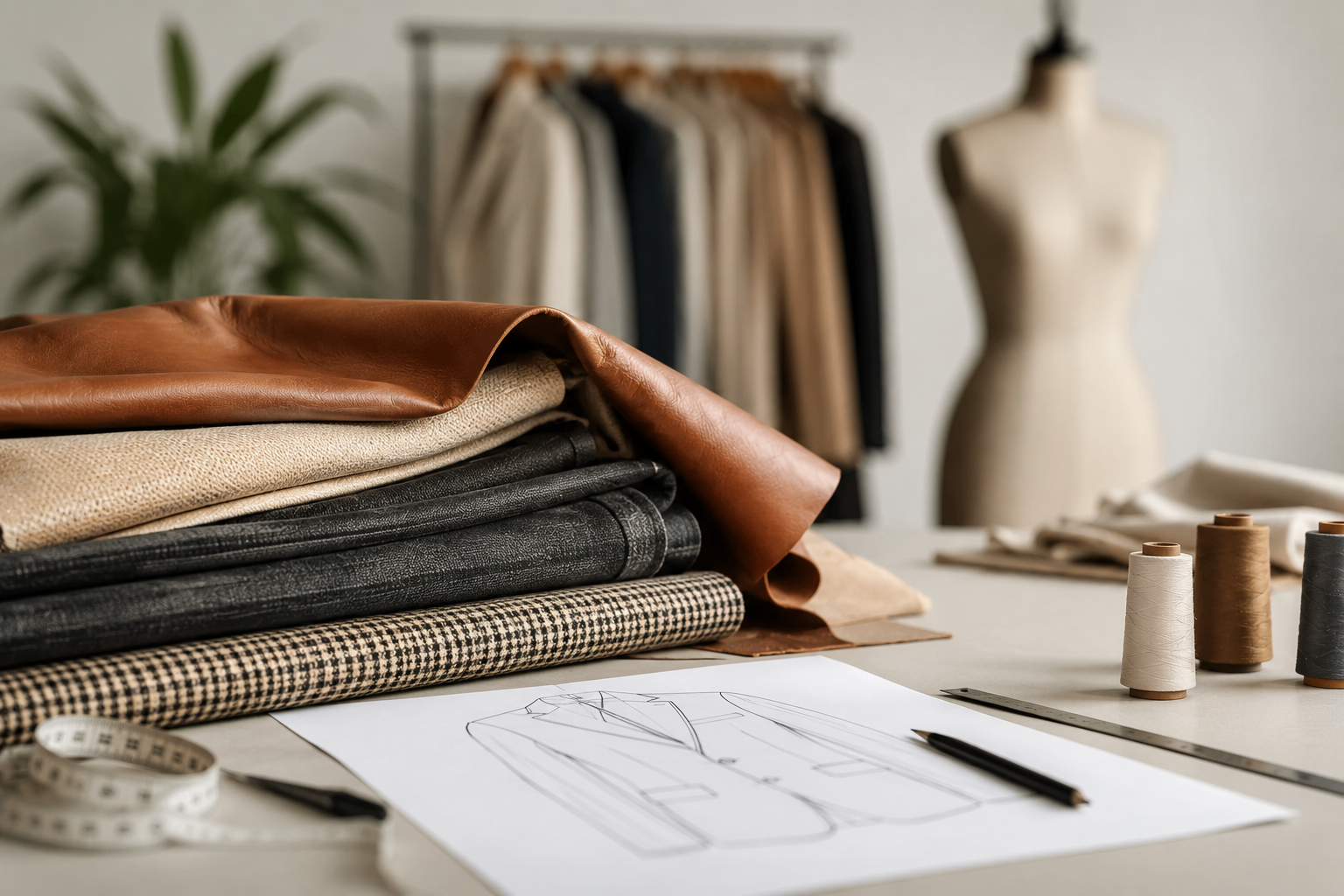
According to SCORE, new brand owners planning premium production should budget for sampling costs and revision rounds as a fixed line item rather than an afterthought, since underestimating this step is one of the most common early-stage sourcing mistakes.
Verify the Factory’s Claims With a Paid First Sample
Never commit to a full production run based on photos and conversation alone. Pay for one sample garment and evaluate it against the exact construction elements in the comparison table above.
Check stitch density with a ruler, feel the interfacing, and examine the hem and buttonholes under good light. A factory that passes this check has proven its Italian-quality claim. One that fails should be dropped from your shortlist regardless of how strong its photos looked.
Find Italian-Quality Manufacturers on Maker’s Row
Maker’s Row is a marketplace connecting apparel brand owners with verified US manufacturers, including small-batch and tailoring-focused factories capable of Italian quality manufacturing in the USA. Instead of researching individual factory websites for construction details, post your project brief specifying full-canvas construction, hand-felled hems, or your target stitch density and let qualified factories respond directly.
Include your construction requirements and fabric preferences in the brief so factories with true Italian-quality capability, not just marketing language, self-select into your bid pool.
Before posting, it helps to understand the full range of US manufacturer types and how private label production, where you customize a factory’s existing base style rather than building a fully custom pattern, compares to full custom tailoring for a premium line. If you are weighing private label clothing against fully custom construction, factor in that private label bases rarely include full-canvas tailoring by default. You can also browse the Maker’s Row brand page to see the range of manufacturer specialties before writing your project brief.
Also Read: Best Private Label Clothing Manufacturers in the USA →
Also Read: Top Clothing Manufacturers in the USA for Quality Production →
FAQs About Sourcing Italian Quality Manufacturing in the USA
Yes, a growing number of US factories, particularly small-batch tailoring houses, employ European-trained pattern makers and offer full-canvas construction, hand-felled hems, and natural fiber mill fabrics. The key is vetting construction details directly rather than relying on marketing claims.
Denser stitching, natural fiber fabrics, hand-finished seams and buttonholes, and canvassed rather than fused interfacing are the main construction markers. These details add cost but significantly change how a finished garment drapes and holds up over time.
Hand-finished, full-canvas construction typically runs 30 to 60 percent higher per unit than standard machine-finished production, depending on fabric choice and the number of hand-finishing steps involved. Brands usually recover this through higher retail pricing rather than absorbing it into margin.
Often yes, since small-batch factories cannot spread fixed costs across as many units, but they typically offer more hand-finishing capability and lower minimum order quantities, which matters more for a premium line than unit cost alone.
Ask where their pattern maker trained, request close-up photos of interior seams and hems, confirm stitch density, and ask how many sample rounds are included before production pricing. Vague answers to any of these are a warning sign.
Yes, a paid first sample is the only reliable way to confirm construction claims before a full production run. Skipping this step is one of the most expensive mistakes a brand owner can make when sourcing premium manufacturing.
Start Applying These Strategies Today
Sourcing Italian quality manufacturing in the USA comes down to vetting construction details instead of trusting marketing claims. The factories capable of full-canvas tailoring and hand-finished details are already on Maker’s Row, ready to bid on your project.