You found a factory you like. Their sample work looks great. Then the reply arrives: “Please send your tech pack.” If you have never made one, that request can stall a launch before it starts. This guide explains what the term means, what goes inside, and how to hand one over with confidence.
A tech pack is a document that tells a factory exactly how to make one garment, using drawings, measurements, materials, and construction notes.
If you are launching your first line, this matters because factories quote and sample from what they can read, not from what you imagine. A clear file also protects your budget, since every unclear detail can become another paid sample round.
We will cover the definition, why it matters, real examples, and the steps to build one.
What Is a Tech Pack?
A tech pack is the blueprint for one garment, combining flat drawings, measurements, materials, and construction notes in a single file. For your brand, this means the factory never has to guess what you intended. Some factories call the same document a technical package.
It is not the same as a pattern. The file is a technical drawing that is not full size, while a pattern is the full-size template used to cut the fabric. The usual order runs from drawing to pattern to prototype, and Maker’s Row’s pattern-making guide notes that edits to the document often follow once the sample exists.
The people who act on your file are skilled production workers. The U.S. Bureau of Labor Statistics counted 25,280 sewing machine operators in US apparel manufacturing in 2025, within a sector of about 71,400 jobs as of September 2026 (preliminary). Every unclear line leaves someone on that floor guessing on your behalf.
A bill of materials (BOM) is a sheet listing every material and component with its placement on the garment. It is one of six core parts:
Component | What it contains | What it prevents |
Flat drawings | Front, back, and detail sketches | Wrong silhouette or neckline |
Bill of materials | Fabrics, trims, thread, hardware, placement | Material substitutions |
Measurements | Point-of-measure chart for your base size | Fit errors |
Construction notes | Stitch types, seam finishes, hems | Wrong assembly |
Colorways and artwork | Color references and artwork specifications | Color mismatches |
Labels and packing | Label placement, folding, packaging method | Rework at finishing |
Why Does a Tech Pack Matter for Brand Owners?
A tech pack matters because it turns your idea into instructions a factory can price, sample, and produce without guessing. Four decisions get easier once you have one:
- Quotes you can compare. Factories price from what they can read, so a complete file lets you compare two quotes against the same specification.
- Fewer sample rounds. Each unclear detail risks another round, and every round adds weeks to your launch.
- Fewer questions back to you. A detailed file lets the factory build without checking back with the designer several times.
- A specification you own. Because the details live in your document, you can send the same package to a second factory.
Tech Pack in Practice: Real Examples
A real spec file changes across three stages, and one small unit error can cost you an extra sample round. These examples show both ideas.
Example: One file, three versions
Apparel development consultant Jessica Sweeney, writing in Tech Packs 101, describes a development version, a fit version, and a production version. Each stage adds detail. Size grading is the process of scaling a base-size pattern into the other sizes you sell.
Stage | When you make it | What it adds |
Development | Before the first sample | Bill of materials, construction page, measurement page |
Fit | After the first sample arrives | Changes found when the sample is fit on a dress form or fit model |
Production | After fit is approved | Size grading, label placements, packing methods |
Example: The half-inch sleeve
A reader comment on Maker’s Row’s post Why A Tech Pack is Vital to Production describes a designer who asked for a smaller sleeve. The factory took off half an inch. The designer had meant one inch. The fix cost one more sample and a few weeks of waiting, and a written measurement would have prevented it. State sizes in numbers, never in words like “smaller.”
Example: One measurement block
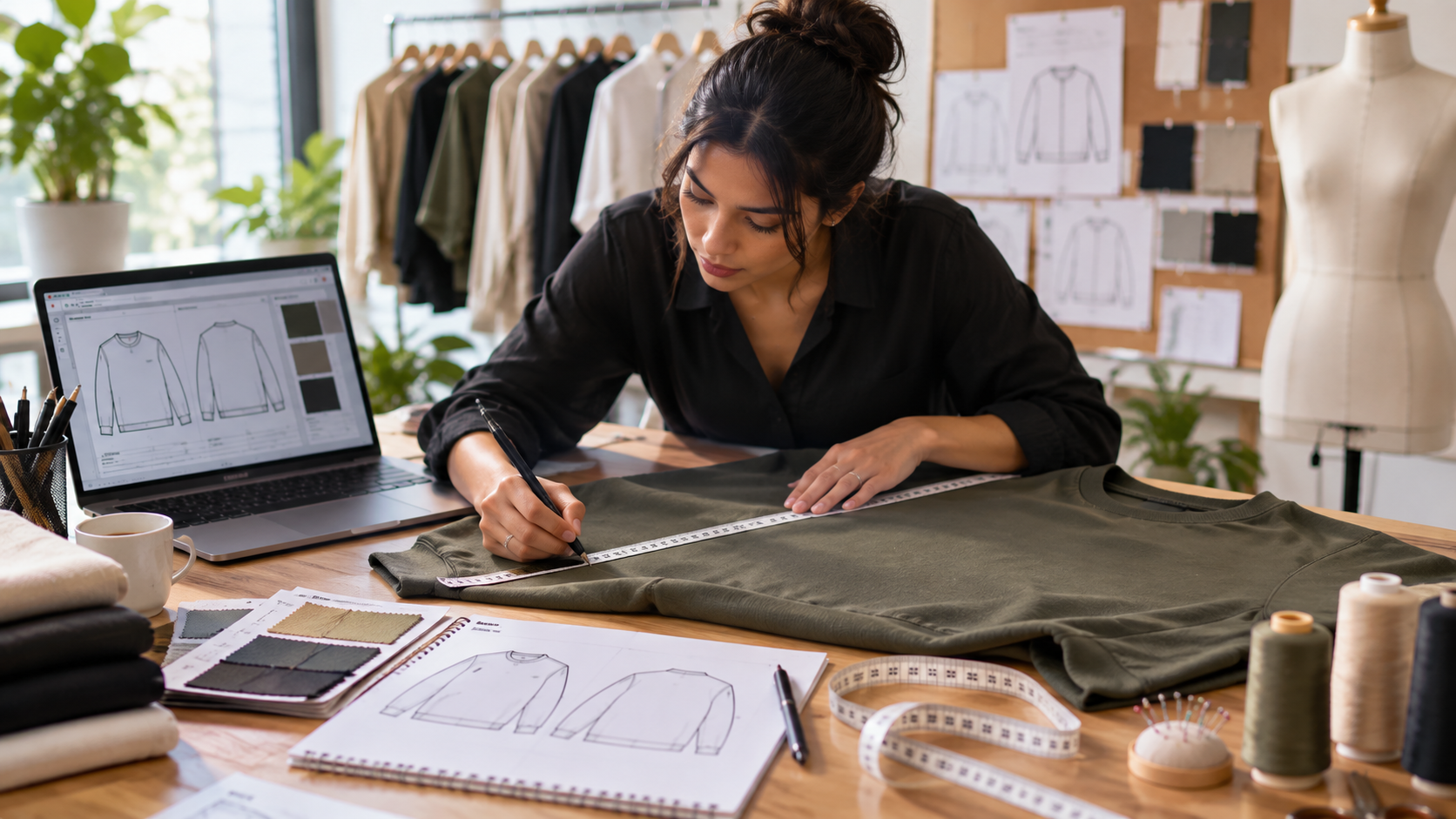
Here is how a measurement block might read. Tolerance is the amount a finished measurement may vary from the target. The numbers below show the format only, so take yours from your own sample.
Point of measure | Size M (inches) | Tolerance |
Body length | 28 | ±0.5 |
Chest width | 20 | ±0.5 |
Sleeve length | 8.5 | ±0.25 |
How Do You Make a Tech Pack for a Factory?
You make a tech pack by drawing your garment, listing every material, adding measurements and construction notes, and exporting everything as one PDF. Designers can use Adobe Illustrator, or work with a technical designer, a specialist who writes specification documents and links design to production. Follow these six steps:
- Draw flats. Sketch the front, back, and any detail views as clean, flat line drawings. The sketch directs the neckline shape and overall silhouette, so keep proportions accurate.
- Build your bill of materials. List every fabric, trim, zipper, and label, with exact color references such as Pantone numbers. A missing reference can mean a wrong-shade sample.
- Add a measurement table. Give measurements for your base size, including body length, sweep, and sleeve length, with a tolerance for each.
- Write construction notes. State stitch types, seam finishes, and hem details line by line. These details also help the patternmaker set seam allowances.
- Add labels and packing. Show label placement and how each piece is folded and packed.
- Number every revision. Keep a change log, then export one PDF so every factory works from the same version.
Aim for a file a stranger could follow without calling you. If a factory can build your sample from the page alone, the draft is ready.
Our full walkthrough in how to create a tech pack for clothing goes deeper on each step. If you want a second opinion on your production plan, SCORE offers free mentoring for small businesses.
Also Read: How to Start a Clothing Brand in the USA →
Tech Pack on Maker’s Row
On Maker’s Row, you attach your tech pack to a project brief and verified US manufacturers bid on it directly. Maker’s Row is a marketplace connecting apparel brand owners with verified US manufacturers.
Finding the right apparel manufacturer does not have to mean months of cold emails. Post your project for free, add your file, and verified US manufacturers bid directly. Review bids, check profiles, connect when ready.
Posting a project and receiving bids costs nothing upfront, while replying to factories requires a paid subscription. If you do not have a file yet, say so in your brief and manufacturers with development services can tell you what they need. You can also browse the clothing manufacturers directory or read our guide to finding a clothing manufacturer in the USA.
FAQs About Tech Packs
A tech pack in fashion is the technical document a designer sends to a factory so it can sample and produce a garment correctly. It combines flat sketches, measurements, a bill of materials, and construction notes. Factories use it to quote, build development samples, and later run bulk production. The more detailed the file is, the less room there is for error.
A complete spec includes flat drawings, a bill of materials, a measurement chart, construction notes, colorways, and label and packing details. Production versions also add size grading. Artwork specifications and trim lists belong in the file as well. The component table above shows what each part prevents.
Yes, in practice you need one before a factory can quote or sample reliably. Some factories offer development help, so a rough sketch can start a conversation. Expect to build a full document before bulk production begins. A complete file keeps your sample rounds, and your budget, under control.
There is no single price, because cost depends on garment complexity and who builds the file. You can draw it yourself, hire a freelance technical designer, or ask a development factory. Request a per-style quote and ask what revisions are included. Plan for extra fit revisions once samples start arriving.
Yes, you can make your own in Adobe Illustrator and export it as a PDF to send digitally. Online templates can format the layout for you. Start with flats, a bill of materials, and measurements, then add detail as samples return. Ask a technical designer to review the file before bulk production.
The difference is that a drawing-and-specification file shows a factory what to build, while a pattern is the full-size template used to cut fabric. The first guides the whole production team, and the second gives the cutter the actual shapes. Most brands create the drawing first, then the pattern, then a prototype.
Share your files only with manufacturers you have vetted, and ask an IP attorney which protection fits your design. A design patent, for example, covers the ornamental appearance of an article of manufacture, according to the USPTO. This is general information, not legal advice.
Ready to Put Your Tech Pack Into Practice?
Your apparel brand is one manufacturer away from becoming real. The factories are on Maker’s Row, ready to bid.