Pantone is a standardized color identification system that helps designers, brands, and manufacturers communicate specific colors accurately. By assigning unique codes to colors, Pantone makes it easier to maintain color consistency across fabrics, clothing, packaging, and other products.
For fashion brands, understanding Pantone is essential when developing collections, selecting fabrics, creating custom apparel, and working with clothing manufacturers. Instead of describing a shade as “dark green” or “dusty pink,” brands can specify a Pantone color reference to communicate their expectations more precisely.
What Is Pantone Used For?
Pantone is used to select, specify, and reproduce colors consistently across design and manufacturing workflows. Its color standards support industries including fashion, textiles, printing, packaging, beauty, and product design.
For example, a clothing brand developing a collection of sweatshirts can use Pantone references to communicate its preferred shades to a manufacturer. This helps establish a clear color target before sampling and bulk production.
Common applications of Pantone include:
- Fashion and apparel: Selecting colors for T-shirts, dresses, jackets, activewear, and accessories.
- Fabric manufacturing: Communicating color requirements for cotton, polyester, nylon, and other textiles.
- Brand identity: Maintaining consistent brand colors across products and marketing materials.
- Packaging and printing: Specifying colors for labels, boxes, hangtags, and promotional materials.
- Product development: Coordinating colors across materials, components, and product collections.
Pantone provides different color systems for different materials and applications, so choosing the appropriate system is important.
Learn more about Pantone color systems
What Is the Pantone Matching System (PMS)?
The Pantone Matching System (PMS) is a standardized color system primarily used for graphics, printing, branding, and packaging. It allows designers and manufacturers to specify colors using recognizable Pantone references rather than relying solely on visual descriptions.
However, PMS is not the only Pantone system. Fashion and textile brands often use Pantone Fashion, Home + Interiors (FHI), which is designed for applications such as apparel, fabrics, and soft goods.
Understanding this distinction helps brands communicate color requirements more effectively and avoid confusion during production.
What Is Pantone in Fashion and Textiles?
In fashion, Pantone helps designers translate creative color concepts into practical manufacturing specifications. Brands can use Pantone references when creating tech packs, approving fabric colors, developing samples, and communicating with textile suppliers.
The Pantone Fashion, Home + Interiors system includes different references for different materials:
- TCX (Textile Cotton eXtended): A cotton-based textile color reference commonly used in fashion and apparel development.
- TPG (Textile Paper Green): A paper-based reference used for applications such as coatings, interiors, and other hard or soft goods.
These references are not automatically interchangeable. A color may look different depending on the material, finish, dyeing process, and lighting conditions.
For this reason, apparel brands should confirm the intended Pantone reference with their manufacturer and review physical lab dips or fabric samples before approving bulk production.
Why Is Pantone Important When Working With Clothing Manufacturers?
Pantone plays an important role in reducing ambiguity between a brand and its manufacturing partner. A clear color specification gives both parties a shared reference during product development.
Here is how Pantone can support apparel production:
- Improves communication: Manufacturers receive a defined color reference instead of an approximate description.
- Supports sample development: Brands can compare lab dips and prototype garments against their intended color.
- Helps maintain consistency: Color standards provide a reference when producing multiple styles or repeating orders.
- Simplifies supplier coordination: Brands can communicate color requirements across different suppliers and production locations.
Pantone does not guarantee a perfect match automatically. Fabric composition, dye availability, production methods, and lighting can affect the final result. Brands should document their color requirements and approve production samples before manufacturing at scale.
Looking for a clothing manufacturer to bring your designs to life? Post your project for free on Maker’s Row to connect with manufacturing partners for your product development needs.
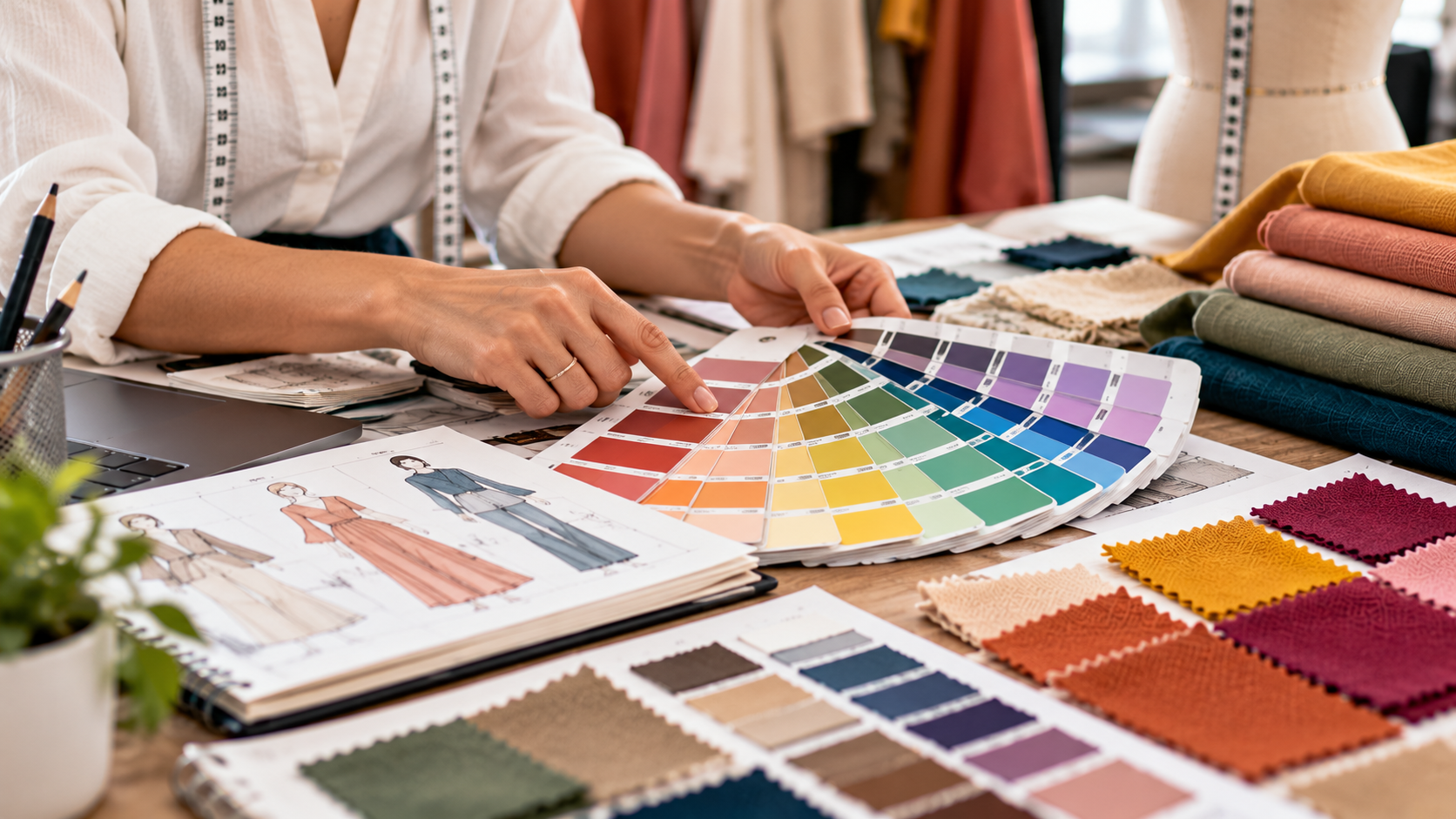
How to Use Pantone When Developing a Clothing Line
If you are launching a fashion brand, follow these steps to incorporate Pantone into your production workflow:
- Choose your colors: Select the shades that align with your collection and brand identity.
- Identify the correct Pantone system: Use the appropriate reference for your intended material and application.
- Add colors to your tech pack: Include the Pantone code, color name, fabric specifications, and relevant design details.
- Request samples: Ask your manufacturer to provide lab dips or fabric swatches for evaluation.
- Approve before bulk production: Confirm the final color against an approved physical sample under suitable lighting.
This process helps establish clear expectations before committing to a full production run.
Final Thoughts: Turn Your Pantone Color Ideas Into Products With Maker’s Row
Pantone is more than a color reference. It is a practical tool that helps fashion brands, designers, and manufacturers communicate color requirements throughout product development and production.
Whether you are creating a new apparel collection, developing custom fabrics, or building a recognizable brand identity, using the right Pantone references can help make your manufacturing process more organized and predictable.
Ready to turn your design into a finished product? Maker’s Row helps brands discover manufacturing partners for apparel and other product categories. Post your project for free on Maker’s Row to share your requirements and take the next step toward bringing your product idea to life.

Pantone especially helps with custom dyes and working with overseas factories.
http://www.ebatotes.com
It would of been great to cover the different types of Pantone standards – coated/uncoated, process, cotton and paper for textiles are the most widely used…