Picking the wrong first product wastes months of budget on samples nobody buys. Most new clothing brands guess at what will sell instead of starting with categories that already have proven demand and manageable minimum order quantities. This guide lists 10 profitable clothing products worth launching first, with the production realities behind each one.
Choosing your first clothing product is the single decision that shapes everything after it: your manufacturing cost, your minimum order quantity, and how fast you can sell through your first run. Some categories carry thin margins and brutal competition. Others let a new brand charge a premium while working with manufacturers who accept small first orders.
This guide covers 10 profitable clothing products for a new brand, why each one works, and what to expect from manufacturer minimum order quantity (MOQ) requirements, which is the smallest number of units a manufacturer will produce per order. Every category below includes a real production detail, not just a category name, so you can compare them before committing to a hero product.
Why Do Some Clothing Products Make More Money Than Others?
Some clothing products make more money because they combine low production cost, high perceived value, and manufacturer flexibility on minimum order quantity. A basic hoodie can cost $12 to produce and sell for $65, a 5x markup, because the customer is paying for brand identity, not fabric. A commodity item like plain socks has almost no markup room because customers compare it directly on price. New brand owners profit most when they pick products where design and branding, not raw materials, drive the retail price.
Launch a Hero Hoodie or Crewneck First
A hoodie or crewneck is the strongest first product for a new clothing brand because it has the highest markup-to-MOQ ratio of any garment category. Fleece is forgiving to construct, so quality issues are rare even from a first-time manufacturer relationship. US cut-and-sew manufacturers commonly offer MOQs of 50 to 150 units per style for fleece goods, and production cost typically runs $12 to $22 per unit depending on weight and trims. A Portland-based streetwear brand launched with a single 100-unit crewneck run, priced it at $58, and sold out in five weeks before reordering 300 units. If this is your first launch, our guide on how to start a clothing brand walks through the full process before you approach a manufacturer.
Start With Graphic T-Shirts to Test Demand Fast
Graphic t-shirts let a new brand test design concepts cheaply because production cost is low and MOQs are the lowest in apparel. Many US screen printers and cut-and-sew shops accept t-shirt MOQs as low as 24 to 50 units per design, with production cost of $6 to $12 per unit. This makes t-shirts the fastest way to learn which graphics and messaging your audience responds to before investing in a more complex garment. The tradeoff is thinner margins, since customers expect lower retail prices on tees than on fleece.
Build Around Loungewear for Repeat Purchases
Loungewear works as a profitable second or third product because it drives repeat purchases at a higher average order value than single tees. Matching sets, joggers, and ribbed basics typically run $18 to $30 in production cost with MOQs of 75 to 200 units per style, and retail 3 to 4 times production cost. Customers who buy one loungewear piece often return for the full set, which raises lifetime customer value without added acquisition cost, making loungewear one of the more overlooked profitable clothing products for a growing brand.
Add Tote Bags as a Low-MOQ Entry Product
Canvas tote bags are a strong low-risk add-on because MOQs run as low as 50 units and production costs stay under $8 per piece. Totes work well bundled with apparel orders or sold as standalone merchandise, and many cut-and-sew manufacturers who produce garments also handle canvas goods, which simplifies sourcing. A tote priced at $28 against a $6 production cost delivers strong margin with minimal manufacturing risk for a first-time brand owner, making totes one of the safest clothing products to test alongside a hero garment.
Launch a Denim Capsule for Premium Pricing
Denim supports premium pricing because customers already expect to pay $80 to $150 for quality jeans, giving a new brand room for healthy margin even at higher production cost. Denim production runs $25 to $45 per unit depending on wash and hardware, with MOQs typically 100 to 300 units, higher than fleece or tees. Los Angeles remains the strongest US hub for denim cut-and-sew production, with manufacturers experienced in small-batch runs for new brands building higher-investment clothing products.
Try Swim and Resortwear for Seasonal Spikes
Swimwear generates concentrated seasonal revenue because demand spikes sharply from March through July, letting a focused brand hit strong sell-through in a short window. Production costs range $10 to $20 per unit with MOQs of 100 to 250 units, and retail prices of $45 to $90 deliver solid margin. The narrow selling season is the tradeoff: inventory planning matters more here than with year-round clothing products like tees or hoodies.
Explore Outerwear for the Highest Margins
Outerwear delivers the highest dollar margin per unit of any category on this list because retail prices of $120 to $300 far exceed the $35 to $70 production cost. Jackets require more complex construction, so manufacturers typically set MOQs of 150 to 300 units and lead times run longer than simpler garments. Outerwear works best as a third or fourth product once a brand has cash flow from faster-turning clothing products like tees or hoodies.
Offer Embroidered Caps as an Add-On Product
Embroidered caps are a reliable add-on because MOQs run as low as 48 units and production cost stays under $6 per unit, making them easy to bundle with any apparel launch. A cap priced at $30 against a $5 production cost adds high-margin revenue without requiring a new manufacturer relationship, since many apparel factories subcontract or offer cap production directly, making caps one of the easiest clothing products to add to an existing lineup.
Test Sustainable Basics for a Loyal Niche
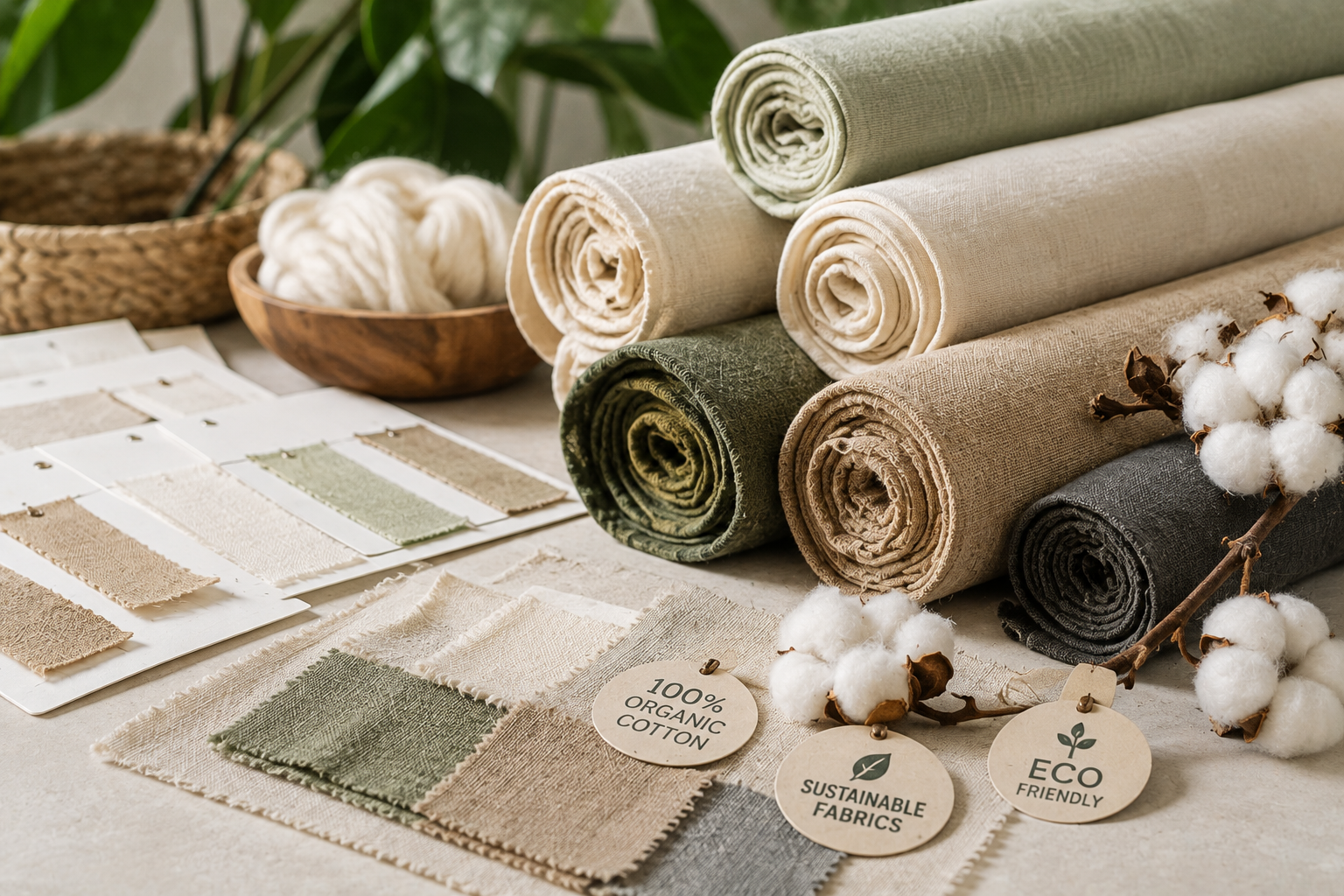
Sustainable basics made from organic cotton or recycled fabric build a smaller but more loyal customer base willing to pay 20 to 40% above conventional pricing. Production costs run $16 to $28 per unit due to certified material sourcing, with MOQs of 75 to 150 units common among manufacturers who specialize in sustainable fabrics. According to Textile Exchange, demand for preferred and recycled fibers has continued rising as of 2026, giving sustainability-focused brands a growing customer base to sell into.
Which Clothing Product Should You Launch First?
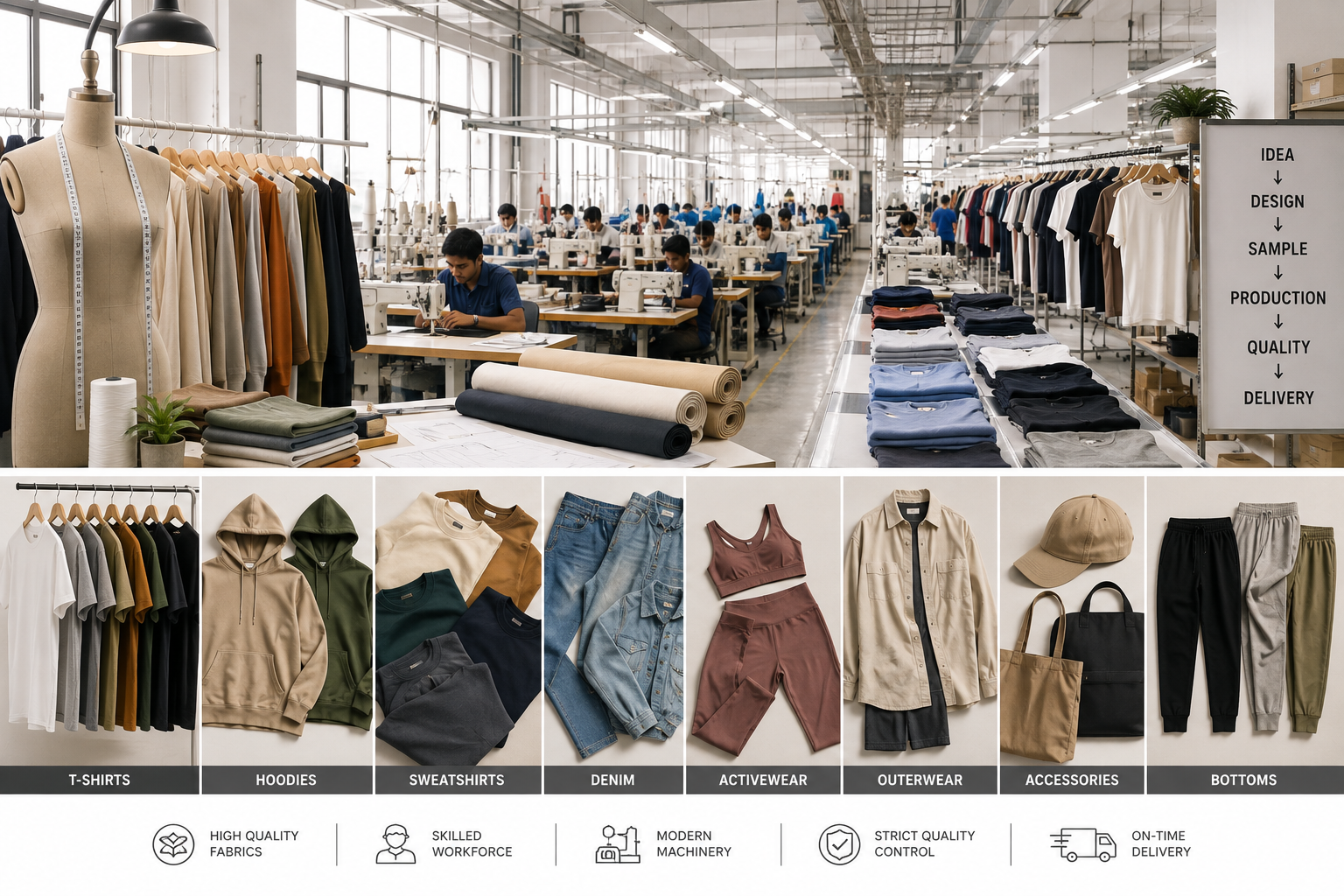
A new brand should launch first with the product that has the lowest MOQ relative to its markup, which for most brand owners means a hoodie, crewneck, or graphic tee rather than denim or outerwear. Starting with a lower-risk category lets you validate demand and generate cash flow before committing to the higher MOQs and production cost of categories like outerwear or denim. Once your hero product is selling consistently, add a second category that complements it, such as a tote bag or cap, to raise average order value without a new manufacturer relationship.
Product Comparison at a Glance
The table below compares all 10 clothing products by typical MOQ, production cost, and margin potential, so you can weigh them side by side before choosing a hero product.
Product | Typical MOQ | Production Cost | Retail Range | Margin Potential |
Hoodie/Crewneck | 50–150 units | $12–$22 | $55–$75 | High |
Graphic T-Shirt | 24–50 units | $6–$12 | $25–$40 | Moderate |
Loungewear Set | 75–200 units | $18–$30 | $60–$110 | High |
Tote Bag | 50 units | Under $8 | $22–$32 | High |
Denim | 100–300 units | $25–$45 | $80–$150 | Moderate-High |
Swimwear | 100–250 units | $10–$20 | $45–$90 | High |
Outerwear | 150–300 units | $35–$70 | $120–$300 | Highest |
Embroidered Cap | 48 units | Under $6 | $25–$35 | High |
Sustainable Basics | 75–150 units | $16–$28 | $40–$65 | Moderate |
How Maker’s Row Helps You Launch Faster
Maker’s Row is a marketplace connecting apparel brand owners with verified US manufacturers, and it removes the biggest bottleneck in launching any product on this list: finding a factory that will work with a first-time brand at a manageable MOQ. Post your project for free, specify which of these clothing products you are launching and your target MOQ, and manufacturers who work at that scale respond directly.
Several of the products above, like tees and totes, have manufacturers actively seeking new brand partnerships because low-MOQ runs help factories fill production gaps between larger orders. That means faster responses and more willingness to negotiate on your first order.
According to the Bureau of Labor Statistics, US apparel manufacturing employment has remained a meaningful part of the domestic textile sector as of 2026, supporting the network of small-batch factories that make low-MOQ launches possible for new brands.
Before committing to a category, it also helps to calculate your expected profit margin once shipping, packaging, and fulfillment costs are added to the base production cost, since those numbers change which product is actually most profitable for your specific brand.
FAQs About Profitable Clothing Products
Hoodies and crewnecks are typically the most profitable first product because they combine a 4 to 5x retail markup with manageable MOQs of 50 to 150 units. Fleece construction is also more forgiving than tailored garments, which reduces quality risk for a first-time manufacturer relationship.
Graphic t-shirts and embroidered caps typically have the lowest MOQs, often 24 to 50 units per design. This makes them useful for testing designs cheaply before committing to a higher-MOQ category like denim or outerwear.
A first production run of one hero product typically costs $3,000 to $10,000, covering sampling, a 50 to 200 unit production run, and basic packaging, though costs vary by category and manufacturer. SBA startup cost guidance recommends budgeting separately for production and for marketing and fulfillment.
A new brand should launch with one hero product rather than a full collection. Launching one product lets you validate demand, refine fit, and generate cash flow before taking on the MOQ and cash commitment of additional styles.
T-shirts, tote bags, and embroidered caps work best with low-MOQ manufacturers, since many US cut-and-sew and screen-print factories accept orders as low as 24 to 50 units for these categories, compared to 100-plus units for denim or outerwear.
Start Applying These Strategies Today
Your clothing brand is one manufacturer away from becoming real. The factories are on Maker’s Row, ready to bid.