Starting a subscription clothing business is one of the most exciting ways to build recurring revenue in apparel. It is also one of the most confusing, because most guides explain how to launch a single collection, not a business that has to ship new product every month. This guide is different. It walks you through the exact steps from concept to your first subscriber shipment, including how to find a US manufacturer that can produce on a recurring schedule.
Recurring apparel revenue is no longer a niche idea. Brands that combine curation with a subscription model have shown that customers will pay monthly for convenience, not just for a single product drop. If you are building a subscription clothing business, that shift is your opening.
New founders in this space run into the same three obstacles: finding a manufacturer who can produce on a recurring cadence, budgeting for inventory that has to rotate every cycle, and not knowing the order the steps go in. This guide solves all three, in order, so you are not guessing at any stage.
As of 2026, BLS Current Employment Statistics reported roughly 72,600 apparel manufacturing employees nationwide, spread across more than 6,300 domestic establishments tracked in the Quarterly Census of Employment and Wages. That capacity is exactly what a subscription clothing brand needs, since recurring shipments depend on a manufacturer who can turn around consistent, smaller batches every month rather than one large seasonal run.
Step 1: Define Your Subscription Concept and Hero Product
A subscription clothing business needs a defined box format before anything else, because the format determines your manufacturing cadence, your SKU count, and your pricing. Decide between three common formats: a curated styling box where a subscriber keeps everything, a try-and-return rental model, or a replenishment model for staple items like socks, tees, or activewear basics.
Write a one to two page brand brief covering your box format, your price point per shipment, and your top three competitor subscription services. Name your hero product first. A hero product is the single garment your first box is built around, before you expand into a full rotating assortment.
Example: The Austin activewear subscription that started with one legging. A founder in Austin launched a monthly activewear subscription built entirely around one legging style in three colorways before adding sports bras in month four. Starting narrow let her validate demand with a single tech pack instead of six.
Before you lock your concept, browse the range of verified US manufacturers on Maker’s Row to see what production categories and specialities are realistically available at a small-batch scale.
Step 2: Know Your Target Subscriber
Your target subscriber is defined by how often they want new product, not just their age or style preference. A subscriber who wants a new piece every month has different expectations than one who wants a seasonal refresh every quarter.
Build a subscriber profile that covers cadence preference, price sensitivity per shipment, and cancellation triggers. Subscription apparel churns faster than one-time purchases if the product does not match expectations set at signup, so be specific about who you are building for.
Also Read: What Is MOQ? Complete Guide for Brand Owners →
Step 3: Build Your Product Assortment and Tech Pack
A subscription clothing business needs a tech pack for every style in rotation, not just one flagship piece, because manufacturers price and produce each SKU separately. A tech pack is a detailed specification document that tells a manufacturer everything they need to produce a garment correctly, including measurements, materials, construction details, and label placement.
Start with three to five SKUs for your first shipment cycle. Build a tech pack for each one covering fabric weight, size grading, and trim details. Manufacturers quote faster and more accurately when every style arrives fully documented, which matters more in a subscription model where you are repeating this process every cycle.
Also Read: Tech Pack Clothing: What It Is and How to Create One →
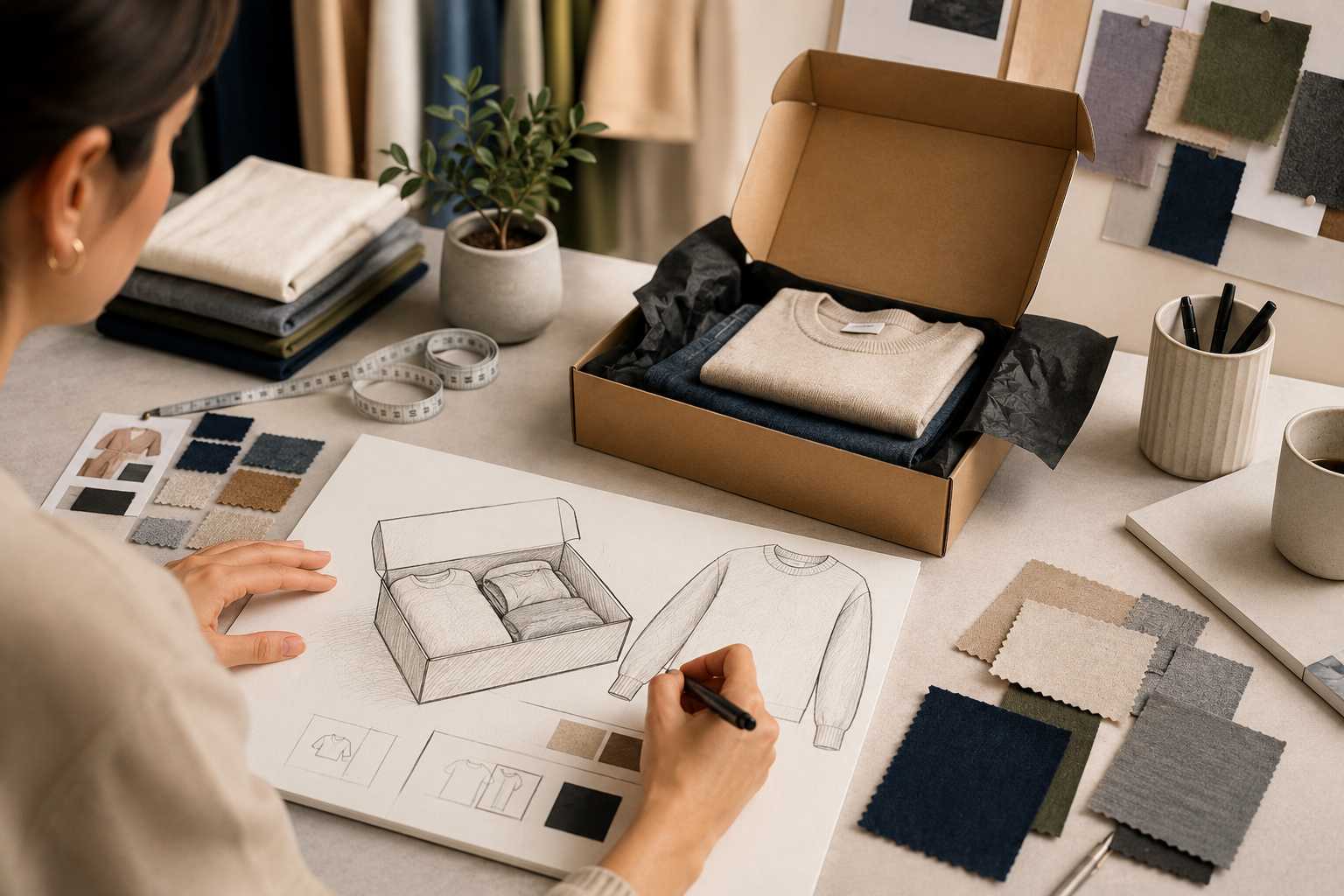
Step 4: How Do You Find a Manufacturer for a Subscription Clothing Business?
You find a manufacturer for a subscription clothing business by prioritizing recurring-order capacity over one-time price, since your factory has to deliver on the same schedule every month or quarter. This is where most subscription founders get stuck, because a manufacturer who handles a single 500-unit run well may not be built for a smaller, repeating cadence.
The old way, cold emailing factories found through a general search, is slow precisely because it does not filter for recurring-order capability. Most factories listed that way have no way to signal whether they want standing monthly orders, so you spend weeks finding out by asking one at a time. The Maker’s Row guide on how to find a clothing manufacturer in the USA covers the general vetting process this subscription-specific step builds on.
What to look for changes slightly for a subscription model. Beyond MOQ and location, you need a manufacturer who is explicit about production slot availability for recurring orders, not just one-off runs.
Criteria | Why It Matters for Subscription Production |
MOQ per style | Determines your minimum viable SKU count per cycle |
Recurring slot availability | Confirms the factory can commit to a monthly or quarterly cadence |
Sample turnaround | Sets how far ahead you must plan each new cycle |
Communication speed | Directly affects whether you can hit a fixed shipping date every cycle |
On Maker’s Row, brand owners post unlimited manufacturing projects for free and receive bids from verified US factories at no upfront cost. To connect directly, subscription plans give full access. Maker’s Row is a manufacturing marketplace connecting apparel brand owners with verified US manufacturers, which removes the guesswork of cold outreach for a business model that depends on dependable, repeat production.
Find Subscription Clothing Manufacturers on Maker’s Row
Describe your subscription cadence, your SKU count per cycle, and your target MOQ per style in your project brief. Manufacturers who work with recurring orders and can commit to a standing production slot respond directly, often within 24 to 48 hours. Factories on Maker’s Row are active and responsive to new projects, which matters when your business depends on hitting the same ship date every month.
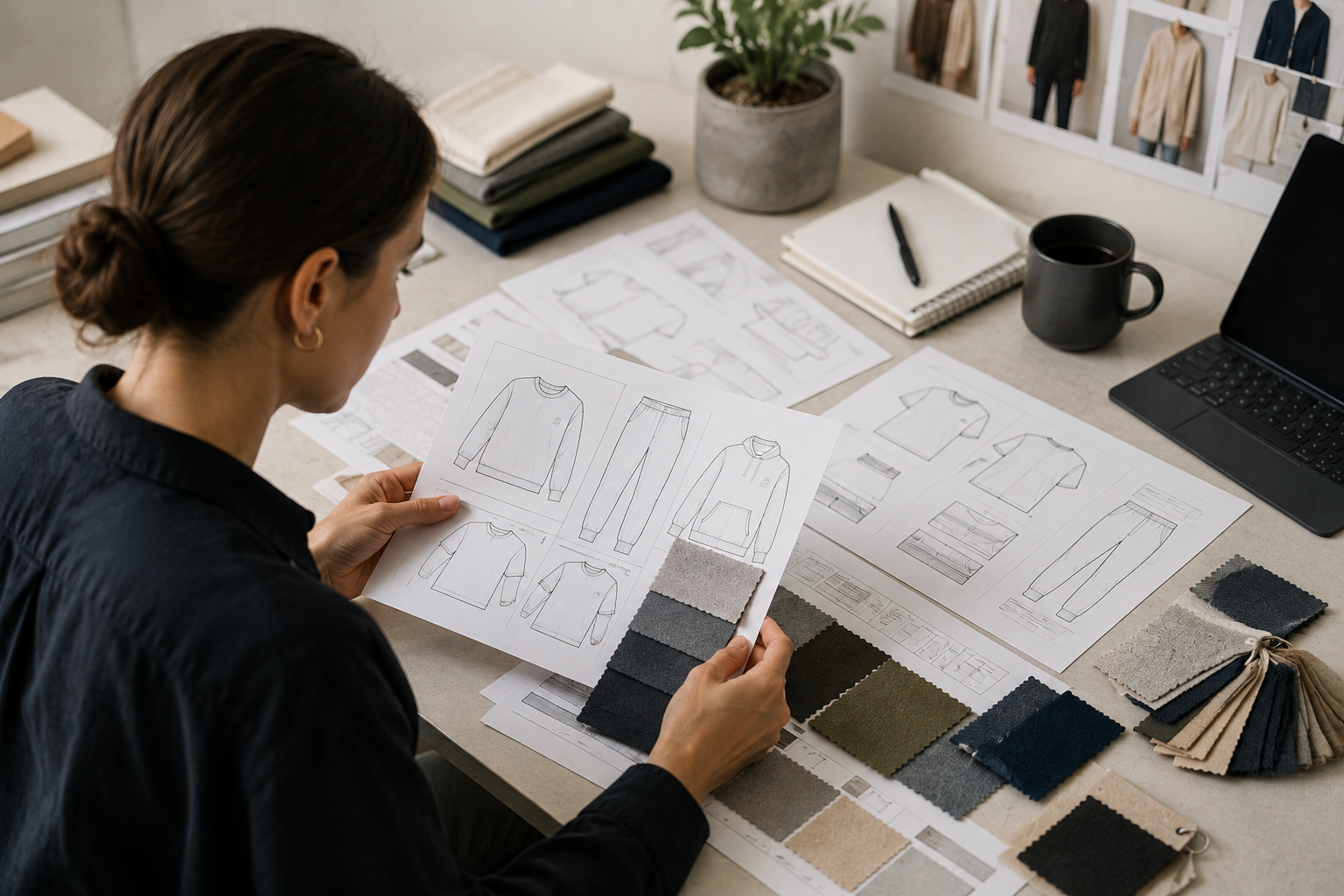
Step 5: Order Samples and Refine
Order samples for every SKU in your first shipment cycle before committing to bulk production. A subscription business cannot absorb a bad first box the way a single-drop brand can absorb a slow-selling item, because a bad first shipment drives cancellations before you ever get a second chance.
Test fit, fabric hand, and finish across your full size run, not just a sample size. Refine each SKU separately. Approve one style at a time rather than waiting to approve the whole assortment together, since delays on one piece should not hold up the rest of your cycle.
Example: The Denver brand that caught a sizing issue before launch. A Denver-based subscription brand ordered samples in extra small, medium, and extra large for its first three-piece box. The extra large sample ran a full size small, a problem the medium and small samples would not have shown. Catching it before the first 400-unit production run avoided a subscriber-facing sizing complaint that would have hit reviews in month one.
Step 6: Plan Your Production Cadence, Budget, and Fulfillment
Your production cadence needs to run ahead of your ship date by enough time to absorb delays. Build your production calendar backward from your promised ship date, working in sample time, bulk production time, and a buffer for quality control.
Budget for inventory differently than a single-drop brand does. You are committing to production before you know exact subscriber counts for that cycle, so build a cancellation buffer into your unit order, typically five to ten percent above your active subscriber count.
Fulfillment adds a layer most first-time subscription clothing founders underestimate. Decide early whether you will pack boxes in-house or use a third-party logistics partner, since packaging, box design, and per-shipment freight all affect your per-unit cost on top of manufacturing.
The Small Business Administration (SBA) recommends new product businesses build a full landed cost model, covering production, packaging, and shipping, before setting a subscription price. That model protects your margin once fulfillment costs are added to the manufacturing quote. The Maker’s Row clothing manufacturing checklist is a useful reference for locking these production decisions before you approach a factory for a recurring commitment.
Step 7: What Should Your Subscription Pricing and Launch Plan Look Like?
Your subscription price needs to cover per-unit production cost, fulfillment, payment processing, and a margin for returns or cancellations, priced per shipment rather than per garment. Calculate your all-in cost per box first, then set a price that leaves at least a 40 to 50 percent margin before marketing spend.
Launch with a waitlist before your first shipment date. A waitlist lets you validate demand and gives your manufacturer a firm unit count before the first production run, reducing the risk of over-ordering inventory you cannot sell through.
The SCORE mentorship network notes that new product businesses that validate demand before committing to inventory reduce their early-stage cash risk substantially, a principle that applies directly to a subscription model where every cycle repeats that same commitment.
FAQs: Starting a Subscription Clothing Business
Most founders launch a small subscription apparel brand with $8,000 to $20,000 in starting capital, covering tech packs, samples, a first production run across multiple SKUs, and packaging. Costs scale with how many SKUs you launch with and whether you use in-house or third-party fulfillment.
Yes. Many successful subscription clothing founders start with no prior manufacturing background, using detailed tech packs and manufacturer partners to fill the technical gap. The key is documenting every style completely before approaching a factory, since a subscription model does not forgive vague specifications the way a one-time order might.
The fastest way is to post a project brief specifying your subscription cadence, SKU count, and target MOQ per style on a platform like Maker’s Row, where manufacturers who work with recurring orders bid directly. Cold-emailing factories one at a time is slower because it does not filter for recurring-order capability upfront.
MOQ, or minimum order quantity, is the smallest number of units a manufacturer will produce per style, per order. For a subscription business running multiple SKUs per cycle, MOQ multiplies across every style, so a 100-unit MOQ across four SKUs means 400 units minimum for a single shipment cycle.
Most subscription clothing businesses take four to seven months from initial concept to first subscriber shipment, accounting for tech pack development, sampling rounds, manufacturer sourcing, and a first bulk production run. Complex multi-SKU boxes typically take longer than single-SKU replenishment models.
Yes, and for a subscription business you need one per SKU in rotation. Manufacturers cannot quote accurately or produce consistently across cycles without a complete tech pack covering measurements, materials, and construction for every style.
Document your designs thoroughly and consider registering distinctive elements with the United States Patent and Trademark Office (USPTO), particularly for your brand name and logo. A signed non-disclosure agreement with a manufacturer adds a further layer of protection before sharing detailed tech packs.
Many US manufacturers that work with small subscription brands accept MOQs starting around 50 to 100 units per style, though this varies by category and factory. Starting with three SKUs at a lower per-style MOQ is more achievable for a first cycle than launching a full six-piece assortment.
Your Subscription Clothing Brand Is Closer Than You Think
Your subscription clothing brand is one manufacturer away from becoming real. The factories are on Maker’s Row, ready to bid.