Starting a blank apparel brand sounds simple until you actually try to do it. You pick a hoodie style, you look for a factory, and suddenly you are staring at minimum order quantities you cannot afford and manufacturers who never write back. This guide fixes that. It walks you through the exact steps for launching this kind of line and sourcing it from a New York manufacturer, even if you have never placed a production order before.
Blank apparel, meaning undecorated garments like t-shirts, hoodies, and fleece that brands buy in bulk and customize with printing, embroidery, or private labeling, is one of the fastest ways to enter clothing manufacturing without designing a garment from scratch. New York remains a hub for this kind of sourcing because the city’s garment district still has cut-and-sew factories and wholesale suppliers within a few blocks of each other. As of 2026, the American Apparel and Footwear Association (AAFA) notes that domestic cut-and-sew capacity remains concentrated in a handful of regional hubs, New York among them, which keeps sourcing lead times shorter for brands that source locally.
Three obstacles trip up most new blank apparel founders. First, finding manufacturers who will work with a small first order. Second, understanding the real cost of a production run before committing. Third, not knowing which steps come before you ever contact a factory. This guide solves all three, with a specific focus on sourcing from New York manufacturers.
Step 1: Define Your Blank Apparel Niche and Hero Product
Blank apparel is undecorated clothing, most often t-shirts, hoodies, crewnecks, and fleece, produced in bulk for brands to customize with their own branding. For a new business, this means you are not designing a garment pattern. You are choosing a base product and building a brand identity around it.
Pick one hero product before anything else. Write a one-page brief covering your target customer, price point, and your top three competitor brands with reference images. A streetwear founder in Brooklyn who tried to launch five styles at once spent her entire first budget on samples that never made it to production. A founder who launched with one heavyweight hoodie sold through her first 150-unit run in six weeks and used that revenue to add a second style.
Decide early whether you are decorating blanks yourself, screen printing or embroidering in-house, or asking your manufacturer to handle private label production, where the factory applies your labels and packaging before shipping. This decision shapes which New York manufacturers fit your search, and it is worth browsing verified US apparel manufacturers on Maker’s Row early to see how factories describe their private label capabilities.
Step 2: Know Your Target Customer
Your customer is not buying a plain hoodie. They are buying what you put on it. Write down their age range, where they shop now, and what price point they expect from a brand at your stage.
A Queens-based fitness brand founder built her entire customer profile around gym-goers aged 25 to 40 who already owned three or more branded hoodies from competing labels. That specificity shaped her fabric choice (midweight fleece, not lightweight cotton) and her price point ($58 retail, not $35). Vague customer definitions lead to vague product decisions that manufacturers cannot quote accurately. SCORE’s guidance for new founders consistently points to a written customer profile as one of the highest-impact steps before any supplier conversation.
Step 3: Build Your Product Spec Sheet
A tech pack is a detailed document that tells a manufacturer everything they need to produce your garment correctly, and even a brand built on undecorated goods needs one, though a simplified version. At minimum, specify fabric weight in GSM, fit (boxy, standard, oversized), colorway, and any label placement if the manufacturer is applying your private label tags.
Also Read: Tech Pack Clothing: What It Is and How to Create One →
Manufacturers quoting these runs respond fastest to founders who already know their fabric weight and fit. A spec sheet with fabric GSM, fit type, and label placement takes a New York manufacturer minutes to quote. A vague email describing “a nice hoodie” takes days of back and forth before a quote is even possible.
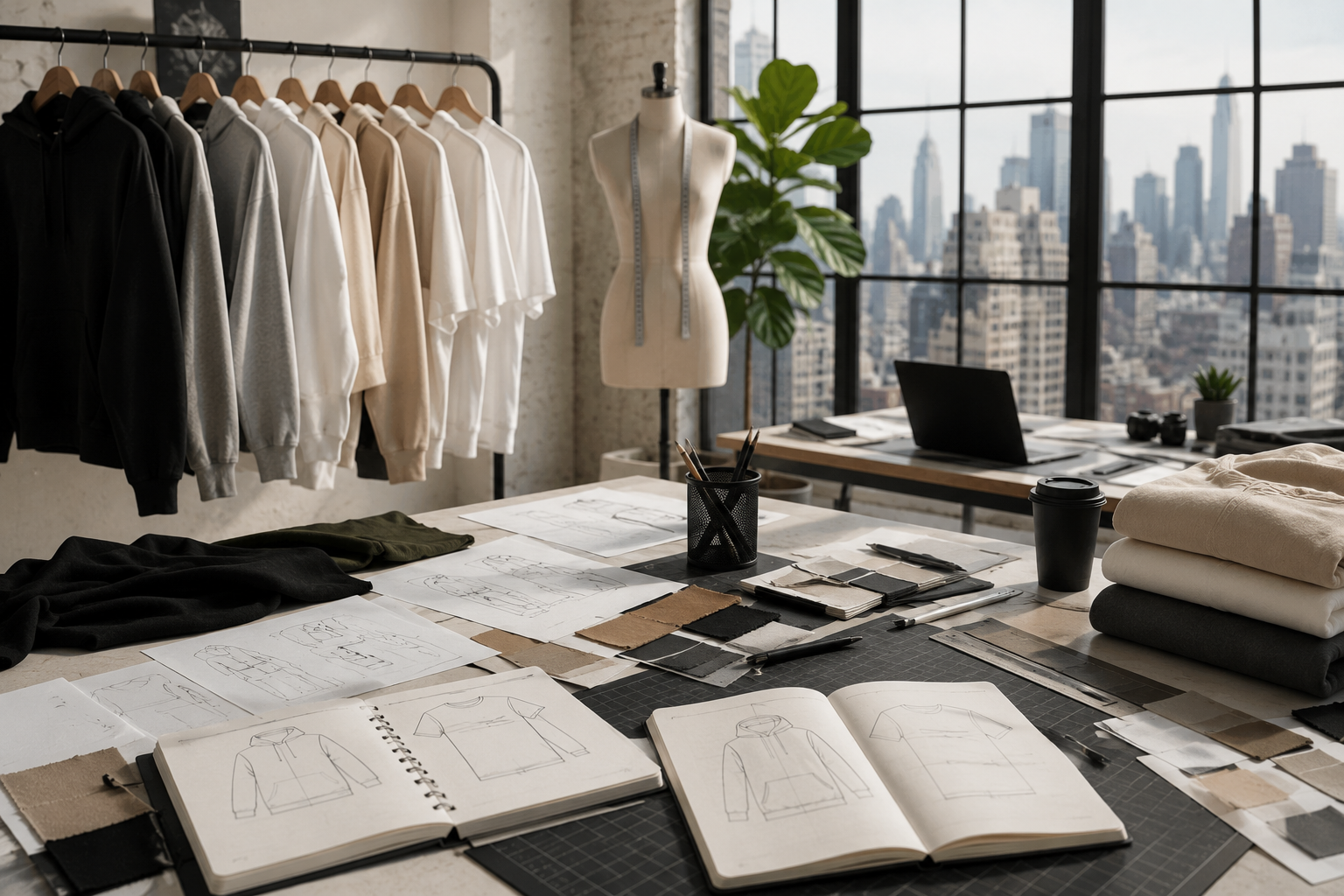
Step 4: How Do You Find a Blank Apparel Manufacturer in New York?
Finding a blank apparel manufacturer in New York means searching a mix of garment district cut-and-sew factories, wholesale blank suppliers, and vetted sourcing platforms, since no single directory lists every option. This is where most new brand owners get stuck, and it determines whether your brand actually launches on schedule.
The old way means walking the garment district cold, calling factories from outdated directories, or attending a trade show like MAGIC and hoping a manufacturer responds afterward. Most established factories do not reply to unknown brands with no order history, and the ones that do often quote minimums of 300 to 500 units per style, which prices out most first-time founders.
What to look for in a New York blank apparel manufacturer:
Criteria | Why It Matters |
MOQ per style | Determines your first-order budget |
Blank fabric options | Confirms they stock the weight and fit you need |
Private label capability | Needed if you want labels applied before shipping |
Sample turnaround | Shorter turnaround means faster launch |
Communication speed | A slow first reply predicts a slow production relationship |
Finding the right blank apparel manufacturer does not have to mean months of cold emails. On Maker’s Row, brand owners post unlimited manufacturing projects for free and receive bids from verified US factories at no upfront cost, and to connect directly, subscription plans give full access. Factories on Maker’s Row are active and responsive, with many replying within 24 to 48 hours of a new project being posted. For a broader look at sourcing strategy beyond blanks, the guide on how to find a clothing manufacturer in the USA covers vetting steps that apply to any garment category.
For brands wanting a curated starting list rather than an open search, this roundup of clothing manufacturers in the NYC garment district covers small batch and custom production factories by name.
Also Read: Top Clothing Manufacturers in NYC for Small Batch Production →
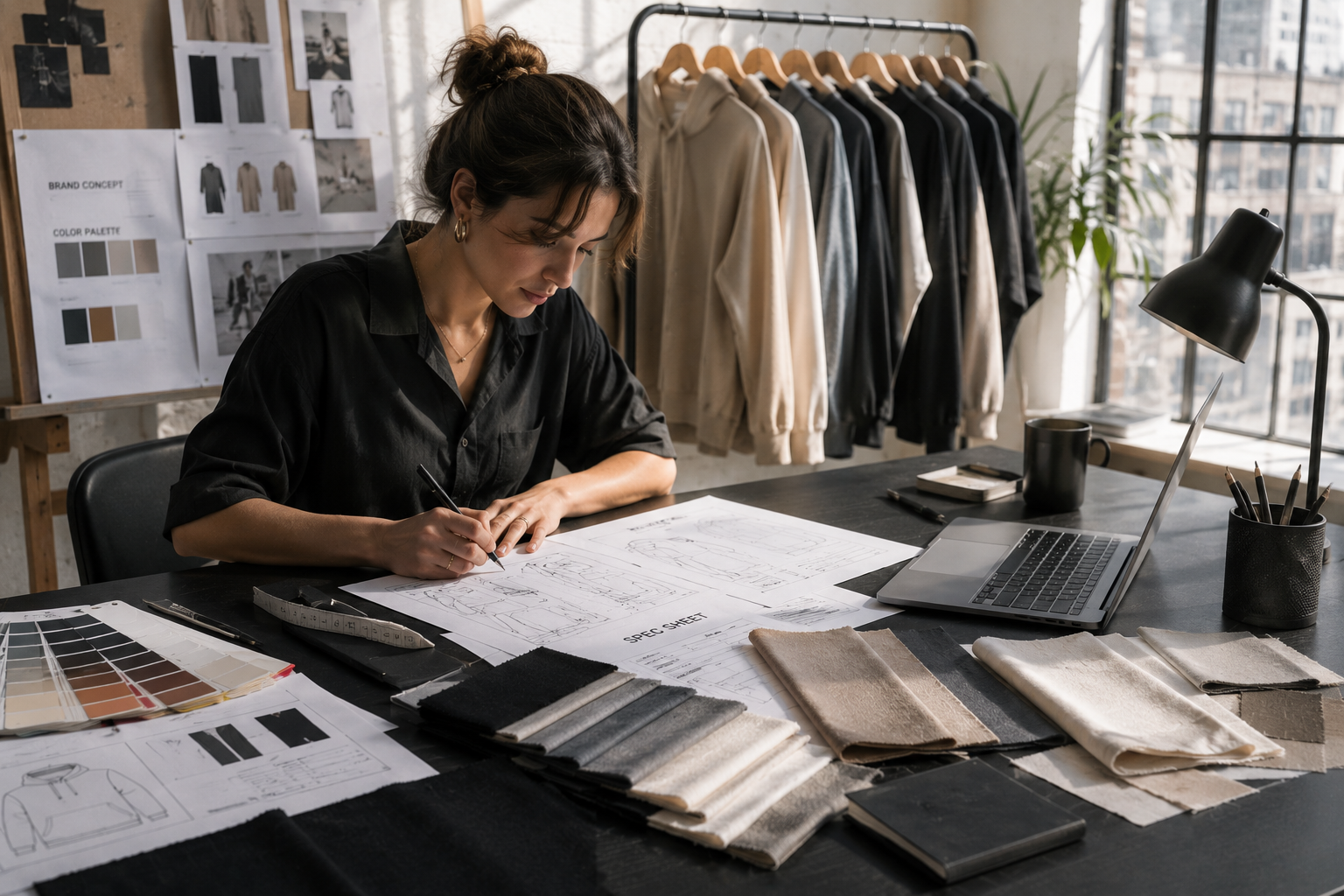
Step 5: Order Samples and Refine
Never commit to a full production run without ordering a sample first, even for undecorated goods where the garment itself is not custom designed. A sample confirms fabric weight, fit, and colorway match what you specified, and it catches problems before you have paid for 200 units of the wrong fabric.
A Manhattan-based basics brand ordered samples from two New York manufacturers quoting the same fabric weight. One sample came back noticeably heavier and boxier than the other, despite an identical GSM listed on paper. Ordering both samples before committing saved the founder from a full production run in the wrong fit.
Step 6: How Much Should You Budget for a First Production Run?
Budget for your total landed cost, not just the per-unit factory quote: production plus sampling, labeling, shipping, and any duties. According to the Small Business Administration (SBA), new product businesses should calculate that full landed cost before committing to a manufacturer, since the factory quote alone typically understates what a first run actually costs.
For a first production run, plan for your MOQ multiplied by your quoted per-unit cost, plus 10 to 15 percent for sampling and labeling. A 150-unit hoodie run at $14 per unit means roughly $2,100 in production cost before packaging and shipping. Budget conservatively and confirm payment terms before you place your order.
Step 7: Launch and Market Your Brand
Once your first production run is confirmed, plan your launch timeline around your manufacturer’s lead time, not the other way around. Ask your New York manufacturer for a written delivery date and build your marketing calendar backward from it.
Photograph your blank apparel on real customers from your target demographic, not just on a mannequin. A Bronx-based streetwear founder used community members instead of paid models for her launch shoot and generated more engagement than her paid ad campaign in the same week. Your next step is building a repeat order relationship with your manufacturer so your second production run moves faster than your first.
FAQs: Starting a Blank Apparel Brand
Most new blank apparel brands launch with $2,000 to $6,000 covering samples, a first production run of 100 to 200 units, labels, and basic packaging. Costs vary by fabric weight and whether your manufacturer applies private label tags. The SBA’s startup cost guidance is a useful benchmark before you finalize your budget.
Yes. Blank apparel is one of the more accessible entry points into clothing manufacturing because you are not designing a garment pattern from scratch. A clear spec sheet and a manufacturer willing to work with first-time brands are the two things that matter most.
Search garment district cut-and-sew factories, wholesale blank suppliers, and vetted platforms like Maker’s Row, where you can post your project and receive bids from verified New York manufacturers directly.
MOQ, or minimum order quantity, is the smallest number of units a manufacturer will produce per style. It directly sets your minimum production spend, since you multiply your MOQ by your per-unit cost to estimate your first-order budget.
Plan for six to ten weeks from choosing your manufacturer to receiving finished units, including two to three weeks for sampling and four to six weeks for production, depending on the factory’s schedule.
A simplified spec sheet covering fabric weight, fit, colorway, and label placement is enough for most runs on undecorated goods. A full tech pack matters more once you move into custom-cut garments.
For brand names and logos, filing a trademark through the United States Patent and Trademark Office (USPTO) protects your brand identity before you share it with manufacturers or place it on production samples.
Many New York blank apparel manufacturers accept first orders between 50 and 150 units per style, though this varies by factory and fabric type. Confirm MOQ directly with each manufacturer before finalizing your spec sheet.
Your Blank Apparel Brand Is Closer Than You Think
Your blank apparel brand is one manufacturer away from becoming real. The factories are on Maker’s Row, ready to bid.