You have a design in your head. You know the silhouette, the fabric, the fit you want. Then someone asks for your pattern, and you realize you do not actually know what that means. If you are new to clothing production, that gap between idea and pattern can feel like the first real wall in building a brand.
Clothes patterns for sewing are flat templates, made from paper or digital files, that show the exact shape of every fabric piece needed to cut and assemble a garment. For clothing brands, this means the difference between a sample that matches your vision and one that does not come close.
Understanding this matters even if you never plan to cut fabric yourself. A patternmaker or manufacturer will still need one before they can produce your first sample, and knowing how patterns work helps you brief them accurately and catch mistakes early.
This guide covers what these patterns actually are, the different formats you will encounter, real scenarios showing how they affect production, and the steps to take before you approach a manufacturer.
What Are Clothes Patterns for Sewing?
These templates are what a patternmaker or factory uses to cut and shape fabric into a finished garment. For clothing brands, this means the pattern is the direct link between a design sketch and an actual sample. No matter how strong your concept, the pattern determines whether the fabric pieces fit together the way you intended.
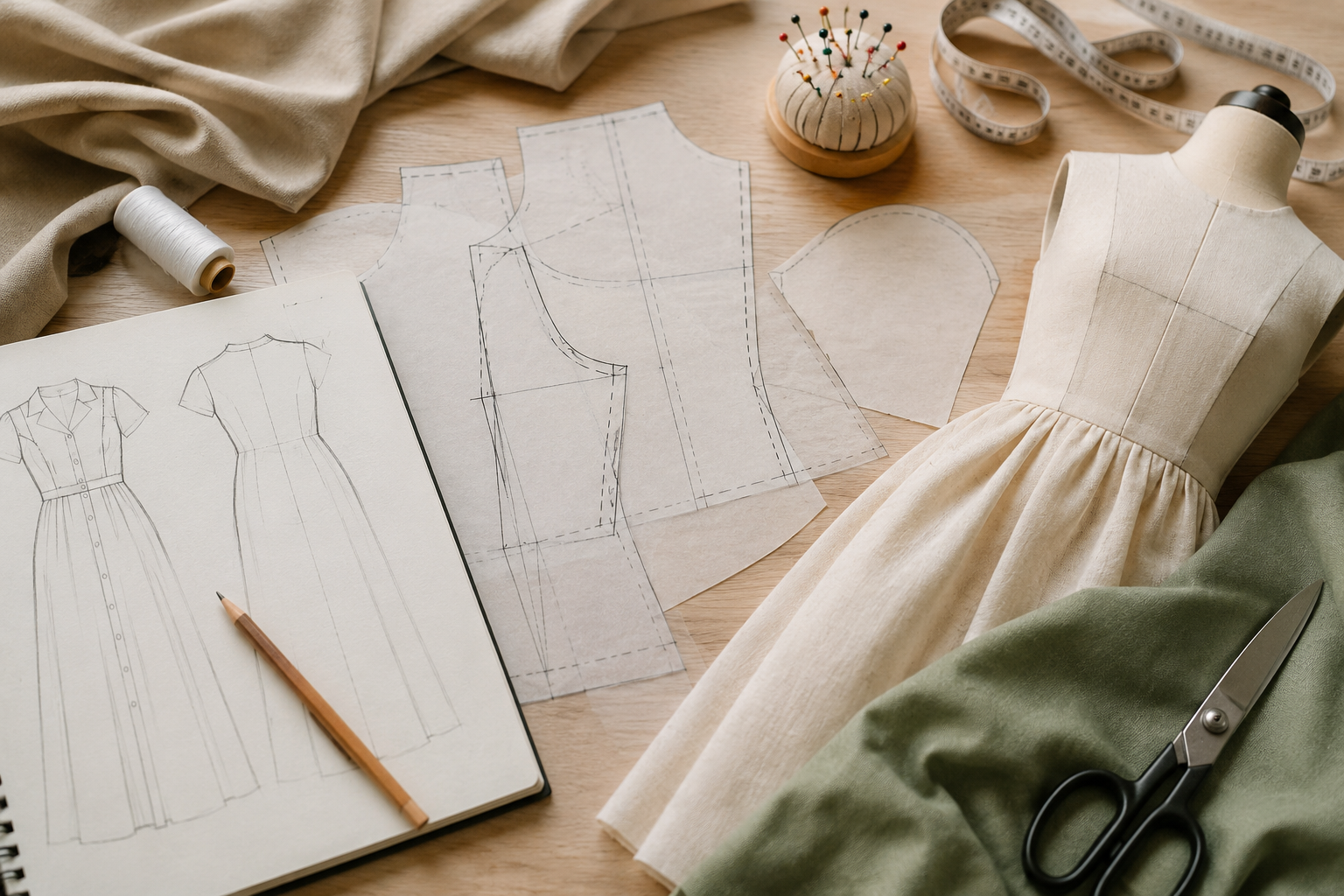
A pattern typically includes several flat pieces, such as a front, back, sleeve, and collar, each drawn with seam allowances, grainlines, and notches that guide cutting and stitching. Clothes patterns for sewing come in a few common formats, summarized below.
Pattern Type | Format | Best For |
Commercial printed pattern | Tissue paper, multi-size | Home sewists and early prototyping |
PDF or digital pattern | Print-at-home or copy shop file | Independent designers, quick iteration |
Custom drafted pattern | Made to your exact spec by a patternmaker | Brands moving toward production |
Draped pattern | Created on a mannequin using muslin | Structured or complex garment shapes |
According to Textile Exchange, accurate material and construction planning at the design stage reduces fabric waste later in production, which is one reason getting the pattern right early carries real cost implications for a brand.
Why Clothes Patterns for Sewing Matter for Brand Owners
Clothes patterns for sewing are not just a sewing-room detail. Understanding how they work shapes several decisions you will make as a brand owner, long before your first sample arrives.
- Sample accuracy. Well-made clothes patterns for sewing are the reason a first sample can come close to your design. A poorly made pattern is often the hidden cause of a bad sample, even when the fabric and construction are fine.
- Cost control. Pattern pieces determine how efficiently fabric is used. A pattern that wastes fabric on the cutting table raises your per-unit cost before production even begins. The American Apparel and Footwear Association notes that sampling and production miscommunication, which often traces back to an unclear pattern, is a leading cause of delayed launches for emerging brands.
- Manufacturer communication. Handing a factory a clear pattern, or a tech pack built from one, signals that you understand your product and speeds up quoting.
- Design ownership. A pattern documents your garment’s construction. If you switch manufacturers later, the pattern travels with you instead of staying locked inside one factory’s files.
Clothes Patterns for Sewing in Practice: Real Examples
These scenarios show how clothes patterns for sewing play out for real brand owners, from early testing to production.
Example: The Reused Sloper
A Portland-based basics brand started with a single custom-fitted block pattern, called a sloper, for a classic tee. They adapted that one sloper into five different tops over two seasons, cutting their patternmaking costs significantly compared to starting from scratch each time.
Example: The Free Pattern Test Run
A first-time founder in Austin used a free clothing pattern for sewing found online to test a dress silhouette at home before committing to a factory sample. The free pattern was not production-ready, but it confirmed the shape worked before any money went into custom pattern development.
Example: The Grading Gap
A Chicago activewear brand approved a pattern for a single sample size, then discovered their manufacturer needed a fully graded pattern across six sizes before quoting production. Requesting the graded version upfront in their next style saved several weeks of back-and-forth.
How to Get a Pattern Made for Your Brand
Getting clothes patterns for sewing made correctly is a process, not a single step. Here is what that process looks like for a brand owner.
- Start with a sketch or reference garment. Give your patternmaker a clear flat sketch or an existing garment that shows the silhouette you want. Vague direction produces a vague pattern.
- Choose your method. Drafting builds the pattern from measurements on paper or software. Draping shapes it directly on a mannequin using muslin. Complex, fitted styles often need draping; simpler shapes usually draft well. For a closer look at both methods, see this breakdown of pattern making steps and methods.
- Test with sample fabric. Before cutting your real fabric, most patternmakers sew a muslin or toile to check fit and proportion, then adjust the pattern based on what they see.
- Grade the pattern across your size run. A single-size pattern is not enough for production. Confirm your patternmaker or factory grades it into every size you plan to sell.
- Fold it into your tech pack. Once the pattern is approved, it becomes part of the technical documentation your manufacturer works from. The Small Business Administration recommends documenting supplier specifications like these clearly before sourcing, since it reduces disputes once production starts.
Also Read: Tech Pack Clothing: What It Is and How to Create One →
Clothes Patterns for Sewing on Maker’s Row
Once your pattern and tech pack are ready, finding a verified US manufacturer who can execute them accurately is the next step. On Maker’s Row, describe your garment and attach your pattern details in your project brief, and manufacturers in usa who work with your construction type respond directly. Brand owners post unlimited manufacturing projects for free and receive bids from verified US factories at no upfront cost. To connect directly, subscription plans give full access.
FAQs About Clothes Patterns for Sewing
A sewing pattern is a flat template, made of paper or a digital file, that shows the shape of each fabric piece needed to cut and construct a garment. It typically includes seam allowances, grainlines, and assembly instructions. Home sewists and manufacturers both rely on patterns, though the level of detail differs significantly between a hobby pattern and a production-ready one.
The main types are commercial printed patterns, PDF or digital patterns, custom drafted patterns, and draped patterns made on a mannequin. Commercial and PDF patterns suit home sewing and early prototyping. Custom drafted or draped patterns are built for a specific brand’s measurements and are typically what manufacturers use for production runs.
Yes, in some form. Even brands that never touch a needle themselves need clothes patterns for sewing made, whether by a freelance patternmaker or as part of a factory’s full-package service. The pattern is what allows anyone to cut and construct your design consistently at scale.
A sewing pattern is the cutting template for the fabric pieces of a garment. A tech pack is a broader document that includes the pattern reference alongside measurements, materials, construction notes, and labeling. Most manufacturers expect a tech pack, and the pattern is one component within it.
Free clothing patterns for sewing can work for early testing at home, but they are rarely production-ready for a factory run. Free patterns are usually drafted for a single standard size and have not been graded or checked against a specific fabric or factory’s construction standards.
Custom pattern making costs vary widely based on garment complexity, whether grading across multiple sizes is included, and whether the patternmaker also produces a sample. Request an itemized quote from two or three patternmakers or full-package factories before committing, since pricing structures differ significantly between freelancers and manufacturers.
Many US cut-and-sew manufacturers offer in-house pattern making as part of a full-package service, which is often more efficient than hiring a separate freelance patternmaker for a first style. Posting your project on a platform like Maker’s Row connects you with factories that include pattern development alongside sampling and production.
Ready to Put Your Pattern Into Practice?
You now know what clothes patterns for sewing are, how they work, and what it takes to get one made correctly. Your clothing brand is one manufacturer away from becoming real. The factories are on Maker’s Row, ready to bid on your project.