Every famous fashion designer you admire made production decisions that shaped their brand long before anyone knew their name. The manufacturing choices they made, including who to work with, how much to order, and when to scale, determined whether their vision survived contact with reality. These 7 lessons pull directly from what the most famous clothes brands and dress designers actually did, so you can apply them before your first production run.
Building a clothing brand in 2026 means navigating the same challenges that defined the careers of the most famous fashion designers in history. The American Apparel & Footwear Association reports that the US apparel industry generates over $350 billion in annual economic activity, yet most new brands stumble on the same production mistakes that experienced designers learned to avoid early.
This article breaks down 7 actionable manufacturing lessons drawn from how famous fashion designers and famous apparel designers built their production foundations, and what you can do this week to apply each one.
Lesson 1: Start With One Hero Product, Not a Full Collection
Famous fashion designers who built lasting brands almost universally started narrow. Ralph Lauren launched with ties. Diane von Fürstenberg launched with the wrap dress. Sara Blakely launched Spanx with a single shapewear product made from a pair of pantyhose she cut herself.
The manufacturing lesson is clear: a single well-made product is easier to sample, easier to cost, and easier to scale than a 20-piece collection. When you work with a manufacturer on one product, you learn their strengths, their communication pace, and their quality standards before committing a larger budget. A Los Angeles knitwear brand placed an initial order of 50 units on one hero pullover and used that run to refine both the product and the factory relationship before expanding to six SKUs.
Choose the one product that best represents your brand’s point of view. Build that first. Scale everything else after it proves itself.
Lesson 2: Build the Manufacturer Relationship Before You Need It
The most famous fashion designers understood that a manufacturer is not a vendor but a creative and operational partner. Karl Lagerfeld, throughout his career at Chanel and Fendi, maintained long-term factory relationships that gave him access to specialist techniques unavailable to brands that simply chased the lowest quote.
You do not need a legendary career to apply this principle. Start conversations with manufacturers before your product is finalised. Reach out early, share your concept, and ask what they see in the design that might cause production issues. A manufacturer who tells you about a seam problem during development saves you money.
The US clothing and fashion industry rewards brands that treat sourcing as a relationship, not a transaction. Brands that survive their first three years almost always point to a stable manufacturing partnership as a key reason.
Lesson 3: Sample More Than You Think You Need To
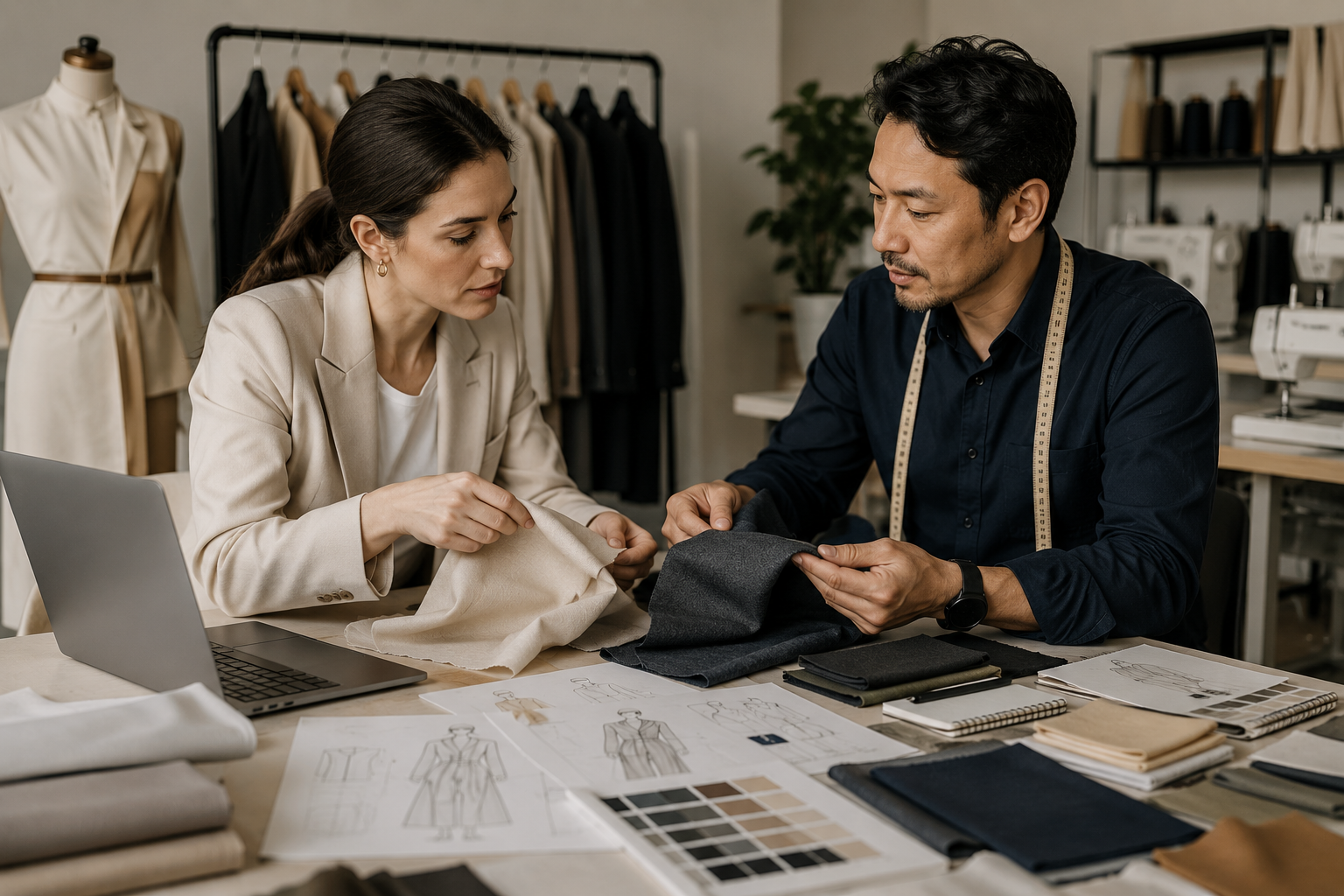
Famous dress designers do not send a sketch to production. They sample, then sample again. Donna Karan was known for wearing her own prototypes throughout development, identifying fit issues before they reached a single wholesale buyer. The sampling discipline of popular clothes designers is one of the most underrated habits a new brand can adopt.
New brands commonly approve one sample quickly due to cost anxiety and move to production, only to discover fit or construction problems in their first 200 units. Budget for at least two to three sample rounds per product. Use each round to test one variable: fit on the first, fabric quality on the second, hardware on the third.
Sampling is not a cost. It is insurance on your production budget. The US apparel manufacturing industry supports iterative development, and domestic manufacturers shorten the round-trip time on each sample compared to overseas production.
Lesson 4: Know Your Numbers Before You Place Any Order
Famous fashion designers who scaled successfully had one thing in common: they understood their cost of goods before they set their retail price. Giorgio Armani built a reputation for commercial restraint by pricing product at margins that allowed the business to survive downturns without relying on constant volume.
Before you contact a manufacturer, know three numbers: your target retail price, your acceptable landed cost (typically 20–30% of retail for apparel), and your MOQ budget. If you cannot answer all three, you are not ready to negotiate.
The Small Business Administration provides free business planning resources covering cost-of-goods modelling for product-based businesses. A single costing session with an SBA advisor before your first order can prevent the most common early-stage production mistake: ordering at a margin that cannot support your business model.
Lesson 5: Treat Quality Control as a Non-Negotiable
The famous clothes brands you recognise built their reputations on consistent quality, not occasional quality. What separates famous fashion designers from brands that do not survive their second collection is usually consistency, not creativity. Prada’s quality control processes at its Italian production facilities are documented at the garment level, not the batch level.
You do not need Prada’s budget to apply this. What you need is a written quality standard document before production begins: approved sample signed off, measurement tolerances defined, fabric standard swatch attached, and hardware finish specified. Send it to your manufacturer before production starts, not after you receive goods you cannot sell.
If you are working with a US manufacturer, request the ability to inspect goods during production, not just after delivery. Most domestic factories accommodate mid-production checks, which eliminates the majority of quality disputes and mirrors what famous apparel designers build into their production workflows.
Lesson 6: Use Scarcity and Small Batches to Test Demand
Some of the most famous fashion designers deliberately used limited production as a brand-building strategy. Supreme built an entire business model around scarcity. Early Comme des Garçons drops in the US market created urgency through limited availability rather than advertising spend.
The manufacturing lesson is practical: small batches reduce financial risk and generate real demand data. A Chicago streetwear brand launched a first run of 75 graphic tees through a local cut-and-sew manufacturer, sold out in 11 days, and used that proof of demand to place a 300-unit follow-up order.
Starting small does not mean thinking small. It means you validate demand before committing capital. The Bureau of Labor Statistics tracks US textile and apparel employment, and the domestic manufacturing ecosystem supports small-batch orders: many US factories carry MOQs of 50 to 150 units per style, which is the right scale for a first validation run.
Lesson 7: Let Manufacturer Feedback Shape Your Design Process
The most famous fashion designers were not too proud to change a design based on what a factory told them was impossible, expensive, or structurally weak. Yves Saint Laurent reportedly maintained close working relationships with his atelier that fundamentally shaped his silhouettes, not despite the manufacturing constraints but because of them.
When your manufacturer says a seam placement will cause production problems, or a fabric does not behave correctly at a specific stitch density, they are saving you money. Listen.
Build a habit of asking one question at every development stage: “What would you change to make this easier to produce at consistent quality?” The answers improve your product and your factory relationship simultaneously. Brands that find the right clothing manufacturer early and treat manufacturer input as design input produce better first collections and experience fewer delays.
How Maker’s Row Helps You Apply These Lessons
Finding the right manufacturer is the foundation all seven of these lessons are built on. Without a production partner who communicates, delivers consistent quality, and works with brands at your stage, none of the strategies that famous fashion designers used are possible to replicate.
On Maker’s Row, post your clothing project for free and verified US manufacturers bid directly. Review bids, check profiles, connect when ready.
Many brands inspired by what famous fashion designers actually did, including starting with one hero product and establishing written quality standards, found their manufacturing partners through Maker’s Row.
FAQs About Manufacturing Lessons from Famous Fashion Designers
The most successful ones mastered one product category before expanding. Ralph Lauren moved from ties to shirts to full lifestyle collections only after each category had a reliable manufacturer and a proven margin. Across famous clothes brands, the consistent lesson is depth before breadth.
Famous fashion designers and famous dress designers starting out negotiated smaller first orders by demonstrating seriousness: arriving with tech packs, a clear brand brief, and prompt deposits. New brands can apply the same principle by starting with a small, fully documented order and building a track record before asking for volume pricing.
Many of them have maintained US manufacturing for parts of their collections. Ralph Lauren and Donna Karan have produced American-made lines throughout their careers, often citing quality control and factory-visit access as key reasons. US manufacturing remains viable at all stages, particularly for cut-and-sew, knitwear, and premium garments.
The biggest manufacturing mistake is skipping the sampling process to save money. Famous fashion designers universally invest heavily in samples before committing to production. A single production run without adequate sampling can produce 200 unsellable units, a cost far greater than the two or three sample rounds that would have prevented it.
Popular clothes designers choose manufacturers based on four factors: category experience, communication responsiveness, sample quality, and alignment on MOQ and lead time. Cold outreach without a documented brief rarely works. Arriving with a clear spec and a concrete production timeline is the most effective approach, modelled by successful brands at all scales.
Yes, and the principles translate directly. They solved the same problems you are solving: finding a reliable factory, maintaining quality at scale, and managing production costs without sacrificing brand integrity. Apply their principles, not just their aesthetics.
Start Applying These Strategies Today
Your clothing brand is one manufacturer away from becoming real. The factories are on Maker’s Row, ready to bid.
Post your project, describe your hero product, and let verified US clothing manufacturers come to you. No cold emails. No guesswork. Just direct bids from factories that work with brands at exactly your stage.