Starting a jacket manufacturing business is one of the more technical entry points into apparel, and that is exactly why it rewards the founders who prepare properly. Jackets involve more construction steps than a t-shirt or a basic tee, which means more places for a new brand to get stuck: zipper sourcing, insulation, lining, seam sealing. This guide gives you the exact steps from concept to first production run, including how to find a US jacket manufacturer even if you have never done this before.
Outerwear is one of the higher-margin categories in apparel, and jackets carry a longer replacement cycle than basics, which means customers who commit to a brand tend to stay loyal across seasons. That opportunity comes with three real obstacles: jacket construction is more complex than most garment categories, sourcing the right manufacturer takes longer, and new founders rarely know the correct sequence of steps before they start spending money. This guide walks through all seven steps, in order, from defining your first jacket to placing your production run.
Step 1: Define Your Brand Identity and Hero Jacket
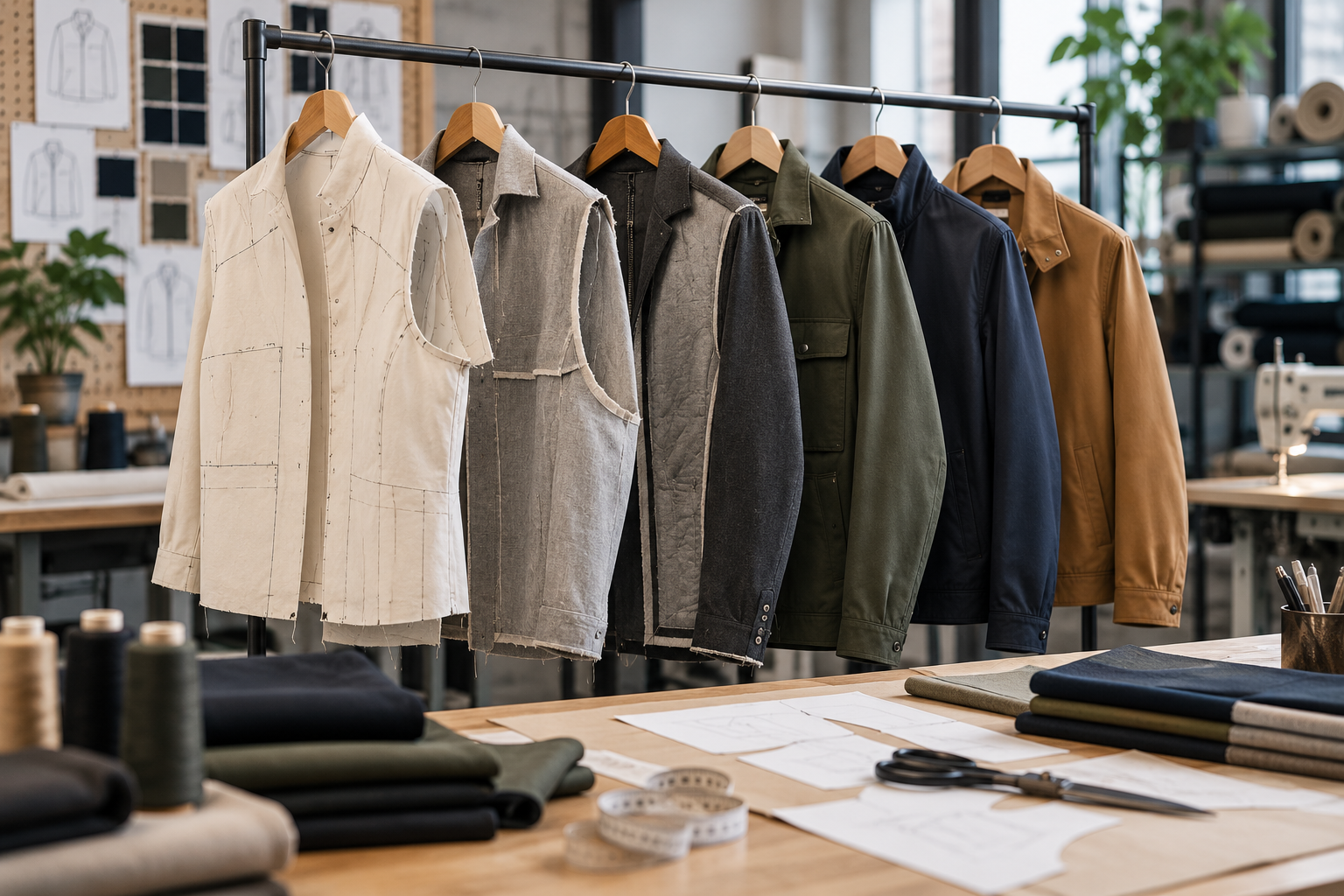
Pick one jacket style to build your entire launch around, not a full outerwear line. Trying to launch a bomber, a parka, and a denim jacket in the same season triples your sampling cost and slows every decision down.
Write a one to two page brand brief covering your target customer, your price point, and your top three competitor brands. Name the specific jacket type you are starting with: bomber, varsity, puffer, denim, or technical shell. Each of these has a different manufacturer pool, since a puffer factory rarely also produces raw denim jackets well.
Decide your positioning early. A $180 wool-blend bomber sold direct to consumer needs a different manufacturer than a $45 private-label windbreaker sold wholesale, because the two require different fabric sourcing and construction tolerances.
Step 2: Know Your Target Customer
Build a one-page customer profile before you sketch anything: who wears this jacket, in what season, and what they currently buy instead. Interview five to ten people who match that profile about fit complaints and price expectations with their current outerwear.
Their answers will shape your fabric choice more than any trend report. A customer buying a technical shell for hiking cares about seam-taping and waterproof rating. A customer buying a fashion bomber cares about silhouette and lining detail. These lead to different manufacturers and different cost structures, so settle this before Step 3.
Step 3: Build Your Product Concept and Tech Pack
Once your hero jacket and customer are defined, translate the concept into a document a factory can actually quote against.
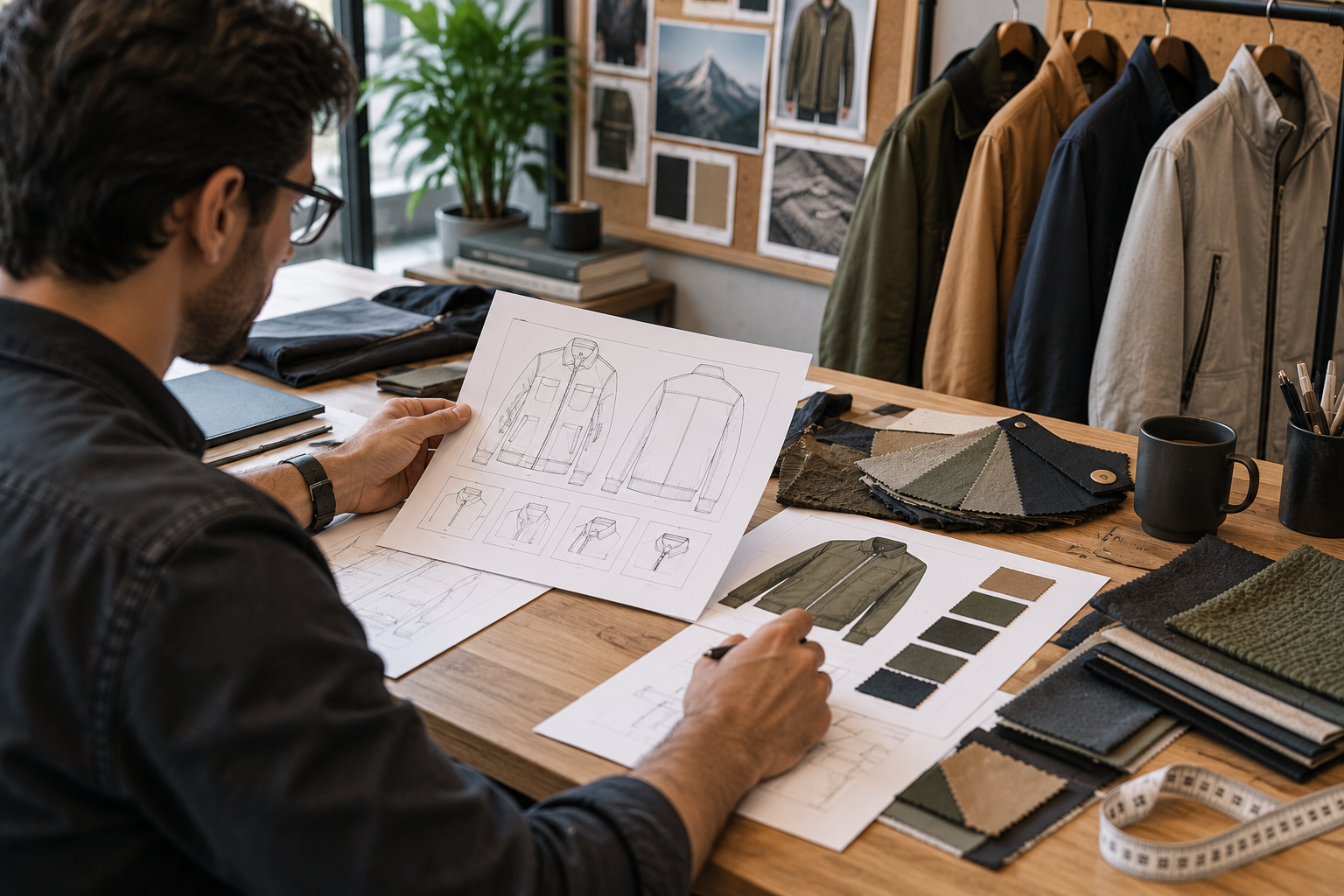
A tech pack is the specification document that tells a manufacturer exactly how to build your jacket, including flat sketches, a full measurement spec, fabric and trim callouts, zipper and lining details, and construction notes. A jacket tech pack needs more detail than a t-shirt’s: zipper type and gauge, insulation weight if applicable, seam construction, and hardware finish all need to be specified, or a factory will guess and the sample will come back wrong.
Also Read: What Is a Tech Pack? Complete Guide for Clothing Brand Owners →
MOQ (minimum order quantity) is the smallest number of units a manufacturer will produce per style, per order. Jacket MOQs run higher than basics because of the added construction steps, commonly 100 to 300 units per style at established factories, though some small-batch cut-and-sew shops accept 50. Know your target number before you start reaching out, or you will accept whatever a factory offers first.
Also Read: What Is MOQ? A Brand Owner’s Guide to Minimum Order Quantities →
Step 4: Find Your Jacket Manufacturer
This is where most new jacket brands get stuck, and it determines whether your brand actually launches. Jacket construction eliminates more factories from consideration than basics do: a manufacturer skilled at t-shirts may have never sewn a zipper or bonded a seam, so your search pool is narrower from the start.
The old way is cold emails pulled from a Google search, walking trade show floors hoping to find an outerwear specialist, or asking an industry contact who may not know one either. This process routinely takes three to six months, and most cold outreach never gets a reply, not because factories dislike new brands but because a generic email gives them nothing to quote against.
What Should You Look For in a Jacket Manufacturer?
A jacket manufacturer should be evaluated on four specific factors before you send a single tech pack: MOQ fit, location, sample policy, and communication speed. The table below breaks these down so you are not piecing them together from separate conversations.
Factor | What to Confirm | Why It Matters for Jackets |
MOQ | Per style, and whether it applies per colorway | Jacket construction complexity often raises MOQ compared to basics |
Location | US-based, and regional outerwear specialization | LA and the Northeast hold more technical outerwear capacity than most regions |
Sample policy | Paid sample before bulk commitment | Zipper and seam issues only surface in a physical sample, not a spec sheet |
Communication speed | Response time to your first inquiry | A slow first reply predicts a slow production timeline |
Posting a detailed project brief on a platform like Maker’s Row filters your search to manufacturers who already handle jacket-level construction, instead of cold-emailing factories one at a time and hoping they respond. Maker’s Row is a marketplace connecting apparel brand owners with verified US manufacturers. On Maker’s Row, you post your jacket project for free and manufacturers who work with your specific construction requirements respond directly, often within 24 to 48 hours.
Also Read: 8 Best Jacket Manufacturers in the USA →
Step 5: Order Samples and Refine
Never move from manufacturer selection straight to a full production run. A paid sample is your first physical version of the jacket, and on a first design it will almost never be perfect.
A Denver-based outerwear founder ordered her first bomber sample expecting a one-round approval. The zipper pull hardware did not match her tech pack spec, and the lining bunched at the shoulder seam. Two more sample rounds, roughly four additional weeks, fixed both issues before she committed to her 150-unit production run. That is normal for jackets, not a sign something went wrong.
Budget for two to three sample rounds before approval, and confirm sampling lead time separately from production lead time when you first speak with a factory.
Step 6: What Does It Cost to Start a Jacket Manufacturing Business?
Starting a jacket manufacturing business typically costs $8,000 to $25,000 for a first run, depending on construction complexity, fabric, and order volume. A basic windbreaker sits at the lower end; an insulated technical shell with waterproof seam-taping sits at the higher end.
Cost Category | Typical Range (First Run) |
Tech pack development | $300–$800 |
Sampling (2–3 rounds) | $600–$1,800 |
Production run (100–300 units) | $6,000–$18,000 |
Packaging and labeling | $500–$1,500 |
Marketing reserve | $500–$3,000 |
The Small Business Administration’s startup cost guide walks through every cost category so you can build a figure specific to your jacket rather than relying on a generic estimate. A smaller first run with fewer sample rounds keeps your initial investment lower while you validate demand.
Step 7: Launch and Market Your Brand
Once your production run is confirmed and delivery is scheduled, shift your attention to launch. Photograph your jacket on real models in conditions relevant to how it will be worn, not just on a hanger.
Build a pre-launch list from your Step 2 customer interviews before your jackets arrive, so your first sales come from people who already told you they wanted the product. A focused single-jacket launch with a clear story, why this jacket, why now, outperforms a broad catalog drop for a first-time outerwear brand.
Plan your second production run based on actual sell-through, not projections. Jackets have a longer sales cycle than basics because of seasonality, so give your first run at least one full relevant season before deciding whether to reorder or adjust the design.
Find verified manufacturers on Maker’s Row by simply publishing your project requirement for free.
FAQs: Starting a Jacket Manufacturing Business
A first jacket production run typically costs $8,000 to $25,000, covering tech pack development, two to three sample rounds, a 100 to 300 unit production run, and basic packaging. Technical or insulated jackets cost more than basic windbreakers because of added materials and construction steps. The SBA’s startup cost calculator helps you build a figure specific to your design.
Yes, prior manufacturing experience is not required, though jackets punish an incomplete tech pack more than simpler garments do. What you need is a precise tech pack, a manufacturer experienced in jacket construction specifically, and patience through multiple sample rounds. Most US manufacturers are used to guiding first-time founders through their first sample.
Post a project brief on Maker’s Row specifying your jacket construction, target MOQ, and fabric requirements, and verified US manufacturers with outerwear experience respond directly. This is faster than cold-emailing general apparel factories that may not have zipper or seam-sealing capability.
MOQ, or minimum order quantity, is the smallest number of units a manufacturer will produce per style, per order. Jacket MOQs commonly run 100 to 300 units due to added construction complexity, which directly multiplies your per-unit cost into your total production budget.
Plan for four to six months from concept to delivered inventory. Tech pack development takes two to three weeks, jacket sampling typically runs 6 to 10 weeks across two to three rounds because of hardware and seam testing, and production runs 6 to 10 weeks depending on your manufacturer’s schedule.
Yes. A tech pack is the specification document that tells a factory exactly how to build your jacket, and it needs more construction detail than a basic garment tech pack, including zipper gauge, insulation weight, and seam type. A factory cannot give you an accurate quote without one.
Original jacket designs, including unique prints and pattern shapes, can be protected through copyright or design patent depending on what specifically is original about your design. The USPTO offers guidance on which protection applies before you send your tech pack to any factory.
Some small-batch US cut-and-sew manufacturers accept jacket orders as low as 50 units per style, below the 100 to 300 unit range common at larger factories. Expect a higher per-unit cost at this smaller volume, since factories spread fixed setup costs across fewer pieces.
Your Jacket Manufacturing Business Is Closer Than You Think
Your jacket brand is one manufacturer away from becoming real. The factories are on Maker’s Row, ready to bid.