You fall for six pieces in a showroom, place the orders, and watch half of them sit unsold by season end. Boutique owners at every stage make that buy at least once. These five strategies turn wholesale fashion trends into smaller, smarter orders you can start using this week.
A single wrong order hurts when you run one storefront on a small budget. Cash tied up in unsold stock cannot pay rent, staff, or next season’s buy. This guide is for boutique owners who follow wholesale fashion trends and want more control over margin and risk. Some of you also want to add your own label.
By the end, you will have five practical moves for buying wholesale fashion trends. You will also get a simple sell-through formula and a clear path to a first private label order.
What Do Wholesale Fashion Trends Mean for Your Boutique?
Wholesale fashion trends are the styles, fabrics, price points, and buying habits that suppliers and boutique buyers move toward each season. For you, they carry two signals. They hint at what customers will ask for next, and they show how suppliers are changing prices, minimums, and lead times.
Caution is the smart default when you chase wholesale fashion trends this year. The State of Fashion 2026 report from The Business of Fashion and McKinsey found that 46 percent of executives expected conditions to worsen in 2026. That figure rose 8 points from the prior year.
A boutique has far less cushion than those executives. You need a buying method, not a hunch, and the five ways below give you one.
1. Start Small With Every Trend Buy
Start every new trend with a small test order, because a small order caps what you can lose if the trend stalls. Open-to-buy is the amount you still have to spend on new inventory this season. Spread it across more styles in fewer units.
Say your open-to-buy is 120 units. Six trend pieces at 20 units each tell you far more than two pieces at 60 units each. You learn which style your customers pick, and you keep cash for reorders.
Split each style across your core sizes, so you can read demand by size as well as by style. Then set a review date, such as week three, before you add any units.
SCORE’s cash flow statement template lists inventory as cash paid out, right beside rent and payroll. That is why one oversized buy can leave you short at month end. Before you commit to any of this season’s wholesale fashion trends, write your test quantity next to every style on the order sheet.
2. Track Sell-Through Weekly Before You Reorder
Track sell-through every week, because it shows which trends are real in your store and which are only loud online. Sell-through rate is the percentage of units you received that you have sold. Divide units sold by units received, then multiply by 100.
If you receive 20 units and sell 8 in three weeks, your sell-through is 40 percent. Reorder the fastest movers. Mark down the slowest early, while shoppers still want them.
Check the numbers on the same day each week, such as Monday morning, so you compare like with like. Keep a simple sheet with four columns: style, units received, units sold, and sell-through.
Compare those numbers with the wholesale fashion trends your sales reps pitch each season. Your own data shows what customers bought, while a lookbook shows what a brand hopes you will buy. For a view of what shoppers chase on the consumer side, read our guide to women fashion trends.
3. Budget for Tariff-Driven Price Shifts
Budget for price shifts now, because tariffs change what wholesalers pay and often what you pay them. The American Apparel & Footwear Association reports that U.S. apparel imports faced a near-record average effective tariff rate of 24.6 percent in 2025. Tariff rules have changed more than once since, so confirm current rates with each vendor before you commit.
Landed cost is the full per-unit price after freight, duties, and fees. Ask each vendor for landed cost on reorders, not only on your opening order. Then ask whether the price holds for a second purchase.
Put every quote in writing with a date and a validity window, since a verbal price from March means little in September. Compare it with a domestic quote for the same style, so you see the full trade-off.
Build a price-increase line into your plan for imported wholesale fashion trends, so a hot piece does not erase its own margin.
4. Add a Private Label Capsule to Your Wholesale Mix
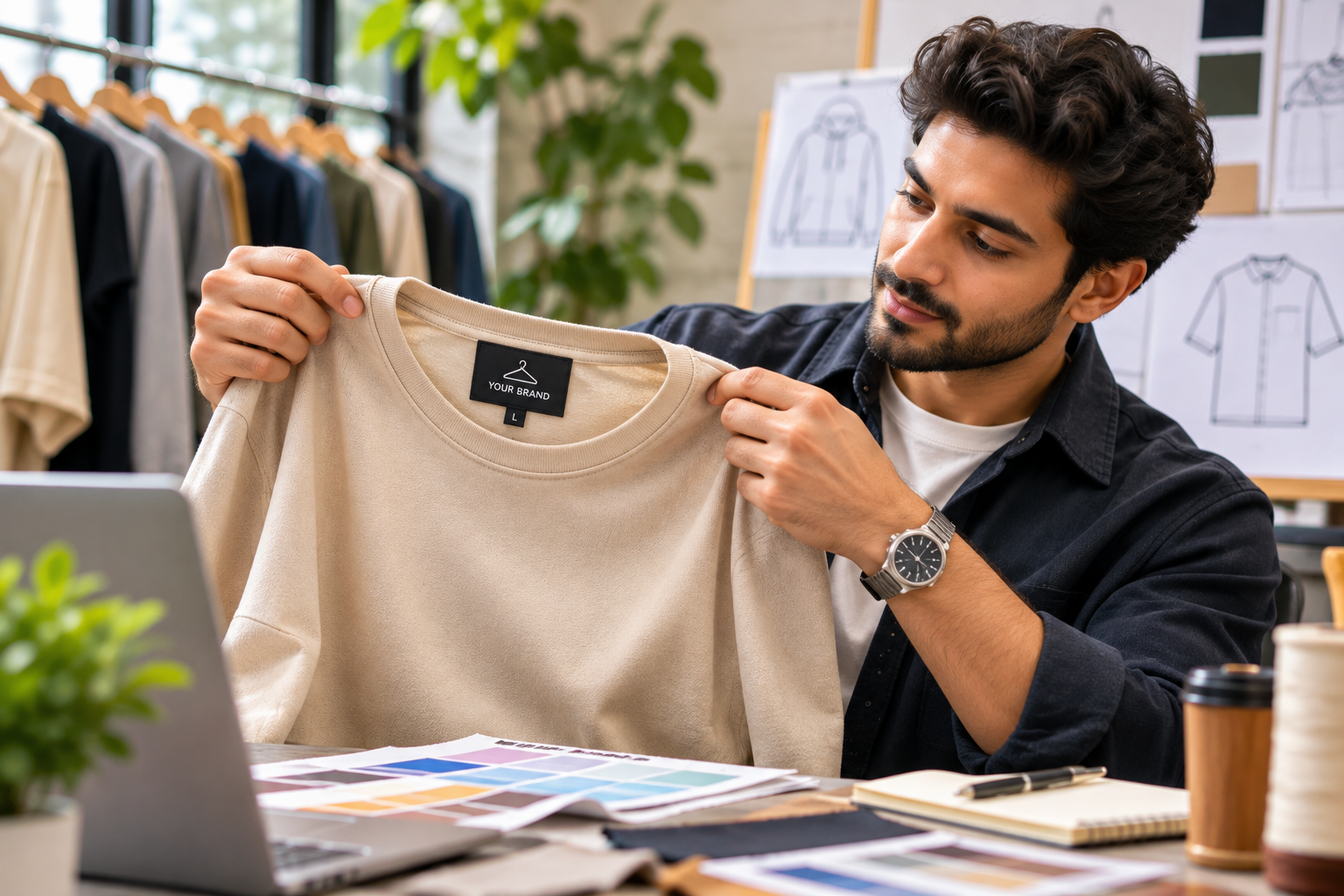
Add a small private label capsule to your wholesale mix, because your own label is the one product no neighboring boutique can stock. A capsule is a small set of coordinated pieces made as one drop. Wholesale fashion trends tell you which silhouette is moving. A private label lets you make it yourself.
What Is Private Label Clothing?
Private label clothing is apparel a factory makes to your specifications and you sell under your own brand name. Our guide to private label clothing covers how it works, what it costs, and how to find manufacturers.
MOQ (minimum order quantity) is the smallest number of units a factory will produce per order. Minimums vary widely by factory type, as this table shows.
Factory type | Typical MOQ | Source |
Portland Garment Factory (Portland, OR) | 25 units per style | |
Small-batch US factories | 50 to 100 units | |
Larger US facilities | 300 to 500 units | |
Many overseas factories | 300 to 1,000 units per style |
Say you run a Portland boutique and a factory with Portland Garment Factory’s minimum fits your signature linen shirt. Your first test is 25 shirts, a fraction of what many overseas factories ask for.
Register your label name early. The USPTO explains that a trademark protects brand names and logos used on goods.
5. Verify Fabric and Made in USA Claims Before You Stock
Verify fiber content and origin claims before you stock a piece, because customers believe what your tag says. Textile Exchange’s Materials Market Report 2025 found that polyester made up 59 percent of global fiber output in 2024. Of that polyester, 88 percent was fossil-based.
A “sustainable” tag on a trend piece deserves proof. Ask for certification documents, not adjectives. Request a fiber content report from the supplier and file it with the purchase order. That paperwork lets you answer a customer question in one email.
Origin claims carry legal weight too. The FTC requires that a product advertised as Made in USA be “all or virtually all” made in the United States. If a vendor sells you a US-made line, ask for written proof of where each production stage happened before you advertise it. Apply the same check to every one of this season’s wholesale fashion trends, from linen sets to denim.
How Maker’s Row Helps You Add Your Own Label
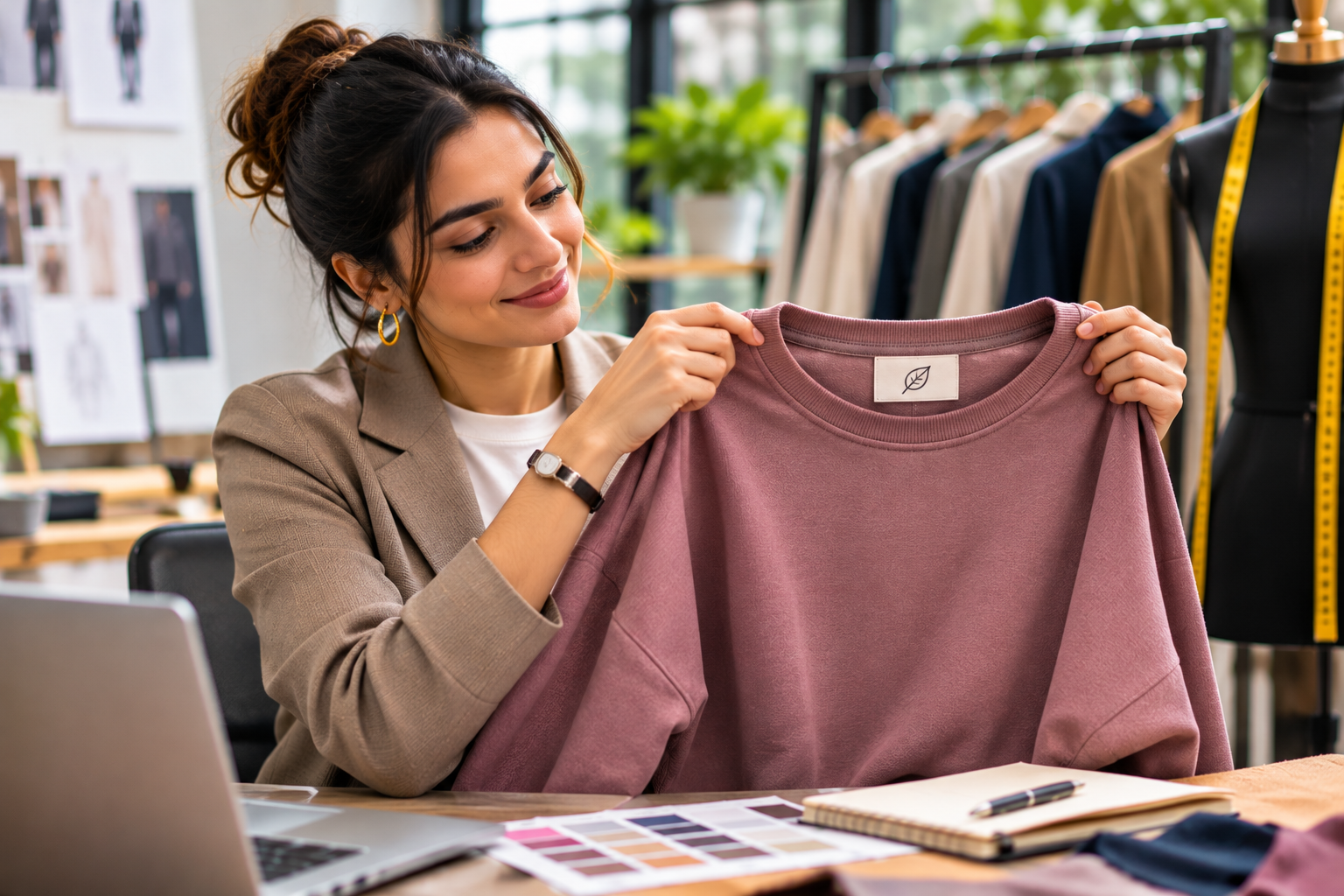
Maker’s Row helps you add your own label by connecting you with verified US manufacturers who bid on your project. Maker’s Row is a marketplace connecting apparel brand owners with verified US manufacturers. Several strategies above, from small test orders to US-made proof, come down to finding the right factory for your situation.
On Maker’s Row, brand owners post unlimited manufacturing projects for free and receive bids from verified US factories at no upfront cost. To connect directly, subscription plans give full access. Finding the right factory for your boutique’s first label capsule does not have to mean months of cold emails. Post your capsule project, review the bids, check profiles, and connect when you are ready.
Once you know which wholesale fashion trends fit your store, you can post your first capsule project for free.
FAQs About Wholesale Fashion Trends
Styles change every season, so the trends worth planning around are buying habits. They include smaller test orders, weekly sell-through tracking, tariff-aware pricing, private label capsules, and verified fabric claims. Check your own sales data before you chase any single silhouette.
Start with your own sell-through data. Then check annual outlooks such as The Business of Fashion’s State of Fashion report and the American Apparel & Footwear Association’s tariff data. Ask your sales reps what they are seeing in reorders, then test it against your numbers.
MOQ means minimum order quantity, the smallest number of units a manufacturer will produce per order. Minimums rise with factory size, and Maker’s Row’s MOQ guide explains how to negotiate them.
Yes, a boutique can stock its own label next to wholesale brands, and a small capsule keeps your first order low-risk. Pick one product type, order at an MOQ you can afford, and keep your label’s price range close to the lines beside it. Our list of private label clothing manufacturers for startups shows where to begin.
A Made in USA label means the product’s significant parts and processing are almost entirely of U.S. origin, under FTC rules. Keep written proof from your supplier before you print the claim on a tag or product page.
Start Applying These Strategies Today
Start with one change before your next order: set a test quantity for every style and track its sell-through weekly. Apply that habit to this season’s wholesale fashion trends, then add the other four ways as you go. Your boutique’s first own-label capsule is one manufacturer away from becoming real. The factories are on Maker’s Row, ready to bid.