Korean fashion brands have moved from niche Seoul street style to global runway and resale influence in under a decade. Getting noticed at that scale is not luck. This guide covers the labels defining the category right now, and what aspiring brand owners can learn from each one.
South Korea’s fashion scene has become one of the most closely watched in the world. K-pop styling, Seoul Fashion Week, and a wave of independent Seoul labels have turned Korean fashion brands into a genuine export category, not just a beauty and music side effect. According to Business of Fashion, the category made significant inroads into the global fashion conversation in 2025, with labels such as Post Archive Faction and Gentle Monster drawing real international attention.
What separates the names that broke through globally from the hundreds of small Seoul labels that never left Dongdaemun is not a bigger marketing budget. It is a distinct point of view executed with total consistency across every drop. If you are building a brand in this space, this guide shows what the best Korean fashion brands are doing right and how that thinking applies to your own production.
What Makes a Great Korean Fashion Brand?
The strongest labels share a handful of traits any brand owner can study, regardless of where they manufacture.
- A specific design language: Oversized silhouettes, unisex sizing, and streetwear mixed with sharp tailoring, rather than chasing every micro-trend.
- Cultural rootedness: Many draw on Korean architecture, hanbok construction, or Seoul neighborhood identity instead of imitating Western labels.
- Celebrity alignment that feels organic: The strongest names were already producing strong product before idols started wearing them.
- Small-batch discipline: Several started as one-person operations producing limited runs before scaling production.
- Global retail distribution: Placement with retailers like SSENSE, END., and FARFETCH signals quality control matching international standards.
Best Korean Fashion Brands in 2026
1. Ader Error
Launched in Seoul in 2014 with a deliberately misspelled name and an “embracing imperfection” philosophy.
Founded: 2014 | Known for: Eclectic graphics, Maison Kitsune and Puma collaborations | Price range: $$
What sets them apart: Proof a Korean label can collaborate with European houses as a creative equal, not a licensee.
2. We11done
Founded as the in-house label of Seoul concept store Rare Market, blending late-90s and early-2000s references with oversized fits.
Founded: 2015 | Known for: Nostalgic, Y2K-leaning streetwear | Price range: $$
What sets them apart: Built international retail placement before opening a flagship store.
3. Thisisneverthat
One of the longest-running names in the category, launched in 2010 and reached its Fashion Week debut in 2018.
Founded: 2010 | Known for: Typography tees, sweats, Pertex outerwear | Price range: $
What sets them apart: Built a decade of credibility before chasing a single international placement.
4. Gentle Monster
Best known for eyewear, now one of the most influential names in the category through immersive retail design.
Founded: Originated in Daegu | Known for: Avant-garde eyewear, installation-style pop-ups | Price range: $$$
What sets them apart: Treats every store as a creative installation worth sharing before a product is even purchased.
5. Wooyoungmi
A pioneer of Korean menswear, founded in Paris and a fixture on the official Paris Men’s Fashion Week schedule.
Founded: 2002 | Known for: Architectural tailoring | Price range: $$$
What sets them apart: Proved a Korean label could compete in formal menswear decades before K-fashion became a trend term.
6. Juun.J
Calls its own approach “Street Tailoring,” fusing avant-garde construction with classic menswear codes.
Founded: Debuted at Paris Men’s Fashion Week in 2007 | Known for: Deconstructed tailoring | Price range: $$$
What sets them apart: Built a category between two established ones that competitors cannot easily copy.
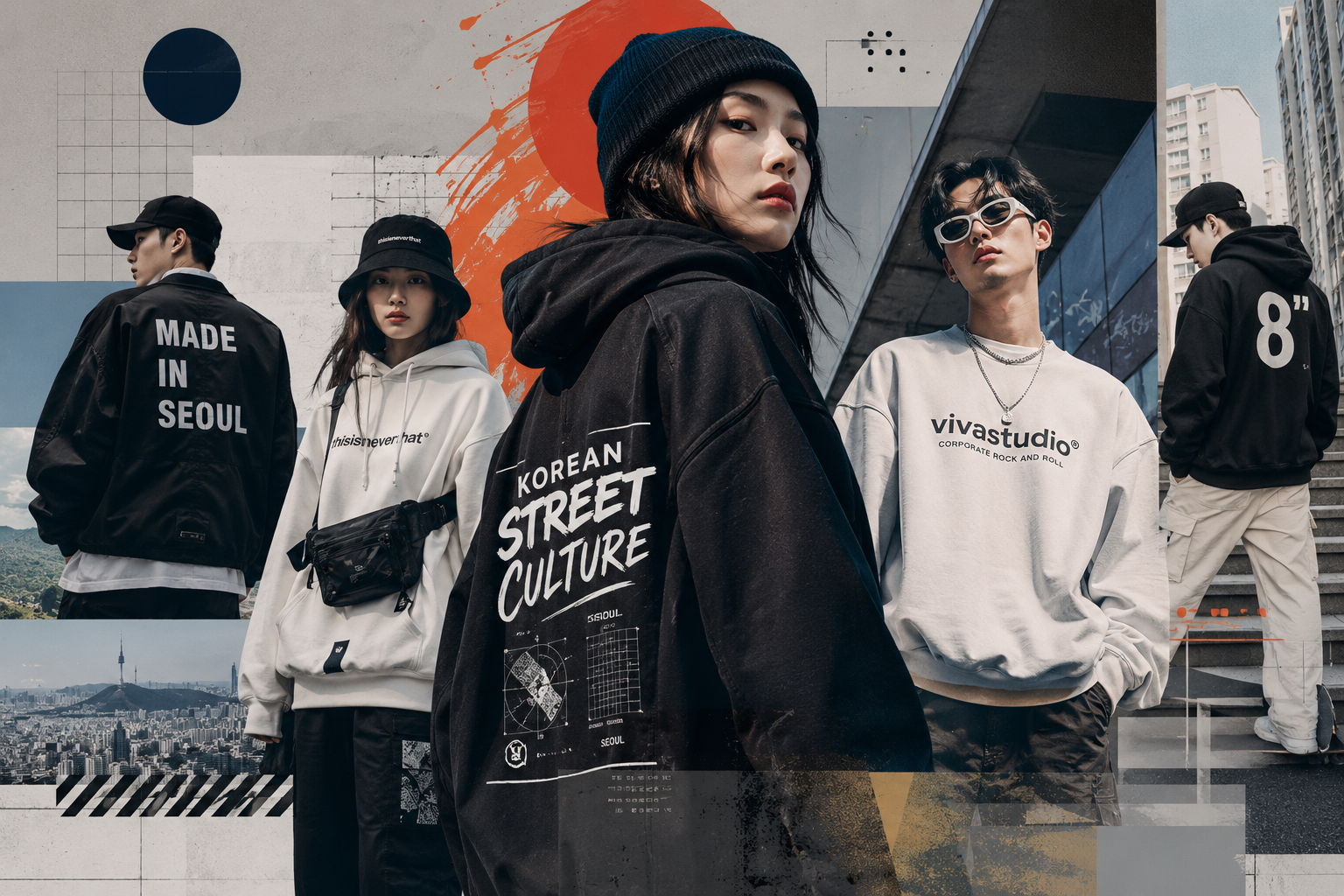
7. Post Archive Faction (PAF)
A newer name earning international press for a technical, deconstructed approach to everyday garments.
Founded: Seoul-based, recent breakout | Known for: Technical fabrics, structural deconstruction | Price range: $$
What sets them apart: Earned global press through product alone, without a celebrity-first strategy.
8. Hyein Seo
Built her eponymous label after graduating from the Royal Academy of Fine Arts Antwerp.
Founded: 2014 | Known for: Figure-conscious, Y2K-inspired streetwear | Price range: $$
What sets them apart: Shows formal fashion training can sharpen a streetwear label’s execution rather than dilute it.
9. 99%IS-
Founded by designer Bajowoo, built on grungy, hand-altered pieces worn by major international musicians.
Founded: 2011 | Known for: DIY construction, distinctive parachute-style pants | Price range: $$
What sets them apart: A strong personal aesthetic, applied consistently, can outperform a polished but generic collection.
10. Mardi Mercredi
Known for a distinctive floral logo, compared by international press to a French-influenced answer to Korean streetwear codes.
Founded: Seoul-based | Known for: Floral branding across tees and sweaters | Price range: $
What sets them apart: Built instant visual recognition with a single logo motif.
[IMAGE: Korean fashion brand apparel rack with streetwear and contemporary pieces | ALT: Korean fashion brands clothing collection 2026]
11. KUSIKOHC
Founded by photographer and designer Gi-seok Cho, operating under the slogan “right to fail,” an LVMH Prize finalist in 2023.
Founded: Debuted full collections in 2022 | Known for: Surrealist graphics | Price range: $$
What sets them apart: Turned a founder’s existing creative practice directly into the label’s visual identity.
12. Thug Club
Founded by Min and Kwon, channels hip-hop culture into bold graphics and statement hardware.
Founded: 2018 | Known for: Rebellious graphics, distinctive logo hardware | Price range: $$
What sets them apart: Built a loyal domestic following first, then expanded internationally on that credibility.
What These Brands Have in Common
A few patterns repeat across this list, regardless of price point or aesthetic. Nearly every label started with one strong, specific product, whether that was Ader Error’s graphic tees or 99%IS-‘s distinctive pants, instead of launching a full assorted collection out of the gate. Most built domestic credibility in Seoul before chasing international retail placement.
Design language also came before scale. None of these brands diluted their aesthetic to chase a broader audience early. They found a manufacturing partner that could execute their specific look consistently, then grew distribution once quality was locked in. See Best Streetwear Brands in the USA for how American labels followed a similar small-batch-first playbook.
Every brand on this list started exactly where you might be right now, with a strong creative point of view and a need to find the right manufacturer to bring it to life.
How to Start Your Own Streetwear-Inspired Brand
Building a brand with this same design discipline is realistic, even without a Seoul address.
- Define your hero product. Do not launch five categories at once. Pick the single piece, an oversized hoodie or a technical jacket, that will carry your identity, and execute it at a level worth comparing to the labels above.
- Build your brand identity before production. Name, color palette, and target customer should be settled before you contact a single factory. The SBA’s guidance on starting a business is a useful reference for formalizing this step.
- Find your manufacturer. This is where most new owners stall. Cold-emailing factories from a Google search is slow. Many founders also lean on SCORE’s free mentorship network for an outside read on their production plan before committing budget.
Find Streetwear Manufacturers on Maker’s Row
Translating that design discipline into your own collection still requires the right US production partner. On Maker’s Row, brand owners post unlimited manufacturing projects for free and receive bids from verified US factories at no upfront cost. To connect directly, subscription plans give full access. Describe your hero product, target MOQ, and fabric weight, and manufacturers who work with that style respond directly. Read our breakdown of MOQ for clothing brands first, since most early-stage owners underestimate how much it shapes a first production run.
FAQs About Korean Fashion Brands
Ader Error and Gentle Monster are currently the most globally recognized names, both through high-profile collaborations and consistent international retail placement. Each built that recognition over roughly a decade rather than overnight.
Ader Error, We11done, thisisneverthat, and Wooyoungmi are stocked by international retailers such as SSENSE, END., and FARFETCH. That distribution reflects production consistency that matches Western retail standards, not just cultural buzz.
Most established labels work with domestic Seoul factories early, then add international production partners once fit is locked in. For a US-based brand inspired by this aesthetic, confirm your design and tech pack before approaching manufacturers, since changes after sampling cost time and money.
A realistic first run, covering sampling and 100 to 150 units of one hero style through a US cut-and-sew manufacturer, typically starts around $5,000 to $15,000 depending on fabric and finishing complexity. Compare a few men’s clothing brands for context before settling on your own price positioning.
Most US cut-and-sew manufacturers set MOQs between 50 and 300 units per style for a first run, similar to what many independent labels started with before scaling.
Your Korean-Inspired Brand Starts With One Decision
Your apparel brand is one manufacturer away from becoming real. The factories that can execute the oversized fits, technical fabrics, and consistent finishing you have studied in this guide are on Maker’s Row, ready to bid.