Launching an outerwear brand is exciting, and it is also where new founders learn how narrow the factory pool really is. A puffer, a wool coat, and a waterproof shell each need a different kind of factory, and most guides skip that. This guide gives you the exact steps to find an outerwear manufacturer that fits your product, even if you have never worked with a factory. It is written for founders planning a first coat or jacket line at a small order size.
Outerwear is one of the most technical categories in apparel, because a coat carries shell fabric, lining, insulation, and zippers that a T-shirt never needs. Each extra layer is another place where the wrong outerwear manufacturer can fail you.
New brand owners hit three walls: finding a factory that builds your exact coat, affording the minimums, and not knowing the order of steps. The pool is small: as of August 2026, the U.S. Bureau of Labor Statistics reports roughly 72,000 workers in US apparel manufacturing (a preliminary figure), and each factory tends to specialize in particular garment categories.
This guide solves all three walls. You will match your coat type to a factory type, set your order size, and build your specs. Then you will assemble a shortlist of outerwear manufacturers you can trust. Follow the seven steps in order.
Step 1: What Kind of Outerwear Are You Making?
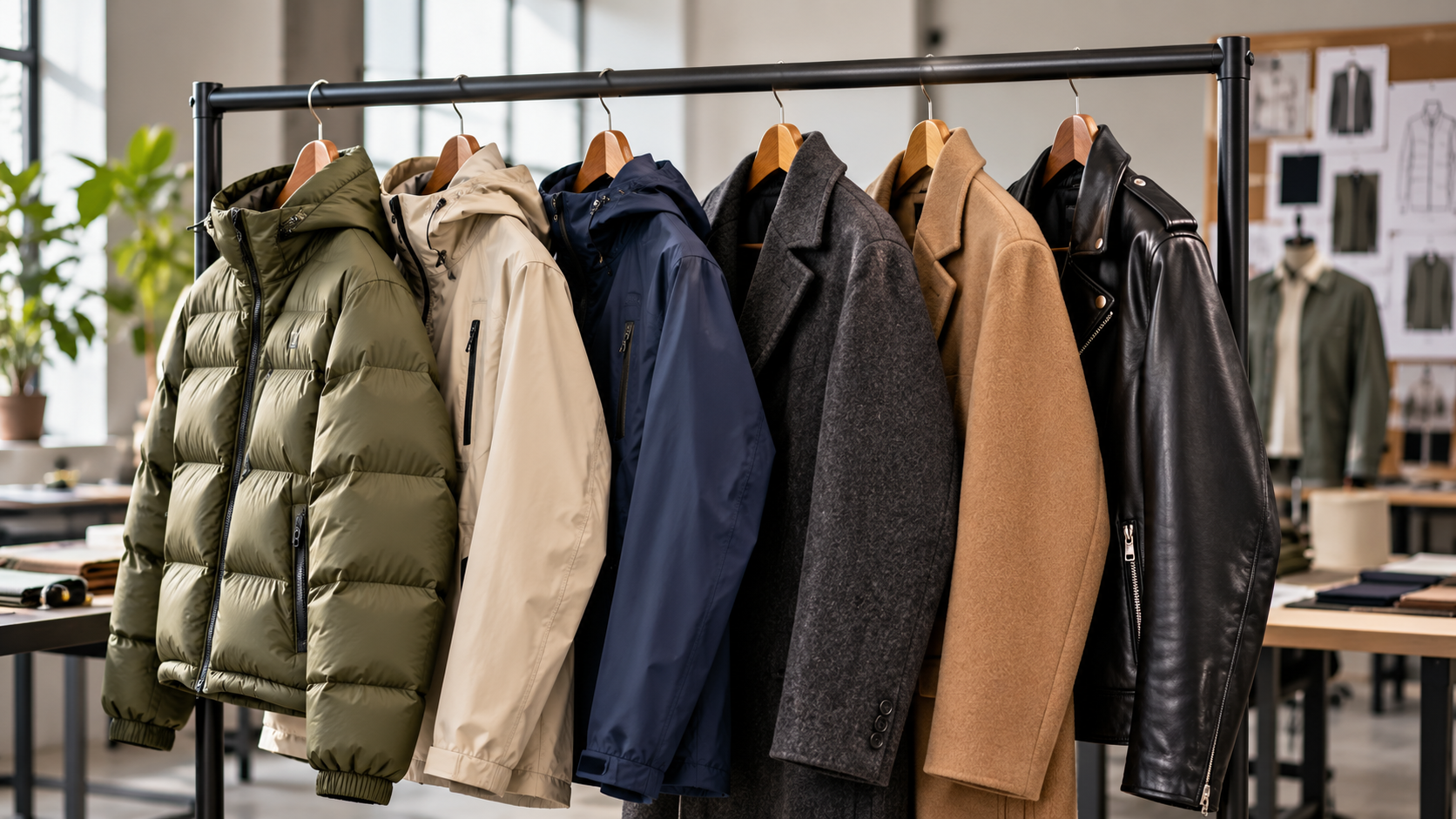
Outerwear is not one product category, because a down puffer, a waterproof shell, and a wool coat each need different machines, materials, and skills. That is why a single outerwear manufacturer rarely accommodates every style. Pick one hero piece, the single style your brand is built around, first. Then match it to the factory type in the table below.
Outerwear Type | What Makes It Hard | Factory Type to Look For |
Insulated puffers and down jackets | Quilting and fill control | Factory with quilting and fill experience |
Technical shells and rainwear | Waterproof fabric and leak-proof seams | Factory with seam-sealing tape machines |
Wool and tailored coats | Structure, lining, and pressing | Tailoring-style cut and sew shop |
Leather and varsity jackets | Heavy hides and thick seams | Factory with leather cutting and heavy machines |
Fleece and lightweight jackets | Knit stretch and zipper alignment | Standard cut and sew factory |
Cut and sew is a production method where a factory cuts fabric to your pattern and sews the pieces into finished garments. Even within cut and sew, factories specialize narrowly.
Maker’s Row’s waterproof clothing manufacturer guide profiles Boathouse Sports, which has built performance outerwear in a 100,000-square-foot Philadelphia factory since 1976. Its jacket manufacturer guide profiles Golden Bear Sportswear, which has cut and sewn leather, wool, and varsity jackets in San Francisco since 1922. A shell brand and a varsity brand need different outerwear manufacturers entirely.
Your first task takes an afternoon. Write a one-to-two page brief naming your hero piece, target customer, price point, and three competitor brands. Keep your first line to one style, not a full collection. Every outerwear manufacturer you contact will ask for this brief first.
Also Read: How to Start a Jacket Manufacturing Business →
Step 2: Set Your Customer, Price Point, and Order Size
Your customer, price point, and order size decide which outerwear manufacturers will even reply to you. Decide all three before you contact anyone, otherwise a factory will decide them for you and you will lose leverage.
Start with the customer, because a commuter buying a rain shell wants different details than a collector buying a heritage wool coat. Write down who wears your coat, in which weather, and what they pay for similar pieces.
MOQ (minimum order quantity) is the smallest number of units a manufacturer will produce per style in one order. Coats carry higher minimums than basics, because the shell, lining, and insulation each come from a separate mill with its own minimum yardage. Set a target quantity and a hard maximum you can afford. Multiply your expected unit price by that quantity, then add sampling and freight to find your real cash requirement.
Tell every outerwear manufacturer your number in the first message. A factory that cannot work at your quantity will say so early, which saves you weeks.
Also Read: What Is MOQ? Complete Guide for Brand Owners →
Next, turn your brief into a document a factory can price.
Step 3: Build Your Tech Pack and Material Specs
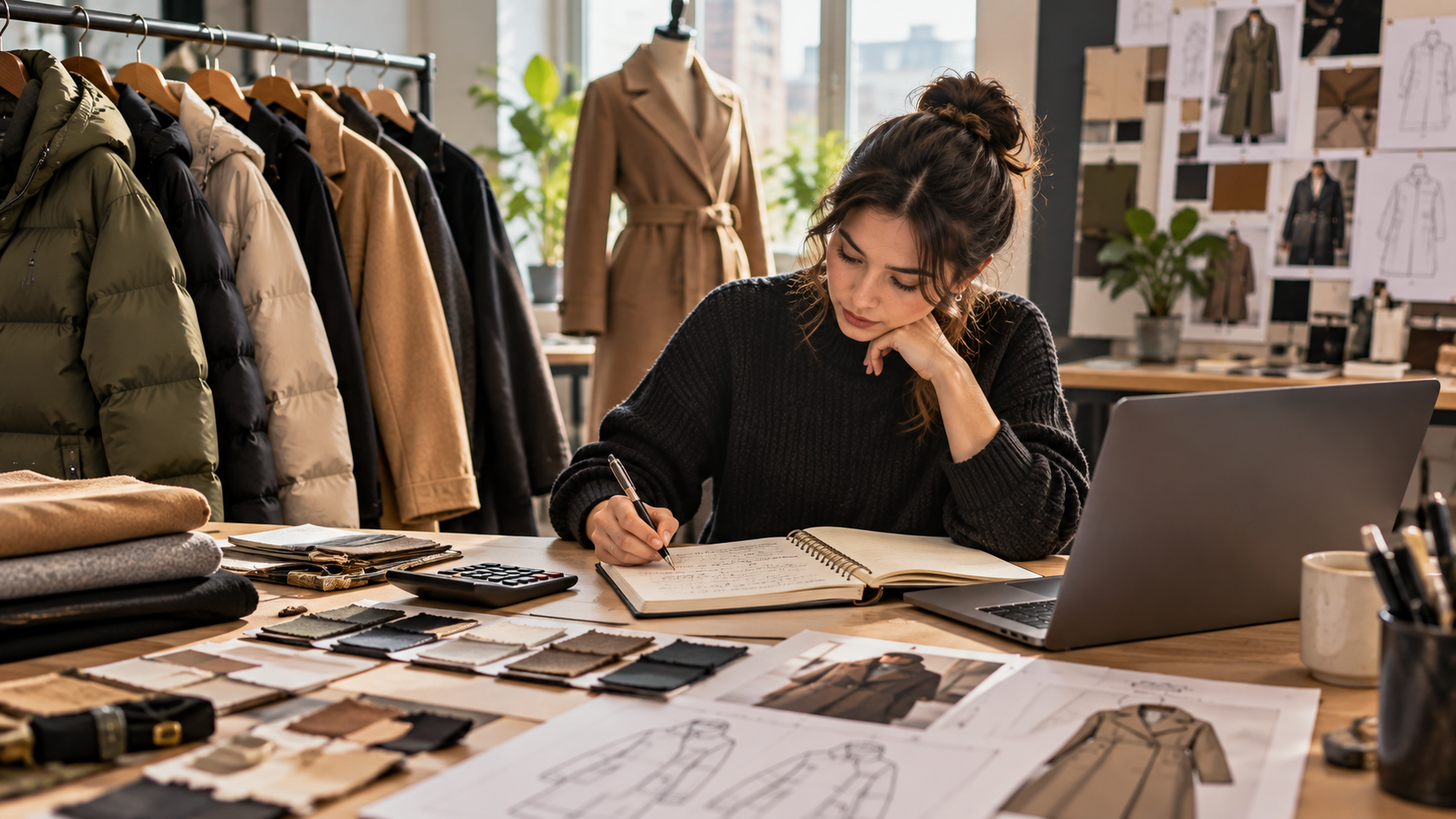
A tech pack is a document that gives a manufacturer every instruction needed to build your garment. You build one by listing every measurement, material, and construction detail a factory needs to price and sew your coat. Without one, you get vague quotes and extra sample rounds, while a complete one gives you prices you can compare across factories.
For outerwear, your tech pack needs more than flat sketches. Include front, back, and detail views, plus measurements for every size.
Add a bill of materials (BOM), which lists every shell, lining, insulation, zipper, snap, drawcord, and label in the garment. Write construction notes covering seam types and pocket builds. Also cover taped seams, which are seams covered with waterproof tape so water cannot pass through the stitch holes.
Materials also shape your claims. If you plan a down jacket, ask whether the down is certified. Products that meet the requirements of the Textile Exchange Responsible Down Standard may carry its logo. That gives your marketing a claim you can back up.
You do not need to build the whole pack alone. Some outerwear manufacturers help develop it, but a draft from you speeds every quote.
Also Read: Tech Pack Clothing: What It Is and How to Create One →
With your specs ready, you can start the search.
Step 4: Find Your Outerwear Manufacturer
You find an outerwear manufacturer by matching your coat type, order size, and specs to factories that already build similar garments. This is where most new brands get stuck, and it decides whether your line actually launches.
The old way is slow: you cold email factories, walk trade shows, and ask founders for referrals. Most factories do not advertise their construction skills, so you spend weeks learning who cannot help you, and each reply can take days.
Screen every outerwear manufacturer on the five criteria below before you request a quote.
Criteria | What to Ask | Why It Matters for Outerwear |
MOQ | What is your minimum per style and per color? | Shell and lining minimums raise the total |
Location | Where do you cut, sew, and finish? | Shipping time and factory visits |
Construction skill | Which coat types have you built recently? | A shell factory may struggle with wool |
Sample policy | Do you charge for samples, and how many rounds? | Coats need multiple fit rounds |
Communication speed | How fast do you answer quotes and questions? | Slow replies now mean slow production later |
Three Maker’s Row guides list outerwear factories by garment type. Start with the coats manufacturer guide for structured coats. Use the jacket manufacturer guide for leather, bomber, and varsity styles, and the waterproof clothing manufacturer guide for technical shells. If your coat is a simpler build, the cut and sew manufacturers guide explains how those factories work
Find Outerwear Manufacturers on Maker’s Row
Maker’s Row is a marketplace connecting apparel brand owners with verified US manufacturers. Finding the right outerwear manufacturer does not have to mean months of cold emails. On Maker’s Row, post your outerwear project for free and verified US manufacturers bid directly. Review bids, check profiles, connect when ready.
Name your hero piece, coat type, and target quantity in your project brief. Outerwear manufacturers that build coats like yours can then respond to your exact spec. Brand owners post unlimited projects and receive bids at no upfront cost. To reply to factories directly, subscription plans give full access.
Step 5: How Do You Vet Your Shortlist and Approve Samples?
You vet an outerwear manufacturer by confirming the business is real, checking references, and paying for a sample before any production commitment. Do this with every factory on your shortlist, including the ones that respond immediately.
Ask for a verifiable business address, a phone number, and two brands they have produced for. Any reputable outerwear manufacturer will provide these without hesitation. Call the references and ask about fit, deadlines, and how problems were handled.
The FTC’s small business scams guide tells you not to pay anyone who demands a wire transfer, cryptocurrency, or gift cards. SCORE advises weighing stability, quality, customer service, and cost together, not price alone.
Then order samples. Plan for at least two rounds on a first coat, because sleeve articulation and shoulder ease rarely land on the first attempt. Before you sign, ask who owns the pattern files and what happens to your fabric if you cancel.
Once a sample fits and feels right, you can plan the full run.
Step 6: Plan Your Production Run and Budget
Your first production run should be small enough to survive a mistake and large enough to clear the factory’s minimum. Work backward from your on-sale date, because cold-weather styles cannot ship late without missing their season.
Ask each outerwear manufacturer for an itemized quotation, not a single number. Your budget needs these lines: pattern and sample fees, shell and lining fabric, insulation, trims, cut and sew labor, labels, packaging, and freight. Maker’s Row’s cost of manufacturing clothes guide shows how a quote breaks into unit cost, sampling fees, MOQ, and shipping.
Negotiate payment terms before your first order, and never send the full amount in advance. Leave a buffer in your timeline for a second sample round. A schedule buffer costs you almost nothing, while a missed season can cost you the entire run.
Your budget is set, so the last step is proving the product before you scale.
Step 7: Approve Pre-Production and Launch Your First Run
A pre-production sample is the final approved garment that the factory must match during bulk production. You approve pre-production by signing off on that sample in writing, then launching a small first run. Keep the sample as your quality standard for every unit that follows.
When bulk units arrive, inspect a random set against the approved sample, checking zipper action, seam finishing, lining fit, and label placement. Report any defect to the factory in writing within days, not weeks.
Then launch small. Photograph the approved sample, open pre-orders or a limited drop, and monitor which sizes sell first. Use that data to size your reorder with your outerwear manufacturer. A concentrated first drop with a clear story outperforms a large catalog for a new outerwear brand.
FAQs: Starting an Outerwear Brand
You need enough to cover samples, materials, production, and freight, and the total depends on your coat type and quantity. For context, Maker’s Row’s cost guide puts a simple 200-unit cut and sew garment at $15 to $45 per unit. One-time pattern and sample fees add $250 to $700. A coat adds lining, insulation, and heavier trims, so expect quotes above that range. Get itemized quotes from at least two outerwear manufacturers before you set a budget. The cost of manufacturing clothes guide explains each line.
Yes, you can start with no experience if you focus on one hero piece and choose an outerwear manufacturer that offers pattern and sample support. Skip the full collection, follow the seven steps in this guide in order, and ask every factory how it handles first-time brands.
Match your coat type to a factory type, then screen each outerwear manufacturer on MOQ, location, construction skill, sample policy, and response speed. You can also post your project on Maker’s Row so verified factories bid on it. For a broader walkthrough, read Maker’s Row’s guide on how to find a clothing manufacturer in the USA.
MOQ is the smallest quantity a factory will produce per style, and it sets the minimum cash you must commit. A higher MOQ raises your upfront cost but typically lowers the price per coat. Ask whether the minimum applies per style or per color. Maker’s Row’s MOQ guide explains that MOQ is set per style, not per total order.
Maker’s Row’s clothing brand launch guide allows four to eight weeks for sampling and four to eight more for production. Choosing a manufacturer takes one to three weeks on Maker’s Row or one to three months through cold outreach, per the same guide. Those timelines cover general clothing, so budget toward the longer end for a lined, insulated coat. Count backward from your on-sale date.
You can start a conversation without a finished tech pack, but you need one for an accurate quote. A draft with sketches, measurements, and a materials list is enough to begin. Maker’s Row’s tech pack guide lists what a complete pack includes.
Ask each outerwear manufacturer to sign a non-disclosure agreement before you share files, and confirm in writing that you own your patterns. For a distinctive look, consider a design patent, which the USPTO describes as protecting the way an article looks. Speak with an intellectual property attorney before you file.
The minimum depends on the factory and the garment, so ask about each style. Maker’s Row’s San Francisco manufacturer guide says The Evans Group takes studio work with no minimum. Its factory-level production starts at 50 units per style, according to The Evans Group’s own FAQ. A studio-level run is a reasonable place to test a first coat.
Your Outerwear Brand Is Closer Than You Think
Your outerwear brand is one manufacturer away from becoming real. The factories are on Maker’s Row, ready to bid.